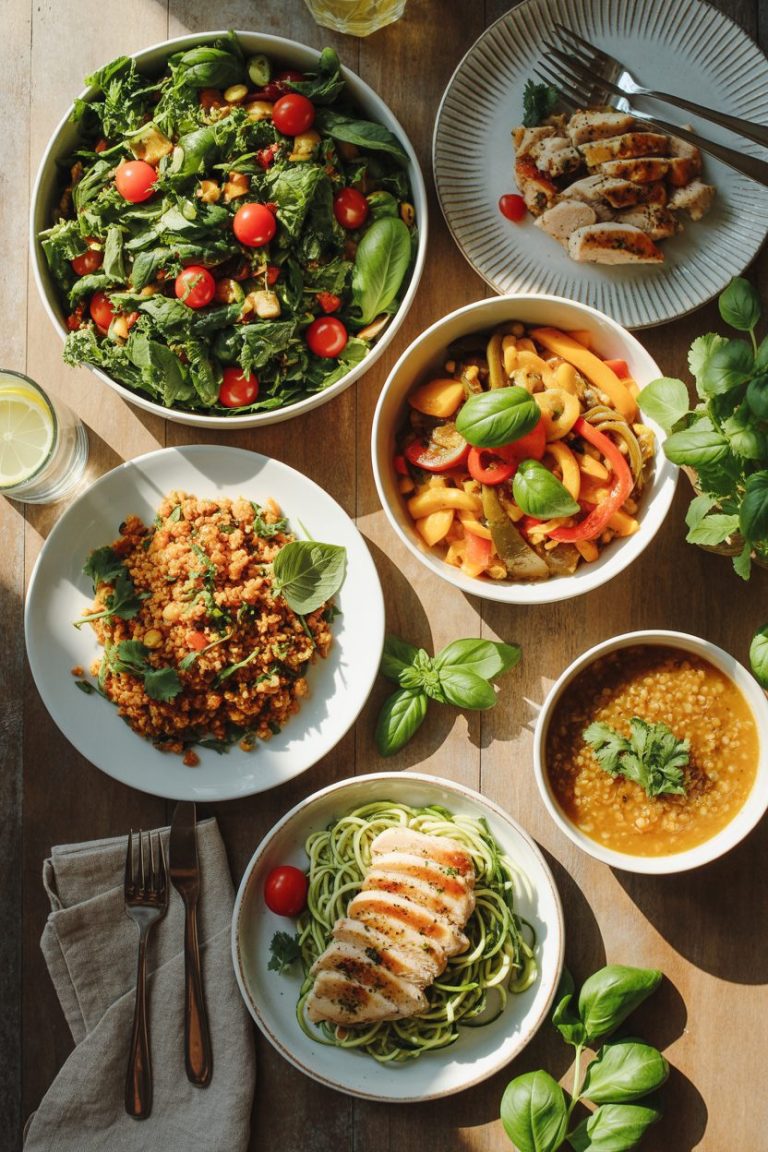
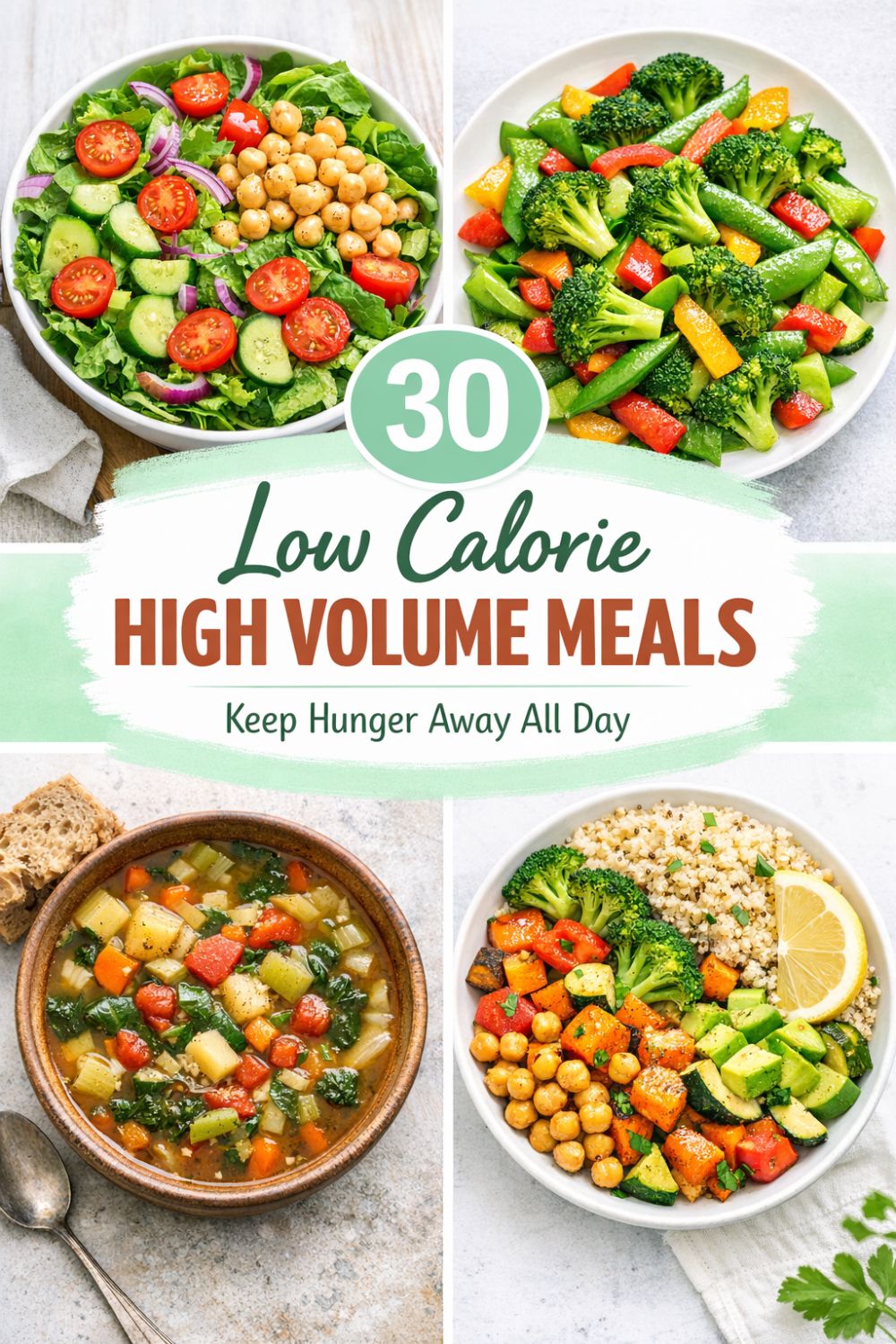
30 Low Calorie High Volume Meals That Keep You Full
Look, I’m not going to sugarcoat this—losing weight while feeling constantly hungry is absolute torture. You know what I’m talking about. That gnawing emptiness that makes you fantasize about carbs at 3 PM and question every life choice that led you to eating sad desk salads.
But here’s the thing nobody tells you: you don’t have to starve to drop pounds. Enter low calorie high volume meals—the holy grail of eating that actually makes sense. We’re talking massive portions that fill you up without wrecking your calorie budget. Yeah, it sounds too good to be true, but stick with me.
I’ve been down the rabbit hole of trying every diet under the sun, and volume eating is the only approach that didn’t make me want to rage-quit by day three. So let’s talk about 30 meals that’ll keep your stomach happy and your jeans fitting better.
These are the basics that make healthy cooking fast and actually enjoyable: less mess, less time, and meals your whole family will happily eat.
- mason jarCheck today’s price →
- non-stick panCheck today’s price →
- spiralizerCheck today’s price →
- large skilletCheck today’s price →
Amazon prices and deals change often, so it’s worth checking today’s price.
What the Heck Are Low Calorie High Volume Meals Anyway?
Before we jump into the good stuff, let’s get clear on what we’re dealing with. Low calorie high volume meals are basically foods that take up a lot of space on your plate (and in your stomach) without packing in tons of calories.
Think about it this way: you could eat a tiny handful of chips for 150 calories, or you could demolish an entire bowl of roasted vegetables for the same amount. Which one’s gonna keep you from raiding the pantry an hour later? Exactly.
These meals work because they’re loaded with water and fiber—two things that fill you up without adding calories. Your stomach has stretch receptors that signal to your brain when you’re full. So eating a big volume of food triggers those receptors, even if the calorie count is low. Pretty clever, right?
🎯 My Go-To Meal Prep System
After years of trial and error, I finally found the meal prep containers that don’t leak, stack perfectly, and actually make me want to prep meals. These glass containers changed my whole game.
- Microwave, oven, and freezer safe (seriously versatile)
- Three different sizes for different meals
- Snap-lock lids that actually seal (no more desk lunch disasters)
- Clear glass so you can see what’s inside without opening 47 containers
I use the big ones for dinner portions with tons of veggies, medium ones for lunches, and small ones for snacks and dressings. They’ve survived my clumsy dishwasher loading for over a year now.
Check Price & Reviews →The Science-ish Part (Don’t Worry, I’ll Keep It Simple)
Here’s what makes volume eating work: energy density. It’s basically the number of calories packed into a certain weight of food. High energy density foods (like cookies and pizza) cram lots of calories into small portions. Low energy density foods (vegetables, fruits, lean proteins) spread fewer calories across bigger portions.
Water and fiber are your best friends here. Water adds zero calories but tons of volume. Fiber does the same while also slowing down digestion, which means you stay fuller longer. Research shows that people who eat more high-volume, low-calorie foods naturally consume fewer total calories without even trying.
The beauty of this approach? You’re not fighting against your body’s natural hunger signals. You’re working with them. And that’s way more sustainable than white-knuckling it through another restrictive diet.
30 Low Calorie High Volume Meals That Actually Taste Good
Breakfast Winners That Won’t Leave You Hangry by 10 AM
1. Massive Veggie Scramble
Three eggs scrambled with bell peppers, mushrooms, spinach, and tomatoes. I’m talking a full pan of veggies here. Add some za’atar on top if you’re feeling fancy. Get Full Recipe.
2. Greek Yogurt Bowl with All the Things
Plain Greek yogurt (the full-fat kind keeps you fuller) topped with berries, a sprinkle of granola, and maybe some chia seeds if you’re into that. The protein from the yogurt is clutch for keeping hunger at bay. Check out this Greek yogurt bowl with berries and honey for inspiration.
3. Overnight Oats That Don’t Suck
Half a cup of oats, almond milk, chia seeds, and whatever fruit you’re feeling. Prep it the night before in a mason jar and you’re golden. Way more volume than regular oatmeal because the oats absorb all that liquid. Try these vanilla almond overnight oats.
4. Egg White Omelet Loaded With Vegetables
Four egg whites, tons of spinach, mushrooms, and a sprinkle of feta. Yeah, egg yolks have nutrients too, but if you’re maxing out volume, whites give you more food for fewer calories. Whip these up in a non-stick pan for easy cleanup.
5. Smoothie Bowl That’s Actually Filling
Blend frozen berries, spinach (you won’t taste it, I promise), protein powder, and a bit of almond milk. Pour into a bowl and top with sliced fruit and a few almonds. The key is keeping it thick so you eat it with a spoon—way more satisfying than drinking it. This Mediterranean smoothie bowl hits different.
🥤 Best Blender for Smoothie Bowls & Meal Prep
BEST SELLER This is hands-down the best investment I’ve made for volume eating. Makes smoothie bowls thick and creamy, pulverizes frozen veggies for soups, and actually crushes ice without sounding like a jet engine.
⚡ Limited Time Deal – Save 38%
Why This Blender is Worth It:
- 1200-watt motor – Blends frozen fruit without leaving chunks
- Pre-programmed settings – One button for smoothies, one for soups, foolproof
- Self-cleaning function – Add water and soap, hit clean, done in 60 seconds
- 64oz pitcher – Big enough to make 4 servings at once for meal prep
- BPA-free & dishwasher safe – No weird plastic taste or smell
- Comes with tamper – Push down thick smoothie bowl ingredients easily
I’ve had mine for 18 months and use it literally every day. Makes cauliflower rice smooth, blends protein shakes without lumps, and creates restaurant-quality soups. The tamper is clutch for thick smoothie bowls—you can actually get that ice-cream-like consistency.
Get This Deal Before It Ends →Looking for more morning fuel? These unique high-protein breakfast ideas or 25 high-protein breakfast meals will keep you full all morning without the mid-morning crash.
Lunch Ideas That Won’t Put You in a Food Coma
6. Giant Salad (But Make It Interesting)
Mixed greens, grilled chicken, cherry tomatoes, cucumber, bell peppers, and a light vinaigrette. Use a salad spinner to get those greens crispy—nobody likes soggy lettuce. Add some chickpeas if you need extra staying power. This actually good Greek salad proves salads don’t have to be boring.
7. Zucchini Noodles with Marinara and Turkey Meatballs
Spiralize a couple zucchinis (or buy them pre-spiralized because life’s short), top with homemade marinara and turkey meatballs. Way more volume than regular pasta for way fewer calories. A spiralizer makes this stupid easy.
8. Soup So Big You Need Two Hands to Carry It
Vegetable soup with tons of cabbage, carrots, celery, tomatoes, and beans. Broth-based soups are volume eating gold because you can eat a massive bowl for minimal calories. Try this lentil soup or this lentil spinach version.
9. Cauliflower Rice Stir-Fry
Two cups of cauliflower rice, mixed veggies, some tofu or shrimp, and low-sodium soy sauce. The cauliflower rice gives you that satisfying rice texture with like one-tenth the calories. Cook it in a large wok to get everything perfectly crispy.
10. Stuffed Bell Peppers
Bell peppers stuffed with ground turkey, quinoa, tomatoes, and spices. One pepper is super filling but clocks in around 200 calories. Get Full Recipe.
Need more lunch inspiration? Check out these Mediterranean lunchbox recipes perfect for work or these high-protein meal prep lunches that’ll actually keep you full until dinner.
💧 The Water Bottle That Actually Makes Me Drink Water
I know, I know—it’s just a water bottle. But hear me out. This thing has time markers on the side that guilt-trip you into staying hydrated all day. And it works.
- Holds a full liter (so you only need to refill twice for your daily goal)
- Time markers like “9 AM, 11 AM, 1 PM” to keep you on track
- Straw lid for easy sipping without spilling on your keyboard
- Fits in car cup holders despite being huge
Since volume eating works best when you’re properly hydrated, this bottle has become my sidekick. Plus, drinking water before meals helps you feel fuller faster. Win-win.
Grab One Here →Dinners That Feel Like Real Meals
11. Grilled Chicken with Roasted Vegetables (But Like, A Lot of Vegetables)
Six ounces of grilled chicken breast, two full sheet pans of roasted broccoli, Brussels sprouts, and carrots. Season everything with garlic, lemon, and herbs. This is a mountain of food. Try this lemon herb chicken with roasted potatoes.
12. Shrimp and Veggie Bowl
Sautéed shrimp (tons of it—shrimp are super low cal), zucchini, bell peppers, snap peas, and cauliflower rice. Drizzle with a little teriyaki sauce. You’ll need a large skillet for all those veggies. This shrimp with couscous is another winner.
13. Baked Salmon with Asparagus and Cherry Tomatoes
Salmon filet with two bunches of asparagus and a pint of cherry tomatoes. All baked on one sheet pan. The vegetables roast down but you get to eat a ton of them. Get Full Recipe.
14. Turkey Chili with Extra Vegetables
Ground turkey, tons of bell peppers, onions, tomatoes, and beans. IMO, chili is the ultimate volume food because you can add so many vegetables that bulk it up. Make it in a slow cooker and forget about it until dinner. This three bean chili is ridiculously filling.
15. Eggplant Lasagna (No Pasta, All Flavor)
Thinly sliced eggplant layered with marinara, part-skim ricotta, and a bit of mozzarella. Bake until bubbly. You get all the lasagna vibes without the carb coma.
16. Grilled Veggie Platter with Hummus
Grilled zucchini, eggplant, bell peppers, and mushrooms served with hummus. This is basically a Mediterranean feast that’ll fill you up completely. Get Full Recipe.
17. Chicken Fajita Bowl
Grilled chicken strips, sautéed peppers and onions, a small amount of brown rice, and tons of shredded lettuce and pico de gallo. The lettuce adds major volume for basically no calories.
18. Cod with Roasted Brussels Sprouts
Baked cod (it’s super lean) with a full pound of roasted Brussels sprouts. Toss the sprouts with balsamic vinegar and a tiny bit of olive oil. So good. Try this baked cod with tomato olive tapenade.
19. Veggie-Packed Stir-Fry
Whatever vegetables are in your fridge—broccoli, snap peas, carrots, cabbage, mushrooms—stir-fried with a bit of chicken or tofu. Serve over a small portion of brown rice or just eat it straight. This tofu broccoli stir-fry is legit.
20. Spaghetti Squash with Meat Sauce
One whole spaghetti squash (roasted and scraped into “noodles”), topped with lean ground beef tomato sauce. You get a massive plate of “pasta” for a fraction of the calories. Get Full Recipe.
🍳 The Air Fryer That Makes Vegetables Actually Taste Good
EDITOR’S CHOICE If you’re serious about volume eating, this air fryer is non-negotiable. It’s made me actually crave roasted vegetables because they come out perfectly crispy every single time.
🔥 Save $60 Today Only
What Makes This Air Fryer Special:
- 8-quart capacity – Cook enough veggies for 4 meals in one batch
- Digital touchscreen – Set it and forget it, no babysitting required
- Even heating technology – No more rotating trays halfway through
- Dishwasher-safe basket – Cleanup takes 30 seconds, not 30 minutes
- 12 preset functions – Roast, air fry, bake, reheat, dehydrate
- Comes with recipe book – 50+ volume-eating friendly recipes included
Brussels sprouts, broccoli, cauliflower, zucchini—everything comes out restaurant-quality with minimal oil. I meal prep 3 sheet pans worth of vegetables every Sunday in about 45 minutes total. The 8-quart size means I’m not cooking in tiny batches like with smaller models.
Claim Your Discount Now →Craving more dinner ideas? These Mediterranean dinner ideas for busy weeknights or easy one-pan dinners make weeknight cooking way less stressful.
Snacks That Actually Hold You Over
21. Air-Popped Popcorn
Three cups of popcorn is only about 100 calories. Season it with nutritional yeast or garlic powder. Get yourself an air popper and never look back.
22. Cucumber and Hummus
An entire cucumber sliced up with a quarter cup of hummus. The cucumber is basically water in vegetable form, so you can eat a ton of it. Get Full Recipe.
23. Watermelon (Like, Half a Watermelon)
Watermelon is 92% water. You can eat a ridiculous amount and barely make a dent in your calorie budget. Plus it’s sweet, so it kills dessert cravings.
24. Bell Pepper Strips with Salsa
Two bell peppers cut into strips, paired with salsa for dipping. Crunchy, satisfying, and you feel like you’re eating chips and dip.
25. Cottage Cheese with Tomatoes
Low-fat cottage cheese topped with diced tomatoes, black pepper, and basil. High protein, super filling, surprisingly good. This savory cottage cheese toast takes it up a notch.
For more snack ideas that won’t derail your progress, check out these Mediterranean snacks that aren’t just hummus or high-protein snacks under 200 calories.
Desserts (Yes, Really)
26. Frozen Grapes
Freeze a bunch of grapes. They turn into little sorbet bites. You can eat a full cup for about 60 calories and it takes forever to eat them, which is oddly satisfying.
27. Strawberries with Whipped Cream
Two cups of strawberries with a dollop of light whipped cream. The strawberries give you tons of volume and the cream makes it feel indulgent. Try these chocolate dipped strawberries for something fancier.
28. Baked Apple Slices with Cinnamon
Slice an apple, bake it with cinnamon and a tiny bit of honey. Smells like apple pie, tastes amazing, way fewer calories than actual pie. Get Full Recipe.
29. Greek Yogurt “Ice Cream”
Freeze Greek yogurt mixed with a bit of vanilla extract and stevia. Scrape it with a fork every 30 minutes while it freezes to get that ice cream texture. Game changer.
30. Berry Parfait
Layer Greek yogurt with tons of mixed berries. Top with a few almonds. It’s basically dessert but with protein and it actually fills you up. This Greek yogurt parfait is the perfect example.
📊 Smart Food Scale with Nutrition Tracking
TECH UPGRADE This isn’t your basic kitchen scale. It connects to an app that automatically calculates calories, protein, carbs, and fiber as you weigh your food. Total game-changer for understanding portions.
💎 Premium Pick – 45% Off
Smart Features You’ll Actually Use:
- Bluetooth app connectivity – Syncs with MyFitnessPal & other tracking apps
- Built-in nutrition database – Over 800,000 foods pre-loaded
- Multiple measurement modes – Grams, ounces, pounds, ml
- Tare function – Zero out bowls and plates instantly
- Rechargeable battery – USB charging, lasts 3-4 months per charge
- Tempered glass surface – Easy to clean, looks sleek on your counter
The app shows you real-time nutrition as you add ingredients, which is perfect for building volume meals. You can see exactly how adding more vegetables increases volume without adding many calories. I use it mainly for proteins and healthy fats where portions matter most, but it’s taught me so much about energy density.
Get Smart Scale Deal →Making Volume Eating Work in Real Life
Okay, so you’ve got the meal ideas. But how do you actually stick with this long-term without losing your mind?
Prep Like Your Life Depends on It
I can’t stress this enough—meal prep is what separates success from “welp, I guess I’m eating takeout again.” Spend two hours on Sunday chopping vegetables, cooking proteins, and portioning things out. Store everything in glass meal prep containers so you can just grab and go.
Learn to Love Vegetables (Or at Least Tolerate Them)
Vegetables are the backbone of volume eating. If you “don’t like vegetables,” you probably just haven’t found the right way to cook them. Roasting vegetables with olive oil, garlic, and salt transforms them completely. Get a good roasting pan and experiment.
Don’t Skip the Protein
While vegetables add volume, protein is what actually keeps you full. Every meal should have a solid protein source—chicken, fish, tofu, beans, whatever. Protein takes longer to digest and helps maintain muscle mass while you’re losing weight.
Water is Your Secret Weapon
Drink water before, during, and after meals. It adds to that full feeling and helps with digestion. Plus, sometimes when you think you’re hungry, you’re actually just thirsty. Keep a big water bottle with you constantly.
Be Strategic About Fats
Fats are calorie-dense, so you can’t go crazy with them if you’re trying to maximize volume. But you still need some fat for satiety and nutrient absorption. A drizzle of olive oil, a few nuts, half an avocado—these add flavor and satisfaction without completely wrecking your portions.
If you’re ready to commit to this approach, check out this 14-day calorie deficit meal plan or 7-day Mediterranean meal prep plan that’s actually realistic for busy people.
🔥 The Kitchen Scale That Changed Everything
Real talk: I avoided food scales for years because they felt too “diet-y.” But this digital scale is what finally helped me understand proper portions without obsessing.
- Switches between grams, ounces, and milliliters with one button
- Tare function lets you zero out the bowl weight (so convenient)
- Slim design that actually fits in a drawer when you’re done
- Accurate to the gram—way better than eyeballing portions
I use it mainly for proteins and grains—the stuff where portion size really matters. For vegetables? Honestly, I just pile them on because volume eating means you can eat tons of them anyway. But knowing exactly what 4oz of chicken looks like was eye-opening.
See Current Price →Common Mistakes People Make with Volume Eating
Thinking All Vegetables Are Created Equal
Not all vegetables work for volume eating. Corn, peas, and potatoes are higher in calories and won’t give you the same bang for your buck as leafy greens, broccoli, or peppers. Know which ones to load up on.
Forgetting About Flavor
Eating bland food is a one-way ticket to falling off the wagon. Invest in good spices, herbs, hot sauce, vinegars—whatever makes your food taste amazing. A spice rack organizer keeps everything accessible.
Going Too Extreme
Look, eating only vegetables and chicken breast 24/7 isn’t sustainable. You need some variety and foods you actually enjoy. It’s okay to have some calorie-dense foods you love—just be strategic about portions.
Not Adjusting Portions Over Time
As you lose weight, your calorie needs decrease. What worked at the beginning might need tweaking later. Pay attention to how your body responds and adjust accordingly.
The Mental Game of Volume Eating
Here’s something nobody talks about: half the battle is mental. We’ve been conditioned to think that dieting means suffering and tiny portions. Volume eating flips that script.
When you can fill your plate and actually eat until you’re satisfied, it doesn’t feel like restriction. That’s huge. The psychological benefit of eating a full plate of food cannot be overstated. It keeps you from feeling deprived, which is usually what makes people quit diets.
But you do have to rewire your brain a bit. If you’re used to calorie-dense foods, vegetables might seem unsatisfying at first. Give it two weeks. Seriously. Your taste buds adapt, and foods that seemed boring start tasting way better. Plus, you’ll actually start craving vegetables because your body realizes they make you feel good.
Another mental shift: stop thinking of food as just fuel. Yeah, it IS fuel, but it’s also pleasure and satisfaction. Volume eating lets you enjoy both. You get to eat a lot, feel full, AND lose weight. That’s not a compromise—that’s winning.
🎉 Join Our Volume Eating Community
Want daily recipes, meal prep tips, and real-time support from people who actually get it? Join 12,000+ members crushing their goals in our WhatsApp community.
New low-cal, high-volume meal ideas delivered straight to your phone every morning
Live prep sessions where we cook together and share shortcuts that actually work
Real people sharing wins, struggles, and tips—no judgment, just support
Early access to sales on meal prep containers, kitchen gadgets, and more
No spam, no sales pitches. Just helpful people and good food. Leave anytime.
Frequently Asked Questions
Can I really lose weight while eating large portions?
Absolutely. The key is choosing foods that have low energy density—lots of water and fiber, fewer calories per serving. When you fill your plate with vegetables, lean proteins, and smart carbs, you can eat substantial portions and still maintain a calorie deficit. Your stomach gets full from the volume, which triggers satiety signals to your brain, but you’re not consuming excessive calories.
How long does it take to see results with volume eating?
Most people notice changes within 2-4 weeks. You’ll probably feel less hungry and more satisfied within the first week, which is huge. The scale might take a bit longer to reflect changes, but that’s normal. Remember, sustainable weight loss is about 1-2 pounds per week. Anything faster is usually water weight or muscle loss.
Do I need to count calories on a volume eating plan?
Not necessarily, but it helps initially to get a sense of portions and what you’re eating. Many people find that after a few weeks of tracking, they develop an intuitive sense of appropriate portions. The beauty of volume eating is that when you focus on low-energy-density foods, it’s pretty hard to overeat. You’d have to eat an absurd amount of broccoli to gain weight.
Can I eat out at restaurants while doing volume eating?
For sure. Just be strategic. Order grilled proteins, ask for extra vegetables instead of fries or rice, and request sauces on the side. Most restaurants are happy to accommodate. Salads with protein are usually a safe bet—just watch the dressing. Don’t be afraid to customize your order to fit your needs.
What if I’m still hungry after eating a high-volume meal?
Give it 20 minutes. Your brain needs time to register that your stomach is full. Drink some water, go for a short walk, distract yourself. If you’re genuinely still hungry after waiting, you might need more protein or healthy fats in your meal. Also check that you’re not confusing thirst or boredom with hunger.
The Bottom Line on Volume Eating
Look, I’m not going to tell you this is magic. You still need to be in a calorie deficit to lose weight—that’s just physics. But volume eating makes that deficit way more bearable.
Instead of feeling deprived and cranky, you get to eat satisfying amounts of food. You’re not measuring out sad portions of crackers or nibbling on tiny snacks that leave you wanting more. You’re eating full plates of actual meals.
The 30 meals I’ve shared here are just a starting point. Once you understand the principles—high water content, high fiber, lean protein, smart portions—you can adapt pretty much any meal to fit the volume eating approach. Swap regular pasta for zucchini noodles. Add more vegetables to your stir-fry. Choose foods that give you more to eat for fewer calories.
This isn’t about perfection. Some days you’ll nail it, some days you’ll order pizza. That’s life. The goal is to make volume eating your default most of the time, so that when you do indulge, it doesn’t completely derail your progress.
And honestly? Once you get used to eating this way, smaller portions of calorie-dense foods don’t even sound appealing anymore. Your body starts craving the foods that make it feel good. That’s when you know it’s working.
So start with a few of these meals. See what you like. Experiment in the kitchen. Find your favorites. Give your body time to adjust. And remember—you’re supposed to enjoy eating. Food is supposed to taste good and make you feel satisfied. Volume eating just helps you do that while also reaching your goals.
Now go forth and eat your vegetables. Like, a lot of vegetables. Your future self will thank you.