21 Mediterranean Snacks That Aren’t Just Hummus
Look, I love hummus as much as the next person. But if I see one more “Mediterranean snack guide” that’s just twelve variations of chickpea dip with different toppings, I’m going to lose it.
The Mediterranean region stretches from Spain to Turkey, encompassing dozens of countries with wildly different food traditions. Reducing all that culinary diversity to hummus and carrot sticks does the entire region a massive disservice. Plus, you’re missing out on some seriously delicious snacks.
These are the basics that make healthy cooking fast and actually enjoyable: less mess, less time, and meals your whole family will happily eat.
- protein powderCheck today’s price →
- digital food scaleCheck today’s price →
- snack containersCheck today’s price →
- shaker bottleCheck today’s price →
Amazon prices and deals change often, so it’s worth checking today’s price.
I’ve spent years exploring Mediterranean flavors, and I can tell you there’s so much more to snack on than the standard grocery store dip aisle. These snacks are flavorful, satisfying, and actually reflect the diversity of Mediterranean cuisine. Most of them are surprisingly easy to make, and they’re all way more interesting than reaching for the same container of hummus for the third time this week.

What Actually Makes a Snack Mediterranean
Before we get into the list, let’s talk about what defines Mediterranean snacking. It’s not just about using olive oil and calling it a day, though olive oil definitely plays a starring role.
Mediterranean snacks typically feature fresh vegetables, legumes, nuts, seeds, whole grains, and moderate amounts of cheese or yogurt. They emphasize flavor from herbs, spices, citrus, and quality ingredients rather than heavy processing or added sugars.
The portions are usually moderate—Mediterranean eating isn’t about restriction, but it’s not about massive American-sized servings either. These snacks are meant to tide you over between meals, not replace them entirely.
Most importantly, Mediterranean snacks are flavorful enough that you actually feel satisfied after eating them. They’re not the kind of snacks that leave you mindlessly reaching for more because they didn’t really hit the spot.
Why Mediterranean Snacks Work for Weight Management
Here’s something interesting: people in Mediterranean regions have lower rates of obesity despite having food cultures that celebrate eating. Part of this comes down to their snacking habits.
Mediterranean snacks tend to be nutrient-dense rather than calorie-dense. A handful of almonds with some fresh fruit gives you healthy fats, protein, fiber, and micronutrients. Compare that to a bag of chips, which gives you mostly refined carbs, salt, and regret.
The combination of protein, healthy fats, and fiber in most Mediterranean snacks helps stabilize blood sugar. You don’t get that spike-and-crash cycle that leaves you hungrier an hour later. According to research on the Mediterranean diet, this eating pattern supports sustainable weight management better than most restrictive diets.
Plus, when your snacks actually taste good, you’re less likely to feel deprived and binge later. Revolutionary concept, I know.
21 Mediterranean Snacks Worth Making
Alright, let’s get to the actual snacks. I’ve organized these roughly by how much effort they require, starting with the grab-and-go options and moving toward things that need a bit more prep.
Quick and Easy Options
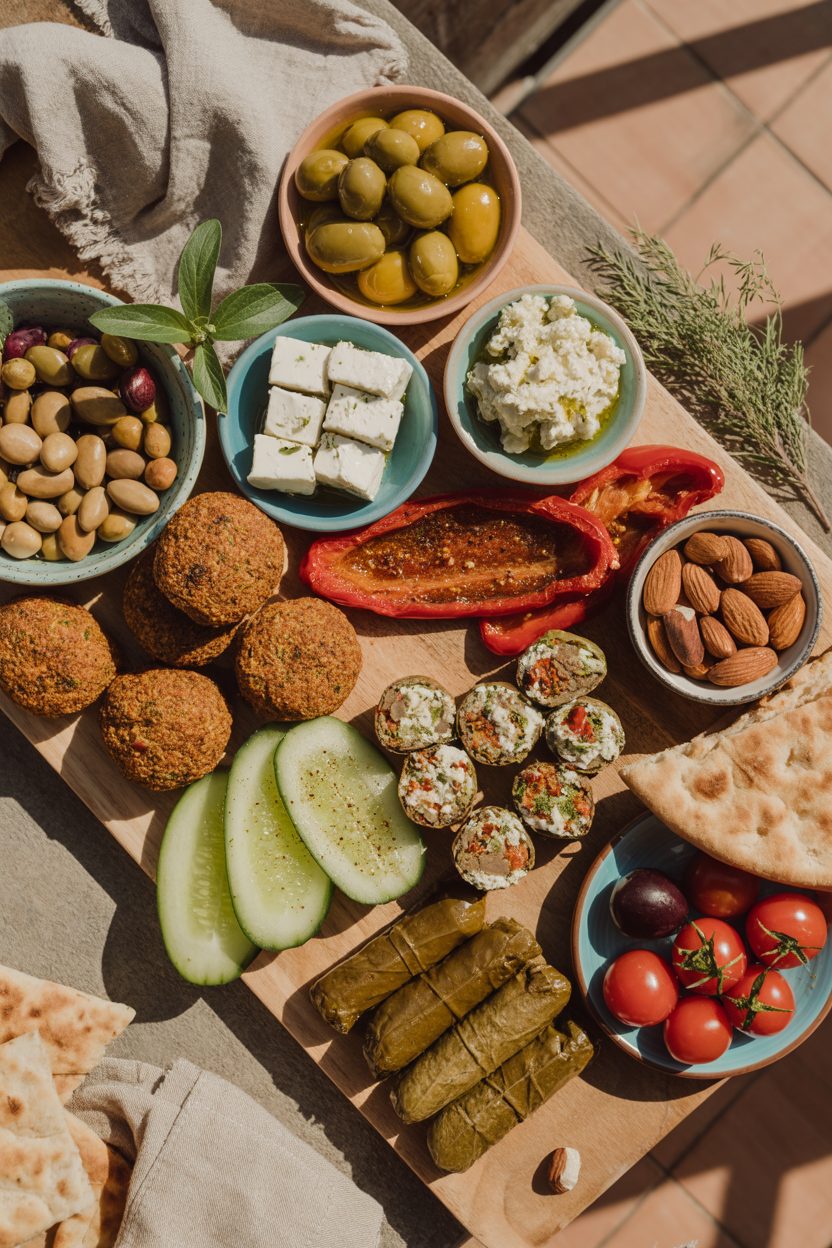
1. Marinated Olives
Buy good quality olives and marinate them yourself with olive oil, lemon zest, garlic, and herbs. It takes five minutes and tastes infinitely better than the sad canned olives at the grocery store.
The healthy fats in olives help you feel satisfied, and they’re packed with antioxidants. Keep a jar in your fridge and grab a small handful when you need a quick snack. Just watch the sodium—rinse them first if you’re salt-sensitive.
2. Fresh Figs with Walnuts
This is peak Mediterranean simplicity. Fresh figs when they’re in season, paired with a handful of walnuts. The figs provide natural sweetness and fiber, while walnuts add omega-3 fatty acids and protein.
If you can’t find fresh figs, dried figs work too—just watch your portions since dried fruit is more concentrated in natural sugars. The combination hits that sweet spot between satisfying and nutritious.
3. Cherry Tomatoes with Sea Salt and Olive Oil
Sometimes the simplest snacks are the best. Get really good cherry tomatoes, drizzle them with quality olive oil, sprinkle with flaky sea salt, and maybe add some torn basil if you’re feeling fancy.
This snack is mostly water and fiber, so you can eat a generous portion for very few calories. The olive oil provides healthy fats that help you absorb the fat-soluble vitamins in the tomatoes.
4. Cucumber Slices with Za’atar
Cut cucumbers into thick rounds, drizzle with olive oil, and sprinkle generously with za’atar—a Middle Eastern spice blend that typically includes thyme, sesame seeds, and sumac. I keep this spice grinder set on my counter specifically for making fresh za’atar blends.
The cucumbers are incredibly hydrating and low in calories, while the za’atar adds complex flavor. This snack is basically crunchy, herby water that somehow tastes amazing.
5. Roasted Chickpeas
Drain and dry canned chickpeas, toss with olive oil and spices, and roast until crispy. You can season them however you want—cumin and paprika, garlic and herbs, or even cinnamon and a touch of honey for a sweet version. The cinnamon roasted chickpeas recipe is a personal favorite.
These are crunchy, satisfying, and packed with plant-based protein and fiber. Make a big batch and keep them in an airtight container for snacking throughout the week.
6. Greek Yogurt with Honey and Pistachios
This is basically a deconstructed dessert that counts as a healthy snack. Use thick Greek yogurt, drizzle with good honey, and top with roughly chopped pistachios.
The yogurt provides protein and probiotics, the honey adds natural sweetness without going overboard, and the pistachios contribute healthy fats and a satisfying crunch. This snack keeps you full for ages.
7. Medjool Dates Stuffed with Almonds
Remove the pit from Medjool dates and stuff them with raw almonds. That’s it. That’s the whole recipe. The dates are naturally sweet and chewy, while the almonds add protein and healthy fats.
Yes, dates are high in natural sugars, but they also contain fiber that slows digestion. Plus, they’re so satisfying that you typically only need two or three to feel content.
Snacks That Need Minimal Prep
8. Whipped Feta Dip with Honey and Thyme
Blend feta cheese with Greek yogurt, a bit of olive oil, honey, and fresh thyme until smooth and creamy. Serve with vegetable sticks or whole grain crackers. Get Full Recipe.
This dip is tangy, slightly sweet, and incredibly addictive. The combination of feta and yogurt gives you protein and calcium, and it’s way more interesting than plain hummus.
9. Stuffed Grape Leaves
Okay, these take effort to make from scratch, but you can buy good quality prepared dolmas and they’re excellent. They’re basically rice and herbs wrapped in grape leaves, and they’re surprisingly filling.
If you want to make your own, the process is meditative—wrapping each little package becomes oddly satisfying. Get Full Recipe. Serve them cold with a squeeze of lemon.
10. Mini Falafel Wraps with Tzatziki
Make mini falafel balls (or buy frozen ones and bake them—no judgment), wrap them in small pieces of pita with cucumber, tomato, and tzatziki sauce. Get Full Recipe.
These are substantial enough to actually satisfy hunger but still light enough to count as a snack. The chickpeas in falafel provide plant-based protein and fiber, while the tzatziki adds protein from the yogurt.
11. Mediterranean Avocado Toast Bites
Cut whole grain bread into small squares, toast them, and top with mashed avocado, cherry tomatoes, crumbled feta, and a drizzle of olive oil. Get Full Recipe.
These are basically fancy Melba toasts, but they taste way better. The avocado provides healthy fats that keep you satisfied, and the feta adds that salty, tangy punch that makes them crave-worthy.
12. Cucumber Hummus Sandwich Bites
Alright, fine, one hummus entry made the list. But these are different—use thick cucumber slices as the “bread” and spread hummus between two slices like a sandwich. Get Full Recipe.
The cucumber adds crunch and hydration without any significant calories, while the hummus provides protein and fiber. Top with a cherry tomato if you want to get fancy.
13. Caprese Salad Skewers
Thread cherry tomatoes, small mozzarella balls, and fresh basil leaves onto small skewers. Drizzle with balsamic glaze and olive oil. These are basically edible art that happens to be nutritious.
The mozzarella provides protein and calcium, while the tomatoes add vitamins and antioxidants. They look impressive enough for a party but easy enough for a Tuesday afternoon snack.
14. Olive Tapenade on Toasted Baguette
Pulse olives, capers, garlic, anchovies, and olive oil in a food processor until you get a chunky paste. Spread on thin slices of toasted baguette. Get Full Recipe.
This is intensely flavorful—a little goes a long way. The olives and anchovies provide healthy fats and omega-3s, and the strong flavor means you’re satisfied with just a small portion.
Snacks Worth the Extra Effort
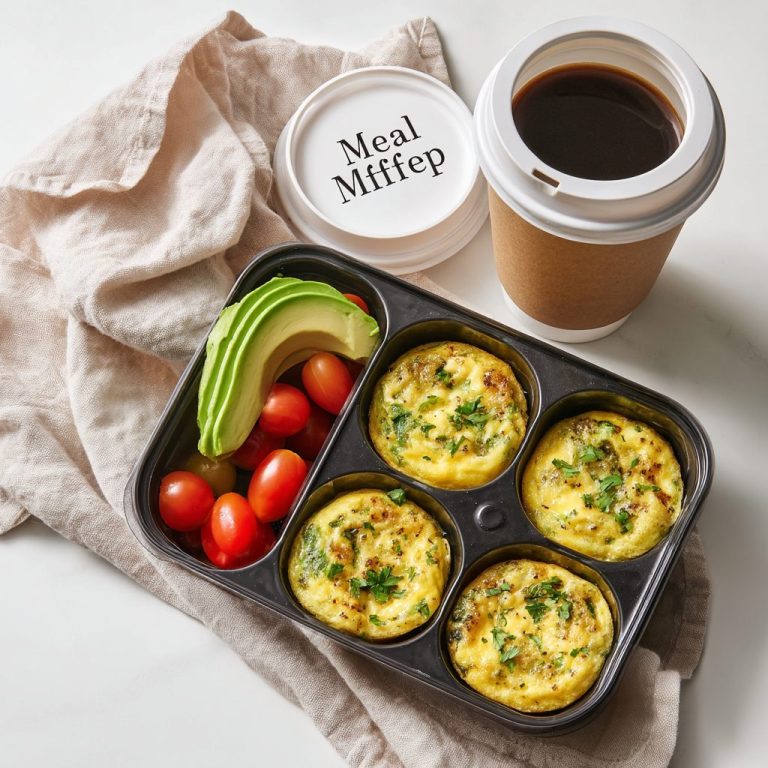
15. Spinach and Feta Egg Muffins
These are perfect for meal prep. Mix eggs with sautéed spinach, crumbled feta, and herbs, pour into muffin tins, and bake. Get Full Recipe.
You can make a batch on Sunday and grab one or two throughout the week. They’re packed with protein from the eggs and feta, plus you’re getting vegetables. Eat them cold or warm them up for 30 seconds.
16. Baked Falafel
Homemade falafel is way better than store-bought, and baking them instead of frying keeps them lighter. Blend chickpeas with herbs, spices, and a bit of flour, form into balls, and bake until crispy. Get Full Recipe.
Serve them with tahini sauce or tzatziki for dipping. The chickpeas provide plant-based protein and fiber, and they’re so flavorful you won’t miss the fried version.
17. Roasted Red Pepper and Walnut Dip
This Turkish-inspired dip blends roasted red peppers with walnuts, garlic, pomegranate molasses, and spices. It’s smoky, slightly sweet, and completely addictive. I use this mini food processor for making dips—it’s the perfect size and way easier to clean than dragging out the full-sized one.
Serve with vegetable sticks or pita chips. The walnuts add healthy fats and protein, while the peppers provide vitamins and antioxidants.
18. Grilled Halloumi Skewers
Halloumi is a Cypriot cheese that doesn’t melt when you heat it—instead, it gets gloriously crispy on the outside while staying soft inside. Cut it into cubes, thread onto skewers with cherry tomatoes and zucchini, and grill or pan-fry.
This is one of those snacks that feels like cheating but isn’t. The cheese provides protein and calcium, and the vegetables add fiber and nutrients. Squeeze fresh lemon over everything before serving.
19. Socca with Toppings
Socca is a chickpea flour pancake from Nice, France. Mix chickpea flour with water, olive oil, and salt, let it rest, then cook like a thick crepe. Top with whatever you want—caramelized onions, olives, cherry tomatoes, herbs.
The chickpea flour makes this naturally high in protein and fiber. It’s gluten-free too, if that matters to you. Cut into wedges and serve warm.
20. Turkish Egg Scramble
This isn’t your regular scrambled eggs. Cook eggs with tomatoes, peppers, onions, and spices until everything melds together into this rich, flavorful dish. Serve with a dollop of Greek yogurt on top.
It’s substantial enough to be a light meal but works perfectly as a hearty snack. The combination of eggs and yogurt provides serious protein, while the vegetables add volume without many calories.
21. Savory Cottage Cheese Toast
Toast whole grain bread, top with cottage cheese, sliced cucumber, tomatoes, everything bagel seasoning, and a drizzle of olive oil. Get Full Recipe.
Cottage cheese is having a moment right now, and for good reason—it’s incredibly high in protein and versatile. This snack is creamy, crunchy, and satisfying all at once.
Making Mediterranean Snacking Work in Real Life
Having a list of snacks is great, but you need a strategy for actually incorporating them into your routine. Here’s what works for me.
Prep ingredients on the weekend. Wash and cut vegetables, make one or two dips, cook a batch of egg muffins or falafel. Having components ready makes it easy to throw together a snack when hunger hits.
Keep pantry staples stocked. Olives, nuts, good quality olive oil, dried herbs and spices, canned chickpeas, and tahini are all shelf-stable and form the foundation of many Mediterranean snacks.
Invest in good storage containers. You’ll be prepping more fresh food, so having containers that keep things fresh matters. I store cut vegetables in water-filled containers to keep them crisp longer.
Don’t try to make everything from scratch all the time. Some days you’re making homemade falafel, and some days you’re opening a jar of good olives and calling it done. Both approaches are valid.
The Protein and Fiber Factor
Most of these snacks combine protein and fiber—that’s the secret to why they actually keep you satisfied. Protein triggers satiety hormones and takes longer to digest than simple carbs. Fiber adds bulk and slows digestion even further.
When you combine the two, you get snacks that genuinely hold you over until your next meal. Compare that to something like pretzels, which are basically just refined flour. You can eat a whole bag and still feel hungry because there’s nothing there to trigger fullness signals.
The healthy fats in many Mediterranean snacks—from olive oil, nuts, avocados, and cheese—also play a role in satisfaction. Fat takes the longest to digest and helps you feel full for extended periods.
Portion Control Without Feeling Deprived
Mediterranean snacking isn’t about eating massive quantities, but it’s not about restriction either. The portions are moderate, but the flavors are intense enough that you feel satisfied.
A small handful of marinated olives is maybe 10-12 olives. Not a huge amount, but the strong, salty flavor means you’re not still reaching for more. Same with the olive tapenade—a tablespoon spread on toast is plenty because the flavor is so concentrated.
This is completely different from mindlessly eating chips where you look down and realize you’ve demolished half the bag without even noticing. When food has actual flavor and texture, you pay attention to it while you’re eating.
Why These Beat Standard American Snacks
American snack culture tends toward highly processed foods designed to be addictive—engineered combinations of salt, sugar, and fat that override your natural fullness signals. You’re supposed to keep eating them.
Mediterranean snacks are the opposite. They’re made from whole foods with simple preparations. The flavors come from quality ingredients and proper seasoning, not from a lab creating the perfect chip seasoning blend.
They’re also more satisfying from a nutritional standpoint. You’re getting actual nutrients—vitamins, minerals, antioxidants, healthy fats, complete proteins. Your body recognizes this as real food and responds accordingly.
Plus, they don’t leave you with that gross, overly-full feeling or that film in your mouth from processed fats. You just feel satisfied and energized, ready to move on with your day.
Adapting These for Different Dietary Needs
Most of these snacks are naturally vegetarian, and many are easily adaptable for vegan diets. Swap the Greek yogurt for coconut yogurt, use vegan cheese alternatives, or simply skip the dairy components in recipes where they’re not essential.
If you’re watching carbs, focus on the vegetable-based options, nuts, olives, cheese, and eggs. Skip or minimize the bread and grain components. Many of these snacks are naturally low-carb already.
For anyone with gluten issues, most of these are naturally gluten-free or easily adapted. Use gluten-free bread for the toast-based snacks, make sure your oats are certified gluten-free, and check labels on any packaged ingredients.
The flexibility is one of the best parts of Mediterranean eating. It’s based on whole foods and simple preparations, so you can adjust based on your needs without losing the essence of what makes these snacks work. If you’re looking for more structured meal ideas, check out this 14-day Mediterranean meal plan.
The Bottom Line
Mediterranean snacking proves you don’t need to live on hummus alone—though there’s nothing wrong with hummus when you actually want it. The region offers incredible variety, and these snacks reflect that diversity.
They’re flavorful, satisfying, and built from whole foods that actually nourish your body. FYI, most of them are remarkably easy to make once you get the hang of the basic techniques and keep the right ingredients stocked.
Start with a few options that appeal to you. Maybe it’s the marinated olives and some good cheese. Maybe it’s prepping a batch of egg muffins for the week. Build from there as you figure out which flavors and preparations work for your lifestyle.
The goal isn’t to perfectly recreate authentic regional snacks every single day. It’s to incorporate more of these nutrient-dense, flavorful options into your routine so you’re reaching for satisfying real food instead of processed snacks that leave you hungry an hour later. For more Mediterranean inspiration, explore these Mediterranean diet snacks.
Your afternoon snack routine deserves better than another bag of chips or yet another container of store-bought hummus. Give some of these options a try and see what actually makes you feel good—during and after eating.