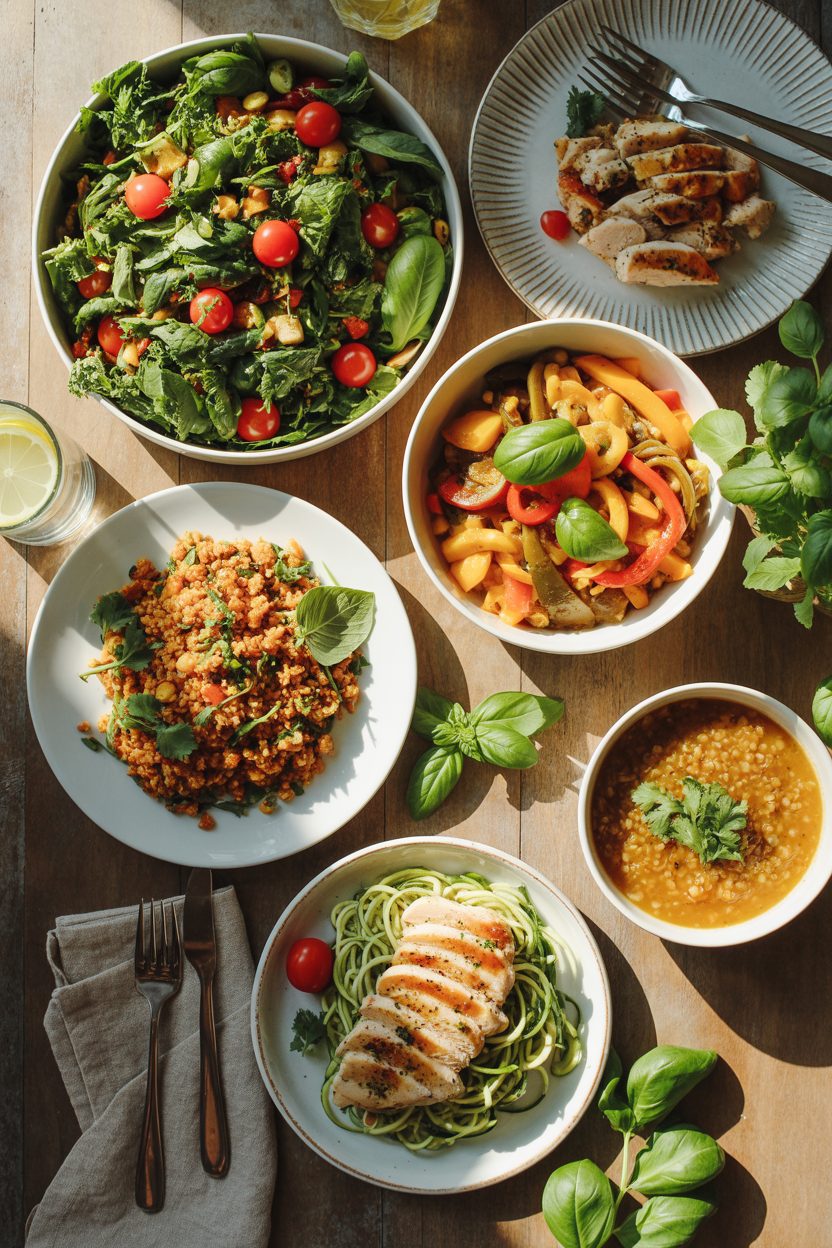
30 Low-Calorie, High-Volume Meals
You know that feeling when you’re supposedly “eating healthy” but you’re starving two hours later, wondering if you accidentally signed up for some medieval fasting ritual? Yeah, I’ve been there. Multiple times. With snack wrappers as evidence.
Here’s the thing nobody tells you about weight loss: hunger is optional. Not in a weird, mind-over-matter kind of way, but because you can actually eat a massive plate of food and still stay under your calorie budget. The secret? High-volume, low-calorie meals that fill you up without derailing your goals.
These are the basics that make healthy cooking fast and actually enjoyable: less mess, less time, and meals your whole family will happily eat.
- glass meal prep containersCheck today’s price →
- insulated lunch bagCheck today’s price →
- digital food scaleCheck today’s price →
- sheet panCheck today’s price →
Amazon prices and deals change often, so it’s worth checking today’s price.
I’m talking about the kind of meals where your plate looks ridiculously full, your stomach feels satisfied, and yet you’re somehow still losing weight. It’s not magic—it’s just smart food choices. Think loads of vegetables, lean proteins, whole grains, and enough fiber to keep you full until your next meal.
So let’s get into 30 meals that prove you don’t have to starve yourself to see results. These aren’t sad diet meals. They’re actual food that tastes good and keeps you satisfied.

What Makes a Meal “High-Volume”?
Before we jump into the recipes, let’s talk about what we actually mean by “high-volume.” It’s pretty straightforward: you’re eating a lot of food by physical volume, but the calorie count stays low.
This works because certain foods—mostly vegetables, fruits, and foods with high water content—take up space in your stomach without packing in tons of calories. A huge bowl of spinach? Maybe 20 calories. A handful of chips? Also around 150 calories, but your stomach barely notices them.
The strategy involves loading up on foods rich in fiber and water. Fiber slows digestion and keeps you feeling full longer. Water adds bulk without adding calories. Combine the two, and you’ve got yourself a winning formula.
Why This Approach Actually Works
I’m not gonna lie—when I first heard about volume eating, I was skeptical. It sounded like another diet gimmick. But then I actually tried it, and wow, what a difference.
The beauty of high-volume meals is they work with your body’s natural hunger signals instead of against them. Your stomach has stretch receptors that tell your brain when you’re full. When you eat enough physical food to stretch your stomach, those receptors fire, and you feel satisfied. It doesn’t matter if you ate 300 calories or 800—if your stomach is physically full, you feel full.
Plus, all that fiber keeps your blood sugar stable. No more energy crashes two hours after lunch. No more desperately raiding the vending machine at 3 PM.
The Core Components of Volume Meals
Every good high-volume meal follows a basic formula. You need non-starchy vegetables as your base, a lean protein source, some complex carbs for energy, and healthy fats for satiety and flavor.
Non-starchy vegetables are your best friends here. We’re talking leafy greens, broccoli, cauliflower, zucchini, peppers, tomatoes, cucumbers, and mushrooms. You can eat enormous quantities of these for minimal calories. I regularly eat a pound of roasted vegetables with dinner. Sounds insane, but it’s probably only 150 calories.
Lean proteins keep you full and help maintain muscle mass while you’re losing weight. Think chicken breast, turkey, fish, egg whites, Greek yogurt, and legumes. A palm-sized portion of protein should anchor most of your meals.
30 Low-Calorie, High-Volume Meals
Alright, let’s get to the good stuff. I’ve organized these by meal type to make your life easier.
Breakfast Options
1. Greek Yogurt Bowl with Berries and Honey
Start your day with a massive bowl of plain Greek yogurt topped with fresh berries, a drizzle of honey, and maybe some walnuts if you’re feeling fancy. The protein in the yogurt keeps you full for hours. For the complete recipe with exact measurements, check out this Greek yogurt bowl with berries.
2. Oatmeal with Fresh Berries and Flaxseed
Cook your oats with extra water or unsweetened almond milk to make them fluffier and more voluminous. Top with tons of fresh berries and a sprinkle of flaxseed. The fiber content here is ridiculous—you’ll be full until lunch. Get the full breakdown at this berry flaxseed oatmeal recipe.
3. Veggie-Packed Egg White Scramble
Whip up egg whites with loads of spinach, mushrooms, tomatoes, and peppers. I’m talking a 3:1 ratio of vegetables to eggs. The volume is crazy, and you’re getting a ton of micronutrients. IMO, this beats a regular omelet any day.
4. Whole Grain Banana Pancakes
Mix mashed banana with oats and egg to create surprisingly fluffy pancakes. Top with more fresh fruit instead of syrup. These pancakes are fiber-rich and way more filling than regular ones. The full recipe is right here.
5. Chia Pudding with Almond Milk and Fresh Fruit
Chia seeds expand like crazy when soaked overnight. Mix them with unsweetened almond milk and top with fresh fruit in the morning. The texture takes some getting used to, but the fullness factor is unmatched. Check out this chia pudding recipe.
Lunch Ideas
6. Massive Mediterranean Chickpea Bowl
Build a huge bowl with mixed greens, roasted chickpeas, cucumber, tomatoes, red onion, and a light lemon-tahini dressing. The chickpeas provide protein and fiber, while the vegetables add bulk. This bowl is genuinely enormous and clocks in around 350 calories. Here’s the full Mediterranean chickpea bowl recipe.
7. Lentil Soup with Crusty Bread
Soup is the ultimate volume food because of the water content. A big bowl of lentil soup with loads of vegetables keeps you full for ages. Pair it with a small piece of whole grain bread for dipping. Get the complete recipe here.
8. Zucchini Noodle Pasta Salad
Spiralize a couple of zucchinis and toss them with cherry tomatoes, olives, a bit of feta, and balsamic vinegar. You can eat a massive bowl for under 200 calories. The zucchini noodles give you that pasta satisfaction without the calorie bomb. Find the detailed recipe at this zucchini noodle salad link.
9. Turkey and Veggie Lettuce Wraps
Skip the tortilla and use large lettuce leaves instead. Fill them with ground turkey, tons of vegetables, and your favorite seasonings. I use this garlic press to crush fresh garlic for the turkey—it makes prep so much faster, and the flavor is way better than the jarred stuff. You can eat like five of these and still be under 300 calories.
10. Cauliflower Rice Stir-Fry
Replace regular rice with riced cauliflower and pile on the vegetables. Add some shrimp or chicken for protein, and season with soy sauce and ginger. The volume here is insane—you’re basically eating a mountain of food.
Dinner Meals
11. Grilled Chicken with Roasted Vegetables
This is my go-to dinner. A grilled chicken breast with a huge tray of roasted broccoli, cauliflower, Brussels sprouts, and peppers. Season everything well, and you’ve got a satisfying meal that’s maybe 400 calories total. The lemon herb chicken with roasted potatoes uses similar techniques.
12. Spaghetti Squash with Tomato Basil Sauce
Roast a spaghetti squash, scrape out the “noodles,” and top with homemade tomato sauce loaded with vegetables. The squash itself is mostly water, so you get a huge plate of pasta-like food for minimal calories. Here’s the full spaghetti squash recipe.
13. Baked Salmon with Herbed Quinoa and Green Beans
Salmon is rich in omega-3 fatty acids and protein, while quinoa provides complex carbs and fiber. Pile your plate high with steamed green beans, and you’ve got a balanced, filling meal. The salmon with herbed quinoa recipe is worth checking out.
14. Stuffed Bell Peppers with Quinoa and Veggies
Hollow out bell peppers and stuff them with a mixture of quinoa, black beans, corn, and tomatoes. Each pepper is like a self-contained meal that’s visually impressive and super filling. Get the details here.
15. Grilled Portobello Mushroom Steaks
These massive mushrooms are meaty enough to serve as a main course. Marinate them, grill them, and serve alongside a mountain of roasted vegetables. Even meat-eaters find these surprisingly satisfying. The portobello mushroom steaks recipe has all the marinade details.
16. Three Bean Chili
Chili is another soup-based meal that’s perfect for volume eating. Load it up with three types of beans, tons of tomatoes, peppers, and spices. A huge bowl clocks in around 300 calories but keeps you full for hours. Find the recipe right here.
17. Whole Wheat Spaghetti with Cherry Tomatoes and Basil
Use whole wheat pasta for extra fiber, keep your portion reasonable, and then load up your bowl with roasted cherry tomatoes and fresh basil. The tomatoes add tons of volume without many calories. This whole wheat spaghetti recipe nails the proportions.
18. Lentil Sweet Potato Stew
Combine lentils with chunks of sweet potato, carrots, and celery in a flavorful broth. This stew is hearty, filling, and packed with fiber. The sweet potatoes add natural sweetness that balances the earthy lentils. Get the full lentil sweet potato stew recipe.
19. Veggie-Packed Black Bean Tacos
Use small corn tortillas, but pile them high with black beans, tons of shredded lettuce, tomatoes, onions, and salsa. The fiber from the beans and the volume from the vegetables make these tacos way more filling than they have any right to be. Check out these black bean tacos.
20. Stir-Fried Tofu with Broccoli and Brown Rice
Cube extra-firm tofu, pan-fry until crispy, and toss with a mountain of broccoli florets. Serve over a modest portion of brown rice. The broccoli volume makes this feel like a huge meal. Here’s the tofu broccoli stir-fry recipe.
Lighter Meals and Bowls
21. Massive Greek Salad
I’m not talking about a sad side salad. I mean a giant mixing bowl full of cucumbers, tomatoes, red onions, olives, and a bit of feta, dressed simply with olive oil and lemon juice. Add some grilled chicken if you want more protein. This Greek salad recipe gets it right.
22. Quinoa Tabbouleh with Hummus and Pita
Make tabbouleh with quinoa instead of bulgur for extra protein, load it with fresh parsley and tomatoes, and serve with a small whole wheat pita and hummus. The fresh herbs add tons of volume and flavor. Get the quinoa tabbouleh recipe here.
23. Mediterranean Grain Bowl
Build a bowl with farro or barley, roasted vegetables, chickpeas, cucumber, tomatoes, and tahini dressing. The whole grains are chewy and satisfying, while the vegetables add bulk. This Mediterranean grain bowl is a personal favorite.
24. Falafel Wrap with Tzatziki
Make baked falafel instead of fried, stuff them into a whole wheat wrap with tons of lettuce, tomatoes, cucumbers, and tzatziki sauce. The vegetables make this wrap massive and incredibly filling. Here’s the falafel wrap recipe.
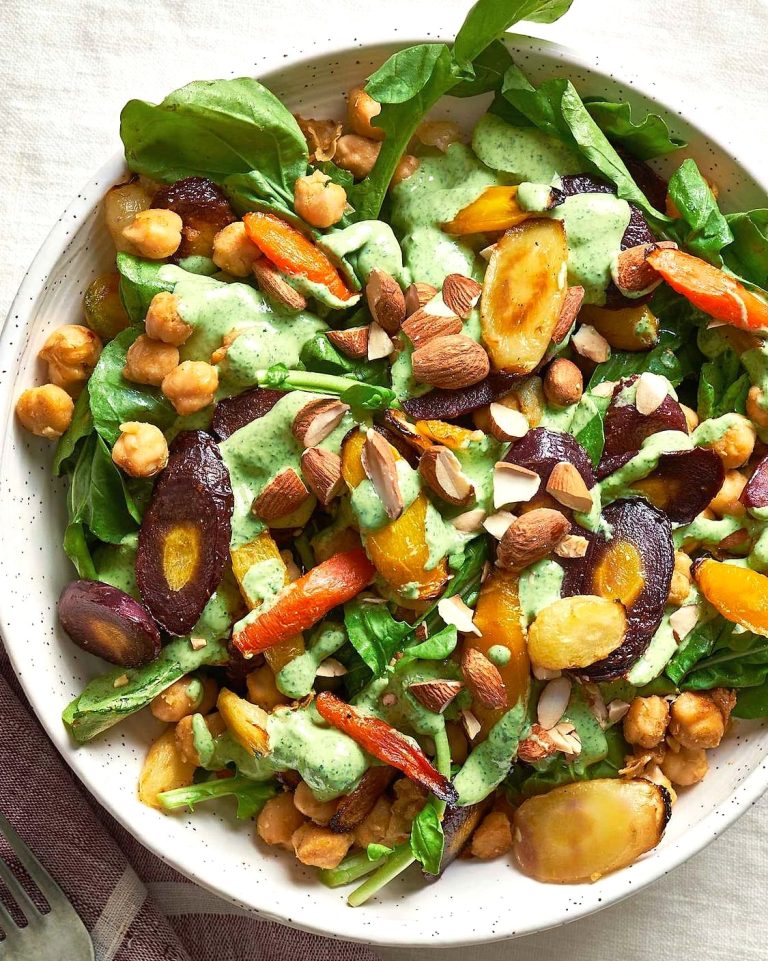
25. Lentil Roasted Carrot Bowl with Tahini Sauce
Combine cooked lentils with roasted carrots, spinach, and a drizzle of tahini sauce. The lentils provide plant-based protein and fiber, while the carrots add natural sweetness and volume. Check out this lentil roasted carrot bowl.
Soup-Based Volume Meals
26. Carrot Ginger Soup with Chickpea Croutons
Blend cooked carrots with ginger and vegetable broth for a smooth, flavorful soup. Top with roasted chickpeas for crunch and protein. You can eat a huge bowl of this for under 250 calories. The carrot ginger soup recipe includes the chickpea crouton trick.
27. Lentil Spinach Soup
Another soup that’s basically magic. Lentils, tons of spinach, tomatoes, and spices in a flavorful broth. The spinach wilts down but still adds volume, and the lentils keep you full for ages. Get the lentil spinach soup recipe.
28. Cauliflower Leek Soup
Blend roasted cauliflower with sautéed leeks and vegetable broth. This soup is creamy without any cream, and you can eat enormous portions. I keep these glass storage containers stocked with soup for easy grab-and-go lunches—they’re microwave and dishwasher safe, which matters more than I’d like to admit. The recipe is available here.
29. Barley Mushroom Soup
Barley adds a chewy texture and tons of fiber to this earthy mushroom soup. Load it with different types of mushrooms for depth of flavor. A big bowl is incredibly satisfying. Find the barley mushroom soup recipe.
30. Detox Green Soup
Blend spinach, kale, zucchini, and peas with vegetable broth and fresh herbs. This bright green soup is packed with nutrients and fiber. Don’t let the color scare you—it actually tastes good. Here’s the detox green soup recipe.
Tips for Making Volume Eating Work
Now that you’ve got 30 meal ideas, let’s talk strategy. Volume eating isn’t just about following recipes—it’s about developing habits that make this approach sustainable.
Prep Your Vegetables in Advance
Seriously, this changes everything. Spend an hour on Sunday chopping vegetables, and suddenly weeknight cooking becomes way less daunting. I roast multiple sheet pans of vegetables at once and keep them in the fridge. When dinner time rolls around, half the work is already done.
Invest in Good Storage Containers
You’ll be making bigger batches of food, so having proper containers matters. Glass containers are ideal because they don’t absorb odors or stains, and you can see what’s inside without opening them.
Season Everything Generously
Low-calorie doesn’t mean low-flavor. Use herbs, spices, citrus, vinegar, and small amounts of quality olive oil to make your vegetables taste amazing. When your food tastes good, you actually want to eat it. Revolutionary concept, I know.
Don’t Skip the Protein
All those vegetables are great, but you need adequate protein to feel satisfied and maintain muscle mass. Every meal should include a palm-sized portion of lean protein. According to the Mayo Clinic, most adults need about 0.8 grams of protein per kilogram of body weight daily.
Drink Water with Your Meals
Water adds to the volume in your stomach without adding calories. Drink a glass before and during your meal. It helps trigger those fullness signals we talked about earlier.
The Mental Shift Required
Here’s something nobody tells you about volume eating: it requires a mental adjustment. We’re so conditioned to think diet food should be tiny portions on big plates, looking sad and depressing.
When you first start eating high-volume meals, your brain might freak out a bit. “Wait, I can eat ALL of this?” Yes. Yes, you can. And you should.
The visual impact of a full plate matters more than we realize. When you see a heaping portion of food, you feel more satisfied before you even take a bite. It’s psychological, but it works.
Common Mistakes to Avoid
Forgetting About Calorie-Dense Additions
You can ruin a perfectly good volume meal by drowning it in dressing or adding too much cheese or nuts. A tablespoon of olive oil is 120 calories. Four tablespoons later, and your low-calorie meal isn’t so low-calorie anymore.
Measure your fats and dressings, at least initially. Once you’ve got a visual reference for appropriate portions, you can eyeball it.
Not Eating Enough Variety
Don’t just eat plain grilled chicken and steamed broccoli every day. You’ll get bored and quit. Rotate through different proteins, vegetables, and seasonings. Try new recipes. Keep it interesting.
Ignoring Your Actual Hunger Cues
Just because you can eat a ton of low-calorie food doesn’t mean you should force yourself to finish huge portions if you’re genuinely full. Listen to your body. The goal is satisfaction, not uncomfortable fullness.
Making It Sustainable Long-Term
The beauty of volume eating is that it doesn’t feel like a diet. You’re not restricting yourself or counting every calorie obsessively. You’re just choosing foods that let you eat more while still reaching your goals.
This approach works long-term because it’s not miserable. You’re not hungry all the time. You’re not avoiding social situations because you can’t eat anything. You’re just making smarter choices about what fills your plate.
FYI, most people find they naturally start craving these high-volume meals once they’ve been eating this way for a few weeks. Your taste buds adjust, and suddenly a massive salad sounds more appealing than a tiny portion of pasta.
The Bottom Line
Volume eating isn’t a magic trick or a fad diet. It’s just common sense wrapped in nutritional science. Eat foods that fill you up without packing in excessive calories, and weight loss becomes significantly easier.
These 30 meals prove you don’t have to choose between feeling full and reaching your goals. You can have both. You can eat massive, satisfying portions and still lose weight. You just have to choose the right foods.
Start with a few recipes that appeal to you. See how you feel. Notice how much more satisfying it is to eat a full plate of food instead of a sad, tiny portion. Your stomach—and your sanity—will thank you.
And honestly, once you realize you can eat a pound of roasted vegetables for the same calories as a handful of chips, the choice becomes pretty obvious. More food, same calories, better nutrition. That’s a win all around.