14-Day Calorie Deficit Meal Plan (Easy, Filling & Actually Realistic!)
Look, I’ve been down the diet rabbit hole more times than I care to admit. You know the drill—you start Monday with all the motivation in the world, by Wednesday you’re Googling “can I eat pizza on a calorie deficit,” and by Friday you’re face-first in a bag of chips wondering where it all went wrong.
But here’s the thing about calorie deficits that nobody really tells you: they don’t have to suck. I know, revolutionary concept. You can actually eat food that tastes good, keeps you full, and still lose weight without feeling like you’re punishing yourself for existing. Wild, right?
This 14-day meal plan isn’t some unrealistic influencer nonsense where every meal looks like it requires a culinary degree and ingredients you can’t pronounce. These are actual meals that real humans can make without losing their minds. We’re talking simple ingredients, reasonable portions, and food that doesn’t taste like cardboard dipped in sadness.

What Makes This Meal Plan Different
I’m not going to sit here and pretend this is some magical solution that’ll transform your life in two weeks. But what it will do is show you that eating in a calorie deficit doesn’t mean living on lettuce and regret.
Each day clocks in around 1,400-1,600 calories, which works for most people trying to lose weight without feeling like they’re starving. Obviously, your mileage may vary depending on your height, weight, activity level, and whether you spent the day moving furniture or sitting at a desk contemplating your existence.
The meals are built around whole foods, lean proteins, and plenty of fiber—the holy trinity of feeling full without blowing your calorie budget. According to research from the Mayo Clinic, high-fiber foods and lean proteins are key factors in maintaining satiety while reducing overall calorie intake, which is exactly what we’re banking on here.
The Ground Rules (Don’t Skip This Part)
Before we jump into the actual plan, let’s cover some basics that’ll make or break your success:
Hydration is non-negotiable. Drink water like it’s your job. Half the time you think you’re hungry, you’re actually just thirsty and your body is bad at communication. Keep a water bottle nearby and sip throughout the day. I use this 32oz insulated water bottle that keeps things cold for hours—game changer for actually remembering to hydrate.
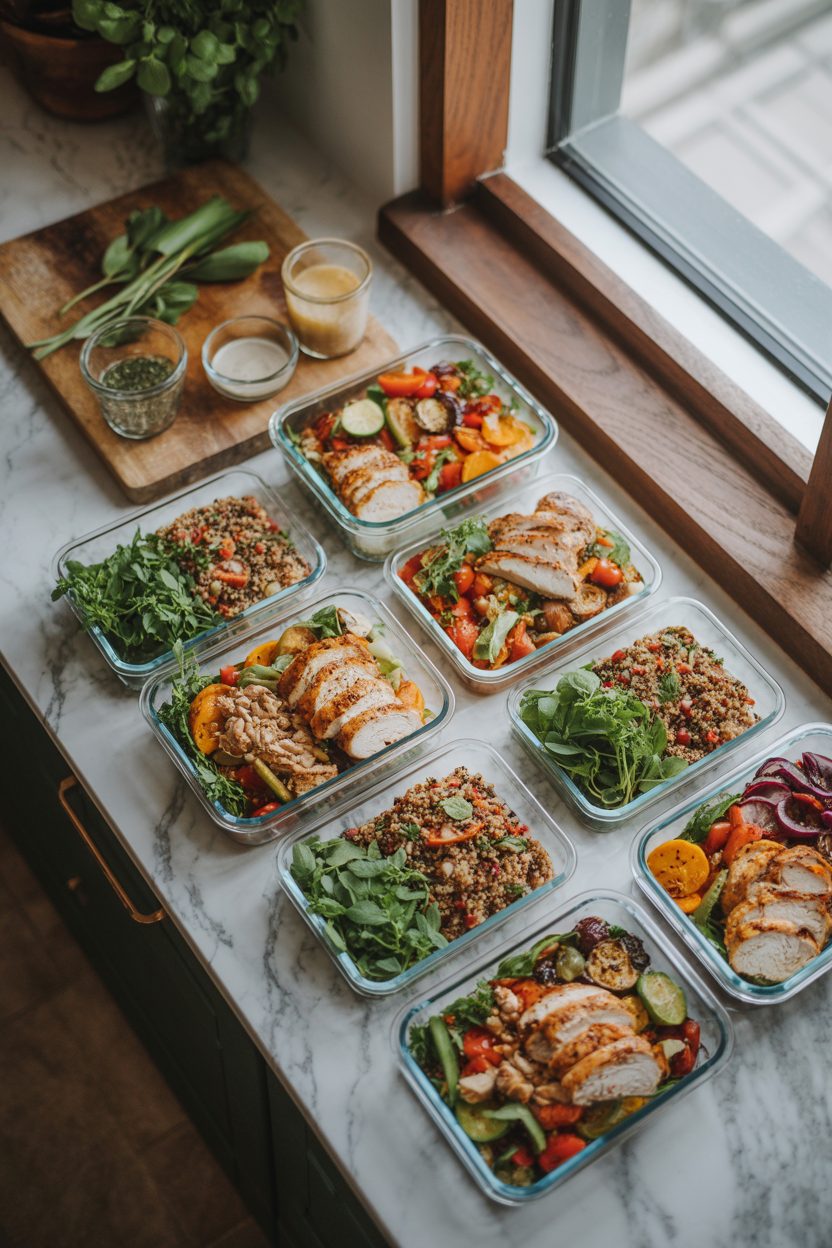
Meal prep is your best friend. I know Sunday meal prep sounds about as fun as doing taxes, but trust me on this. Spending two hours on Sunday means you’re not making terrible decisions at 7 PM on Tuesday when you’re tired and everything sounds terrible except takeout. Grab some glass meal prep containers with snap lids—I’ve been using this 10-pack set for years and they’re still going strong. No weird plastic taste, actually leak-proof, and microwave-safe.
Flexibility matters. Don’t like salmon? Swap it for chicken. Hate zucchini? Use broccoli instead. This isn’t a prison sentence. The specific foods matter less than the overall structure and calories. Just try to keep protein, carbs, and veggies roughly similar.
Week 1: Getting Started Without Losing Your Mind
Day 1
Breakfast: Greek Yogurt Parfait with Berries & Honey (~300 cal)
This isn’t your sad office yogurt situation. We’re talking thick Greek yogurt layered with fresh berries and a tiny drizzle of honey. The protein keeps you full way longer than regular yogurt.
Lunch: Mediterranean Chickpea Bowl (~400 cal)
This is one of those meals that’s stupidly easy but somehow tastes gourmet. Chickpeas, cucumbers, tomatoes, feta, olives, and a lemon-herb dressing. Pro tip: make extra chickpeas for snacking later.
Dinner: Grilled Lemon Herb Chicken with Quinoa (~450 cal)
Nothing fancy, just solid, filling food. I use this digital meat thermometer to make sure chicken is actually cooked through without turning it into rubber—takes the guesswork out completely.
Snack: Hummus with veggie sticks (~150 cal)
Keep your hummus portions honest though. It’s healthy, but it’s not calorie-free, despite what your brain tells you at 3 PM.
Day 2
Breakfast: Oatmeal with Fresh Berries & Flaxseed (~320 cal)
Add a pinch of cinnamon because it makes everything taste like you tried harder than you actually did. Ground flaxseed adds omega-3s and fiber without changing the texture too much.
Lunch: Tuna White Bean Salad (~380 cal)
High protein, low drama, maximum satisfaction. If you’re prepping ahead, keep the dressing separate until you’re ready to eat. A good set of small dressing containers makes this way easier.
Dinner: Whole Wheat Spaghetti with Cherry Tomatoes & Basil (~480 cal)
Pasta on a diet? Yeah, it’s possible when you’re reasonable about portions and load up on veggies. A kitchen scale helps here—no, you can’t eyeball pasta portions, we’ve all tried and we all failed. This compact digital scale lives on my counter permanently.
Snack: Apple with almond butter (~180 cal)
The protein and healthy fats from the nut butter help keep you satisfied longer than just eating the apple alone. Healthline notes that pairing fruits with nut butters creates a balanced snack with both quick and sustained energy.
Day 3
Breakfast: Avocado Toast with Cherry Tomatoes & Hemp Seeds (~340 cal)
This isn’t just millennial nonsense—the healthy fats actually keep you full. Hemp seeds add protein and a slight nutty crunch.
Lunch: Lentil & Spinach Soup (~360 cal)
Lentils are criminally underrated for weight loss. They’re packed with protein and fiber, dirt cheap, and fill you up without requiring a nap afterward.
Dinner: Baked Salmon with Herbed Quinoa (~490 cal)
Salmon is one of those foods that feels fancy but is actually pretty forgiving to cook. Don’t overthink it. I line my baking sheet with this reusable silicone mat—nothing sticks, and cleanup is literally just wiping it down.
Snack: Savory Cottage Cheese Bowl with Veggies (~160 cal)
This combo sounds weird but it’s oddly addictive. Everything bagel seasoning makes everything better.
Day 4
Breakfast: Berry Green Smoothie (~310 cal)
Throw everything in a blender and pretend you’re getting away with something. The spinach disappears completely into the berries—your brain thinks it’s a milkshake, your body gets vegetables.
Lunch: Cucumber Hummus Sandwich (~370 cal)
Load it up with whatever vegetables you have lying around. The more colorful, the better—and no, Skittles don’t count as vegetables.
Dinner: Mediterranean Grain Bowl (~460 cal)
Farro, roasted chickpeas, cherry tomatoes, cucumber, and tzatziki. Farro has this chewy texture that’s way more interesting than plain rice, plus it’s high in fiber according to nutrition data.
Snack: Mixed nuts (1 oz) (~170 cal)
Measure these though. Nuts are calorie-dense, and “a handful” can get real generous real fast. I keep mine in a small snack container so I’m not mindlessly eating from the bag.
Day 5
Breakfast: Tofu Scramble with Spinach & Bell Peppers (~290 cal)
Even if you’re not vegetarian, this is worth trying. Season it right and it’s genuinely good—way better than the sad, flavorless tofu you’re imagining.
Lunch: Caprese White Bean Salad (~390 cal)
This feels summery even in the dead of winter. The white beans add protein and substance so you’re not hungry again in 45 minutes.
Dinner: Lemon Garlic Grilled Chicken with Couscous (~470 cal)
Couscous cooks in like five minutes, which is clutch on busy weeknights. For perfectly roasted veggies every time, I swear by this heavy-duty rimmed baking sheet—the raised edges keep everything contained and it doesn’t warp in high heat.
Snack: Greek yogurt with honey (~150 cal)
The protein in Greek yogurt makes it way more satisfying than regular yogurt. A small drizzle of honey goes a long way.
Day 6
Breakfast: Whole Grain Banana Pancakes (~330 cal)
Yes, pancakes. They’re made with mashed banana, eggs, and oats—no refined flour, but they still taste like actual breakfast food. The natural sugars in bananas provide quick energy while the fiber slows digestion.
Lunch: Quinoa Tabbouleh with Hummus & Pita (~410 cal)
Tabbouleh is basically a salad that doesn’t make you feel like you’re eating rabbit food. Heavy on the fresh herbs, light on the existential dread.
Dinner: Shrimp Sautéed in Garlic & Olive Oil with Couscous (~450 cal)
Shrimp cooks so fast it’s almost impossible to mess up. Almost. Season everything well—this isn’t the time to be shy with spices. A good quality garlic press makes prep way faster.
Snack: Bell peppers with tzatziki (~120 cal)
Crunchy, refreshing, and the tzatziki makes you feel like you’re getting away with something indulgent.
Day 7
Breakfast: Chia Pudding with Almond Milk & Fresh Fruit (~300 cal)
Make this the night before and it’s ready to grab in the morning. Chia seeds are loaded with fiber and omega-3s, which sounds boring but your body appreciates it.
Lunch: Mediterranean Chickpea Wraps (~400 cal)
These pack really well for work lunches. Use these beeswax food wraps to keep everything fresh without plastic—they’re reusable and actually work.
Dinner: Stuffed Bell Peppers with Quinoa & Veggies (~440 cal)
These look way more impressive than the effort required, which is always a win in my book.
Snack: Pear with walnuts (~160 cal)
The fiber in the pear plus the healthy fats in walnuts make this more filling than it looks. Walnuts are particularly high in ALA omega-3s.
Week 2: You’ve Got This Down Now
By week two, you’re probably getting into a rhythm. The meals become less about following strict instructions and more about understanding the formula: lean protein, complex carbs, lots of vegetables, reasonable portions. Groundbreaking stuff, I know.
Day 8
Breakfast: Savory Mediterranean Scramble (~320 cal)
This is what eggs should taste like. Feta adds a salty punch that makes vegetables actually exciting.
Lunch: Lentil Roasted Carrot Bowl with Tahini Sauce (~390 cal)
Roasted carrots get sweet and caramelized—nothing like those sad, boiled carrots you were forced to eat as a kid.
Dinner: Grilled Salmon with Tomato Caper Relish (~480 cal)
The caper relish sounds fancy but it’s literally just chopping stuff and mixing it together. Even I can handle that.
Snack: Mini Cucumber boats with hummus (~130 cal)
Scoop out some of the seeds from cucumber halves, fill with hummus, and you’ve got a low-calorie snack that’s actually satisfying.
Day 9
Breakfast: Quinoa Breakfast Bowl with Apples & Walnuts (~340 cal)
Who says quinoa is just for lunch and dinner? It’s basically oatmeal’s more interesting cousin.
Lunch: Falafel Wrap with Tzatziki (~420 cal)
You can make baked falafel pretty easily, or grab some from the store if you’re not feeling ambitious. No judgment either way.
Dinner: One-Pot Mediterranean Pasta (~450 cal)
One pot means minimal cleanup, which is basically the whole point of weeknight cooking. A good Dutch oven makes this even easier—I use this enameled cast iron one for everything from pasta to soups.
Snack: Greek yogurt with dark chocolate chips (~140 cal)
The combo of creamy yogurt and chocolate hits that dessert craving without completely derailing your day. Dark chocolate also contains flavonoids, so you’re basically doing your heart a favor. You’re welcome.
Day 10
Breakfast: Whole Grain Toast with Nut Butter & Sliced Fruit (~310 cal)
Simple, classic, effective. The combination of complex carbs, healthy fats, and natural sugars from the banana keeps your energy steady. Whether you go with peanut butter or almond butter is purely personal preference—both work great.
Lunch: Mediterranean Tuna Stuffed Peppers (~370 cal)
Mix tuna with a bit of Greek yogurt, herbs, and stuff it in bell pepper halves. It’s like a tuna salad without the bread, which saves calories for more interesting things later.
Dinner: Baked Cod with Tomato Olive Tapenade (~440 cal)
Fish cooks fast, which is perfect for when you can’t be bothered with long cook times. Brussels sprouts get crispy and amazing when roasted—nothing like the mushy version you remember hating.
Snack: Apple slices with peanut butter (~170 cal)
The classic combo for a reason. Natural peanut butter is great, but honestly, the regular stuff works fine too.
Day 11
Breakfast: Mediterranean Smoothie Bowl (~330 cal)
This is basically ice cream for breakfast but make it socially acceptable and nutritious. Top with granola and fresh fruit for crunch.
Lunch: Zucchini Noodle Pasta Salad (~360 cal)
Zoodles aren’t trying to be pasta, and that’s okay—they’re their own thing. A spiralizer makes this prep way faster if you’re into meal prepping—this handheld one doesn’t take up much space.
Dinner: Grilled Chicken Shawarma Salad (~470 cal)
All the flavor of shawarma without the heavy pita and extra calories. Load up on the veggies to make it filling.
Snack: Cinnamon Roasted Chickpeas (~150 cal)
These are crunchy, savory, and way better than chips. Make a big batch and keep them around for when you need something crispy.
Day 12
Breakfast: Low-Fat Greek Yogurt Parfait with Oats & Fruit (~310 cal)
Layer everything in a jar if you’re feeling Pinterest-y, or just dump it in a bowl if you’re being realistic about your life.
Lunch: Spinach Feta Egg Muffins (~340 cal)
Make a batch of these on Sunday and you’ve got grab-and-go lunches for days. They reheat surprisingly well. A silicone muffin pan makes these pop out easily without any sticking nonsense.
Dinner: Mediterranean Chickpea Skillet (~450 cal)
This comes together in one pan and tastes way better than the effort suggests. Don’t skip the lemon juice at the end—it brightens everything up.
Snack: Carrots with tzatziki (~110 cal)
I know, vegetables again, but the tzatziki makes them actually enjoyable instead of just virtuous.
Day 13
Breakfast: Oatmeal with Dried Figs, Walnuts & Cinnamon (~340 cal)
Figs add natural sweetness and a chewy texture that makes this feel more like dessert than diet food. Plus they’re high in fiber and minerals.
Lunch: Greek Veggie Quesadilla (~400 cal)
This is what happens when Mediterranean food crashes into Mexican food, and honestly, it works. Spinach, tomatoes, olives, and feta in a whole wheat tortilla.
Dinner: Lemon Oregano Grilled Chicken (~460 cal)
Sometimes simple is best. Good seasoning makes all the difference here—don’t be stingy with the herbs and lemon. Serve with roasted potatoes and steamed broccoli.
Snack: Almonds with berries (~160 cal)
The combo of protein, healthy fats, and natural sugars hits different than any single snack alone.
Day 14
Breakfast: Sweet Potato Hash with Black Beans & Avocado (~360 cal)
This is the kind of breakfast that makes you forget you’re supposedly restricting calories. Top with a fried egg if you want extra protein.
Lunch: Tomato Feta Farro Bowl (~380 cal)
Farro is underrated and I will die on this hill. It’s chewy, nutty, and filling in a way that regular rice just isn’t.
Dinner: Baked Salmon with Dill & Garlic (~480 cal)
We’re ending on a high note with a meal that feels fancy but requires minimal actual effort. Serve with herbed quinoa and green beans.
Snack: Frozen Yogurt Bark with Berries & Dark Chocolate (~140 cal)
Make this by spreading Greek yogurt on a baking sheet lined with parchment paper, top with berries and chocolate chips, freeze, then break into pieces. It’s basically dessert masquerading as a healthy snack.
Making This Work in Real Life
Here’s the truth: meal plans are great until life happens. You’re going to have days where cooking feels impossible, where you’re invited to dinner, where you just really want that slice of pizza. And that’s fine. Completely normal, actually.
The goal isn’t perfection—it’s consistency over time. If you nail 80% of your meals, you’re doing great. The other 20% is for living your life without food-related anxiety spiraling.
Prep what you can. Chop vegetables on Sunday. Cook grains in bulk. Grill several chicken breasts at once. The more you prep ahead, the less you’ll sabotage yourself on busy days. Trust me, your 7 PM weeknight self will thank your Sunday self. I use this 8-piece knife set for all my meal prep—sharp knives make chopping way less of a chore.
Keep emergency foods around. Canned tuna, frozen vegetables, eggs, Greek yogurt—these are your backup plan for when meal prep goes sideways. You can throw together a decent meal from pantry staples faster than waiting for delivery.
Track loosely, not obsessively. Yeah, I know everyone says to track calories precisely, but real talk? Close enough usually works fine for most people. If you’re eating whole foods and reasonable portions, you’re probably in the right ballpark. A simple food scale helps keep portions honest without getting weird about it.
What About Dining Out?
You’re not going to live in a bubble for 14 days. You’ll eat out, and that’s okay. The Mediterranean diet approach actually translates pretty well to restaurants.
Look for grilled proteins, vegetable sides, and salads with dressing on the side. Skip the bread basket if it’s not worth it to you (but if the bread is amazing, have a piece and enjoy it without guilt). Most restaurants will grill chicken or fish if you ask, even if it’s not on the menu that way.
Restaurant portions are usually huge, so consider splitting an entree or boxing half before you start eating. Your calorie deficit doesn’t have to be perfect every single day—it’s the overall pattern that matters.
The Snack Strategy
Snacks can make or break your calorie deficit. The meals in this plan clock in around 300-400 calories each, leaving 200-400 for snacks depending on your total daily target.
High-protein snacks keep you fuller longer. Greek yogurt, cottage cheese, hard-boiled eggs, edamame, roasted chickpeas—these are your friends. They hit different than crackers or pretzels. Check out these high-protein low-calorie snacks if you need more ideas beyond what’s in this plan.
Pair carbs with protein or fat. An apple alone will spike your blood sugar and leave you hungry in an hour. An apple with almond butter? That’ll hold you over. The protein and fat slow down digestion and keep everything stable, according to research on blood sugar management.
Volume eating is legit. Sometimes you just want to eat a lot of something. Cherry tomatoes, cucumber slices, bell pepper strips, berries—these are low calorie but you can eat a decent volume. A big bowl of berries feels way more satisfying than three crackers, even if the calories are similar.
If you’re looking for more variety, these 21 high-protein low-calorie snacks are all under 200 calories and actually keep you full.
When You’re Not Seeing Results
If you’re following this plan pretty closely but not losing weight, here are the usual suspects:
Portions are sneaking up. Measure things occasionally, even if you think you know what a serving looks like. We’re all terrible at eyeballing portions. That “tablespoon” of peanut butter is probably closer to three. Honestly, just keep a set of measuring spoons clipped to your pantry door—makes portion control way less annoying.
Liquid calories add up fast. Fancy coffee drinks, juice, alcohol, even those “healthy” smoothies from the store can pack hundreds of calories. Water, black coffee, and unsweetened tea are your best bets for staying hydrated without sabotaging your deficit.
You’re not moving enough. Diet is like 80% of weight loss, but that other 20% matters. You don’t need to become a gym rat, but walking more, taking the stairs, and generally moving throughout the day all add up. The Mayo Clinic recommends at least 150 minutes of moderate activity per week for overall health.
Your maintenance calories are lower than you think. Online calculators give estimates, not gospel truth. If you’re consistently eating 1,500 calories and not losing weight after a few weeks, your actual maintenance might be lower than expected. Adjust accordingly.
Beyond the 14 Days
This plan isn’t meant to be followed forever—it’s a starting point to show you what eating in a calorie deficit actually looks like. After these two weeks, you’ll have a better sense of portion sizes, what keeps you full, and how to build meals that work for your goals.
The best diet is the one you can actually stick with long-term. If you hate quinoa, don’t eat quinoa. If you love pasta, fit pasta in. The specific foods matter way less than the overall pattern of eating mostly whole foods in reasonable portions.
You can check out this 30-day Mediterranean diet challenge if you want to keep the momentum going, or mix in some high-protein breakfast ideas to keep things interesting. If meal prep is your thing, these Mediterranean meal prep bowls are game-changers for staying on track.
Want to dive deeper into Mediterranean eating specifically? This 14-day Mediterranean meal plan for beginners breaks down everything you need to know without overwhelming you.
Weight loss isn’t linear, motivation comes and goes, and some weeks will be better than others. That’s just how it works. The people who succeed aren’t the ones who do everything perfectly—they’re the ones who keep showing up even after bad days.
You’ve got 14 days of meals planned out. You know what to eat, when to eat it, and how to make it work even when life gets messy. Now you just have to start. Sunday’s a good day for grocery shopping and meal prep. Or Monday. Or literally whenever you’re ready. There’s no perfect time to start—you just have to pick a day and go for it.
And hey, if you make it through these two weeks and realize calorie deficits aren’t for you right now? That’s fine too. At least you’ll have learned some new recipes and figured out what does and doesn’t work for your life. That’s not failure—that’s just useful information.