7-Day Mediterranean Diet Plan for Beginners (Easy & Delicious!)
Look, I’m going to level with you right from the start. If someone tells you eating healthy is boring, they’ve clearly never tasted a proper Greek salad with good olive oil or a perfectly seasoned piece of grilled salmon. The Mediterranean diet isn’t some trendy fad that’ll have you eating nothing but kale smoothies and crying into your pillow at night. It’s actually how millions of people have eaten for centuries, and they happen to live longer, healthier lives than most of us. Coincidence? I think not.
I spent years bouncing between different diets, trying to figure out why I felt like garbage despite “eating clean.” Then I stumbled onto Mediterranean eating, and honestly, it felt less like a diet and more like I’d been given permission to actually enjoy my food again. No calorie counting apps. No weird shakes. Just real food that tastes good and happens to be ridiculously good for you.
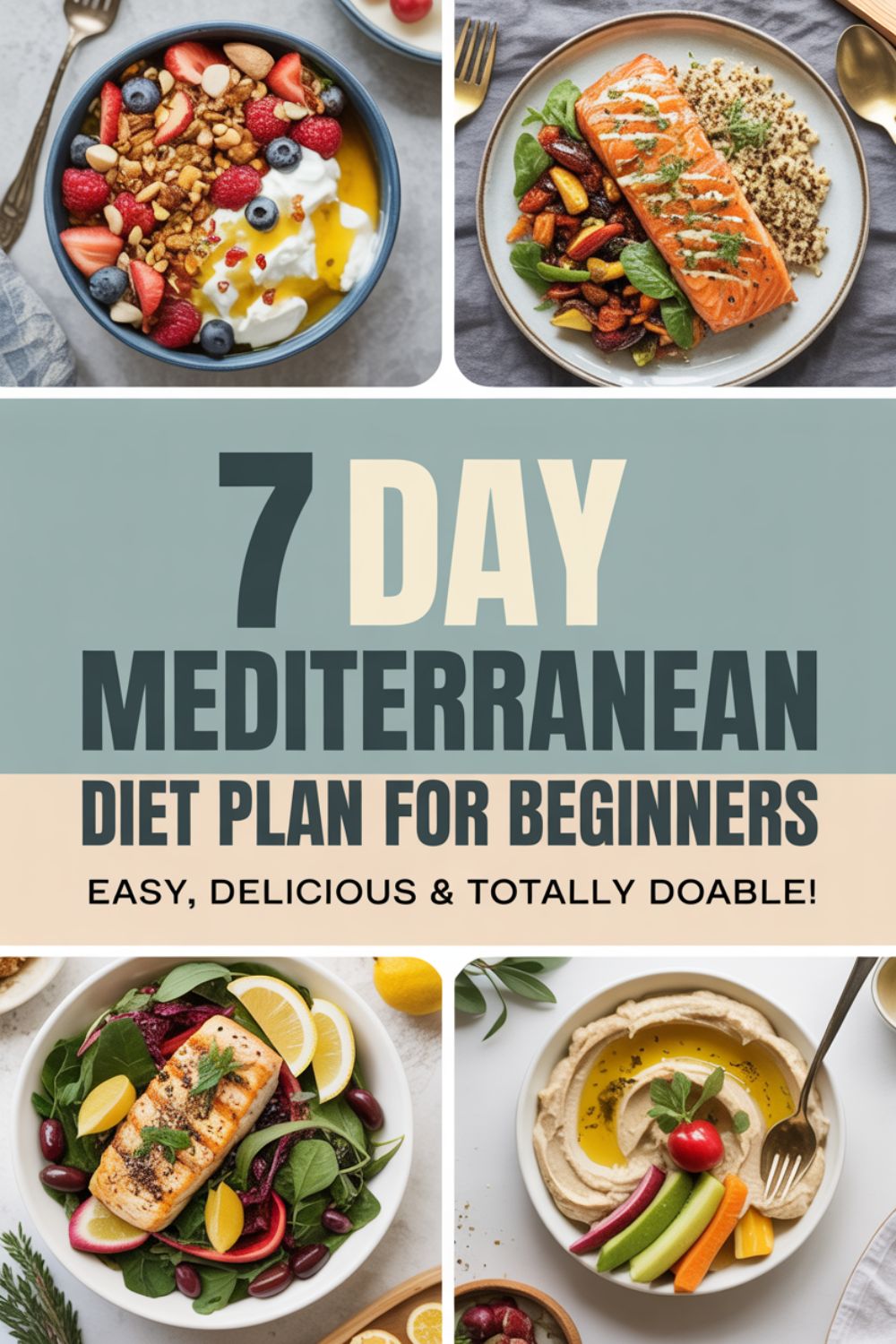
This 7-day plan is designed for people who want results without the misery. You’ll eat plenty, feel satisfied, and actually look forward to meals. Sound too good to be true? Stick with me here.
Why the Mediterranean Diet Actually Works (Unlike That Juice Cleanse You Tried)
Here’s the thing about the Mediterranean diet that most people miss—it’s not actually a “diet” in the traditional sense. Nobody in Greece is weighing their lentils or stressing about macros. They’re eating vegetables because they’re fresh and delicious. They’re using olive oil because it makes everything taste better. They’re having wine with dinner because, well, life’s too short.
Studies from Harvard’s School of Public Health show that people who follow Mediterranean eating patterns have a 25% reduced risk of cardiovascular disease. That’s not some marginal improvement—that’s a massive health shift from just eating differently.
The diet centers around whole grains, fresh vegetables, fruits, legumes, nuts, fish, and olive oil. You’re not eliminating entire food groups or eating like a rabbit. Research from Mayo Clinic confirms that this approach reduces inflammation, improves cholesterol levels, and helps maintain a healthy weight without the constant hunger that comes with restrictive dieting.
What makes this sustainable is simple: the food doesn’t suck. You’re not choking down bland chicken breast and steamed broccoli. You’re eating vibrant salads, hearty soups, grilled fish with herbs, and crusty bread dipped in olive oil. Your taste buds stay happy, which means you’ll actually stick with it.
What You’ll Actually Eat This Week
Let me walk you through what seven days of Mediterranean eating looks like in real life. No fancy ingredients you can’t pronounce. No equipment you need to take out a second mortgage to afford. Just straightforward, delicious meals that happen to make your body work better.
Day 1: Easing Into It
Breakfast: Start with a Greek yogurt bowl topped with fresh berries and a drizzle of honey. I’m serious about the honey part—don’t skip it. It’s what makes you forget you’re eating “healthy.” Toss in some walnuts for crunch and you’ve got a breakfast that’ll keep you full until lunch without that 10 AM crash.
Lunch: A simple lentil soup with crusty whole grain bread. Lentils are basically nature’s protein bombs, and when you cook them with garlic, tomatoes, and good olive oil, they transform into something actually crave-worthy.
Dinner: Grilled salmon with tomato-caper relish and a side of roasted vegetables. Salmon is rich in omega-3 fatty acids, which your brain loves more than your morning coffee. The capers add a briny kick that makes the whole dish sing.
Speaking of salmon, if you’re going to invest in one kitchen tool this year, make it a good fish spatula#. Fish is delicate, and trying to flip it with a regular spatula usually ends in disaster. Trust me on this one.
Day 2: Building Momentum
Breakfast: Avocado toast with sliced tomatoes and a generous drizzle of olive oil. Yes, avocado toast. No, I’m not being ironic. It’s genuinely good, filling, and gives you healthy fats to start your day right.
Lunch: Try the tuna and white bean salad. This is one of those meals that tastes better than it has any right to. White beans give you fiber and protein, tuna adds omega-3s, and the lemon-herb dressing pulls it all together.
Dinner: Whole wheat spaghetti with cherry tomatoes and fresh basil. Carbs aren’t the enemy—refined, processed carbs are. Whole wheat pasta gives you energy without the blood sugar spike and crash.
“I tried Sarah’s Mediterranean plan and honestly didn’t expect much. Three weeks in, I’ve lost 8 pounds without feeling like I’m starving myself. The lentil soup has become my Sunday meal prep staple—I make a giant pot and eat it all week.” — Mike, 34
Day 3: Finding Your Rhythm
Breakfast: Oatmeal with dried figs, walnuts, and cinnamon. Oats are seriously underrated for keeping you full. The figs add natural sweetness, and walnuts give you those brain-boosting omega-3s.
Lunch: Grilled vegetable platter with hummus. Load up on whatever vegetables look good at the market. Zucchini, bell peppers, eggplant—grill them all. Dip them in creamy hummus and try not to eat the entire plate in one sitting.
Dinner: Lemon-herb chicken with roasted potatoes. Chicken thighs work better than breasts here—they stay juicy and flavorful. The lemon and herbs make it taste like something from a fancy restaurant.
For breakfast ideas that go beyond the basics, check out these 30 Mediterranean breakfast recipes for busy mornings or dive into 25 high-protein breakfast options that’ll keep you energized all morning.
Day 4: Mixing It Up
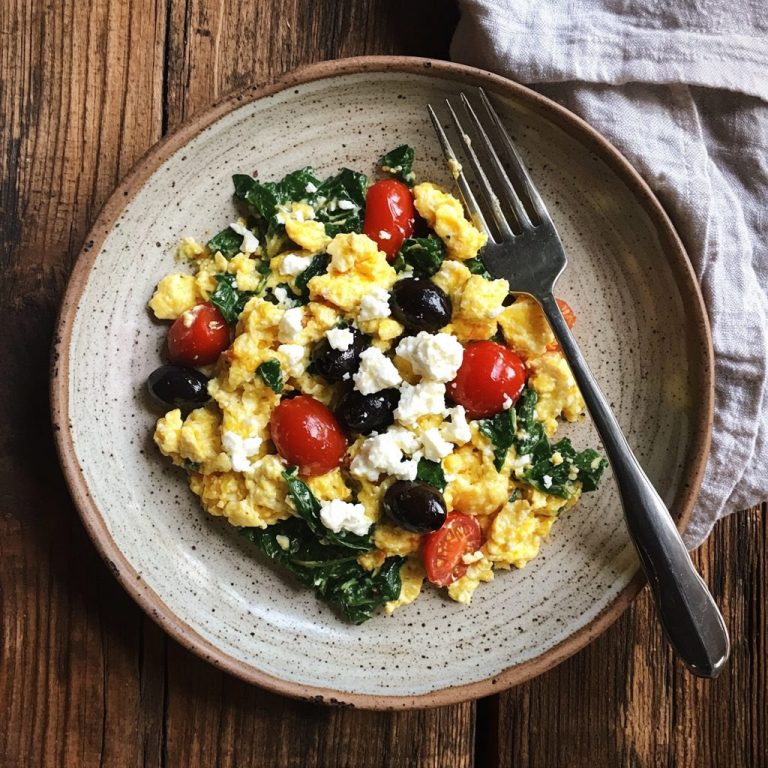
Breakfast: Savory Mediterranean scramble with spinach, tomatoes, and feta. Eggs are cheap, versatile, and packed with protein. The feta adds a salty richness that makes regular scrambled eggs taste like cardboard by comparison.
Lunch: Cucumber-hummus sandwich on whole grain bread. This sounds weird until you try it. The crunch of fresh cucumber against creamy hummus is genuinely satisfying, and you won’t miss the deli meat.
Dinner: Shrimp sautéed in garlic and olive oil over couscous. Shrimp cooks in minutes, which makes this perfect for weeknights when you’re too tired to think. The garlic-olive oil combo is basically Mediterranean magic.
Day 5: Staying Strong
Breakfast: Mediterranean smoothie bowl topped with nuts and seeds. Smoothie bowls get a bad rap for being Instagram fodder, but when you load them with Greek yogurt, berries, and healthy fats, they’re actually filling.
Lunch: Mediterranean grain bowl with quinoa, chickpeas, cucumber, tomatoes, and tahini dressing. Grain bowls are the ultimate customizable lunch. Swap ingredients based on what you have, and it still works.
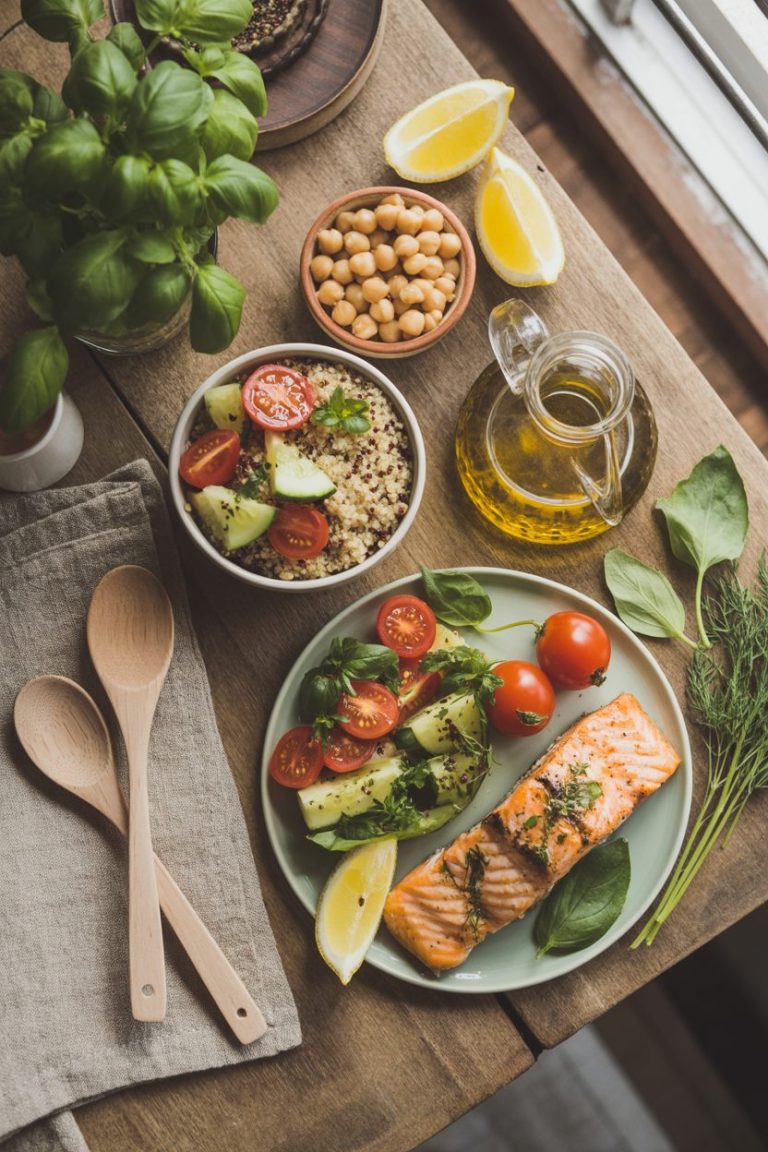
Dinner: Baked salmon with herbed quinoa and green beans. Quinoa is one of the few plant foods that’s a complete protein, which makes it perfect for days when you need energy that lasts.
If you’re looking for more grain-based ideas, you’ll love these Mediterranean salads that actually fill you up or explore our complete 14-day Mediterranean meal plan.
Day 6: Almost There
Breakfast: Greek yogurt parfait with layers of granola and fresh fruit. Layer it in a mason jar# for an Instagram-worthy breakfast that you can grab on your way out the door.
Lunch: Greek salad (but like, actually good). Skip the sad iceberg lettuce. Use crisp romaine, ripe tomatoes, Kalamata olives, cucumber, red onion, and proper feta cheese. Dress it simply with olive oil, lemon juice, and oregano.
Dinner: Stuffed bell peppers with quinoa and vegetables. These look fancy but are stupid easy to make. Hollow out some peppers, fill them with your quinoa mixture, bake, and pretend you’ve been cooking like this your whole life.
Day 7: Finishing Strong
Breakfast: Shakshuka—eggs poached in spicy tomato sauce. This North African dish is basically eggs swimming in a rich, slightly spicy tomato sauce. Scoop it up with crusty bread and try not to lick the pan.
Lunch: Mediterranean chickpea wraps with tahini sauce. Chickpeas are ridiculously versatile and cheap. Mash them up with some lemon, stuff them in a wrap with vegetables, and you’ve got a portable lunch that doesn’t taste like sadness.
Dinner: Lemon-oregano grilled chicken with a simple side salad. Sometimes simple is best. Good chicken, bright lemon, fragrant oregano, and fresh greens. This is the kind of meal that makes you realize healthy eating doesn’t have to be complicated.
“Week one was rough—I’m not gonna lie. But by week three? I stopped craving the junk food I used to demolish every night. My energy levels are way more stable, and I’ve dropped 12 pounds without even really trying. The shakshuka recipe is now a weekend staple in our house.” — Jennifer, 41
The Science Behind Why This Works
I’m not going to bore you with every single study, but understanding why this diet works helps you stick with it when temptation strikes. According to Johns Hopkins Medicine, the Mediterranean diet reduces your risk of early heart disease and can lower your risk of early death by up to 80 percent when combined with other healthy habits.
The magic happens through several mechanisms. First, you’re getting healthy monounsaturated fats from olive oil and nuts instead of saturated fats from processed foods. These fats actually help reduce inflammation in your body, which is linked to basically every chronic disease you want to avoid.
Second, the fiber from all those vegetables, legumes, and whole grains keeps your blood sugar stable. No more energy crashes that send you running to the vending machine at 3 PM. Your gut bacteria also love fiber, and when they’re happy, they produce metabolites that support your overall metabolic health.
Third, the omega-3 fatty acids from fish (especially salmon, sardines, and mackerel) fight inflammation and support brain function. Research published in the National Institutes of Health shows these fatty acids play a key role in the diet’s protective effects against cardiovascular disease and cognitive decline.
For those interested in high-protein variations, explore these high-protein Mediterranean meals under 400 calories or check out this 7-day high-protein Mediterranean plan.
Common Mistakes People Make (And How to Avoid Them)
Look, I’ve screwed this up in every way possible, so learn from my mistakes. The biggest one? Thinking you can just add olive oil to your current garbage diet and call it Mediterranean. That’s not how this works. You can’t dump olive oil on processed foods and expect magic to happen.
Another mistake is going overboard with portions. Yes, olive oil is healthy. No, you shouldn’t be drinking it from the bottle. A tablespoon or two per meal is plenty. I learned this the hard way when I couldn’t figure out why I wasn’t losing weight despite “eating healthy.” Turns out, drowning everything in olive oil adds up fast.
People also tend to skip the variety. Eating the same three meals on repeat gets old fast, no matter how good they are. The Mediterranean diet works because there’s endless variety. Different vegetables, different proteins, different grains. Mix it up or you’ll get bored and quit.
Finally, don’t stress about perfection. Had pizza on Friday night? Cool. Get back to it Saturday morning. This isn’t an all-or-nothing situation. The goal is progress, not perfection.
Meal Prep Tips That’ll Save Your Sanity
Real talk: meal prep is the difference between success and failure here. You’re busy. I’m busy. We’re all busy. If you wait until you’re starving to figure out what to eat, you’ll order takeout every time.
Sunday afternoon is your friend. Spend an hour or two prepping ingredients. Cook a big batch of quinoa or brown rice. Roast a bunch of vegetables. Make a pot of lentil soup. Portion everything into containers, and suddenly weeknight dinners take 15 minutes instead of an hour.
I use glass meal prep containers# because they don’t hold onto smells or stains like plastic does. Plus, you can see what’s inside without playing fridge roulette.
Breakfast can be prepped too. Those overnight oats everyone raves about? They’re not just hype. Make five jars on Sunday, grab one each morning, and you’ve eliminated the “what’s for breakfast” panic. If you need inspiration, check out these 25 overnight oats recipes for weight loss.
Salad dressings are another game-changer. Make a big batch of lemon-olive oil vinaigrette and keep it in the fridge. Suddenly salads take 30 seconds to throw together instead of becoming a whole production.
For more structured meal prep guidance, take a look at these quick Mediterranean meal prep ideas or dive into 14 practical meal prep strategies.
What About Snacks? (Because We’re All Human)
You’re going to get hungry between meals. That’s normal. The difference is what you reach for when hunger strikes. Ditch the processed granola bars and chips. Mediterranean snacks are simple and actually satisfying.
A handful of almonds or walnuts. Some baby carrots with hummus. Fresh fruit. Greek yogurt with a drizzle of honey. Cherry tomatoes with a little mozzarella. These aren’t revolutionary, but they work because they combine protein, healthy fats, and fiber to actually keep you full.
I keep these small snack containers# in my bag with pre-portioned nuts. It’s way cheaper than buying those tiny overpriced bags at the store, and it stops me from eating an entire container of cashews in one sitting (which I’ve definitely never done, obviously).
For more snack ideas that won’t derail your progress, explore these Mediterranean snacks beyond hummus or check out high-protein options under 200 calories.
Making It Work in Real Life
Here’s the reality check: this diet is only sustainable if it fits into your actual life. You’re not going to shop at specialty stores for obscure ingredients or spend three hours making dinner every night. Neither am I. That’s okay.
Most of these meals come together in 30 minutes or less. You can find everything at a regular grocery store. No special equipment needed beyond basic pots, pans, and a halfway decent knife. Speaking of knives, if yours can’t cut a tomato without turning it into mush, invest in a good chef’s knife#. It’s genuinely life-changing.
Eating out doesn’t have to derail everything either. Mediterranean restaurants are everywhere. Greek, Lebanese, Turkish—they all work. Order grilled fish or chicken, ask for vegetables instead of fries, skip the bread basket if you can, and you’re golden. At other restaurants, look for similar patterns: grilled proteins, lots of vegetables, olive oil-based preparations.
What about social situations? Family dinners? Work lunches? Nobody’s expecting you to be weird about food. Eat what’s available and make the best choices you can. If grandma made her famous lasagna, have some. Enjoy it. Get back to your regular eating the next day. Life’s too short to stress about every single meal.
Budget-Friendly Mediterranean Eating
Let’s address the elephant in the room: people think eating healthy is expensive. And yeah, if you’re buying pre-cut vegetables and organic everything, it adds up fast. But the Mediterranean diet is actually pretty affordable if you’re smart about it.
Lentils, beans, and chickpeas are dirt cheap and crazy nutritious. A bag of dried lentils costs maybe two bucks and makes enough food for a week. Canned beans work too—rinse them well to get rid of excess sodium, and you’re good to go.
Buy vegetables that are in season. They’re fresher, taste better, and cost less. Frozen vegetables are fine too, especially for things like spinach or mixed vegetables that you’ll cook anyway. The nutrition is virtually identical.
Shop the sales for fish. When salmon’s on sale, buy extra and freeze it. Same with chicken. A whole chicken is cheaper than buying individual pieces, and you can use the bones to make stock (which sounds fancy but literally just means throwing them in a pot with water and vegetables).
Olive oil seems expensive upfront, but you only need a little bit per meal, so one bottle lasts forever. Skip the $30 boutique bottles unless you’re using it raw in salads. For cooking, mid-range olive oil works perfectly fine.
Need budget-conscious recipe ideas? Check out these budget-friendly Mediterranean meals that won’t break the bank.
Frequently Asked Questions
Can I lose weight on the Mediterranean diet?
Absolutely. Multiple studies show people following this eating pattern lose weight sustainably without the constant hunger of restrictive diets. You’re eating nutrient-dense foods that keep you full, which naturally leads to consuming fewer calories without feeling deprived. Most people lose 1-2 pounds per week, which is the sweet spot for sustainable weight loss.
Is the Mediterranean diet expensive to follow?
Not necessarily. While fresh fish and olive oil can seem pricey, the diet relies heavily on affordable staples like beans, lentils, seasonal vegetables, and whole grains. Buy in-season produce, use frozen vegetables when appropriate, and stock up on sales. You’ll likely save money compared to buying processed foods and takeout.
Do I have to give up meat entirely?
Nope. The Mediterranean diet includes meat, just not as the star of every meal. Think of it as a supporting player rather than the main event. Red meat shows up occasionally, poultry more frequently, and fish gets priority. You’re not becoming vegetarian unless you want to—you’re just shifting the balance toward plant-based foods with meat playing a smaller role.
How long before I see results?
Most people notice increased energy within the first week. Better sleep, improved digestion, and clearer thinking often show up before the scale moves. Weight loss typically becomes visible after 2-3 weeks of consistent eating. Health markers like blood pressure and cholesterol improve within a few months, though you’ll need blood work to track those changes.
Can I drink coffee on the Mediterranean diet?
Yes, and you should if you enjoy it. Coffee is widely consumed in Mediterranean countries. Just skip the sugar-loaded fancy drinks and keep it simple—black, or with a splash of milk. The antioxidants in coffee actually complement the diet’s anti-inflammatory benefits nicely.
What if I don’t like fish?
You’ve got options. Focus on other protein sources like beans, lentils, chickpeas, eggs, and poultry. Include plenty of nuts and seeds for healthy fats. If you can tolerate shellfish, that works too. The key is variety—don’t rely on chicken for every single meal or you’ll get sick of it fast.
Your First Week: What to Expect
Let’s be honest about what happens when you make this switch. The first few days might feel weird. Your body is used to processed foods, sugar spikes, and constant snacking. Breaking those patterns takes adjustment.
Days 1-3 are usually the toughest. You might miss your usual snacks. Your brain will try to convince you that you need that afternoon candy bar. Push through. Drink water, have some nuts, distract yourself for 10 minutes. The craving will pass.
By days 4-5, things start clicking. Your energy levels stabilize. That 3 PM crash disappears. You sleep better. Your digestion improves (sometimes dramatically—don’t say I didn’t warn you about all that fiber).
Week two is when it becomes habit. You stop thinking about what you’re “giving up” and start appreciating how good you feel. Your taste buds adjust, and suddenly that overly sweet dessert you used to love tastes cloying.
One month in, you’re not “on a diet” anymore. This is just how you eat. And the best part? You don’t want to go back.
Final Thoughts
Here’s what it comes down to. The Mediterranean diet works because it’s not asking you to be perfect. It’s not eliminating entire food groups or requiring you to eat like a monk. It’s just shifting your eating toward real food that humans have thrived on for thousands of years.
You’ll eat delicious meals. You’ll feel satisfied. Your health will improve. And you won’t spend your life obsessing over every calorie or feeling guilty every time you eat.
Start with this 7-day plan. See how you feel. Adjust based on your preferences. Maybe you hate fish—swap in chicken or legumes. Can’t stand olives? Skip them and use more tomatoes. This is a framework, not a prison sentence.
The goal isn’t perfection. It’s progress. It’s eating a little better today than you did yesterday. It’s choosing the grilled fish over the fried chicken most of the time, while still having the fried chicken when you really want it.
Give yourself permission to enjoy food again. Your body will thank you for it.