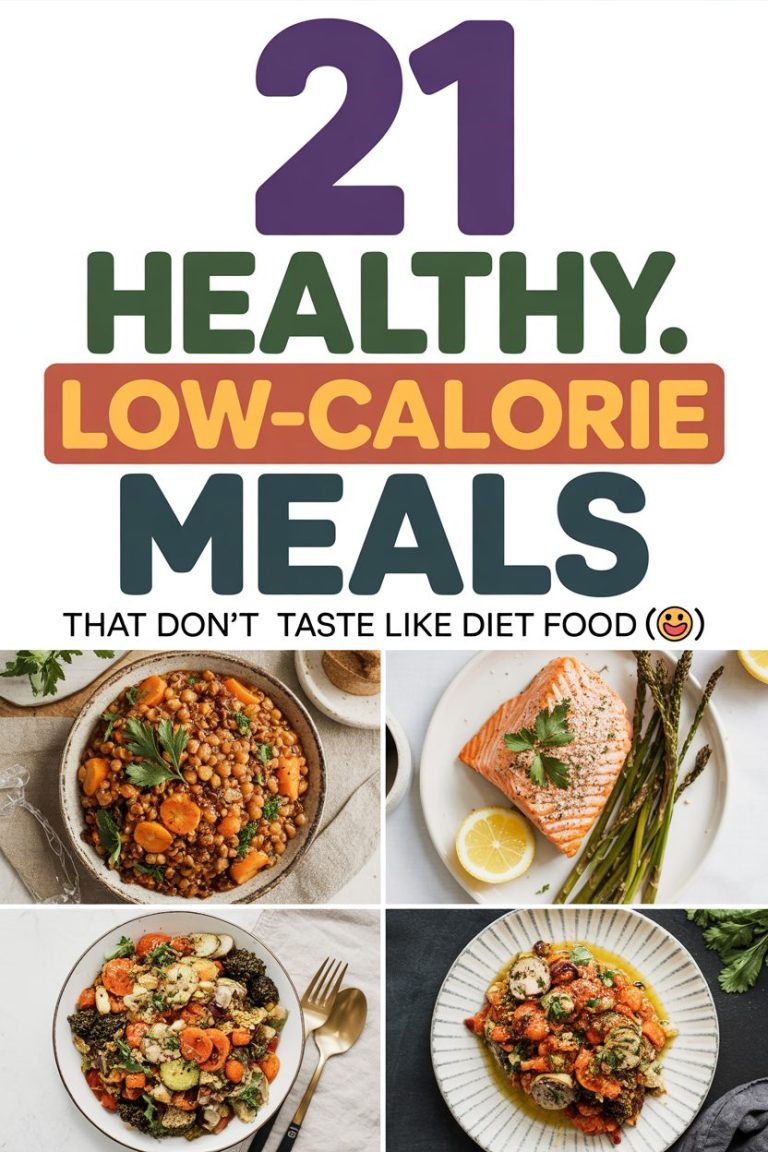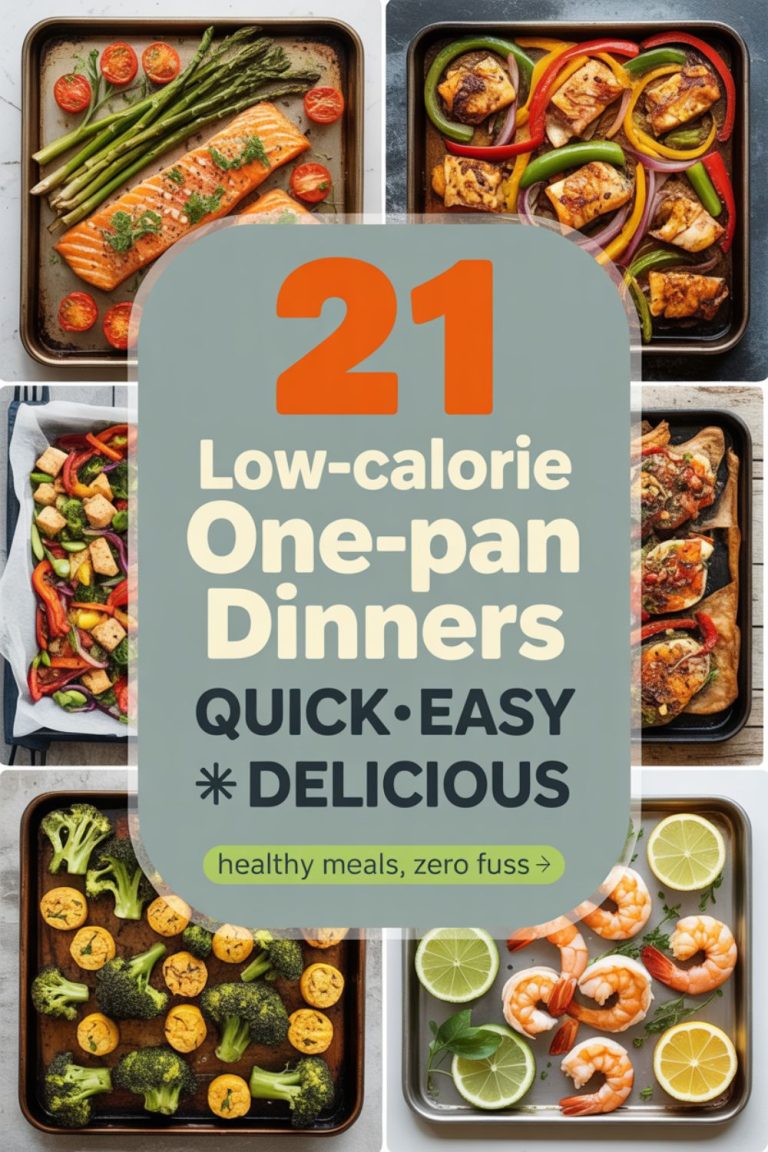
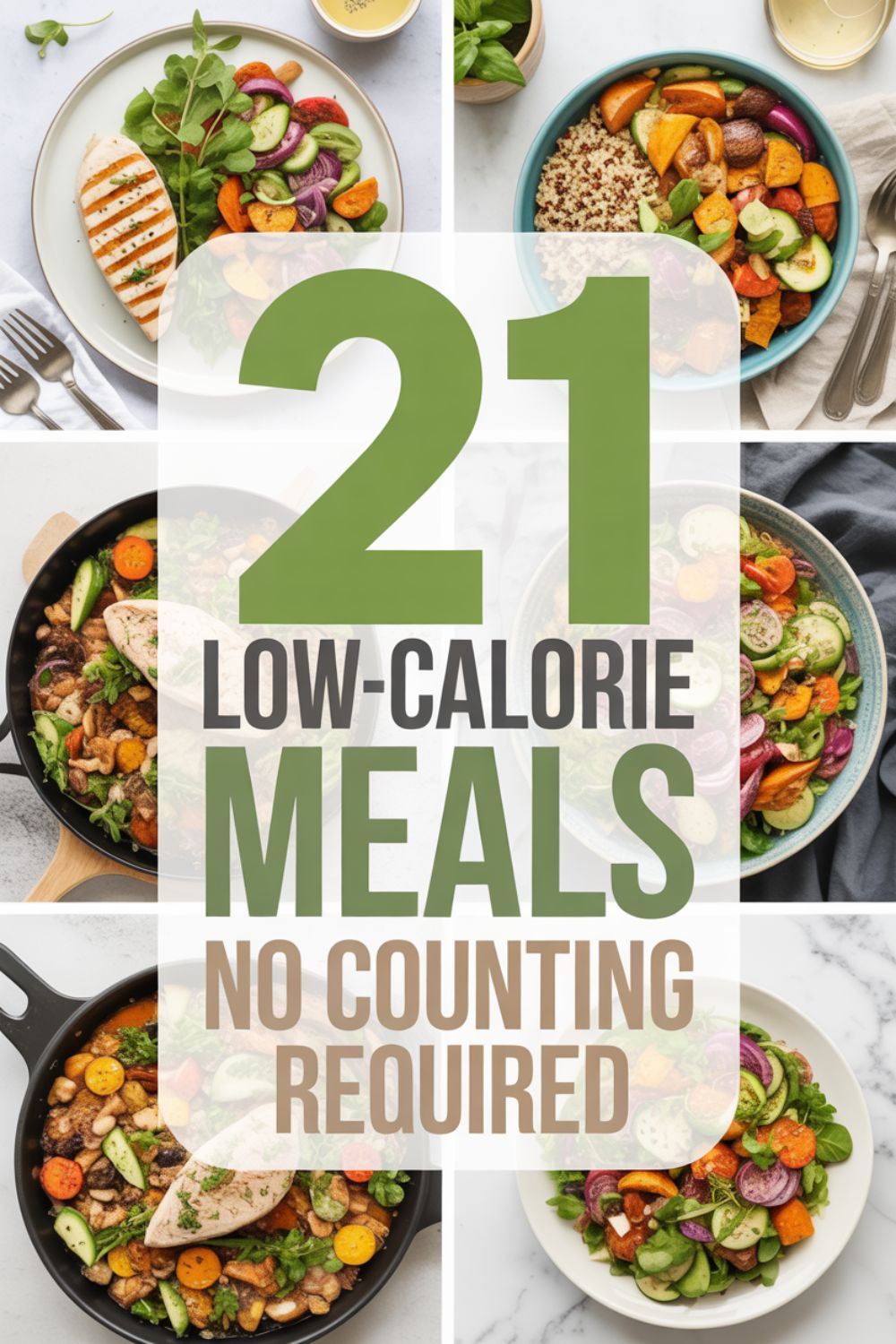
21 Low-Calorie Meals Without Counting Calories
Look, I get it. You’re tired of pulling out your phone every single time you eat a grape, punching numbers into some calorie-tracking app like you’re doing advanced calculus. What if I told you there’s a better way to eat light without turning every meal into a math problem?
These 21 low-calorie meals prove you can eat well, feel satisfied, and keep things reasonable without obsessing over every single calorie. We’re talking real food that actually tastes good and keeps you full.
Why Low-Calorie Eating Doesn’t Have to Suck
Here’s the thing about low-calorie meals that nobody tells you: they don’t have to be sad desk salads or plain chicken breast that tastes like regret. Nutrient-dense foods provide essential vitamins and minerals without excessive calories, which means you can actually enjoy what you’re eating while staying on track.
The secret? Volume eating. Think big plates piled high with vegetables, lean proteins that keep you satisfied, and smart swaps that don’t make you feel like you’re missing out. When you focus on foods that are naturally lower in calories but high in fiber and protein, you’ll feel full without that heavy, sluggish feeling.
IMO, the whole calorie-counting obsession misses the point. Your body isn’t a calculator, and food isn’t just numbers. It’s fuel, enjoyment, and sometimes just a damn good meal at the end of a long day.
Fill half your plate with vegetables first, then add your protein and grains. You’ll naturally eat fewer calories without feeling deprived.
The Smart Swap Strategy
Want to know the easiest way to cut calories without actually “dieting”? Make simple swaps that you barely notice. I’m talking about using spiralized zucchini instead of half your pasta, or reaching for Greek yogurt instead of sour cream.
These aren’t groundbreaking revelations, but they work. Swap regular rice for cauliflower rice a few times a week. Use lettuce wraps instead of tortillas when you’re feeling adventurous. Replace half the ground beef in your tacos with black beans. Boom—fewer calories, same satisfaction.
One of my favorite tricks? Using a kitchen scale not to obsess over portions, but just to get a feel for what reasonable serving sizes actually look like. Once you eyeball it a few times, you don’t need the scale anymore.
21 Low-Calorie Meals That Actually Deliver
Alright, let’s get to the good stuff. These meals are organized by meal type, and every single one clocks in well under 500 calories while keeping you satisfied. No weird ingredients, no complicated techniques—just straightforward food that works.
Breakfast Champions
1. Greek Yogurt Power Bowl
Start with plain Greek yogurt (way more protein than regular yogurt), top it with fresh berries, a drizzle of honey, and maybe some sliced almonds for crunch. This breakfast keeps you full for hours without weighing you down. Get Full Recipe.
2. Veggie-Loaded Scramble
Two eggs scrambled with spinach, tomatoes, and bell peppers. Add some feta if you’re feeling fancy. The vegetables bulk up the meal without adding many calories, and the protein from the eggs keeps hunger at bay. Get Full Recipe.
3. Overnight Oats
Mix oats with almond milk, chia seeds, and your choice of fruit the night before. Wake up to breakfast that’s already done. I prep these in mason jars on Sunday and have breakfast sorted for the week. If you’re looking for more variety, check out these overnight oats for weight loss.
4. Avocado Toast (The Right Way)
Use whole grain bread, mash half an avocado, add cherry tomatoes and a sprinkle of hemp seeds. The healthy fats keep you satisfied, and it’s way more interesting than plain toast. Get Full Recipe.
For more morning inspiration, you might also love these high-protein breakfasts or this Mediterranean smoothie bowl that packs in nutrients without the calorie overload.
Lunch Ideas That Won’t Put You in a Food Coma
5. Mediterranean Chickpea Bowl
Chickpeas, cucumber, tomatoes, red onion, and a lemon-herb dressing. It’s filling, flavorful, and you can make a huge batch for the week. Get Full Recipe.
6. Tuna and White Bean Salad
Canned tuna (the good stuff in olive oil, not water—you’re not a monster), white beans, arugula, and lemon juice. High protein, low effort, maximum satisfaction. Get Full Recipe.
Keep canned beans and tuna in your pantry. You’re never more than 10 minutes away from a decent lunch.
7. Lentil Soup
Lentils are underrated. They’re packed with protein and fiber, dirt cheap, and make an incredibly satisfying soup. Make it in a slow cooker and forget about it until dinner. Get Full Recipe.
8. Falafel Wrap with Tzatziki
Homemade falafel isn’t as complicated as it sounds, especially if you use a food processor. Wrap it in whole wheat pita with tons of vegetables and a dollop of tzatziki. Get Full Recipe.
9. Cucumber Hummus Sandwich
This sounds too simple to be good, but trust me. Whole grain bread, thick layer of hummus, cucumber slices, and some sprouts. It’s refreshing, crunchy, and surprisingly filling. Get Full Recipe.
Speaking of Mediterranean favorites, you might also check out this Greek salad that’s actually good or these Mediterranean chickpea wraps for more lunchbox inspiration.
Dinner Winners
10. Grilled Lemon-Herb Chicken with Quinoa
Marinate chicken in lemon juice, olive oil, and herbs. Grill it (or use a grill pan if you’re an apartment dweller like me), serve over quinoa with roasted vegetables. Simple, satisfying, and under 400 calories. Get Full Recipe.
11. Baked Salmon with Herbed Quinoa
Salmon is one of those magical proteins that feels fancy but is stupid easy to cook. Season it, stick it in the oven, serve with quinoa and green beans. Get Full Recipe.
12. Stuffed Bell Peppers
Hollow out bell peppers, stuff them with a mixture of quinoa, veggies, and a little cheese. Bake until tender. These are meal-prep gold—make a batch and eat them all week. Get Full Recipe.
13. Whole Wheat Spaghetti with Cherry Tomatoes and Basil
Not all pasta is off-limits. Use whole wheat spaghetti, sauté cherry tomatoes until they burst, add fresh basil and a tiny bit of olive oil. It’s light, flavorful, and won’t leave you in a carb coma. Get Full Recipe.
14. Shrimp Sautéed in Garlic and Olive Oil with Couscous
Shrimp cooks in minutes and is naturally low in calories. Sauté with garlic in a cast iron skillet, serve over couscous with a side of roasted veggies. Get Full Recipe.
15. Grilled Veggie Platter with Hummus
Sometimes the best dinner is the simplest. Grill zucchini, eggplant, bell peppers, and asparagus. Serve with hummus and maybe some whole grain pita. Get Full Recipe.
For more dinner inspiration that won’t derail your goals, explore these Mediterranean dinner ideas or check out these high-protein Mediterranean meals under 400 calories.
Soups and Stews
16. Lentil and Spinach Soup
This is comfort food that happens to be good for you. Lentils, spinach, tomatoes, and warming spices. Make a huge pot and freeze individual portions in freezer-safe containers. Get Full Recipe.
17. Three Bean Chili
Loaded with fiber and protein, this chili is hearty enough that you won’t miss the meat. Top with a small dollop of Greek yogurt instead of sour cream. Get Full Recipe.
18. Carrot Ginger Soup
Roast carrots, blend with ginger and vegetable broth, top with chickpea croutons for crunch. It’s vibrant, warming, and shockingly low in calories. Get Full Recipe.
Batch-cook soups on Sunday. Portion them into containers and you’ve got lunches for days. Way cheaper than eating out and you know exactly what’s in them.
Light But Satisfying
19. Mediterranean Grain Bowl
Farro or quinoa as the base, topped with roasted vegetables, chickpeas, feta, and a lemon-tahini dressing. This is the kind of bowl that makes you feel like you’re doing something right. Get Full Recipe.
20. Shakshuka
Eggs poached in spicy tomato sauce. It’s traditionally a breakfast dish, but honestly, it works any time of day. Serve with a piece of whole grain bread for dipping. Get Full Recipe.
21. Spaghetti Squash with Tomato-Basil Sauce
Roast a spaghetti squash (use a sharp knife to cut it—those things are tough), scrape out the strands, top with marinara and fresh basil. It’s surprisingly pasta-like and way lighter. Get Full Recipe.
The Volume Eating Game-Changer
Ever wonder why you can eat an entire bag of chips and still be hungry, but a huge salad with chicken keeps you full for hours? It’s all about volume and nutrient density. Foods with high water and fiber content help you feel full on fewer calories.
This is where vegetables become your best friend. They take up space in your stomach, they’re loaded with fiber, and they barely make a dent in your calorie budget. Load up on leafy greens, cruciferous vegetables, and watery vegetables like cucumbers and zucchini.
The trick is making them taste good. Roast them in the oven with a bit of olive oil and salt. Sauté them with garlic. Grill them until they’re slightly charred. Nobody wants to eat sad steamed broccoli, but roasted broccoli with a squeeze of lemon? That’s a different story.
Protein is the other piece of the puzzle. It keeps you satisfied longer than carbs or fats. Chicken breast, fish, eggs, Greek yogurt, cottage cheese, legumes—these should be staples in your rotation. When you combine high-volume vegetables with solid protein sources, you’ve got meals that fill you up without loading you down.
Meal Prep Like You Mean It
Look, meal prepping sounds tedious, but it’s the difference between eating well all week and ordering pizza on Wednesday because you’re too tired to figure out dinner. You don’t have to prep every single meal, but having a few basics ready makes everything easier.
Cook a big batch of quinoa or brown rice. Roast a sheet pan of vegetables. Grill several chicken breasts. Portion them into glass meal prep containers. Now you can mix and match throughout the week without eating the exact same thing every day.
The beauty of these low-calorie meals is that most of them keep well. Soups and stews actually taste better after a day or two. Grain bowls hold up great in the fridge. Even salads work if you keep the dressing separate.
FYI, investing in decent storage containers changed my meal prep game. No more soggy lettuce or leaked dressing at the bottom of my bag. Get ones that actually seal properly and stack nicely in your fridge.
If you’re new to this whole meal prep thing, these high-protein meal prep ideas or this 7-day Mediterranean meal prep plan will get you started on the right foot.
The Snack Situation
Let’s be real—snacks are where most people’s “low-calorie eating” plans fall apart. You’re doing great with your meals, then 3 PM hits and suddenly you’re elbow-deep in a bag of pretzels wondering how you got here.
The solution? Have good snacks ready. Keep cut vegetables and hummus in the fridge. Portion out some nuts (yes, they’re calorie-dense, but a small handful keeps you satisfied). Greek yogurt with berries. Hard-boiled eggs. Apple slices with a bit of almond butter spread thin with a small offset spatula.
The key is having these prepped and ready before you’re starving. Because when you’re truly hungry, you’re not going to wash and cut vegetables. You’re going to eat whatever’s easiest, which is usually not what you want to be eating.
For more ideas, check out these Mediterranean snacks that keep you full or these high-protein snacks under 200 calories.
Making Restaurant Meals Work
You’re not going to cook every single meal for the rest of your life. That’s not realistic, and honestly, it sounds miserable. But you can make smarter choices when eating out.
Start with a salad or broth-based soup. Ask for dressings and sauces on the side. Choose grilled over fried. Split an entrée or immediately box up half to take home. These aren’t revolutionary tips, but they work.
The thing is, restaurant portions are massive. What they serve you is often 2-3 actual servings. You don’t have to clean your plate just because it’s in front of you. Eat until you’re satisfied, not until you’re uncomfortably full.
And look, if you want the burger and fries sometimes, get the burger and fries. This isn’t about perfection. It’s about making choices that mostly support your goals while still enjoying your life.
The Psychology of It All
Here’s something nobody talks about enough: the mental side of eating fewer calories. It’s not just about the food—it’s about changing your relationship with food.
Stop thinking of foods as “good” or “bad.” A cookie isn’t morally superior or inferior to a carrot. They serve different purposes. One gives you quick energy and a moment of enjoyment. The other provides vitamins and fiber. Both have their place.
Learn to recognize actual hunger versus boredom, stress, or habit. Are you really hungry, or are you just procrastinating on that work project? Sometimes you need food. Sometimes you need to take a walk or call a friend or just sit with the discomfort for a minute.
Eat slowly. Put your fork down between bites. Give your body time to register that it’s getting food. It takes about 20 minutes for your brain to catch up with your stomach. If you inhale your meal in five minutes, you’ll still feel hungry even though you’ve eaten enough.
Frequently Asked Questions
How can I eat low-calorie meals without feeling hungry all the time?
Focus on high-volume, nutrient-dense foods like vegetables, lean proteins, and whole grains. These foods take up more space in your stomach and digest slowly, keeping you fuller longer. Also, make sure you’re drinking enough water throughout the day—sometimes thirst masquerades as hunger.
Do I really need to count calories to lose weight?
Not necessarily. While calorie counting can be a useful tool for some people, focusing on whole foods, proper portions, and listening to your hunger cues often works just as well. The key is being mindful about what you’re eating without obsessing over exact numbers.
What’s the difference between low-calorie and low-carb?
Low-calorie focuses on total energy intake regardless of where those calories come from, while low-carb specifically limits carbohydrate consumption. You can have low-calorie meals that include healthy carbs like quinoa or sweet potatoes. They’re not mutually exclusive, but they’re different approaches.
Can I still eat pasta and bread on a low-calorie diet?
Absolutely. The key is choosing whole grain options and watching your portions. A reasonable serving of whole wheat pasta with lots of vegetables and lean protein can fit perfectly into a low-calorie eating plan. It’s all about balance and not making pasta the entire meal.
How do I meal prep without getting bored of eating the same thing?
Prep components instead of complete meals. Cook a batch of protein, grains, and roasted vegetables, then mix and match them throughout the week with different sauces and seasonings. This gives you variety without the work of cooking from scratch every day.
The Bottom Line
Eating low-calorie meals doesn’t mean resigning yourself to boring, unsatisfying food. It means getting smarter about your choices, filling up on nutrient-dense ingredients, and actually enjoying what you eat.
These 21 meals prove you can eat well without turning into a human calculator. They’re practical, flavorful, and designed for real life—not some perfect Instagram fantasy where everyone has unlimited time and a professional kitchen.
Start with a few recipes that sound good to you. Get comfortable making them. Then add a few more. Before you know it, you’ll have a solid rotation of meals that keep you satisfied without the calorie overload.
And remember: this isn’t about perfection. It’s about progress. Some days you’ll nail it. Some days you’ll eat pizza. Both are fine. The goal is to make choices that mostly support your health while still leaving room to actually live your life.
Now get in the kitchen and make something good.