30-Day Low-Calorie Meal Prep Plan (Printable PDF)
If you’ve ever stood in front of the fridge, stared at a half-empty yogurt cup, and thought, “Well, I guess that’s dinner,”—then trust me, this 30-Day Low-Calorie Meal Prep Plan is about to change your life.
I built this plan because, like most people, I love food but hate fuss. The goal? Eat better, feel lighter, and spend way less time cooking. Oh, and it had to be realistic—no mystery powders or kale-only diets here. Just balanced, low-calorie meals that taste good, keep you full, and fit into a real schedule.
👉 Grab your free printable PDF version at the end of this post—it’s designed to make prepping ridiculously simple.

Why a 30-Day Low-Calorie Plan Actually Works
Here’s the thing—low-calorie doesn’t have to mean low flavor. The trick is balancing fiber, protein, and healthy fats, so your body stays satisfied without the energy crash two hours later.
Think of it this way: you’re not depriving yourself; you’re just trading chaos for structure. When every meal’s planned out (and prepped ahead), you’ll eat more intentionally—plus, your fridge suddenly looks like it belongs in a wellness magazine.
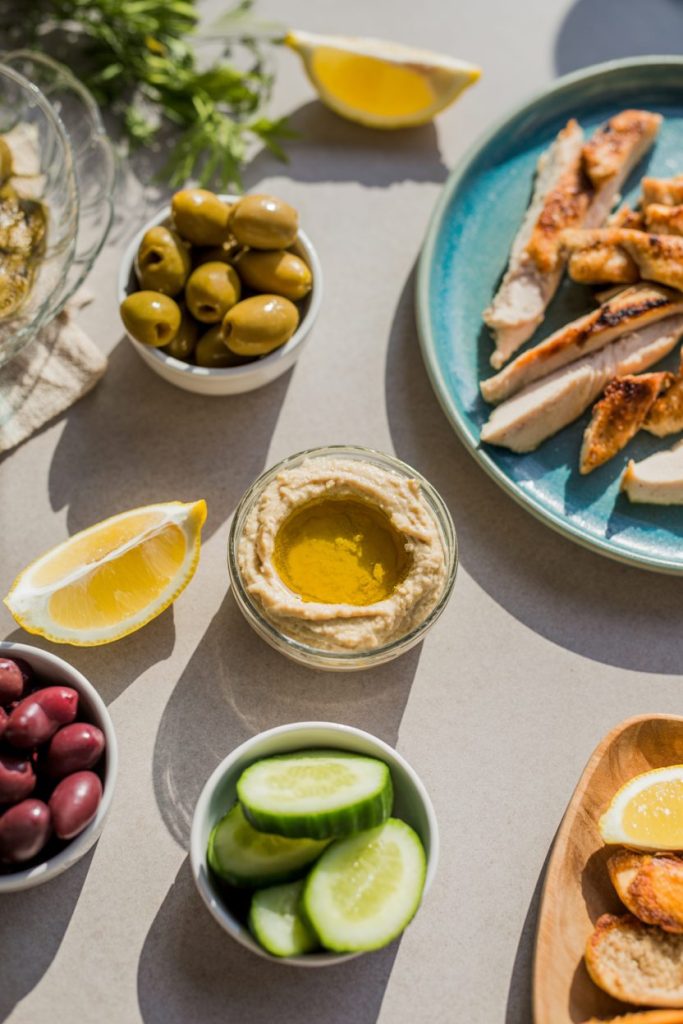
I’ve also leaned heavily on Mediterranean-inspired meals in this plan. They’re fresh, simple, and naturally low in calories without feeling restrictive.
Ever wondered why people in Greece aren’t calorie counting? Olive oil, veggies, and lean proteins do the heavy lifting.
How to Use This 30-Day Plan
This plan is broken into four weeks, each with its own focus:
- Week 1: Reset your habits
- Week 2: Find your rhythm
- Week 3: Balance & variety
- Week 4: Long-game consistency
You’ll see repeating core meals (because prepping 30 unique dishes is a one-way ticket to burnout), but I’ve mixed in flavor swaps and smart rotation tricks.
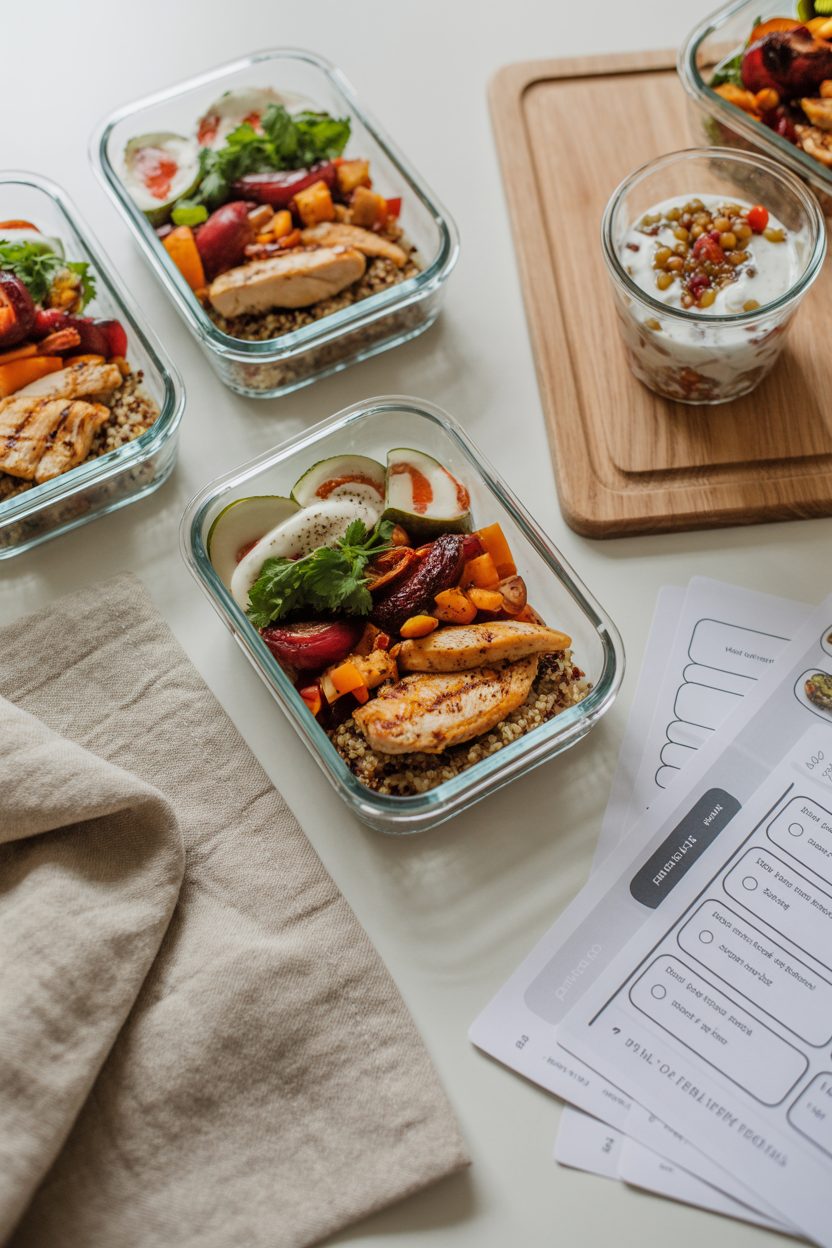
Pro tip: Use glass containers for your prepped meals—they keep food fresh longer and look way better stacked in the fridge. I love these leakproof glass meal prep containers—they survive dishwashers, freezers, and my clumsy Sunday-night energy.
WEEK 1: The Reset Week
This first week is all about rebooting your eating routine—fewer takeout runs, more real food. You’ll batch prep a few staples that’ll carry you through the week.
Prep Goals
- Roast a tray of mixed veggies (bell peppers, zucchini, broccoli).
- Cook one big batch of quinoa.
- Make a protein option: grilled chicken or lentils.
- Whip up two dressings (lemon-tahini and olive-herb).
Sample Meal Plan
Breakfasts:
Lunches:
Dinners:
- Lemon-Herb Chicken with Roasted Potatoes
- Grilled Veggie Platter with Hummus
Snacks:
Why it works: This week sets your tone—simple meals, moderate portions, and consistent energy.
And FYI, roasting all your veggies on one large sheet pan saves time and sanity. I swear by this heavy-duty sheet pan—it browns veggies evenly without sticking.
WEEK 2: Finding Your Rhythm
Now that your fridge looks organized (and your wallet isn’t crying from DoorDash fees), it’s time to make healthy eating feel second nature.
Prep Goals
- Cook a grain base: brown rice or farro.
- Batch-cook a lean protein: turkey meatballs or chickpeas.
- Pre-chop salad fixings and store in sealed containers.
Sample Meal Plan
Breakfasts:
Lunches:
Dinners:
Snacks:
Why it works:
Week 2 helps you find your food flow. By prepping just two proteins and a grain, you can mix and match lunches and dinners for endless combos—without repeating the same meal twice in a row.
Pro tip: Keep chopped cucumbers in airtight containers with a splash of lemon water—they’ll stay crisp all week.
WEEK 3: Balance & Variety
Okay, you’ve survived two weeks—this is where you start adding variety and flavor while keeping calories in check.
Prep Goals
- Grill 2 proteins: chicken and shrimp.
- Roast a batch of sweet potatoes.
- Make a simple sauce (try Greek yogurt + lemon + garlic).
Sample Meal Plan
Breakfasts:
Lunches:
Dinners:
Snacks:
Want a guilt-free dessert? Try these chocolate-dipped banana bites. Bananas bring natural sweetness, potassium, and fiber—something even Healthline swears by for maintaining energy and satiety.
Also, storing cooked proteins in sectioned glass containers keeps them fresher longer. I use this 3-compartment set—makes portioning idiot-proof.
WEEK 4: The Long Game
This final week is where healthy habits stick. By now, your grocery list probably runs on autopilot, and your Sunday prep feels more like a ritual than a chore.
Prep Goals
- Prep mixed greens, boiled eggs, and roasted veggies.
- Make a batch of energy bites.
- Choose two dinners to double up for leftovers.
Sample Meal Plan
Breakfasts:
Lunches:
Dinners:
Snacks:
Why it works:
Week 4 ties everything together—simple prep, diverse flavors, and effortless balance. By now, portion control becomes second nature.
Ever notice how low-calorie stops feeling like a “diet” when you’re genuinely full? That’s the point.
Smart Tips to Make Meal Prep Stick
- Reuse core ingredients. Cook one grain and one protein base each week—swap sauces to keep things interesting.
- Don’t skip flavor. Herbs, citrus, and spice blends keep meals exciting without adding calories.
- Invest in a mini food scale. Portion control is way easier when you actually know what 4 oz of chicken looks like.
- Stay flexible. Life happens—if you skip a meal prep session, just repeat a recipe you already love.
For quick reference, this digital kitchen scale is small, accurate, and actually kind of cute—it makes logging portions a lot less annoying.
Real-Life Example: My Week 3 “Lazy Sunday” Prep
I’m not going to lie—by week three, I was over chopping. So, I turned it into a two-hour “batch and chill” session.
Here’s how it went down:
- Roasted two trays of veggies.
- Cooked shrimp while listening to a podcast.
- Assembled Greek yogurt parfaits in jars for the week.
- Packed everything using these silicone reusable bags—less cleanup, more fridge space.
It wasn’t fancy, but it worked. Every weekday lunch was ready to go, and I didn’t touch a frying pan until Friday night.
Health Benefits Beyond Calories
This isn’t just about eating less—it’s about eating smarter. Following a structured low-calorie plan can help:
- Stabilize blood sugar levels
- Boost digestion and metabolism
- Reduce inflammation (thank you, olive oil and leafy greens)
- Support steady weight management
And according to Mayo Clinic, focusing on whole, nutrient-dense foods—rather than just cutting calories—creates sustainable, long-term results.
Plus, the Mediterranean twist in this plan naturally provides healthy fats, fiber, and lean protein.
Your 30-Day Low-Calorie Meal Prep Plan (Printable PDF)
To make life easier, I turned everything here—recipes, shopping lists, and prep notes—into a clean, printable PDF guide you can download and keep on your fridge. It’s organized week-by-week, so you can check off prep steps and track your progress.
Print it, scribble on it, spill olive oil on it—it’s built to be used, not just downloaded.
Final Thoughts: Keep It Simple, Keep It Consistent
If there’s one thing I’ve learned from years of meal prepping, it’s this: consistency beats perfection.
You don’t need to reinvent your menu every day—just find meals you enjoy and rotate them. The beauty of this 30-day low-calorie plan is that it fits into real life.
So whether you’re trying to lose weight, eat more mindfully, or simply stop ordering takeout at 10 PM—this plan’s your reset button.
Ready to start? Print your guide, grab your containers, and make your fridge your new favorite view.
Download your free printable PDF version of the 30-Day Low-Calorie Meal Prep Plan below and start prepping your way to more energy, better meals, and zero weekday chaos.