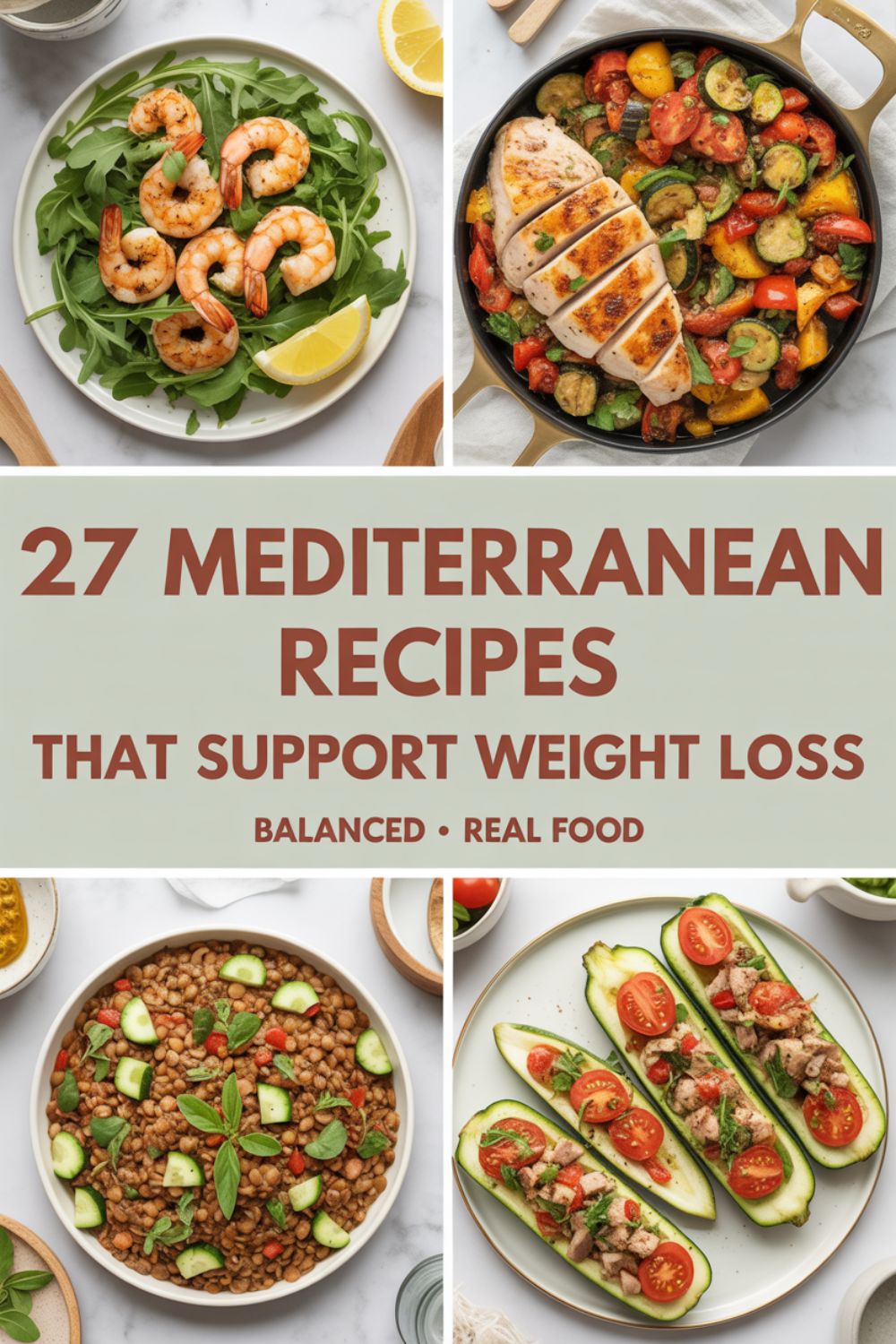
27 Mediterranean Recipes That Support Weight Loss
Let’s get real for a second. You’ve probably heard about the Mediterranean diet a thousand times, but have you actually tried cooking it? I’m talking about the kind of food that makes you wonder why anyone would ever settle for sad desk salads or bland chicken breast again.
Here’s the thing about Mediterranean cooking that nobody tells you upfront: it’s not really a “diet” in the miserable, restrictive sense. It’s more like a lifestyle choice where you get to eat actual food that tastes good while your body quietly thanks you by shedding those stubborn pounds. No magic pills, no meal replacement shakes that taste like cardboard—just real ingredients doing what they do best.
Research actually backs this up. Studies from Harvard’s School of Public Health show that people following a Mediterranean eating pattern maintain weight loss significantly better than those on restrictive diets. We’re talking about doubled success rates in keeping weight off long-term. That’s not just impressive—that’s life-changing.
Why Mediterranean Food Actually Works for Weight Loss
Unlike those trendy diets that make you eliminate entire food groups (looking at you, no-carb crew), Mediterranean eating doesn’t ask you to give up the foods that make life worth living. Instead, it shifts your focus toward ingredients that naturally fill you up without packing on calories.
The secret sauce? It’s all about calorie density versus volume. You can eat a massive bowl of roasted vegetables, chickpeas, and grilled fish for fewer calories than a small bagel with cream cheese. Your stomach gets full, your brain gets the “stop eating” signal, and you’re not left staring into the fridge at 9 PM wondering if you’re actually hungry or just bored.
According to research published in the National Library of Medicine, higher adherence to Mediterranean eating patterns is linked to a two-fold increased likelihood of maintaining weight loss. Translation: this stuff actually sticks.
The Foundation: What You’re Actually Eating
Before we dive into the recipes, let’s talk about what fills your shopping cart on a Mediterranean plan. Think colorful vegetables, legumes that cost pennies, whole grains that keep you satisfied, lean proteins, and yes—healthy fats like olive oil and nuts.
I use this glass olive oil dispenser for drizzling without going overboard. Portion control matters even with the good fats, and trust me, it’s easier to be mindful when you’re not just glugging straight from a giant bottle.
Protein Sources That Actually Satisfy
Fish is king here. Salmon, sardines, mackerel—all loaded with omega-3s that fight inflammation while keeping you full. Not a fish person? Chicken, turkey, and eggs work perfectly. The key is variety.
For meal prep, I swear by these glass meal prep containers. They’re microwave-safe, don’t stain, and you can see what’s inside without opening every single one like a sad refrigerator treasure hunt.
Speaking of protein-packed options, check out these grilled salmon variations or try the lemon herb chicken if you’re team poultry. Both recipes prove that healthy doesn’t mean boring.
Vegetables and Legumes: The Volume Eaters
This is where Mediterranean cooking really shines. Zucchini, eggplant, tomatoes, peppers, cucumbers—pile them on. Chickpeas, lentils, and white beans bring protein and fiber to the party without the hefty calorie price tag of meat.
Ever tried roasting chickpeas until they’re crispy? Life-changing. I use this silicone baking mat so they don’t stick and cleanup is basically nonexistent. Zero scrubbing, maximum crunch.
Breakfast: Start Your Day the Mediterranean Way
Forget sugary cereals and processed breakfast bars. Mediterranean mornings are all about Greek yogurt, fresh fruit, whole grain toast, and eggs prepared about fifty different ways.
The Greek yogurt bowl with berries and honey is my go-to when I’m running late. Get Full Recipe Throw everything in a bowl, drizzle some honey, maybe add walnuts if you’re feeling fancy, and you’re out the door.
For something more substantial, the savory Mediterranean scramble brings vegetables and eggs together in a way that keeps you full until lunch. No mid-morning vending machine raids necessary.
If you’re into meal prep, overnight oats are clutch. The oatmeal with dried figs and walnuts tastes like dessert but fuels you like a champion. I make five jars on Sunday using these mason jars with lids and thank myself all week.
For more morning inspiration, you might love these easy Mediterranean breakfast ideas or this Mediterranean smoothie bowl when you want something cold and refreshing.
Lunch: Midday Meals That Don’t Make You Sleepy
Heavy lunches are productivity killers. You need something that satisfies without triggering the dreaded 2 PM crash. Enter Mediterranean bowls, salads, and wraps that actually fill you up.
The Mediterranean grain bowl is basically a customizable template. Get Full Recipe Start with quinoa or farro, pile on roasted vegetables, add chickpeas or grilled chicken, drizzle with tahini. It’s different every time but always good.
Salads That Don’t Suck
I know, I know—salads have a reputation for being rabbit food. But Mediterranean salads are different. They’re hearty, flavorful, and you’re not left hungry an hour later wondering what went wrong with your life choices.
The Greek salad lives up to its name. Cucumbers, tomatoes, red onion, olives, feta, all tossed with olive oil and oregano. Simple, satisfying, and it travels well for work lunches.
For something with more protein, try the tuna white bean salad. The combination keeps you full way longer than you’d expect. I usually make a big batch and portion it out using these divided containers so the greens don’t get soggy.
Wraps and Sandwiches Done Right
Not everything needs to be a bowl. Sometimes you just want something you can hold in your hand while you’re pretending to be productive.
The falafel wrap with tzatziki is surprisingly easy to make at home. Get Full Recipe You can bake the falafel instead of frying—less mess, fewer calories, still delicious.
Or go minimal with the cucumber hummus sandwich. It sounds too simple to work, but somehow it does. Perfect for hot summer days when the thought of turning on the stove makes you want to cry.
Looking for more portable options? Check out these Mediterranean lunchbox recipes or explore wrap variations that’ll keep lunch interesting.
Dinner: Where Mediterranean Cooking Really Shines
This is the meal where you can get creative. Dinner’s when you have time to actually cook, and Mediterranean cuisine gives you endless options without requiring a culinary degree.
Fish and Seafood
Fish cooks fast, which is perfect for weeknights when you’re tired and tempted by takeout. The baked salmon with herbed quinoa is foolproof. Get Full Recipe Season the fish, throw it in the oven, cook your quinoa, done.
If you’re feeling slightly more ambitious, the shrimp sautéed in garlic and olive oil with couscous takes maybe 20 minutes start to finish. I use this non-stick skillet so the shrimp don’t stick and cleanup is painless.
The grilled salmon with tomato caper relish adds brightness with the caper relish that cuts through the richness of the fish perfectly.
Chicken and Turkey
Sometimes you just want chicken. The lemon garlic grilled chicken with couscous is my Sunday meal prep staple. Make a big batch, portion it out, and you’ve got dinners sorted.
The lemon oregano grilled chicken is so simple it almost feels like cheating, but the flavor says otherwise. Marinate in the morning, grill at night.
Vegetarian Options That Don’t Feel Like You’re Missing Out
Meatless doesn’t mean flavorless or unsatisfying. Mediterranean cuisine has been doing plant-based eating for centuries—they just didn’t call it that.
The lentil soup with crusty bread is comfort food that happens to be healthy. Get Full Recipe Make a huge pot, freeze portions in these freezer-safe containers, and have easy dinners for weeks.
Those stuffed bell peppers with quinoa and veggies look impressive but are actually pretty simple. Core the peppers using this pepper corer gadget (weirdly satisfying to use), stuff them, bake them. People will think you tried way harder than you did.
The shakshuka works for dinner just as well as breakfast. Eggs poached in spicy tomato sauce, some crusty bread for dipping, maybe some feta crumbled on top if you’re feeling it.
For more plant-forward options, explore these high-protein vegetarian recipes or check out Mediterranean salads that actually fill you up.
One-Pan Wonders
Less cleanup means you’re more likely to cook instead of ordering pizza. The one-pot Mediterranean pasta lives in a single pot from start to finish. Everything cooks together, flavors meld, and you only have one thing to wash.
The Mediterranean chickpea skillet is another weeknight hero. Chickpeas, spinach, tomatoes, garlic—throw it all in a skillet, let it do its thing. Serve over rice or eat it straight from the pan if nobody’s judging.
Snacks: Because Nobody Makes It From Lunch to Dinner Without Snacking
Snacking isn’t the enemy—mindless snacking on junk food is. Mediterranean snacks keep you satisfied between meals without derailing your progress.
The hummus veggie sticks are exactly what they sound like, but that doesn’t make them any less perfect. Make your own hummus in this mini food processor (way better than store-bought and you control the garlic level), cut up whatever vegetables you have, done.
The olive tapenade on toasted baguette feels fancy but takes about five minutes if you cheat and use a jarred tapenade. No shame in shortcuts.
Greek yogurt with nuts and cinnamon hits that sweet spot when you want something that feels like dessert but isn’t going to spike your blood sugar and leave you crashing.
Need more ideas? These Mediterranean snacks beyond hummus and high-protein snacks under 200 calories will keep your snack game strong.
The Practical Stuff Nobody Tells You
Reading recipes is one thing. Actually implementing this into your chaotic life is another. Let’s talk about the real challenges and how to handle them.
Meal Prep Without Losing Your Mind
You don’t need to prep every single meal for the week. That’s overwhelming and sets you up for burnout. Instead, prep components.
Cook a big batch of quinoa or farro. Roast a bunch of vegetables. Grill several chicken breasts. Hard-boil a dozen eggs. Then mix and match throughout the week. Same ingredients, different combinations, way less boring.
I use this rice cooker for grains because I inevitably burn them on the stovetop when I’m trying to multitask. Set it and forget it actually works with this thing.
Shopping Smart
You don’t need to buy everything organic or shop at fancy stores. Frozen vegetables work great for most recipes. Canned chickpeas and beans are just as nutritious as dried ones you cook yourself—just rinse them first.
Buy whatever’s on sale and build your meals around that. Chicken thighs on sale? Great, make the lemon herb chicken. Zucchini cheap this week? Perfect time for the grilled veggie platter.
Making It Work When You’re Busy
The one-pan dinners are your friends on crazy days. The whole wheat spaghetti with cherry tomatoes and basil comes together faster than waiting for pizza delivery.
Keep your pantry stocked with staples: olive oil, canned tomatoes, pasta, rice, quinoa, canned beans, spices. Then you only need to grab fresh stuff weekly. I keep a running list on this magnetic notepad on my fridge so I don’t forget what I need.
Common Mistakes to Avoid
Even with the best intentions, it’s easy to go off track. Here’s what trips people up and how to avoid it.
Going Overboard on Olive Oil
Yes, olive oil is healthy. Yes, it’s a Mediterranean staple. But it’s still 120 calories per tablespoon, and those add up fast when you’re being generous with your pours.
Measure it, at least at first. Use a spray bottle or that dispenser I mentioned earlier. You’ll be surprised how little you actually need to get great flavor.
Forgetting About Portion Sizes
Just because something’s healthy doesn’t mean you can eat unlimited amounts. Nuts are nutritious, but a handful is very different from half the jar while you’re watching Netflix.
Same with cheese. Feta is delicious. A little crumbled on your salad? Perfect. A block of it? That’s a different story.
Making Everything Complicated
Some of the best Mediterranean meals are the simplest. Avocado toast with tomato and olive oil is literally four ingredients. The cucumber tomato feta salad takes five minutes to throw together.
Don’t let perfect be the enemy of good. A simple meal you’ll actually make beats an elaborate recipe you keep putting off.
Real Talk: Will You Actually Lose Weight?
Here’s what the science says. Studies show that Mediterranean eating patterns lead to an average weight loss of 4 to 10 kilograms over 12 months when combined with some calorie awareness and regular movement. That’s roughly 9 to 22 pounds.
But more importantly, people actually maintain it. According to research published in nutrition journals, following Mediterranean eating habits doubles your chances of keeping weight off long-term compared to typical restrictive diets.
Why? Because you’re not suffering through it. You’re eating real food that tastes good. You’re not constantly white-knuckling your way through cravings. When restriction isn’t part of the equation, sustainability becomes way easier.
The fiber from all those vegetables and whole grains keeps you full. The protein from fish, chicken, and legumes stabilizes your blood sugar. The healthy fats satisfy you on a deeper level than low-fat alternatives ever could. Your body gets what it needs, so it stops screaming at you for more food.
Building Your Own Mediterranean Recipe Rotation
You don’t need 27 recipes to get started. Pick five that sound good. Make them. See what you like. Adjust from there.
Maybe you discover you love the lentil spinach soup but aren’t crazy about fish. Fine—do chicken instead. Or maybe the grilled eggplant with yogurt sauce becomes your new favorite thing and you make it weekly. Great.
The goal isn’t to follow some rigid meal plan. It’s to find Mediterranean-style meals you genuinely enjoy eating, then rotate through them. Add new recipes when you’re bored, not because you think you have to.
For structured guidance, check out the 14-day Mediterranean meal plan for beginners or the 7-day meal prep plan if you want more organization.
What About Eating Out?
Mediterranean restaurants exist everywhere, making this one of the easier eating styles to maintain when you’re not cooking at home. Greek places, Lebanese restaurants, even Italian spots can work if you choose wisely.
Order grilled fish or chicken. Get the Greek salad. Ask for olive oil and lemon on the side instead of creamy dressings. Skip the bread basket or limit yourself to one piece. Share dessert if you want something sweet.
At regular restaurants, build your plate Mediterranean-style: half vegetables, quarter protein, quarter whole grains. It’s not complicated.
Frequently Asked Questions
Can I really lose weight eating pasta and bread?
Yes, but portion size matters. Mediterranean eating includes whole grain pasta and bread in moderate amounts, not giant plates of buttered noodles. A cup of whole wheat pasta with vegetables, olive oil, and a lean protein won’t sabotage your weight loss—it’ll keep you satisfied so you don’t raid the pantry at midnight.
How much olive oil is too much?
Aim for 2-3 tablespoons total per day. It’s calorie-dense at 120 calories per tablespoon, so measuring helps. Use it for cooking and dressing salads, but don’t go overboard. A little goes a long way for flavor.
Do I need to eat fish if I don’t like it?
Nope. While fish is encouraged for its omega-3s, you can focus on chicken, turkey, eggs, and plant-based proteins like chickpeas and lentils instead. The Mediterranean diet is flexible—work with what you actually enjoy eating.
Is this diet expensive?
It doesn’t have to be. Beans, lentils, eggs, and seasonal vegetables are affordable. Frozen fish works fine and costs less than fresh. Buy what’s on sale, use canned beans, skip the fancy stuff. You’re not required to shop at Whole Foods to make this work.
How long until I see results?
Most people notice changes within 2-4 weeks if they’re consistent. Weight loss happens gradually—1-2 pounds per week is realistic and sustainable. The bigger win is how you feel: more energy, better digestion, fewer cravings. Those changes often show up before the scale budges.
The Bottom Line
Mediterranean eating isn’t about perfection. It’s about shifting your habits toward foods that support your goals without making you miserable in the process.
You’ll have days where you eat the bread basket. You’ll have weekends where meal prep doesn’t happen. That’s fine. Progress isn’t linear, and one meal doesn’t define your entire approach.
The 27 recipes we’ve covered give you options for every meal and situation. Pick the ones that sound good, try them out, adjust as needed. Keep the ones you love, ditch the ones you don’t. Build a rotation that works for your life, your schedule, and your taste buds.
Weight loss will happen as a side effect of eating well consistently over time. But the real payoff? You’ll actually enjoy the food you’re eating. You won’t feel deprived. You won’t spend every meal wishing you were eating something else.
That’s the difference between a temporary diet and a sustainable way of eating. And honestly, that’s the whole point.