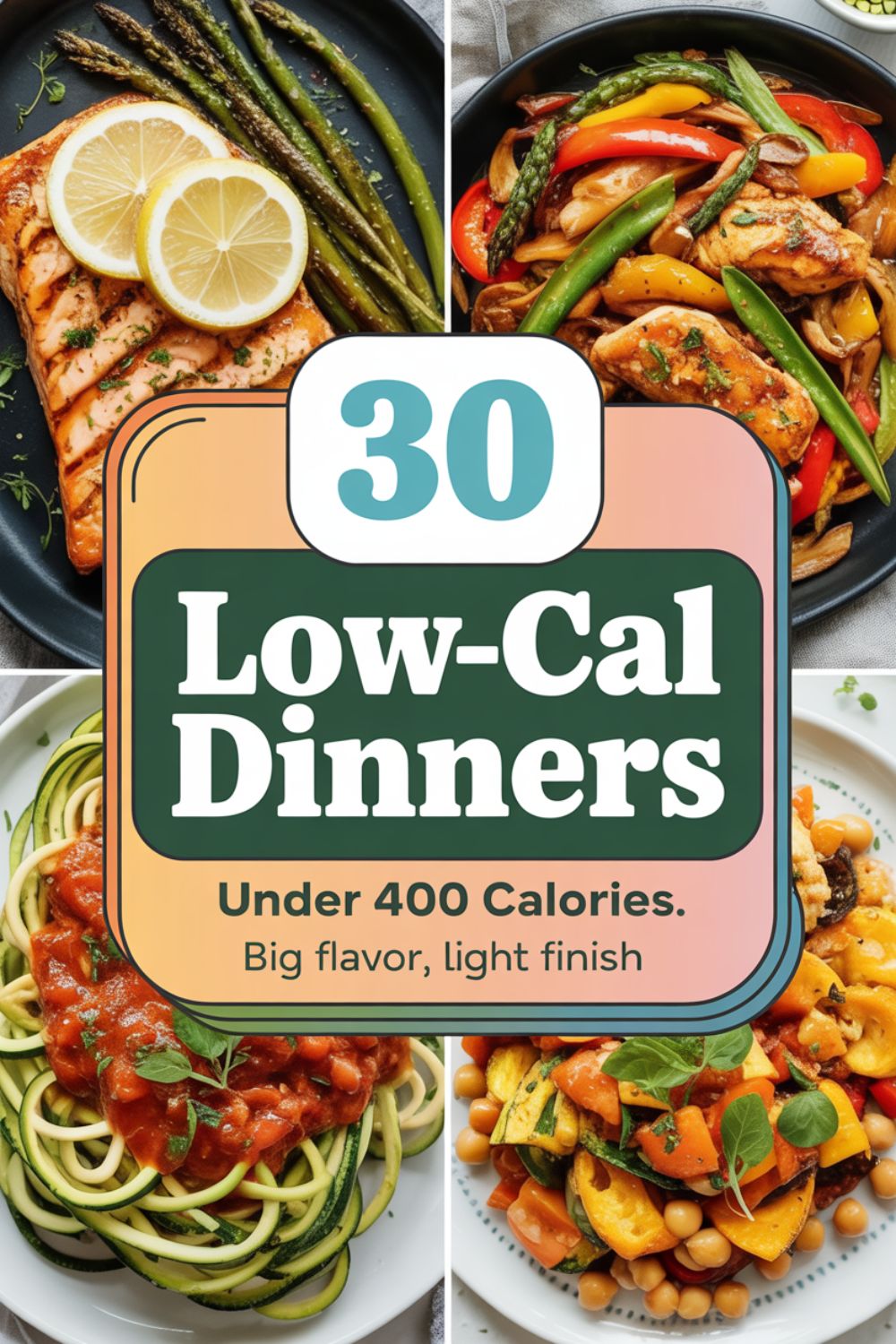
30 Low-Calorie Dinners Under 400 Calories
Look, I get it. You’re trying to watch your calories but the thought of another sad desk salad makes you want to throw your meal prep containers out the window. Here’s the thing though—low-calorie doesn’t have to mean low-flavor, and it definitely doesn’t mean you need to starve yourself until breakfast.
I’ve spent way too many evenings staring into my fridge, wondering how to make dinner happen without blowing my calorie budget for the day. The good news? It’s totally possible to eat satisfying, actually-delicious dinners that clock in under 400 calories. No, I’m not talking about three pieces of steamed broccoli and a prayer.
Why 400 Calories Makes Sense for Dinner
Before we jump into the recipes, let’s talk numbers for a second. Most nutrition experts suggest that nutrient-dense, low-calorie meals should focus on vitamins, minerals, fiber, and lean proteins to keep you satisfied without excess calories. A 400-calorie dinner isn’t some random number I pulled from thin air—it’s actually a sweet spot that leaves room for breakfast, lunch, and snacks while keeping you in a reasonable calorie deficit if weight loss is your goal.
The key is making those 400 calories count. We’re talking lean proteins that keep you full, fiber-packed veggies that add volume without adding calories, and enough healthy fats to make everything taste, you know, actually good. Because what’s the point of eating healthy if you’re miserable the whole time?
💡 Pro Tip
Prep your proteins and chop your veggies on Sunday afternoon. Future you will be incredibly grateful when Wednesday night rolls around and you’re too tired to think straight.
The Mediterranean Magic: Flavor Without the Calorie Bomb
IMO, Mediterranean-style cooking is where it’s at when you’re trying to keep calories low. Why? Because it relies heavily on herbs, spices, citrus, and just enough olive oil to make everything sing without drowning your food in unnecessary fats.
Take something like lemon herb chicken with roasted potatoes. Get Full Recipe. It’s simple, it’s satisfying, and it proves that low-calorie doesn’t have to mean boring. The lemon cuts through the richness of the chicken, the herbs add complexity, and those roasted potatoes? Chef’s kiss. All without making you feel like you’re on some miserable diet.
Or consider a Greek salad but like, actually good. We’re not talking about that sad iceberg lettuce situation with two cherry tomatoes. I’m talking crisp cucumbers, juicy tomatoes, briny olives, and just enough feta to make it interesting. The traditional version uses a generous pour of olive oil, but you can dial it back slightly and still have something that tastes like you’re eating on a terrace overlooking the Aegean.
Speaking of Mediterranean inspiration, you might also love these high-protein Mediterranean meals or this Mediterranean smoothie bowl if you’re into breakfast-for-dinner situations.
Protein-Packed Dinners That Actually Fill You Up
Let’s be real—if your dinner doesn’t have enough protein, you’re going to be rifling through the pantry an hour later looking for snacks. Not ideal when you’re trying to stick to a calorie budget.
Fish and seafood are your best friends here. They’re naturally lean, cook quickly, and absorb flavors like nobody’s business. A grilled salmon with tomato caper relish gives you all the protein you need, plus those omega-3s that everyone’s always going on about. Pair it with some roasted veggies and you’ve got a dinner that looks like it came from a restaurant but clocks in way under 400 calories.
Chicken breast gets a bad rap for being dry and boring, but that’s only if you don’t know how to cook it properly. The secret? Don’t overcook it, and for the love of all that is holy, season it properly. A lemon garlic grilled chicken with couscous is proof that chicken can be juicy, flavorful, and low-calorie all at once. Get Full Recipe.
Don’t Sleep on Plant-Based Proteins
If you’re not into meat or just want to mix things up, plant-based proteins are having their moment for good reason. Lentils, chickpeas, and beans are ridiculously filling, packed with fiber, and won’t cost you a fortune at the grocery store.
A lentil spinach soup is one of those meals that seems too simple to be this satisfying, but it absolutely delivers. The lentils give you that protein punch, the spinach adds nutrients and volume, and the whole thing comes together in one pot. Fewer dishes to wash? Sign me up.
Then there’s the whole world of chickpea-based dinners. These little guys are versatile as hell. Throw them in a curry, roast them for a crunchy topping, or mash them up for a filling. A chickpea cauliflower coconut curry sounds fancy but takes maybe 30 minutes start to finish. Get Full Recipe. The coconut milk makes it creamy, the curry paste brings the heat, and you can serve it over cauliflower rice to keep those calories in check.
For more plant-powered inspiration, check out these high-protein vegetarian recipes that prove meatless doesn’t mean protein-less.
💡 Quick Win
Invest in a good digital kitchen scale. Eyeballing portions is how you accidentally turn a 400-calorie dinner into a 600-calorie one. Trust me on this.
Veggie-Forward Dinners That Don’t Feel Like Punishment
Vegetables are your secret weapon when you’re trying to eat low-calorie. They’re high in fiber, loaded with nutrients, and you can eat a ton of them without racking up calories. The trick is making them taste good enough that you actually want to eat them.
Roasting is your best friend here. It caramelizes the natural sugars in vegetables and adds this depth of flavor that steaming or boiling just can’t match. A grilled veggie platter with hummus is simple but effective—bell peppers, zucchini, eggplant, all charred and delicious. The hummus adds creaminess and a bit of protein without going overboard on calories.
Ever tried stuffed vegetables? They’re genius for portion control and they look impressive as hell. Stuffed bell peppers with quinoa and veggies are like edible bowls—the pepper itself adds to your veggie count, and you can pack them with quinoa, more veggies, maybe some lean ground turkey if you’re feeling fancy. Get Full Recipe.
The Noodle Situation
Can we talk about pasta alternatives for a second? Because regular pasta isn’t inherently evil, but if you’re trying to stay under 400 calories, a standard pasta serving can eat up a big chunk of your budget pretty fast.
Enter: spaghetti squash with tomato basil sauce. I was skeptical the first time someone suggested I replace pasta with squash. Like, really? But then I tried it and realized it’s not about being a perfect pasta substitute—it’s its own thing, and it’s actually pretty great. You get that noodle-like texture, it soaks up whatever sauce you’re using, and a massive serving is like 40 calories. Load it up with a good tomato sauce, some fresh basil, maybe a sprinkle of parmesan, and you’ve got yourself a dinner.
If you’re craving actual pasta though, whole wheat spaghetti with spinach pesto lets you have the real deal while sneaking in some greens. The pesto is where you can play around with ratios—less oil, more basil and spinach, maybe some pasta water to loosen it up. Still delicious, way fewer calories than traditional pesto.
One-Pan Wonders Because Who Has Time for Dishes?
FYI, the number of pans you dirty is directly proportional to how likely you are to order takeout next time. This is science. Probably.
One-pan meals are clutch for busy weeknights, and they’re actually perfect for portion control because everything cooks together. A Mediterranean chickpea skillet is one of those throw-it-all-in-and-hope-for-the-best situations that actually works out. Get Full Recipe. Chickpeas, tomatoes, spinach, whatever spices you have on hand—it all comes together in one pan and tastes like you put way more effort in than you actually did.
Sheet pan dinners are another game-changer. Baked salmon with dill and garlic can share a sheet pan with green beans or asparagus. Everything roasts at the same temperature, you use parchment paper for easy cleanup, and dinner’s ready in like 25 minutes. The salmon gets crispy edges, the veggies get slightly charred, and you barely had to think about it.
Looking for more quick dinner solutions? These easy Mediterranean one-pan dinners or quick Mediterranean skillet dinners have got you covered.
💡 Pro Tip
Line your sheet pans with silicone baking mats. They’re reusable, nothing sticks to them, and you’ll wonder how you ever lived without them. Plus you’ll stop wasting money on aluminum foil.
Soups and Stews: The Ultimate Volume Eaters
Can we appreciate soup for a second? It’s basically the MVP of low-calorie eating. You can eat a huge bowl and still stay well under 400 calories if you do it right. The liquid makes you feel full, and if you load it up with vegetables and lean protein, you’re getting all the nutrition you need.
A three bean chili is the kind of meal you can make in huge batches and eat all week. Beans are incredibly filling thanks to their fiber and protein content, and when you slow-cook them with tomatoes, peppers, and chili spices, you end up with something that tastes like it simmered for hours even if you used canned beans and made it in 30 minutes.
Or try a lentil sweet potato stew. Get Full Recipe. Sweet potatoes add this natural sweetness that balances out the earthiness of the lentils, and the whole thing is ridiculously comforting without being heavy. I like making this in a slow cooker so I can dump everything in before work and come home to a house that smells amazing.
The Broth-Based Advantage
Broth-based soups are where it’s at for keeping calories low. Cream-based soups can be delicious but they rack up calories fast. With broth, you get all the flavor with a fraction of the calories.
Take a simple lentil soup with crusty bread. The soup itself is super low-cal, so you can actually enjoy some good bread on the side without guilt. The key is using a flavorful broth—either make your own or buy the good stuff that actually tastes like something.
When you need something lighter, these Mediterranean soups under 300 calories prove you can go even lower and still be satisfied.
Breakfast for Dinner: Don’t Sleep on This Move
Who decided breakfast foods are only for morning anyway? Some of my favorite low-calorie dinners are traditionally breakfast items. Eggs are cheap, cook fast, and one large egg is only about 70 calories with 6 grams of protein. The math works out.
A savory Mediterranean scramble with tomatoes, spinach, and a bit of feta is protein-packed and takes maybe 10 minutes to make. Serve it with some whole grain toast and you’ve got a complete meal that happens to be breakfast-themed.
Or go for shakshuka, eggs in spicy tomato sauce. Get Full Recipe. It sounds fancy, it looks impressive, but it’s literally just eggs poached in a tomato sauce with peppers and spices. The sauce is where all the flavor comes from, and you can dip bread into it, or don’t if you’re watching carbs. Either way, it’s satisfying and well under 400 calories per serving.
The Art of the Bowl
Grain bowls, buddha bowls, whatever you want to call them—these things are perfect for using up whatever vegetables you have hanging around in your fridge. The formula is simple: grain or grain alternative, protein, vegetables, sauce. Customize to your heart’s content.
A Mediterranean grain bowl might have quinoa as the base, grilled chicken or chickpeas for protein, cucumbers and tomatoes for freshness, and a simple lemon tahini dressing to tie it all together. The portion sizes are key here—be generous with the vegetables, moderate with the grains, and measure your sauce because that’s where hidden calories love to hide.
For something different, try a Moroccan spiced quinoa bowl. Get Full Recipe. Warm spices like cumin, coriander, and cinnamon make quinoa actually interesting. Add some roasted vegetables, maybe some chickpeas, and you’ve got a dinner that’s anything but boring.
Need more bowl inspiration? Check out these high-protein bowls that keep you satisfied without weighing you down.
Taco Night Without the Guilt
Tacos don’t have to be a calorie bomb. In fact, they’re pretty ideal for low-calorie eating because you can control exactly what goes in them.
Start with veggie-packed black bean tacos. The black beans give you protein and fiber, the vegetables add crunch and nutrition, and you can go wild with toppings that don’t cost you many calories—salsa, cilantro, lime juice, a tiny bit of cheese if you must. Use corn tortillas instead of flour to save some calories, or go full lettuce wrap if you’re feeling ambitious.
Fish tacos are another solid move. White fish like cod or tilapia are super lean, and when you season them right and add some crunchy cabbage slaw, you don’t even miss the deep-frying. A squeeze of lime, maybe a dollop of Greek yogurt instead of sour cream, and you’re in business.
Stir-Fry Success
Stir-fries are incredibly forgiving and perfect for cleaning out your vegetable drawer. The key to keeping them low-calorie is being strategic with the oil and sauce.
A stir-fried tofu with broccoli and brown rice proves that tofu can absolutely be delicious when you cook it right. Press the tofu to get the water out, get your pan screaming hot, use just enough oil to prevent sticking, and let it get crispy. The broccoli adds bulk, the brown rice gives you those complex carbs everyone’s always recommending, and a simple sauce of soy sauce, garlic, and ginger brings it all together.
For a different take, try a broccoli cashew stir-fry. The cashews add healthy fats and make it feel indulgent, but you don’t need many to get that effect. I use a good non-stick wok for these—it means I can use less oil and nothing sticks to the bottom.
Wraps and Sandwiches That Won’t Weigh You Down
Sometimes you just want to eat with your hands, you know? Wraps and sandwiches can absolutely fit into a low-calorie dinner plan if you’re smart about it.
A falafel wrap with tzatziki is surprisingly reasonable calorie-wise, especially if you bake the falafel instead of frying it. The chickpea-based falafel gives you protein and fiber, the tzatziki adds creaminess, and you can load up on vegetables to make it filling.
For something simpler, a cucumber hummus sandwich sounds weird but works. Get Full Recipe. Whole grain bread, a generous spread of hummus, thick cucumber slices for crunch, maybe some sprouts or microgreens if you’re feeling fancy. It’s refreshing, filling, and the hummus provides enough protein to keep you satisfied.
Love wraps? These high-protein wraps take the concept to the next level.
💡 Quick Win
Buy pre-spiralized vegetables or grab a spiralizer. Zucchini noodles, sweet potato noodles—they’re an easy way to add volume to meals without adding many calories.
The Reality Check: What 400 Calories Actually Looks Like
Let’s be honest for a second. When you first start eating 400-calorie dinners, the portions might look smaller than what you’re used to. That’s normal. Your eyes and your stomach need time to adjust.
The good news? Research on low-calorie, nutrient-dense foods shows that when you focus on foods high in protein and fiber, you can feel just as satisfied on fewer calories. Your body adapts. The first week might be rough, but after that, most people find that these meals actually keep them full.
Here’s what helps: eating slowly, drinking plenty of water with your meal, and actually paying attention while you eat instead of scrolling through your phone. Mindful eating isn’t just wellness-culture nonsense—it actually helps your brain register that you’re full.
Meal Prep Makes Everything Easier
I’m not gonna lie, eating low-calorie dinners consistently is way easier if you do at least some meal prep. You don’t have to go full meal-prep-Sunday-with-40-containers mode, but having some basics ready makes a huge difference.
Cook a big batch of grains—quinoa, brown rice, farro, whatever. Roast a bunch of vegetables. Grill or bake some chicken breast. Keep these in the fridge and you can throw together a bowl or a wrap in literally five minutes when you get home from work too tired to think.
For full week plans that do all the thinking for you, check out this 7-day high-protein Mediterranean meal plan or the 14-day Mediterranean meal plan for beginners.
Smart Swaps That Actually Work
You don’t have to completely reinvent your favorite meals to make them low-calorie. Sometimes it’s just about making smart swaps that save you calories without sacrificing flavor.
Greek yogurt instead of sour cream? Classic move. Saves you about 30 calories per serving and actually has more protein. Cauliflower rice instead of regular rice? You can literally eat four times as much for the same calories. Lettuce wraps instead of tortillas? Saves you 100+ calories and adds more vegetables to your dinner.
Zucchini noodles or spaghetti squash instead of pasta gives you that noodle experience with a fraction of the calories. A good vegetable spiralizer pays for itself pretty quickly when you see how much money you save not buying boxes of pasta.
Instead of breading and frying, try coating protein in spices and baking it on a wire rack. You get crispy edges without all the oil. Using citrus juice and zest for flavor instead of butter or oil saves calories while adding brightness to dishes.
Satisfying Your Cravings Without Derailing Everything
Here’s where a lot of low-calorie eating plans fall apart—you get a craving for something specific and your dinner options feel too restrictive to satisfy it. But you can work around this.
Craving Italian? A one-pot Mediterranean pasta with lots of vegetables and a modest portion of pasta hits that comfort food note. Want something creamy? Make a soup with a bit of coconut milk or blended cauliflower for creaminess without heavy cream’s calorie count.
Missing takeout? A lot of takeout dishes can be recreated at home with way fewer calories. That pad thai you love? Make it with zucchini noodles, actual peanuts instead of heavy peanut sauce, and you’ve got something that scratches the same itch.
Keeping It Sustainable
Look, if you’re reading this thinking you’re going to eat 400-calorie dinners every single night for the rest of your life, pump the brakes. The goal isn’t perfection—it’s building habits that you can actually maintain.
Some nights you’ll nail the 400-calorie dinner. Other nights you’ll go out with friends or order pizza because you had a rough day, and that’s fine. What matters is what you do most of the time, not what you do once in a while.
These recipes aren’t punishment. They’re tools. Use them when they serve you, adapt them to fit your preferences, and don’t stress if you need to deviate sometimes. The people who succeed long-term are the ones who find a sustainable approach, not the ones who white-knuckle their way through misery.
30 Dinner Ideas to Get You Started
Alright, enough theory. Here are 30 actual dinner ideas, all under 400 calories, that you can start making tonight:
- Grilled Salmon with Tomato Caper Relish – Rich in omega-3s and incredibly satisfying
- Lentil Spinach Soup – Fiber and protein in one comforting bowl
- Shakshuka (Eggs in Spicy Tomato Sauce) – Breakfast for dinner done right
- Veggie-Packed Black Bean Tacos – All the taco flavor, none of the guilt
- Stir-Fried Tofu with Broccoli and Brown Rice – Crispy tofu changes everything
- Mediterranean Grain Bowl – Customizable and always delicious
- Three Bean Chili – Make a huge batch and thank yourself all week
- Baked Salmon with Dill and Garlic – Simple, elegant, foolproof
- Spaghetti Squash with Tomato Basil Sauce – Your pasta fix without the carb load
- Greek Salad But Like, Actually Good – Fresh, crunchy, properly seasoned
- Lentil Sweet Potato Stew – Comfort food that loves you back
- Grilled Veggie Platter with Hummus – Sometimes simple is best
- Stuffed Bell Peppers with Quinoa and Veggies – Built-in portion control
- Whole Wheat Spaghetti with Spinach Pesto – Real pasta that still fits your goals
- Chickpea Cauliflower Coconut Curry – Creamy without being heavy
- Falafel Wrap with Tzatziki – Baked, not fried, still delicious
- Lemon Herb Chicken with Roasted Potatoes – Classic for a reason
- Mediterranean Chickpea Skillet – One pan, minimal fuss
- Savory Mediterranean Scramble – Protein-packed and quick
- Lentil Soup with Crusty Bread – The bread makes it feel special
- Moroccan Spiced Quinoa Bowl – Warm spices make quinoa interesting
- Broccoli Cashew Stir-Fry – A little crunch goes a long way
- Cucumber Hummus Sandwich – Refreshing and filling
- One-Pot Mediterranean Pasta – Fewer dishes, more flavor
- Lemon Garlic Grilled Chicken with Couscous – Juicy chicken, fluffy couscous, perfection
- black bean enchiladas – Hold the cheese, keep the flavor. Get Full Recipe
- grilled portobello mushroom steaks – Meaty texture, minimal calories. Get Full Recipe
- carrot ginger soup with chickpea croutons – Warming and surprisingly substantial. Get Full Recipe
- grilled lemon herb chicken with quinoa – A protein powerhouse. Get Full Recipe
- sweet potato tacos – Who knew sweet potatoes worked in tacos? They absolutely do. Get Full Recipe
Frequently Asked Questions
Is 400 calories enough for dinner?
For most people trying to lose weight or maintain a healthy weight, yes. A 400-calorie dinner leaves plenty of room for breakfast, lunch, and snacks throughout the day. The key is making sure those 400 calories come from nutrient-dense foods with plenty of protein and fiber to keep you satisfied. If you’re very active or have higher calorie needs, you might need to adjust upward, but 400 is a solid baseline for many people.
How do I make low-calorie dinners more filling?
Volume is your friend. Load up on non-starchy vegetables, which are high in fiber and water but low in calories. Include lean protein in every meal—it’s the most satiating macronutrient. Don’t skip healthy fats entirely; a small amount helps with satisfaction. And honestly? Eat slowly and drink water with your meal. Your brain needs about 20 minutes to register fullness, so rushing through dinner works against you.
Can I meal prep these dinners?
Absolutely. Most of these recipes work great for meal prep. Soups, stews, grain bowls, and anything with cooked grains or proteins can be made in advance and stored in the fridge for 3-4 days. Some things are better fresh—like anything with a lot of raw vegetables or crispy elements—but you can prep the components separately and assemble when you’re ready to eat.
What if I’m still hungry after a 400-calorie dinner?
First, wait 20 minutes. Seriously. Your stomach and brain aren’t always synced up. If you’re still genuinely hungry after that, have a small snack with protein—a hard-boiled egg, some Greek yogurt, a handful of nuts. Also, look at what you ate earlier in the day. If you skimped on breakfast and lunch, your body’s trying to catch up at dinner. Balance throughout the day matters.
Do I need to count every calorie?
Not forever, but it helps to track for a little while when you’re starting out. Most people are terrible at estimating portions and calories (myself included). Using a food scale and a tracking app for a few weeks teaches you what appropriate portions actually look like. Once you’ve got that mental reference, you can be more relaxed about it. Some people prefer to keep tracking; others find they can eyeball it after they’ve learned. Do what works for you.
Final Thoughts
Here’s the thing about low-calorie eating that nobody tells you: it gets easier. Not because you get used to being hungry—you shouldn’t be hungry if you’re doing this right—but because you learn what actually satisfies you and what’s just empty calories you won’t miss.
You’ll figure out that a massive salad with grilled chicken and a simple vinaigrette fills you up way more than a small serving of creamy pasta. You’ll realize that roasted vegetables taste better than steamed ones, so you’ll actually want to eat them. You’ll discover which meals you genuinely enjoy making and which ones are more trouble than they’re worth.
The recipes I’ve shared here aren’t some revolutionary secret. They’re just good food that happens to be lower in calories. Nothing weird, nothing that requires ingredients you can only find at specialty stores, nothing that takes three hours to make.
Start with one or two recipes that sound good to you. Make them a few times until they’re easy. Then add a couple more to your rotation. Before you know it, you’ll have a solid collection of dinners you can make without thinking, and you won’t feel like you’re sacrificing anything.
And look, if you try something and hate it? Don’t make it again. Life’s too short to eat food you don’t enjoy, even if it fits your calorie goals. There are enough options out there that you can find meals that work for both your taste buds and your nutrition needs.
Now go make yourself some dinner. A real, satisfying, delicious dinner that just happens to be under 400 calories.