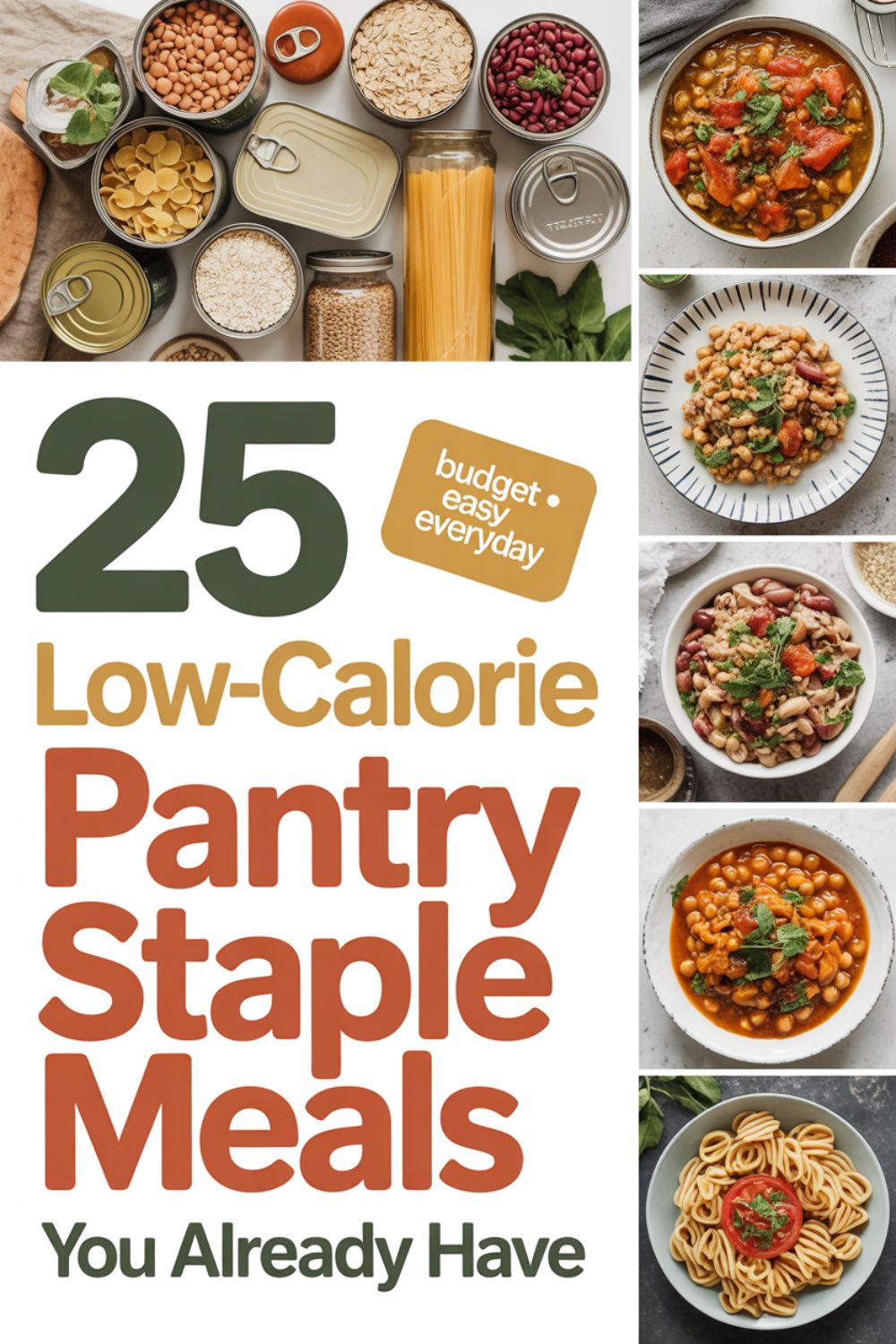
25 Low-Calorie Meals Using Pantry Staples
Let’s be real for a second. You open your pantry at 6 PM on a Tuesday, and what do you see? A can of chickpeas that’s been sitting there since who-knows-when, some pasta that’s probably older than your last haircut, and maybe a lonely jar of marinara sauce. Sound familiar?
Here’s the thing though—those “boring” pantry staples are actually your secret weapon for throwing together low-calorie meals that don’t taste like cardboard. And no, I’m not talking about depressing diet food. I’m talking about actual meals that’ll make you forget you’re trying to eat healthy.
I’ve spent way too many evenings staring into my pantry wondering what the heck to make that won’t destroy my calorie budget or require a trip to three different grocery stores. Turns out, the answer was right there all along.
Why Pantry Staples Are Your Best Friend for Weight Loss
Before we dive into the recipes, let’s talk about why keeping a well-stocked pantry actually matters. Research shows that having nutritious pantry staples on hand makes it way easier to stick to healthy eating habits without constantly running to the store.
Think about it. When you’re hungry and your fridge looks like a desert, what do you do? Order takeout. But when you’ve got canned beans, whole grain pasta, and some basic spices ready to go, you can whip up something decent in the time it takes for that delivery driver to find your house.
Plus, most pantry staples are ridiculously cheap. We’re talking beans, lentils, rice, oats—the stuff that costs less than your morning coffee but keeps you full for hours. According to nutrition experts at Mayo Clinic, focusing on foods with low calorie density (like beans and whole grains) helps you feel satisfied while eating fewer calories.
The Essential Pantry Staples You Actually Need
Alright, so what should you actually keep in your pantry? I’m not gonna give you some crazy long list that requires taking out a second mortgage. Here’s what I actually use on repeat:
Proteins: Canned tuna, salmon, chickpeas, black beans, lentils (red and green), and if you’re feeling fancy, some canned sardines in olive oil. Yeah, sardines. Don’t knock ’em till you try ’em.
Grains: Brown rice, quinoa, whole wheat pasta, oats, and maybe some couscous for when you’re pretending to be sophisticated. Whole grains are packed with fiber that keeps you full, which is basically the whole point when you’re trying to lose weight.
Flavor Makers: Canned tomatoes (diced and crushed), tomato paste, low-sodium broth, olive oil, and a decent collection of spices. Pro tip? Get yourself a spice rack organizer so you can actually find what you need instead of buying your fifth jar of cumin.
The Extras: Garlic (jarred is fine, fight me), onion powder, nutritional yeast for that cheesy flavor without actual cheese, and some vinegar—apple cider or balsamic, your choice.
Looking for more ways to stock a healthy kitchen? Check out these Mediterranean breakfast recipes that make mornings way less stressful.
25 Low-Calorie Meals You Can Actually Make Tonight
Breakfast Options (Because Morning Matters)
1. Overnight Oats Three Ways
Throw oats, milk (dairy or plant-based), and whatever you want into a jar the night before. In the morning, boom—breakfast is ready. My favorite combo is oats with cinnamon, a tiny bit of maple syrup, and whatever fruit I can find. Comes in around 250-300 calories and keeps me full until lunch. Get Full Recipe
If you’re into overnight oats, you’ll love these 25 overnight oats recipes for weight loss—there’s seriously a flavor for every mood.
2. Savory Oatmeal with Canned Tuna
I know, I know. It sounds weird. But trust me on this one. Cook your oats in low-sodium broth instead of water, top with a can of drained tuna, some cherry tomatoes if you have them, and a drizzle of olive oil. It’s like 320 calories of pure protein-packed goodness that’ll make you rethink sweet oatmeal forever.
3. Chickpea Scramble
Mash up some chickpeas with nutritional yeast, turmeric, and whatever spices you’re feeling. Sauté in a pan with a tiny bit of oil. Tastes scrambled-egg-adjacent, clocks in at around 280 calories, and you can make it while half asleep. Perfect for those mornings when your brain isn’t quite online yet.
Lunch Ideas (That Won’t Put You in a Food Coma)
4. Mediterranean Chickpea Salad
Drain a can of chickpeas, toss with diced tomatoes (fresh or canned, no judgment), cucumber if you’ve got it, red onion, lemon juice, and olive oil. Add some dried oregano and you’ve got a 350-calorie lunch that actually tastes like food from a real restaurant. Get Full Recipe
5. Tuna and White Bean Salad
This is one of those “looks fancy, took five minutes” situations. Can of tuna, can of white beans, lemon juice, olive oil, salt, pepper. Maybe throw in some parsley if you’re trying to impress someone. Around 300 calories and so much protein you’ll forget you’re eating “diet food.” Get Full Recipe
6. Quick Lentil Soup
Sauté some jarred garlic in olive oil (told you jarred garlic is clutch), add lentils, a can of diced tomatoes, vegetable broth, and whatever spices you feel like. Let it simmer while you scroll through your phone. Thirty minutes later, you’ve got a pot of soup that’s maybe 250 calories per bowl. Get Full Recipe
For more filling lunch options that won’t wreck your calorie budget, try these high-protein meal prep lunches.
7. Pasta e Fagioli (Fancy Name, Easy Meal)
Cook whole wheat pasta (about 2 oz dry per serving). Drain. Mix with white beans, marinara sauce, and some Italian seasoning. Heat it up. Eat it. Feel like you ordered Italian takeout except you didn’t and you just saved 600 calories and twenty bucks.
8. Quinoa Tabbouleh
Cook quinoa according to package directions. Let it cool. Mix with canned chickpeas, diced tomatoes, cucumber, parsley, lemon juice, and olive oil. It’s fresh, it’s light, it’s around 320 calories, and it makes you feel like you have your life together even if you definitely don’t. Get Full Recipe
Dinner Winners (The Main Event)
9. One-Pot Pasta with Chickpeas
Throw pasta, chickpeas, canned tomatoes, garlic, and basil into a pot with some water or broth. Cook until the pasta is done and the sauce has thickened. One pot. Minimal cleanup. Maximum satisfaction. About 400 calories per serving. Get Full Recipe
10. Black Bean Tacos
Heat up black beans with taco seasoning. Warm some corn tortillas (I use this tortilla warmer because burnt tortillas are a tragedy). Top with salsa, a tiny bit of cheese if you want, and some lettuce. Three tacos come in around 380 calories and taste way better than they have any right to.
11. Lentil Sweet Potato Stew
This one’s a game-changer. Sauté onions and garlic, add lentils, diced sweet potato (yeah, that counts as a pantry staple if you keep them in a cool, dark place), canned tomatoes, and vegetable broth. Simmer until everything’s tender. It’s hearty, it’s filling, it’s under 350 calories per bowl. Get Full Recipe
12. Tuna Pasta Bake
Cook pasta, mix with canned tuna, a can of cream of mushroom soup (the low-fat kind), frozen peas if you have them, and top with a sprinkle of breadcrumbs. Bake until bubbly. It’s comfort food that won’t completely derail your goals—about 380 calories per serving if you don’t go crazy with the portions.
Speaking of pasta, if you’re looking for lighter alternatives, check out these Mediterranean pasta alternatives that won’t leave you feeling heavy.
13. Shakshuka (Easier Than It Sounds)
Simmer canned tomatoes with garlic, cumin, and paprika. Make little wells in the sauce and crack eggs into them. Cover and let the eggs cook. Eat it with bread or just a fork. High protein, super satisfying, around 320 calories if you use two eggs. Get Full Recipe
14. Three-Bean Chili
Open three cans of different beans (black, kidney, pinto—mix it up). Add canned tomatoes, chili powder, cumin, and let it simmer. Top with a dollop of Greek yogurt instead of sour cream. Boom. Protein-packed dinner for under 350 calories that makes enough leftovers to last you through the week. Get Full Recipe
15. Chickpea Curry
Sauté onions and garlic, add curry powder (I’m obsessed with this curry spice blend), canned chickpeas, canned tomatoes, and a bit of coconut milk if you have it. Serve over rice. It’s creamy, it’s spicy, it’s way better than takeout, and it’s around 400 calories. Get Full Recipe
16. Spaghetti Aglio e Olio (With a Protein Boost)
Cook whole wheat spaghetti. In a pan, heat olive oil with tons of garlic and red pepper flakes. Toss the pasta in the oil. Add a can of drained chickpeas or white beans for protein. Top with nutritional yeast. Simple, classic, and around 380 calories if you don’t drown it in oil.
Quick Snacks and Small Meals
17. Roasted Chickpeas
Drain, dry, toss with spices, and roast at 400°F for 30 minutes. Crunchy, salty, addictive, and only about 120 calories per serving. I make a huge batch and keep them in these snack containers for when I need something to munch on. Get Full Recipe
18. Tuna Stuffed Peppers
Mix canned tuna with a bit of Greek yogurt (way better than mayo, trust me), stuff it into bell pepper halves. Eat. Feel fancy. About 180 calories and takes literally five minutes. Get Full Recipe
19. White Bean Hummus
Blend white beans with tahini (or peanut butter if you’re out), lemon juice, garlic, and olive oil. Serve with whatever vegetables you can find. It’s like hummus but cheaper and still around 150 calories for a generous serving.
Need more snack inspiration? These 21 Mediterranean snacks will keep you satisfied between meals without going overboard on calories.
20. Sardine Toast
Okay, hear me out. Mash sardines onto whole grain toast with a squeeze of lemon and some black pepper. It’s an acquired taste, but it’s also 200 calories of omega-3s and protein that’ll keep you full for hours. Plus, sardines are ridiculously cheap.
Bonus Meals for When You’re Feeling Adventurous
21. Rice and Bean Buddha Bowl
Cook brown rice. Top with black beans, salsa, a tiny bit of cheese, and some lettuce or spinach if you have it. Drizzle with lime juice. It’s basically Chipotle at home except way cheaper and around 380 calories. Add some cottage cheese for extra protein if you want.
22. Lentil Bolognese
Swap out ground beef for cooked lentils in your marinara sauce. Serve over pasta. It’s meaty, it’s satisfying, nobody will know it’s not actually meat, and you just cut the calories in half. Win-win-win.
23. Mediterranean Grain Bowl
Layer quinoa or farro, chickpeas, roasted red peppers from a jar, olives, and a drizzle of tahini. Top with whatever fresh veggies you have lying around. Around 350 calories of pure Mediterranean goodness. Get Full Recipe
24. Tomato Chickpea Soup
Blend canned tomatoes with chickpeas, garlic, and vegetable broth. Heat it up. Top with a swirl of olive oil and some crushed red pepper. Creamy, comforting, and under 250 calories per bowl. I serve it with a slice of crusty bread that I toast in my countertop toaster oven.
25. Stuffed Bell Peppers
Cut bell peppers in half, fill with a mixture of cooked rice, black beans, corn, and salsa. Bake until the peppers are soft. Top with a sprinkle of cheese if you want. Each pepper half is around 200 calories and you can make a bunch at once for meal prep. Get Full Recipe
For a complete week of balanced meals, check out this 7-day Mediterranean meal plan that takes all the guesswork out of meal planning.
Making These Meals Work in Real Life
Look, I get it. Reading a list of 25 meals is one thing. Actually making them when you’re tired and hungry and just want to order pizza is another thing entirely.
Here’s what actually works: pick three or four recipes from this list and just make those on repeat for a couple weeks. Get good at them. Let them become your default “I don’t know what to make” meals. Then add a few more to your rotation.
I also can’t stress enough how much easier life gets when you prep a few things on the weekend. Cook a big pot of rice or quinoa. Open some cans, drain and rinse your beans, portion them out. Suddenly, weeknight cooking becomes “assembly” instead of “cooking,” and assembly is way less intimidating.
Store everything in glass meal prep containers because they’re microwave-safe, dishwasher-safe, and they don’t get all gross and stained like plastic ones do. Yeah, they’re a bit of an investment, but you’ll use them forever.
The Money Talk Nobody Wants to Have
Let’s talk about the elephant in the room: budget. One of the best things about cooking with pantry staples is that it’s cheap. Like, really cheap.
A can of beans costs less than a dollar. A pound of dried lentils is maybe two bucks and makes enough food to feed you for a week. Rice, pasta, oats—all dirt cheap. Even canned tuna and salmon, which used to be affordable, are still way cheaper than ordering takeout or buying fresh fish.
Compare that to ordering delivery. A single meal can easily cost fifteen to twenty dollars. That’s the same price as buying enough pantry staples to make five or six meals. The math isn’t even close.
Plus, FYI, these foods last forever (well, not literally, but close enough). Canned goods are good for years. Dried beans and grains? Same deal. So you can stock up when things are on sale without worrying about them going bad before you use them.
Common Mistakes to Avoid
Not seasoning enough: This is where people go wrong with healthy cooking. Beans and lentils are bland on their own. Use spices liberally. Garlic powder, onion powder, cumin, paprika, Italian seasoning—these are your friends. Don’t be scared of them.
Skipping the acid: A squeeze of lemon juice or a splash of vinegar at the end brightens up the whole dish. It’s the difference between “meh, this is fine” and “wait, I actually want to eat this.”
Making everything at once: Start with one or two recipes. Master them. Then add more. Trying to completely overhaul your cooking habits overnight is a recipe for burnout and a pantry full of ingredients you’ll never use.
Forgetting to drain and rinse canned beans: Seriously, rinse them. The liquid in the can adds unnecessary sodium and a weird taste. Just drain it and give them a quick rinse under cold water. Takes five seconds and makes a huge difference.
Tips for Maximum Flavor with Minimum Effort
Here’s what I’ve learned after making these meals way too many times: toasting your spices for like thirty seconds before adding other ingredients changes everything. Just heat them in a dry pan until they smell amazing. It wakes up the flavors and makes even the simplest meals taste more complex.
Also, nutritional yeast is your secret weapon for adding a cheesy, umami flavor without actual cheese. Sprinkle it on pasta, rice bowls, roasted vegetables—everything. It’s also packed with B vitamins, which is a nice bonus.
And if you’re making anything with canned tomatoes, add a tiny pinch of sugar. It balances out the acidity and makes the tomatoes taste way better. We’re talking like a quarter teaspoon for a whole can. Not enough to make it sweet, just enough to round out the flavor.
Want to take your cooking to the next level? Try these easy Mediterranean one-pan dinners for minimal cleanup and maximum flavor.
Meal Prep Strategy That Actually Works
IMO, the best way to make these pantry staple meals work is to have a loose meal prep routine. I’m not talking about spending six hours on Sunday making every single meal for the week. That’s not realistic for most people.
What works better: spend maybe an hour prepping components. Cook a big batch of rice or quinoa. Drain and rinse a few cans of beans and store them in containers. Chop some vegetables if you’re feeling ambitious. Mix up some spice blends and keep them in small jars (I use these mini spice jars for custom blends).
Then during the week, you’re just combining pre-prepped ingredients. Throw some rice, beans, and salsa together. Toss pasta with chickpeas and marinara. Mix tuna with white beans and lemon juice. Five minutes and you’ve got a meal.
What to Do When You’re Bored of the Same Meals
Yeah, eating the same things gets old. Here’s the trick: change up your spices and sauces. Black beans with Mexican spices taste nothing like black beans with curry powder, which taste nothing like black beans with Italian seasoning.
Same ingredients, completely different meals. Chickpeas in a curry? Indian food. Chickpeas with tahini and lemon? Mediterranean. Chickpeas with taco seasoning? Mexican-inspired. You get the idea.
Also, don’t underestimate the power of different textures. Roasted chickpeas are crunchy. Mashed chickpeas are creamy. Whole chickpeas in soup are hearty. Same ingredient, three different eating experiences.
Frequently Asked Questions
Can I really lose weight eating pasta and rice?
Absolutely, as long as you watch your portions and pair them with plenty of protein and vegetables. The key is using whole grain versions (which have more fiber) and measuring out reasonable serving sizes. A serving of pasta is usually 2 oz dry, which looks way smaller than most people think. But when you bulk it up with beans, vegetables, and a flavorful sauce, it’s totally satisfying for around 400 calories.
How long do these pantry staples actually last?
Canned goods are good for 2-5 years past the date on the can if stored properly. Dried beans and lentils can last 10+ years in an airtight container. Whole grains like brown rice and quinoa are best within 6 months to a year, but will last longer in the fridge or freezer. Spices lose potency after about a year but won’t hurt you. Just give them a sniff—if they don’t smell like much, it’s time for fresh ones.
Are canned beans as healthy as dried beans I cook myself?
Pretty much, yeah. The main difference is sodium content, but if you rinse canned beans thoroughly, you wash away about 40% of the sodium. Canned beans are actually more convenient and still pack the same fiber, protein, and nutrients as dried beans. If you have time to cook dried beans from scratch, go for it. But if not, canned is totally fine and way better than not eating beans at all.
What if I don’t like beans or lentils?
First, try different preparations—roasted chickpeas taste nothing like chickpeas in soup. But if you genuinely can’t stand legumes, focus on canned fish (tuna, salmon, sardines), eggs, and lean proteins you can freeze. You can also use canned chicken or turkey, though check the sodium levels. The point is having protein sources that don’t require refrigeration or frequent shopping trips.
Can I freeze meals made from pantry staples?
Most of them, yes. Soups, stews, chilis, and grain-based dishes freeze beautifully. I wouldn’t recommend freezing pasta salads or anything with a lot of fresh vegetables, as they get mushy. But cooked lentils, beans, rice, and pasta-based casseroles all freeze well for up to 3 months. Just portion them out in freezer-safe containers and label with the date. Future you will be very grateful.
Why This Actually Works for Weight Loss
The reason these pantry staple meals work so well for losing weight isn’t magic. It’s simple math plus smart food choices.
Most of these meals are built around foods that are high in fiber and protein but relatively low in calories. Beans, lentils, and whole grains keep you full way longer than processed foods. When you’re not hungry all the time, you’re not reaching for snacks every hour, and that’s where the calorie savings really add up.
Plus, when you’re cooking at home with basic ingredients, you know exactly what’s going into your food. No hidden oils, sugars, or massive portion sizes like you get at restaurants. You’re in control, which makes it way easier to stay in a calorie deficit without feeling like you’re starving yourself.
For more structured guidance, check out this 14-day calorie deficit meal plan that takes the guesswork out of planning your meals.
Final Thoughts
Here’s the thing about low-calorie meals made from pantry staples: they’re not glamorous. They’re not Instagram-worthy. Nobody’s going to ooh and ahh over your bowl of lentil soup like they would over some elaborate restaurant dish.
But you know what they are? Reliable. Affordable. Actually filling. And when you’re trying to lose weight or just eat healthier, those things matter way more than whether your dinner looks good in a photo.
Start with a few recipes from this list. Stock your pantry with the basics. Give yourself permission to keep it simple. You don’t need to be a master chef to eat well—you just need a well-stocked pantry and the willingness to throw some ingredients together.
And yeah, you’ll probably still order takeout sometimes. That’s fine. But having these meals in your back pocket means you’ve always got an option that’s cheaper, healthier, and ready in the time it takes to scroll through a delivery app.
Now if you’ll excuse me, I’m going to go make myself some chickpea curry because writing about food for the past hour has made me incredibly hungry.


