30 Mediterranean Recipes for Weight Loss Journey
So you want to lose weight but you’re tired of eating sad desk salads and flavorless chicken breast? Yeah, me too. That’s exactly why I fell head over heels for Mediterranean cooking. It’s one of those rare wins where you actually get to enjoy your food while watching the scale move in the right direction.
I’m not going to sugarcoat it—weight loss isn’t easy. But it’s a lot easier when your meals don’t taste like cardboard. Mediterranean recipes bring flavor, color, and honestly, a lot of satisfaction to your plate without the calorie bomb that usually comes with “delicious food.”

Why Mediterranean Food Actually Works for Weight Loss
Look, I’ve tried enough diets to know when something’s legit versus just another trending hashtag. The Mediterranean approach isn’t technically a “diet” in the restrictive sense. It’s more like how people in Greece, Italy, and Spain have been eating for centuries—and spoiler alert, they’re doing pretty well health-wise.
Research from Harvard’s School of Public Health shows that people following Mediterranean eating patterns maintain weight loss better than those on traditional low-fat diets. One study tracked participants for six years—six years!—and they kept the weight off. That’s not a diet, that’s a lifestyle that actually sticks.
Here’s what makes it work: You’re eating tons of vegetables, whole grains, legumes, and healthy fats from olive oil and nuts. Johns Hopkins research found that this combo lowers heart disease risk by up to 30% and helps maintain a healthy weight. The fiber keeps you full, the healthy fats keep your brain happy, and the variety keeps you from feeling deprived.
Pro Tip:
Prep your veggies on Sunday night. Seriously. Chop cucumbers, tomatoes, bell peppers, and store them in containers. You’ll thank yourself all week when dinner comes together in 15 minutes instead of an hour.
The Secret Sauce (Literally—It’s Olive Oil)
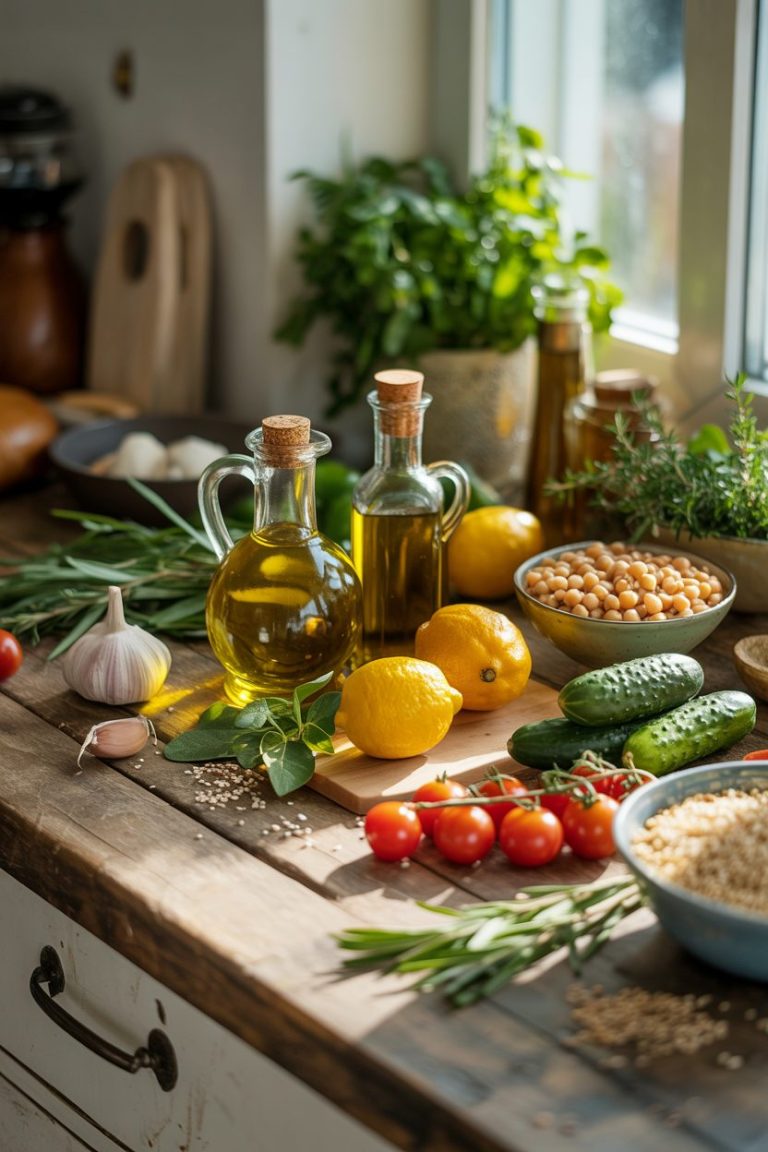
Ever wonder why Mediterranean folks can eat olive oil like it’s going out of style and still stay lean? It’s not magic, it’s science. Extra virgin olive oil is packed with monounsaturated fats that keep you satisfied and help your body absorb all those vitamins from your vegetables.
But here’s the thing—portion control still matters. I use this small olive oil dispenser that makes it easy to drizzle without drowning my food. Two tablespoons is the sweet spot according to most nutritionists. That’s enough to get the health benefits without turning your salad into a calorie trap.
Speaking of salads, if you haven’t tried a proper Mediterranean Chop Chop, you’re missing out on one of the easiest, most refreshing meals you can make. It’s basically summer in a bowl.
Breakfast Options That Don’t Feel Like Punishment
Breakfast used to be my downfall. I’d either skip it entirely or grab something quick and regrettable. Mediterranean breakfasts changed that game completely. You’ve got options that range from super simple to “I’m feeling fancy today.”
The quick wins: Greek yogurt with berries and a drizzle of honey is my go-to when I’m running late. Get Full Recipe. It takes maybe three minutes to throw together, keeps me full until lunch, and tastes like actual dessert. Sometimes I’ll add some chia seeds for extra fiber and omega-3s.
On weekends, I go all out with shakshuka—eggs poached in spicy tomato sauce. It sounds fancy but it’s ridiculously easy. You just need a decent cast-iron skillet and about 20 minutes. The leftovers reheat beautifully too, FYI.
For those mornings when you need something grab-and-go, spinach feta egg muffins are your friend. Bake a batch on Sunday, store them in the fridge, and you’ve got breakfast sorted for the week. I keep mine in these glass meal prep containers—no weird plastic taste, and they stack nicely.
Looking for more morning inspiration? Check out these 30 Mediterranean breakfast ideas or these high-protein breakfast options that keep you satisfied without the calorie overload.
Lunch: The Meal That Makes or Breaks Your Day
Lunch is where a lot of people fall off the wagon. You’re hungry, you’re busy, and that drive-through is looking really tempting. But here’s where Mediterranean recipes really shine—they’re mostly make-ahead friendly and taste better cold or at room temperature anyway.
Quinoa tabbouleh is my lunch MVP. It’s basically a grain salad packed with parsley, tomatoes, cucumbers, and lemon juice. You can make a huge batch and it lasts all week. I pair it with some hummus and whole wheat pita, and boom—lunch is handled.
The wrap game is strong too. Falafel wraps might sound complicated, but you can make baked falafel in about 30 minutes. I use a mini food processor to blitz the chickpeas and herbs—makes the whole thing stupidly easy.
If you’re more of a bowl person, the Mediterranean grain bowl is endlessly customizable. Start with farro or bulgur, add whatever roasted vegetables you have, throw in some chickpeas, drizzle with tahini sauce, and call it lunch. Get Full Recipe.
Quick Win:
Keep canned chickpeas, jarred roasted red peppers, and artichoke hearts in your pantry. These are your emergency lunch ingredients. Toss them with some greens, add feta, drizzle olive oil and lemon—you’ve got a meal in five minutes flat.
For those weeks when you need serious variety, these Mediterranean lunchbox ideas will keep things interesting. Or if you’re into meal prep, check out these quick meal prep strategies that’ll save your weeknights.
Dinner Solutions for Actual Humans with Limited Time
Real talk: I don’t have two hours to spend cooking dinner. Most nights I’ve got maybe 30 minutes before I start eating cereal straight from the box. That’s why I love Mediterranean one-pan dinners—minimal cleanup, maximum flavor.
Lemon herb chicken with roasted potatoes is stupid simple but tastes like you actually tried. Get Full Recipe. Chuck everything on a sheet pan, drizzle with olive oil and lemon, roast for 40 minutes while you do literally anything else. The chicken comes out juicy, the potatoes get crispy, and you’ve got dinner plus leftovers.
Fish dishes are even faster. Grilled salmon with tomato caper relish takes maybe 15 minutes total. I keep a fish spatula specifically for this—it’s weirdly satisfying to flip a perfect piece of fish without it falling apart.
Vegetarian nights are my jam. Stuffed bell peppers look impressive but are basically just rice and vegetables baked inside a pepper. You can stuff them with quinoa, chickpeas, tomatoes, whatever you’ve got. They freeze brilliantly too, so make extra.
When I’m really not feeling it, one-pot Mediterranean pasta saves the day. Everything goes in one pot—pasta, tomatoes, garlic, spinach, olives. Fifteen minutes later you’ve got dinner. Use a good quality pasta pot with a strainer insert and you won’t even dirty a colander.
If seafood is your thing, these Mediterranean seafood dinners are phenomenal. And for busy weeknights, these quick dinner solutions will keep you sane.
Snacks That Won’t Derail Your Progress
Let’s be honest—snacking is where most weight loss attempts go to die. You’re doing great all day, then 3 PM hits and suddenly you’re elbow-deep in a bag of chips. Mediterranean snacking is different because it’s actually built into the eating pattern.
The classics work for a reason. Hummus with veggie sticks is the most obvious choice, but it genuinely works. I make my own hummus in batches using a high-powered blender—it comes out smoother than store-bought and costs way less.
Mini avocado toast bites are perfect when you need something more substantial. Just use whole grain crackers instead of bread, top with mashed avocado, cherry tomatoes, and a sprinkle of za’atar. They look fancy enough for guests but take maybe five minutes.
My personal favorite? Olive tapenade on toasted baguette. Get Full Recipe. It’s salty, satisfying, and packed with healthy fats. I keep a jar in the fridge at all times. Sometimes I’ll spread it on whole grain crackers when I’m too lazy to toast bread.
For more snack inspiration, check out these Mediterranean snacks that actually satisfy or these high-protein options under 200 calories.
Soups That Feel Like a Warm Hug
Soup might not seem like an obvious weight loss tool, but hear me out. A big bowl of soup fills you up with minimal calories and keeps you satisfied for hours. Plus, most Mediterranean soups are basically just vegetables and legumes, so you’re getting tons of fiber and nutrients.
Lentil soup is my cold-weather staple. It’s hearty, protein-rich, and tastes even better the next day. I make it in a large Dutch oven and portion it out for the week. Pair it with a small piece of crusty bread and you’ve got a complete meal for under 300 calories.
Lentil spinach soup is a lighter variation that’s perfect for spring. Get Full Recipe. The spinach wilts right into the soup, adding color and nutrients without any extra effort. Sometimes I’ll throw in some red pepper flakes for a bit of heat.
IMO, soup is the ultimate meal prep food. Make a huge batch on Sunday, freeze half, and you’ve got emergency meals for those nights when cooking feels impossible. These Mediterranean soups under 300 calories prove you don’t need cream or butter to make something delicious.
The Grain Situation: Finding Your Favorites
Whole grains get a bad rap in some diet circles, but they’re a staple of Mediterranean eating for good reason. They provide sustained energy, keep you full, and add texture to meals. The trick is choosing the right ones and watching your portions.
Farro is my ride-or-die grain. It’s chewy, nutty, and holds up well in salads and bowls. Tomato feta farro bowls are ridiculously good—the farro soaks up all the tomato juices and gets this amazing flavor. I cook big batches in my rice cooker because who has time to babysit a pot?
Bulgur wheat is another winner, especially for tabbouleh. It cooks in like 15 minutes and has this lovely tender texture. Quinoa is the overachiever of the grain world—technically a seed, high in protein, gluten-free if that matters to you.
If you’re watching carbs more closely, these Mediterranean pasta alternatives offer creative ways to enjoy your favorite flavors without the carb load. Or check out these low-carb dinner options that are still satisfying.
Pro Tip:
Cook your grains in vegetable broth instead of water. Same cooking time, way more flavor. It’s such a simple trick but makes everything taste more intentional.
Protein Without the Boredom
Look, chicken breast is fine, but if I have to eat another plain grilled chicken breast I might lose it. Mediterranean cooking treats protein as part of the meal, not the star of the show. That mindset shift makes everything more interesting.
Lemon oregano grilled chicken is what happens when you actually season your food. The marinade is just olive oil, lemon juice, garlic, and oregano, but it transforms boring chicken into something you’d actually order at a restaurant. Get Full Recipe.
Fish is huge in Mediterranean cuisine, and for good reason—it’s lean, quick-cooking, and takes on flavors beautifully. Baked cod with tomato olive tapenade is elegant enough for company but easy enough for a Tuesday. I use parchment paper to line my baking sheet—zero cleanup.
Don’t sleep on legumes. Mediterranean chickpea skillet is packed with protein and fiber, costs basically nothing, and reheats perfectly. Plus, chickpeas have this satisfying texture that makes vegetarian meals feel complete.
For more protein-focused ideas, these high-protein chicken recipes are perfect for meal prep, and these high-protein Mediterranean meals under 400 calories prove you can stay satisfied without overdoing it.
Making It Work in Real Life
Here’s what nobody tells you about weight loss: the perfect plan doesn’t exist. What matters is finding something sustainable that you can actually stick with. Mediterranean eating works for me because it doesn’t feel restrictive. I’m not cutting out entire food groups or counting every calorie.
My practical tips after doing this for a while: Keep your pantry stocked with the basics—canned tomatoes, chickpeas, pasta, rice, olive oil, garlic, onions. With these ingredients, you can throw together a decent meal without planning. I use these clear storage containers for my pantry so I can actually see what I have.
Batch cooking is your friend, but don’t go crazy. Make one or two things on Sunday—maybe a soup and a grain—and build different meals around them during the week. That way you’re not eating the exact same thing five days in a row.
For comprehensive planning, these 14-day meal plans and 7-day meal prep strategies take all the guesswork out. And if you’re balancing high protein with Mediterranean flavors, this 7-day high-protein plan nails that combo.
What About Dessert?
Yes, you can still have dessert. Mediterranean desserts tend to be fruit-based and not as aggressively sweet as American desserts, which honestly makes them more satisfying. You eat them and feel content, not like you need to immediately take a nap.
Fresh fruit with a drizzle of honey and some nuts is the go-to. Baked cinnamon apples smell amazing and taste like apple pie without all the butter and sugar. Sometimes I’ll top them with a dollop of Greek yogurt and pretend it’s ice cream.
Frozen yogurt bark is my summer favorite. You spread Greek yogurt on a baking sheet, top with berries and dark chocolate chips, freeze it, then break it into pieces. It’s basically fancy ice cream that takes five minutes to make. I store mine in freezer-safe bags so it doesn’t get freezer burn.
For more sweet options that won’t tank your progress, these Mediterranean desserts prove you don’t have to choose between weight loss and satisfaction.
Frequently Asked Questions
Can you really lose weight eating Mediterranean food?
Absolutely. Research shows people following Mediterranean eating patterns lose weight and, more importantly, keep it off long-term. The combination of high-fiber foods, lean proteins, and healthy fats keeps you satisfied with fewer calories. You’re not starving yourself—you’re just eating better quality food that naturally fills you up without overdoing it on calories.
How much olive oil should I actually use?
Two to three tablespoons per day is the sweet spot according to most nutrition research. That’s enough to get the health benefits without going overboard on calories. I measure mine instead of pouring directly—it’s easy to use way more than you think. A small drizzle goes further than you’d expect, especially if you’re mixing it with lemon juice or vinegar for dressings.
What if I don’t like fish or seafood?
No problem—Mediterranean eating isn’t all about fish. Focus on chicken, turkey, eggs, legumes, and Greek yogurt for your protein. Chickpeas, lentils, and white beans are Mediterranean staples that pack serious protein and fiber. You can absolutely follow this eating style without touching a single piece of fish.
Is Mediterranean food expensive to make?
It can be, but it doesn’t have to be. Stick to basics like dried beans, lentils, seasonal vegetables, canned tomatoes, and less expensive proteins like chicken thighs or eggs. Skip the fancy imported cheeses and expensive fish—you’ll still get all the benefits. Buying olive oil in larger bottles and shopping sales makes a huge difference too.
How long until I see results?
Most people notice changes within two to three weeks—better energy, less bloating, clothes fitting differently. The scale might not move immediately because you’re eating more fiber and your body is adjusting. Give it a solid month before you judge. This isn’t a quick fix; it’s a sustainable approach that works gradually but reliably.
The Bottom Line
Weight loss doesn’t have to mean eating food you hate. Mediterranean recipes prove you can enjoy flavorful, satisfying meals while still making progress toward your goals. The secret isn’t deprivation—it’s choosing foods that fill you up with nutrients instead of empty calories.
I’m not going to promise you’ll drop 20 pounds in a month. That’s not how this works, and honestly, you don’t want it to work that way. Quick fixes don’t last. But if you’re looking for an eating style you can actually maintain, one that makes you feel good and doesn’t require you to carry a food scale everywhere, Mediterranean eating might be exactly what you need.
Start small. Pick three recipes from this list that sound good and try them this week. See how you feel. Notice what you like and what you don’t. Build from there. That’s how real, lasting change happens—one decent meal at a time, not through some dramatic overhaul that you’ll abandon in two weeks.
Your weight loss journey doesn’t need to be miserable. It really doesn’t. And these 30 Mediterranean recipes are proof that healthy eating can be genuinely enjoyable. Now if you’ll excuse me, I have some grilled eggplant calling my name.