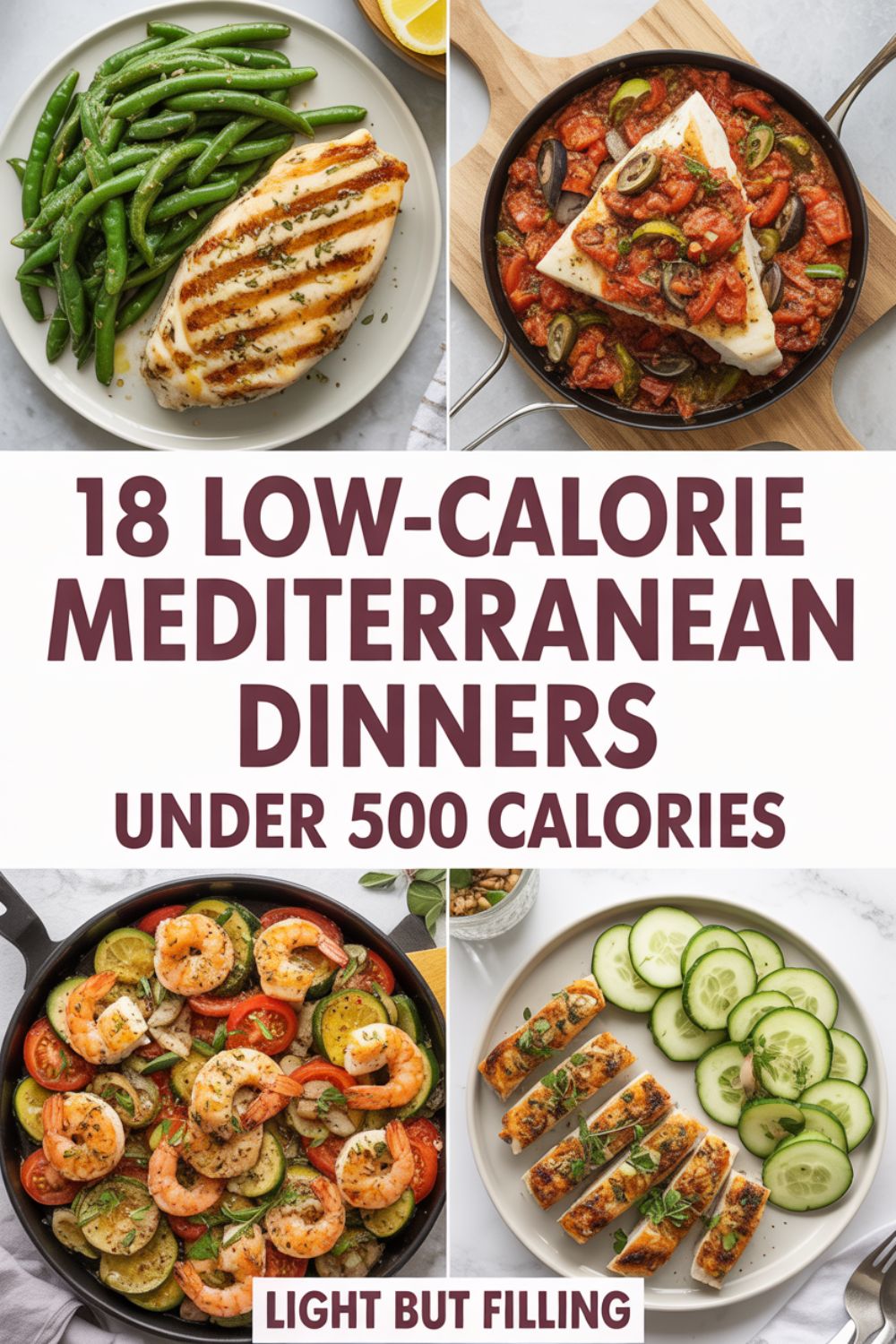
18 Low-Calorie Mediterranean Dinners Under 500 Calories
Look, I get it. You’re scrolling through recipe after recipe, trying to find something that won’t blow your calorie budget but also won’t taste like cardboard. Most “low-calorie” dinners feel like punishment, right? But here’s the thing about Mediterranean cooking that nobody tells you: it’s basically designed to be satisfying without the calorie bomb.
I’ve been cooking Mediterranean-style for years now, and honestly, it’s the only way I can stick to my goals without feeling like I’m on some miserable diet. These 18 dinners I’m sharing? They’re all under 500 calories, packed with flavor, and won’t leave you raiding the fridge two hours later. No weird ingredients you can’t pronounce, no spending your entire paycheck at Whole Foods.
The secret sauce here is pretty simple. Research from Harvard shows that Mediterranean eating patterns help with weight management because they’re naturally high in fiber and lean proteins while keeping portions reasonable. You’re not starving yourself—you’re just eating smarter.
Why Mediterranean Food Works When You’re Counting Calories
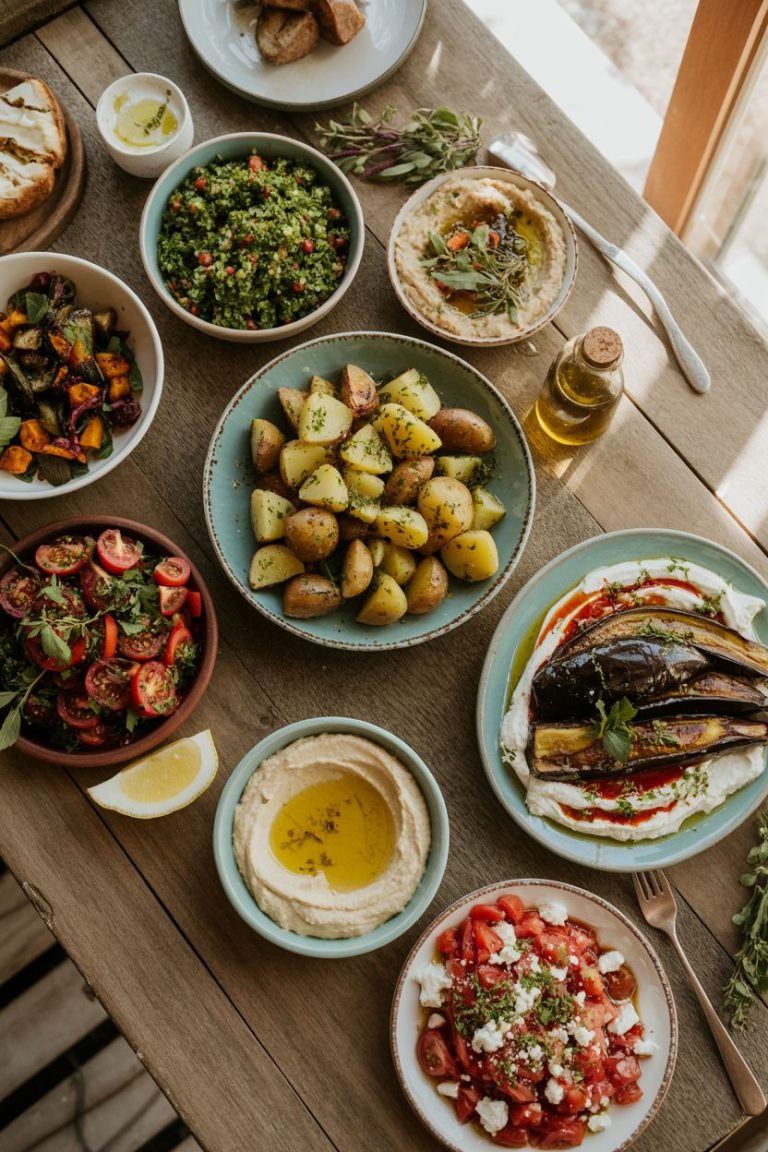
Here’s what I love about this approach. Traditional Mediterranean cooking relies on ingredients that fill you up without packing in ridiculous amounts of calories. We’re talking chickpeas, lentils, fish, loads of vegetables, and olive oil used strategically, not dumped in like it’s free.
The average American dinner clocks in somewhere around 700-800 calories, and that’s before you add the bread basket and dessert. Mediterranean dinners flip that script entirely. You get volume from vegetables, protein from legumes and lean meats, and enough healthy fat to keep everything tasting good and keeping you satisfied.
The core principles are dead simple. Load up on vegetables (they’re cheap and filling), use legumes for bulk and protein, add moderate amounts of whole grains, include fish or chicken when you want it, and use olive oil like you mean it—but measure it. That last part is crucial. Olive oil is healthy, sure, but it’s still 120 calories per tablespoon, and those add up fast.
According to research published in the Journal of Translational Medicine, the Mediterranean diet’s effectiveness comes from its anti-inflammatory properties and ability to control weight through nutrient-dense, lower-calorie foods. Translation: you feel full, your body’s happy, and the scale cooperates.
18 Dinners That Actually Taste Good (And Won’t Wreck Your Calories)
Let’s get into the actual food. These aren’t going to win any Instagram beauty contests, but they’ll keep you full, taste amazing, and fit into your calorie goals without making you feel deprived.
1. Grilled Lemon Herb Chicken with Quinoa
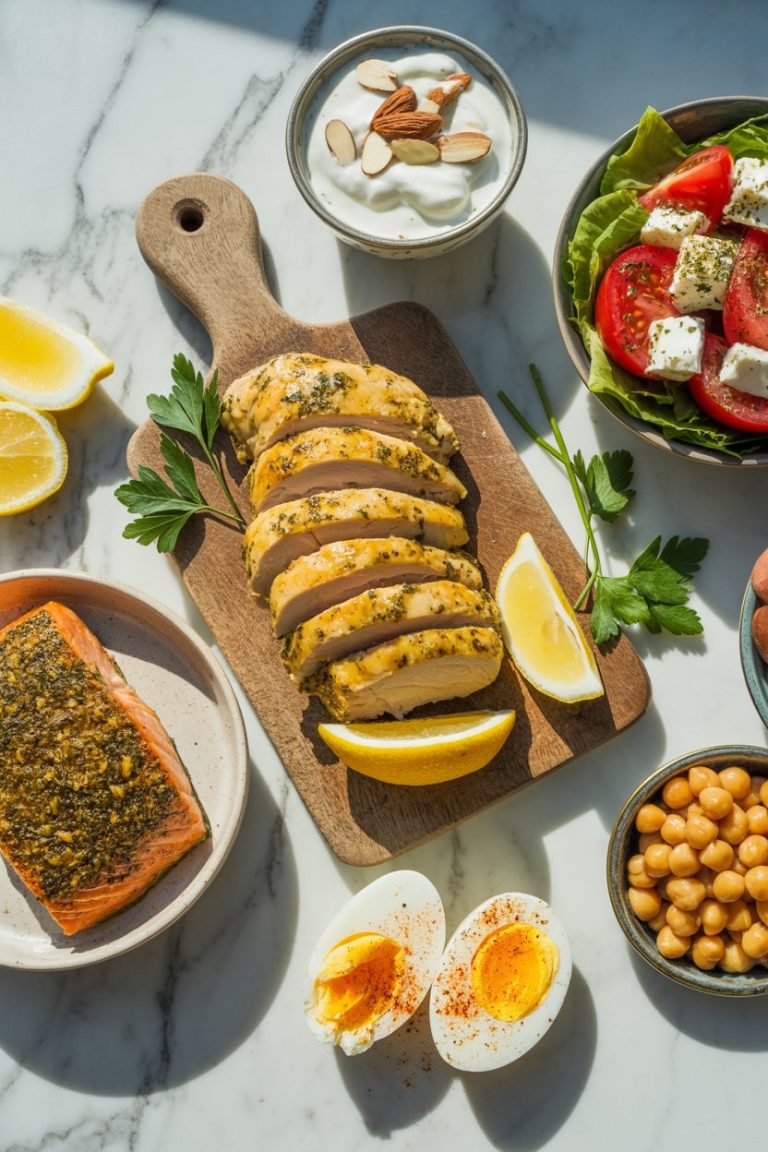
This is my go-to when I need something quick and satisfying. You marinate chicken breast in lemon juice, garlic, oregano, and a touch of olive oil, throw it on the grill or in a grill pan, and serve it over quinoa with roasted vegetables. The whole thing comes in around 420 calories, and the protein keeps you satisfied for hours.
The key here is the marinade. Don’t skip it or try to rush it—give the chicken at least 30 minutes to soak up those flavors. I use this marinade container that makes the whole process stupidly easy. Get Full Recipe.
2. Mediterranean Chickpea Bowl
Chickpeas are basically the MVP of Mediterranean cooking. They’re cheap, they’re filling, and they taste good with pretty much everything. This bowl combines chickpeas with cucumber, tomato, red onion, feta, and a lemon-herb dressing. Clocks in at about 380 calories and actually keeps you full.
I prep these on Sundays and eat them throughout the week. Just keep the dressing separate until you’re ready to eat—nobody wants soggy vegetables. Get Full Recipe.
3. Baked Salmon with Herbed Quinoa
Salmon gets a bad rap for being expensive, but here’s the truth: you don’t need a huge portion. A 4-ounce piece is plenty when you pair it with quinoa and vegetables. Season it with dill, garlic, and lemon, bake it for 15 minutes, and you’re done. Total calories? Around 440.
If you’ve never baked salmon before, trust me—it’s harder to mess up than to get right. I use parchment paper sheets to make cleanup brain-dead simple. Get Full Recipe.
Speaking of salmon dishes, if you’re into trying different flavor profiles, you might want to check out this grilled salmon with tomato-caper relish or this baked salmon with dill and garlic. Both are equally low-cal and pack serious flavor.
4. Lentil Spinach Soup
This soup is basically liquid comfort food that won’t destroy your calorie budget. Lentils, spinach, tomatoes, garlic, and vegetable broth create something that tastes like you spent hours on it but actually takes about 30 minutes. One generous bowl? Roughly 290 calories.
The beauty of lentil soup is that it’s even better the next day. Make a big batch, portion it out in glass meal prep containers, and you’ve got lunches sorted. Get Full Recipe.
5. Stuffed Bell Peppers with Quinoa and Veggies
These are criminally underrated. You hollow out bell peppers, stuff them with a mixture of quinoa, diced vegetables, tomatoes, and herbs, then bake until the peppers are tender. Each pepper comes in around 320 calories and feels like a complete meal.
I cut the peppers lengthwise instead of across the top—makes them easier to stuff and they sit better in the pan. Get Full Recipe.
6. Greek Salad (The Actually Good Version)
Most Greek salads are basically an excuse to eat a pound of feta cheese. This version keeps the portions reasonable—cucumbers, tomatoes, red onion, olives, a moderate amount of feta, and a simple olive oil and lemon dressing. Add some chickpeas for protein, and you’re looking at about 350 calories.
The secret is the quality of your tomatoes and cucumbers. Use the best fresh vegetables you can find, because there’s nowhere to hide in a salad this simple. Get Full Recipe.
7. Shakshuka (Eggs in Spicy Tomato Sauce)
Shakshuka isn’t traditionally dinner, but who’s making rules here? Eggs poached in a spicy tomato sauce with peppers and onions, served with a small piece of whole grain bread. The whole thing? About 380 calories, and it’s ridiculously satisfying.
I use a cast iron skillet for this because it goes from stovetop to table and makes you look like you know what you’re doing. Get Full Recipe.
8. Grilled Chicken Shawarma Salad
All the flavors of shawarma without the calorie-dense pita and heavy sauces. You marinate chicken in yogurt and spices, grill it, then serve it over a bed of greens with cucumbers, tomatoes, and a light tahini dressing. Comes in around 410 calories and tastes like something from a restaurant.
The marinade makes this, so don’t skip it. If you’re short on time, even 15 minutes makes a difference. Get Full Recipe.
9. One-Pot Mediterranean Pasta
Yes, you can have pasta and keep it under 500 calories. The trick is portion control and loading up the dish with vegetables. Whole wheat pasta, cherry tomatoes, spinach, garlic, olives, and a touch of feta. One serving runs about 450 calories.
The “one-pot” part means less cleanup, which is honestly half the battle on weeknights. Everything cooks together, the flavors meld, and you’re done in 20 minutes. Get Full Recipe.
For more pasta inspiration that won’t wreck your diet, try this whole wheat spaghetti with cherry tomatoes and basil or experiment with spaghetti squash with tomato-basil sauce if you want to cut carbs even further.
10. Mediterranean Tuna Stuffed Peppers
This is what I make when I’m too lazy to actually cook but want something more interesting than a sad desk salad. Mix canned tuna with white beans, diced vegetables, lemon juice, and herbs, then stuff it into bell pepper halves. Each pepper? About 280 calories.
Use good quality tuna—it makes a difference. I keep canned tuna in olive oil in my pantry specifically for this. Get Full Recipe.
11. Lemon Garlic Grilled Chicken with Couscous
Couscous is basically the lazy person’s grain. It “cooks” in five minutes because you just pour hot water over it. Pair it with lemon-garlic grilled chicken and some roasted vegetables, and you’ve got a 430-calorie dinner that feels fancy but requires minimal effort.
The couscous soaks up all the flavors from the chicken and vegetables, so everything tastes cohesive instead of like random items thrown on a plate. Get Full Recipe.
12. Baked Falafel with Tzatziki
Traditional falafel is deep-fried and delicious but also calorie-dense. Baked falafel gives you the same flavors and textures without the oil bath. Serve it with tzatziki sauce and a simple salad, and you’re looking at around 390 calories.
The trick to good baked falafel is getting them crispy on the outside. I brush them lightly with olive oil using a silicone brush before baking. Get Full Recipe.
13. Mediterranean Chickpea Wraps
These are my answer to fast food cravings. Mashed chickpeas with tahini, lemon, and spices, wrapped in a whole wheat tortilla with vegetables. Each wrap is about 370 calories and actually fills you up, unlike those sad lettuce wraps that leave you hungry 30 minutes later.
I use large whole wheat tortillas because they hold together better than the small ones and don’t fall apart mid-bite. Get Full Recipe.
14. Grilled Eggplant with Yogurt Sauce
Eggplant is one of those vegetables that people either love or think tastes like spongy sadness. The difference is in how you cook it. Grilled eggplant with a garlicky yogurt sauce, served with a small portion of bulgur or quinoa, comes in around 340 calories and actually tastes interesting.
Salt your eggplant slices and let them sit for 20 minutes before grilling—it draws out the bitterness and prevents them from absorbing too much oil. Get Full Recipe.
15. Shrimp Saganaki (Spicy Tomato Feta)
This Greek dish sounds fancy but is embarrassingly easy. Shrimp cooked in a spicy tomato sauce with feta cheese, served over a small portion of orzo or with crusty bread. The whole thing runs about 420 calories and tastes like you ordered takeout.
Shrimp cooks fast, so don’t walk away from the stove or you’ll end up with rubber. Get Full Recipe.
16. Cucumber Tomato Feta Salad
Sometimes the simplest things are the best. This salad is literally just cucumbers, tomatoes, red onion, feta, olives, and a lemon-oregano dressing. Add some grilled chicken or chickpeas for protein, and you’ve got a 360-calorie dinner that requires zero cooking skills.
The key is cutting everything into similar-sized pieces so each bite gets a little of everything. Get Full Recipe.
Looking for more protein-packed options? Check out these high-protein Mediterranean meals under 400 calories or browse through high-protein low-calorie meals for even more variety.
17. Lentil Sweet Potato Stew
This stew is what I make when I want something comforting but don’t want to blow my calorie budget. Lentils, sweet potatoes, tomatoes, and warming spices create something that tastes rich and hearty but clocks in around 340 calories per bowl.
The sweet potatoes add natural sweetness that balances the acidity of the tomatoes. Don’t skip them or try to substitute regular potatoes—it’s not the same. Get Full Recipe.
18. Whipped Feta Dip with Vegetables and Pita
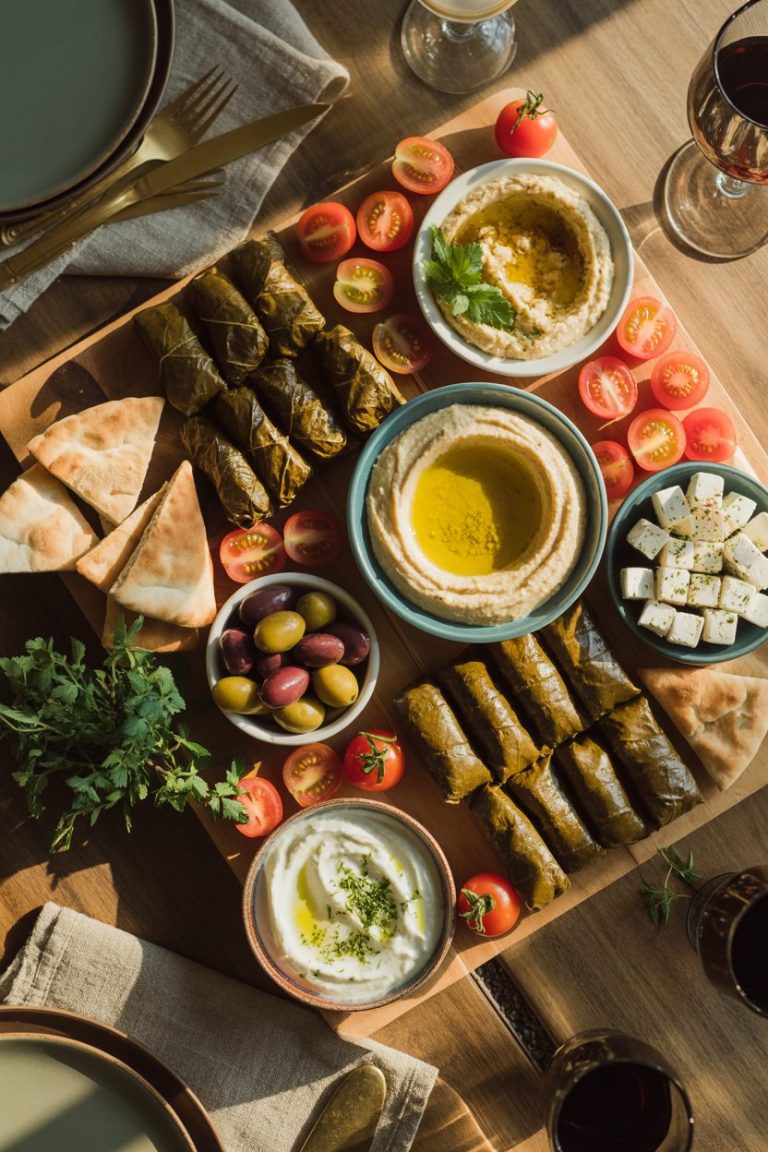
Okay, this is more of an appetizer-turned-dinner situation, but hear me out. Whipped feta with olive oil and herbs, served with loads of raw vegetables and a small amount of whole wheat pita. The whole spread comes in around 380 calories and feels indulgent without actually being heavy.
I make the whipped feta in a food processor because getting it smooth and creamy by hand is basically impossible. Get Full Recipe.
Making These Dinners Work in Real Life
Here’s the reality check. These recipes are great, but they only work if you actually make them. And you’re only going to make them if they fit into your actual life, not some fantasy version where you have unlimited time and energy.
Meal prep is your friend. Not the Instagram version where everything looks perfect in matching containers, but the practical version where you cook some grains, chop some vegetables, and marinate some protein on Sunday so weeknight dinners don’t feel like a second job.
According to Mayo Clinic’s research on Mediterranean eating, the sustainability of this diet comes from its flexibility and use of simple, accessible ingredients. You’re not hunting down obscure superfoods or spending a fortune on specialty items.
I keep my pantry stocked with basics: canned chickpeas, lentils, canned tomatoes, olive oil, quinoa, whole wheat pasta, and various spices. With those staples, you can throw together a decent dinner even when your fridge is looking sad.
The Calorie Math That Actually Matters
Let’s talk about why 500 calories for dinner actually makes sense. If you’re aiming for weight loss on around 1,800-2,000 calories per day, splitting it roughly into 400 for breakfast, 400-500 for lunch, 500 for dinner, and 200-300 for snacks gives you structure without feeling restrictive.
These Mediterranean dinners hit that 500-calorie sweet spot because they’re volume-based. You get a full plate of food that looks and feels like a real meal, not some sad portion that leaves you staring at the bottom of the bowl wondering where your dinner went.
The fiber from vegetables and whole grains, combined with protein from legumes, fish, or chicken, creates satiety that lasts. You’re not going to be raiding the pantry at 9 PM wondering why you’re still hungry. Well, hopefully not. I’m not going to lie and say these are magic.
Common Mistakes People Make
I’ve made every mistake possible with low-calorie cooking, so let me save you some trouble. The biggest one? Thinking “low-calorie” means “no flavor.” Wrong. You need to season your food aggressively. Herbs, spices, lemon juice, vinegar—these are your friends and they add basically zero calories.
Another big mistake: not measuring oils and thinking you’re using “a drizzle” when you’re actually using a quarter cup. Get measuring spoons. Use them. The difference between 1 tablespoon and 3 tablespoons of olive oil is 240 calories, and your eyes cannot tell the difference when you’re pouring.
People also tend to skip vegetables because they’re “boring,” then wonder why their 400-calorie dinner left them hungry. Vegetables add volume, fiber, vitamins, and minerals without adding many calories. They’re literally the secret weapon of low-calorie cooking.
And honestly? Not batch-cooking anything. If you’re starting from scratch every single night, you’ll get tired and order pizza. Cook extra. Future you will be grateful.
Why Mediterranean Over Other “Diets”
I’ve tried a lot of eating patterns over the years, and Mediterranean is the only one I’ve stuck with long-term. It’s not because I’m some health saint with incredible willpower—it’s because it doesn’t feel like deprivation.
Keto made me angry and gave me terrible breath. Paleo was expensive and made me miss beans. Veganism was great until I realized I was just eating pasta and bread all day. But Mediterranean? It’s flexible enough to work with different preferences, accessible enough that you don’t need a specialty grocery store, and satisfying enough that you’re not white-knuckling it through dinner.
Johns Hopkins Medicine notes that Mediterranean-style eating helps keep cholesterol levels healthy, enhances blood sugar control, reduces inflammation, and helps arteries stay flexible. Those benefits come from eating actual food, not popping supplements or drinking shakes.
IMO, the best diet is the one you can actually stick with. And Mediterranean hits that mark because it’s based on foods that humans have been eating for thousands of years, not some newfangled approach invented by someone trying to sell you something.
If you’re looking to dive deeper into Mediterranean eating patterns, you might find these helpful: 14-day Mediterranean meal plan for beginners or this 7-day meal prep plan for busy people.
Getting Started Without Overwhelming Yourself
Don’t try to overhaul your entire diet on Monday. That’s how you end up back at square one by Thursday. Pick three of these recipes that sound good, make them this week, and see how you feel. If they work, add a couple more next week.
You don’t need to buy everything at once. Start with basics: olive oil, canned chickpeas, canned tomatoes, some spices, and whatever vegetables look good at the store. Build from there as you figure out what you actually like making.
And here’s the thing nobody tells you: you’re going to mess some of these up the first time. You’ll overcook the chicken or undersalt the vegetables or forget to soak the lentils. That’s normal. Keep going. The second time is always better than the first.
Frequently Asked Questions
Can I really stay full on 500 calories for dinner?
Yes, if you’re eating the right foods. Mediterranean dinners are designed around high-fiber vegetables, protein-rich legumes, and whole grains that provide volume and satiety. The key is including enough protein (at least 25-30g per meal) and plenty of vegetables to fill your plate without filling your calorie budget. These aren’t tiny portions—they’re full plates of real food.
Do I need expensive ingredients to cook Mediterranean food?
Not at all. The backbone of Mediterranean cooking is actually pretty affordable: canned chickpeas and lentils, seasonal vegetables, whole grains like bulgur and quinoa, and moderate amounts of olive oil. Yes, fresh fish and quality feta cost more, but you can make plenty of these recipes with pantry staples. Skip the specialty stores and shop your regular grocery store.
How do these recipes compare to regular Mediterranean restaurant meals?
Restaurant Mediterranean meals typically clock in at 800-1200 calories because they use significantly more oil, larger portions of grains and proteins, and often include extras like bread and dessert. These home-cooked versions give you the same flavors and satisfaction but with controlled portions and measured ingredients. You’re still getting authentic Mediterranean food, just in more reasonable amounts.
Can I meal prep these dinners for the week?
Most of these recipes meal prep beautifully. Soups, stews, grain bowls, and marinated proteins all store well for 4-5 days. The exceptions are dishes with delicate greens or crispy components—prep the ingredients separately and assemble right before eating. I usually cook 2-3 recipes on Sunday and rotate them throughout the week to avoid food boredom.
Will I lose weight eating these dinners every night?
Weight loss depends on your total daily calorie intake, not just dinner. If you’re in a calorie deficit for the day, yes, these 500-calorie dinners support weight loss. But if you’re eating 3,000 calories total and think one Mediterranean dinner will cancel that out, that’s not how it works. These recipes help by keeping dinner satisfying and portion-controlled, but the rest of your eating matters too.
Final Thoughts
Here’s what I’ve learned after years of trying to eat better without making myself miserable: you need food that tastes good, doesn’t take forever to make, and actually keeps you satisfied. These 18 Mediterranean dinners check all those boxes.
They’re not going to change your life overnight. You’re not going to wake up 20 pounds lighter after eating grilled chicken and quinoa for a week. But they give you a sustainable way to eat well without feeling like you’re on some restrictive diet that you’ll abandon the second someone offers you pizza.
The Mediterranean approach works because it’s based on real food that humans have been eating forever. No weird shakes, no expensive supplements, no counting macros down to the gram. Just vegetables, whole grains, legumes, lean proteins, and enough olive oil to make everything taste good.
Start with whichever recipes sound most appealing to you. Make them once, see how they fit into your life, and adjust from there. Some you’ll love, some you’ll modify, and some you’ll skip entirely. That’s fine. The goal is finding a handful of dinners you actually enjoy making and eating, not forcing yourself through meals you hate because they’re “healthy.”
And remember: progress over perfection. You don’t need to make every meal from scratch or follow these recipes exactly. Use them as a starting point, adapt them to what you have in your kitchen, and don’t stress if dinner doesn’t look Instagram-perfect. It just needs to taste good and fit your goals.