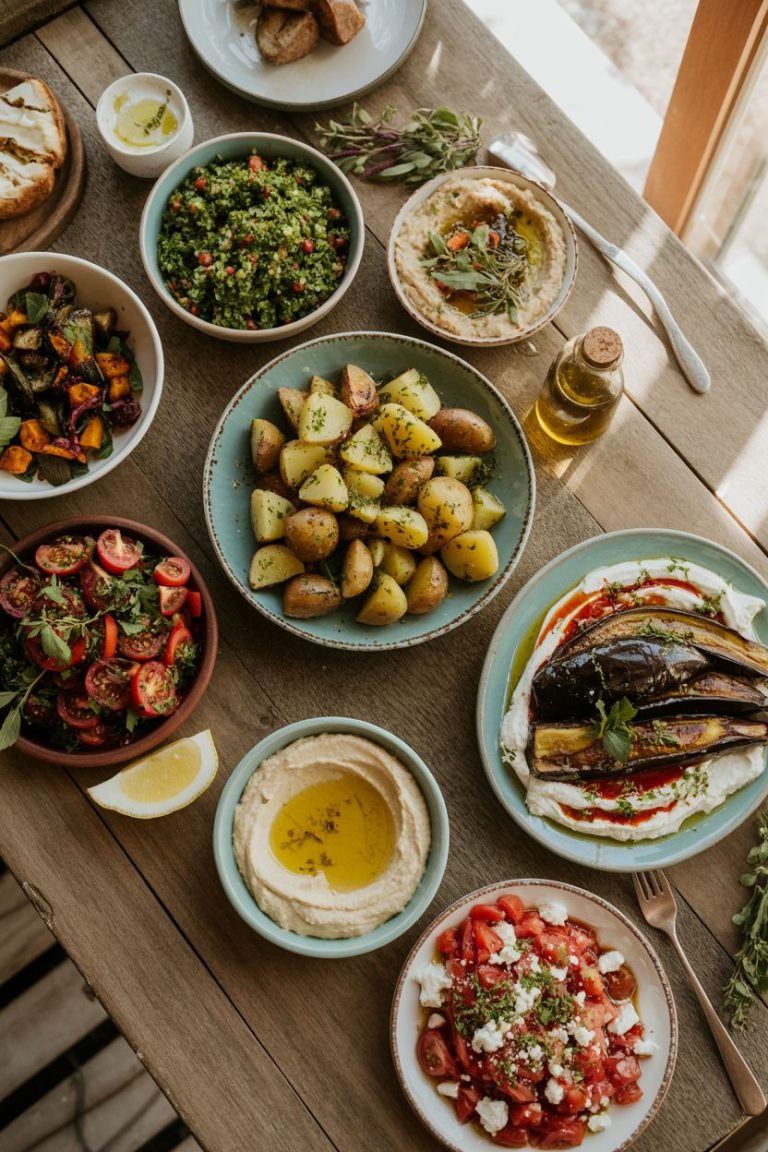
20 Mediterranean Side Dishes That Make Every Meal Better
Look, I’m gonna be real with you. Side dishes are where Mediterranean cooking truly shines, and honestly? Most people are missing out big time. We’re talking about dishes that can turn a boring Tuesday dinner into something you’d actually look forward to eating.
I’ve spent years cooking Mediterranean food, and here’s what I’ve learned: the sides are never just afterthoughts. They’re vibrant, packed with flavor, and genuinely make you feel good after eating them. No post-meal food coma, no regrets—just satisfied and energized.
These aren’t your standard steamed broccoli or plain rice situations. We’re diving into roasted vegetables drizzled with quality olive oil rich in polyphenols, grains that actually taste like something, and legumes prepared in ways that’ll convert even the skeptics.

These are the basics that make healthy cooking fast and actually enjoyable: less mess, less time, and meals your whole family will happily eat.
- baking sheetCheck today’s price →
- dry panCheck today’s price →
- large skilletCheck today’s price →
- food processorCheck today’s price →
Amazon prices and deals change often, so it’s worth checking today’s price.
Why Mediterranean Sides Hit Different
Ever wonder why Mediterranean food feels so much lighter yet more satisfying than other cuisines? It’s not magic—it’s all about how ingredients work together. These sides complement your main dish without overwhelming it, adding texture, flavor, and actual nutrition.
The beauty of Mediterranean cooking patterns lies in simplicity. You’re not drowning vegetables in heavy cream sauces or butter. Instead, you’re letting quality ingredients speak for themselves with just enough olive oil, herbs, and citrus to make them pop.
Plus, let’s talk fiber. These dishes pack serious fiber from vegetables, legumes, and whole grains. You know that feeling when you eat a meal and you’re hungry again in an hour? Yeah, that doesn’t happen here.
1. Roasted Lemon Garlic Potatoes
These potatoes are what dreams are made of. Crispy on the outside, fluffy inside, with that perfect tangy bite from fresh lemon juice. I make these at least twice a week because they’re ridiculously easy and work with literally everything.
Cut your potatoes into wedges, toss them with olive oil, minced garlic, lemon zest, oregano, salt, and pepper. Roast at 425°F for about 35-40 minutes until golden and crispy. The key is not overcrowding your baking sheet—give them space to breathe and get crispy.
Pro move? Squeeze fresh lemon juice over them right when they come out of the oven. Game changer. If you’re looking for more potato-forward ideas, check out this lemon herb chicken with roasted potatoes.
2. Mediterranean Quinoa Pilaf
Quinoa gets a bad rap for being bland, but that’s because people don’t know how to cook it properly. This pilaf version? Absolute flavor bomb. I cook mine in vegetable broth instead of water—immediately makes it taste ten times better.
Toast your quinoa first in a dry pan for a couple minutes. This brings out a nutty flavor that plain quinoa just doesn’t have. Then add your broth, bring to a boil, reduce heat, and let it do its thing for about 15 minutes.
Once it’s cooked, fluff it with a fork and fold in diced cucumbers, cherry tomatoes, fresh parsley, mint, and a simple lemon-olive oil dressing. It’s fresh, it’s filling, and it keeps well in the fridge for days.
3. Classic Greek Salad
I know what you’re thinking—salad as a side dish? But hear me out. A proper Greek salad isn’t some wimpy pile of lettuce. It’s chunky cucumbers, ripe tomatoes, red onions, Kalamata olives, and thick slabs of feta cheese.
The dressing is stupid simple: olive oil, red wine vinegar, dried oregano, salt, and pepper. That’s it. No fancy ingredients needed. The quality of your olive oil matters here though—splurge a little on extra virgin olive oil with that peppery kick.
Cut everything into big, bite-sized chunks. None of this finely diced nonsense. You want to actually taste each ingredient. For a more filling version, try this Greek salad but like actually good.
4. Sautéed Garlic Spinach
This is my go-to when I need something green on the plate fast. Takes maybe 5 minutes tops. Heat olive oil in a large skillet, add sliced garlic, let it sizzle for 30 seconds, then dump in your spinach.
Fresh spinach wilts down dramatically—like, a whole bag becomes maybe a cup of cooked spinach. So don’t be shy with the quantity. Season with salt, pepper, and a squeeze of lemon juice at the end.
The garlic shouldn’t brown—if it does, it turns bitter and ruins the whole thing. Keep the heat at medium and keep things moving. Simple but effective.
5. Roasted Red Pepper and Feta Dip
Okay technically this is more of a dip than a traditional side, but it’s so good I had to include it. You can make it with jarred roasted peppers (I won’t judge), but roasting your own takes it to another level.
Blend roasted red peppers, feta cheese, garlic, olive oil, lemon juice, and a pinch of red pepper flakes in a food processor until smooth. Adjust the consistency with olive oil—some people like it thick, I prefer mine a bit looser for dipping.
Serve it with warm pita, vegetables, or spread it on sandwiches. It keeps in the fridge for about a week, though it never lasts that long in my house.
Looking for more Mediterranean appetizer ideas? You might enjoy this whipped feta dip with honey and thyme or check out these 30 Mediterranean appetizers you’ll actually want to make on repeat.
6. Lemon Herb Couscous
Couscous is criminally underrated. It cooks in literally 5 minutes and soaks up flavors like nobody’s business. I use it when I need something fast that doesn’t taste like I rushed it.
Boil your broth (or water if that’s all you have), pour it over the couscous in a 1:1 ratio, cover it, and walk away for 5 minutes. Come back, fluff it with a fork, and mix in fresh herbs, lemon zest, olive oil, and maybe some toasted pine nuts if you’re feeling fancy.
The texture should be light and fluffy, not clumpy. If it clumps up, you used too much liquid or didn’t fluff it properly. Also pairs perfectly with dishes like lemon garlic grilled chicken.
7. White Bean and Tomato Salad
Canned beans are a lifesaver, and anyone who says otherwise is lying or has way too much time on their hands. This salad comes together in minutes and packs serious protein and fiber.
Drain and rinse your white beans (cannellini beans work great), toss them with halved cherry tomatoes, diced red onion, fresh basil, olive oil, and red wine vinegar. Season generously with salt and pepper.
Let it sit for at least 15 minutes before serving so the flavors can mingle. The beans soak up the dressing and it gets better as it sits. I’ve eaten this for lunch straight out of the fridge and it’s genuinely satisfying.
If you’re into bean-based dishes, definitely try this tuna white bean salad or explore more options in this collection of Mediterranean white bean recipes.
8. Balsamic Roasted Vegetables
This is my answer to “I have random vegetables in my fridge and no idea what to do with them.” Zucchini, bell peppers, eggplant, cherry tomatoes—whatever you’ve got works.
Chop everything into similar-sized pieces, drizzle with olive oil and balsamic vinegar, season with salt, pepper, and Italian herbs, then roast at 400°F for about 25-30 minutes. Stir once halfway through.
The balsamic caramelizes slightly and creates this sweet-tangy glaze that’s borderline addictive. I use parchment paper on my sheet pan for easy cleanup—totally worth it.
9. Tabbouleh Salad
Real tabbouleh is mostly herbs with a bit of bulgur wheat, not the other way around. I see so many versions that are just grain salad with a few sad parsley leaves sprinkled on top. That’s not tabbouleh.
Soak your bulgur in hot water for about 15 minutes until tender. Meanwhile, finely chop a massive amount of fresh parsley and mint—like, way more than seems reasonable. Add diced tomatoes, cucumbers, and green onions.
Dress it with olive oil, fresh lemon juice, salt, and pepper. The ratio should be heavy on the herbs and light on the grain. It’s fresh, bright, and incredibly refreshing. For a fuller meal, pair it with hummus and pita.
10. Grilled Asparagus with Lemon
Asparagus on the grill develops this slightly charred, smoky flavor that you just can’t get any other way. Trim the woody ends (just bend them until they snap naturally), toss with olive oil, salt, and pepper.
Grill over medium-high heat for about 5-7 minutes, turning occasionally. They should be tender but still have some bite—nobody wants mushy asparagus. Finish with a squeeze of fresh lemon and maybe some shaved Parmesan if you’re into that.
Don’t have a grill? A grill pan on your stove works great too. Same technique, same results.
11. Cucumber and Tomato Feta Salad
Sometimes you just need something cold and crunchy, you know? This salad delivers exactly that. Dice up cucumbers and tomatoes, crumble in some feta, add thinly sliced red onions.
The dressing is olive oil, lemon juice, dried oregano, and a touch of garlic. Toss everything together and let it chill in the fridge for at least 30 minutes. The vegetables release their juices and create this light, flavorful dressing.
I make this all summer long because it requires zero cooking and tastes amazing. Plus it goes with literally everything from grilled meats to fish. Check out this cucumber tomato feta salad for the full recipe.
12. Za’atar Roasted Cauliflower
Za’atar is this Middle Eastern spice blend that’s basically magic. It’s got thyme, oregano, sumac, and sesame seeds. If you haven’t tried it yet, you’re seriously missing out.
Cut cauliflower into florets, toss with olive oil and generous amounts of za’atar, then roast at 425°F for about 30 minutes until golden and crispy around the edges. The cauliflower gets sweet and nutty, the za’atar adds this tangy, herby kick.
You can find za’atar at most grocery stores now, or order quality za’atar spice blend online. It keeps forever in your pantry and transforms basically any roasted vegetable.
13. Marinated Olives
Okay this is barely a recipe, but marinated olives are such an easy way to elevate your meal. Buy decent quality olives—not the canned black olive nonsense—and marinate them yourself.
Combine Kalamata and green olives in a bowl with olive oil, lemon zest, crushed garlic, red pepper flakes, and fresh herbs like rosemary or thyme. Let them hang out in the fridge for at least a few hours, preferably overnight.
They keep for weeks and make everything feel fancier. Throw them on a mezze platter, serve them with cheese, or just eat them straight from the jar while standing in front of the fridge at midnight. No judgment.
14. Lentil and Herb Salad
Lentils are the unsung heroes of Mediterranean cooking. They’re cheap, packed with protein and fiber, and super versatile. This salad version is one of my favorites for meal prep.
Cook your lentils until just tender—not mushy. French green lentils hold their shape best for salads. Drain and let them cool slightly, then toss with diced bell peppers, red onions, fresh parsley, and a lemon vinaigrette.
This works warm or cold, which makes it perfect for packed lunches. The lentils soak up the dressing and get more flavorful as they sit. Add some crumbled feta if you want extra richness. For more lentil inspiration, try this Mediterranean lentil salad.
If you’re into hearty grain and legume dishes, you’ll love these Moroccan spiced quinoa bowls or this warming lentil spinach soup.
15. Herb-Roasted Carrots
Carrots get weirdly sweet when you roast them. Like, candy-level sweet but in a vegetable way. Cut them into sticks or leave them whole if they’re those cute baby carrots.
Toss with olive oil, fresh thyme, a bit of honey (optional but recommended), salt, and pepper. Roast at 400°F for about 25-30 minutes until caramelized and tender. The edges should be slightly charred and crispy.
Sometimes I add a sprinkle of cumin or coriander for a different vibe. Carrots are forgiving—experiment and see what you like. A quality roasting pan helps distribute heat evenly for perfect caramelization.
16. Farro with Roasted Vegetables
Farro is this ancient grain that’s got way more personality than plain rice. It’s chewy, nutty, and holds up well to bold flavors. Cook it like pasta—boil in salted water until tender, then drain.
Mix your cooked farro with whatever roasted vegetables you have—I like zucchini, bell peppers, and cherry tomatoes. Add some fresh basil, a drizzle of good olive oil, and maybe some pine nuts for crunch.
This keeps well in the fridge and actually tastes better the next day once the flavors meld together. IMO, it beats brown rice any day of the week. For complete meals featuring farro, check out this garlicky grilled chicken with farro and roasted veggies.
17. Garlic Green Beans
Green beans get a bad rap because most people overcook them into oblivion. Done right, they should still have some snap to them. Blanch them in boiling salted water for about 3 minutes, then shock them in ice water.
Heat olive oil in a pan, add sliced garlic, then toss in your blanched green beans. Sauté for just a couple minutes until heated through. Season with salt, pepper, and a squeeze of lemon.
The blanching sets the bright green color and the quick sauté adds flavor without turning them mushy. Simple technique, massive difference in taste and texture.
18. Mediterranean Rice Pilaf
Rice pilaf is basically rice that went to flavor school. Toast your rice in olive oil first until it smells nutty, then add broth, cover, and simmer. This extra step makes plain rice taste a hundred times better.
Once cooked, fluff it with a fork and stir in toasted almonds or pine nuts, dried cranberries or raisins, fresh parsley, and some lemon zest. The combination of textures and flavors is what makes this work.
You can make this ahead and reheat it—just add a splash of broth or water when reheating so it doesn’t dry out. A heavy-bottom pot with lid is essential for evenly cooked rice every time.
19. Blistered Cherry Tomatoes
This is stupid easy but looks and tastes impressive. Heat olive oil in a cast iron skillet until it’s really hot, add whole cherry tomatoes, and just let them sit without moving them.
They’ll start to blister and burst after a few minutes. Add minced garlic, fresh basil, salt, and pepper. The tomatoes release their juices and create this amazing sauce that’s perfect for spooning over fish, chicken, or just eating with crusty bread.
The key is high heat and not moving them too much. Let them develop that char. It concentrates all the flavors and makes regular cherry tomatoes taste like they came from a fancy restaurant.
20. Hummus and Veggie Platter
Look, I know hummus is technically a dip, but in Mediterranean culture, it’s served as a side dish all the time. Making it from scratch is easy if you have a food processor, and it tastes way better than store-bought.
Blend chickpeas, tahini, lemon juice, garlic, and olive oil until smooth. Adjust the consistency with water or more olive oil. Serve it in a shallow bowl with a well in the center filled with olive oil and a sprinkle of paprika.
Surround it with cut vegetables, pita bread, or use it as a spread on sandwiches. It’s protein-packed, filling, and keeps in the fridge for a week. For a complete veggie spread, try this grilled veggie platter with hummus.
Frequently Asked Questions
What makes a side dish Mediterranean?
Mediterranean side dishes typically feature fresh vegetables, legumes, whole grains, and olive oil as primary ingredients. They’re seasoned with herbs like oregano, basil, and parsley, plus citrus like lemon. The focus is on simple preparation that highlights natural flavors rather than heavy sauces or excessive processing.
Can I meal prep these Mediterranean side dishes?
Absolutely. Most grain-based sides like quinoa pilaf, farro, and rice pilaf keep well in the fridge for 4-5 days. Roasted vegetables stay good for 3-4 days. Salads with dressing are best consumed within 2 days, but you can prep the ingredients and dress them fresh. Bean and lentil salads actually improve in flavor after sitting overnight.
Are Mediterranean side dishes good for weight loss?
Yes, they can be. They’re typically high in fiber from vegetables and whole grains, which keeps you full longer. The healthy fats from olive oil and nuts provide satiety without excessive calories. Plus, they’re nutrient-dense rather than calorie-dense, meaning you get more nutrition per calorie compared to processed sides.
What’s the best olive oil to use for these dishes?
Use extra virgin olive oil for the best flavor and health benefits. It contains the highest levels of beneficial polyphenols and antioxidants. For finishing dishes and dressings, splurge on higher-quality EVOO with a peppery, robust flavor. For roasting and cooking, mid-range EVOO works perfectly fine.
How do I make Mediterranean sides taste better without adding extra calories?
Focus on fresh herbs, citrus zest, and quality spices. These add massive flavor without calories. Properly seasoning with salt brings out natural flavors in vegetables. Roasting instead of steaming concentrates flavors through caramelization. And honestly, a small amount of really good olive oil goes further than a large amount of cheap stuff—the flavor is more concentrated.
The Bottom Line
Mediterranean side dishes aren’t complicated. They don’t require fancy equipment or hard-to-find ingredients. What they do require is decent quality produce, good olive oil, and maybe five minutes of actual effort.
The magic happens when you stop overthinking it. Roast some vegetables, cook some grains, toss things with olive oil and lemon. These aren’t revolutionary techniques—they’re just solid, time-tested approaches that happen to taste incredible and make you feel good.
Start with one or two sides that sound appealing. Master those, then branch out. Before you know it, you’ll have a whole rotation of Mediterranean sides that make every meal feel like you actually tried—even on those nights when you absolutely did not.
Your weeknight dinners deserve better than frozen vegetables microwaved with zero seasoning. These sides prove that eating well doesn’t mean spending hours in the kitchen or breaking the bank. Just real food, simply prepared, tasting exactly how it should.