
15 Mediterranean Smoothies Packed with Nutrients
Look, I get it. You want something quick, tasty, and healthy that doesn’t feel like you’re drinking lawn clippings. Mediterranean smoothies hit that sweet spot where ancient wisdom meets modern convenience, and honestly? They’re pretty damn good.
I’ve been experimenting with these nutrient-packed blends for years now, and they’ve become my secret weapon for mornings when I need something substantial but don’t want to stand over a stove. The Mediterranean approach to smoothies isn’t about cramming in every superfood known to humanity. It’s about balance, quality ingredients, and flavors that actually make sense together.
Why Mediterranean Smoothies Actually Work
Here’s the thing about Mediterranean-style eating—it’s not a fad diet your cousin tried for three weeks. Research consistently shows that this pattern of eating supports heart health, reduces inflammation, and packs in serious antioxidants without the pretentious wellness culture nonsense.
What makes these smoothies different from your typical protein shake? They lean heavily on whole foods like Greek yogurt, nuts, seeds, olive oil (yes, really), and loads of fruits and vegetables. The Mediterranean diet emphasizes ingredients rich in healthy fats, fiber, and plant-based nutrients that keep you full for hours.
Plus, throwing spinach into a berry smoothie means you’re getting those leafy greens without actually tasting them. Win-win.
The Core Ingredients That Make These Smoothies Mediterranean
Before we jump into specific recipes, let’s talk about what actually goes into a Mediterranean smoothie. Unlike those overly sweet coffee shop versions loaded with sugar, these smoothies prioritize nutrient density and staying power.
Greek Yogurt—The Protein Powerhouse
Greek yogurt is your base for most of these smoothies, and for good reason. It’s packed with protein (roughly 15-20 grams per cup), loaded with probiotics for gut health, and creates that thick, creamy texture everyone loves. I use plain, unsweetened Greek yogurt because the fruit adds plenty of natural sweetness.
If you’re vegan or lactose-intolerant, cashew-based yogurt works surprisingly well. Just make sure it’s unsweetened—some of those flavored versions have more sugar than a candy bar.
Olive Oil—Yes, In Your Smoothie
I know what you’re thinking. Olive oil in a smoothie sounds weird. But trust me on this—a tablespoon of extra virgin olive oil adds healthy monounsaturated fats that help you absorb all those fat-soluble vitamins from your fruits and veggies. Plus, it makes the texture ridiculously smooth.
You won’t taste it if you’re using quality EVOO. I keep a small bottle specifically for smoothies because I go through it fast.
Nuts, Seeds, and Healthy Fats
Almonds, walnuts, hemp hearts, chia seeds, and flaxseeds are Mediterranean staples that transform a basic smoothie into an actual meal. They provide omega-3 fatty acids, fiber, and that satisfying feeling that lasts until lunch.
I grind flaxseeds in a small coffee grinder beforehand because whole flaxseeds pass through your system undigested. Ground flax has a mild, nutty flavor and blends seamlessly into any smoothie.
Speaking of breakfast inspiration, you might also love these high-protein breakfasts under 350 calories or this Mediterranean smoothie bowl for a heartier start to your day.
Fruits and Vegetables—The Antioxidant All-Stars
The Mayo Clinic notes that antioxidants from whole foods may help prevent various diseases. Mediterranean smoothies lean on berries, figs, dates, pomegranate, citrus fruits, and vegetables like spinach, cucumber, and even avocado.
Frozen fruit is your friend here. It’s picked at peak ripeness, often more nutritious than “fresh” fruit that’s been sitting in a truck for days, and it keeps your smoothie cold without watering it down with ice.
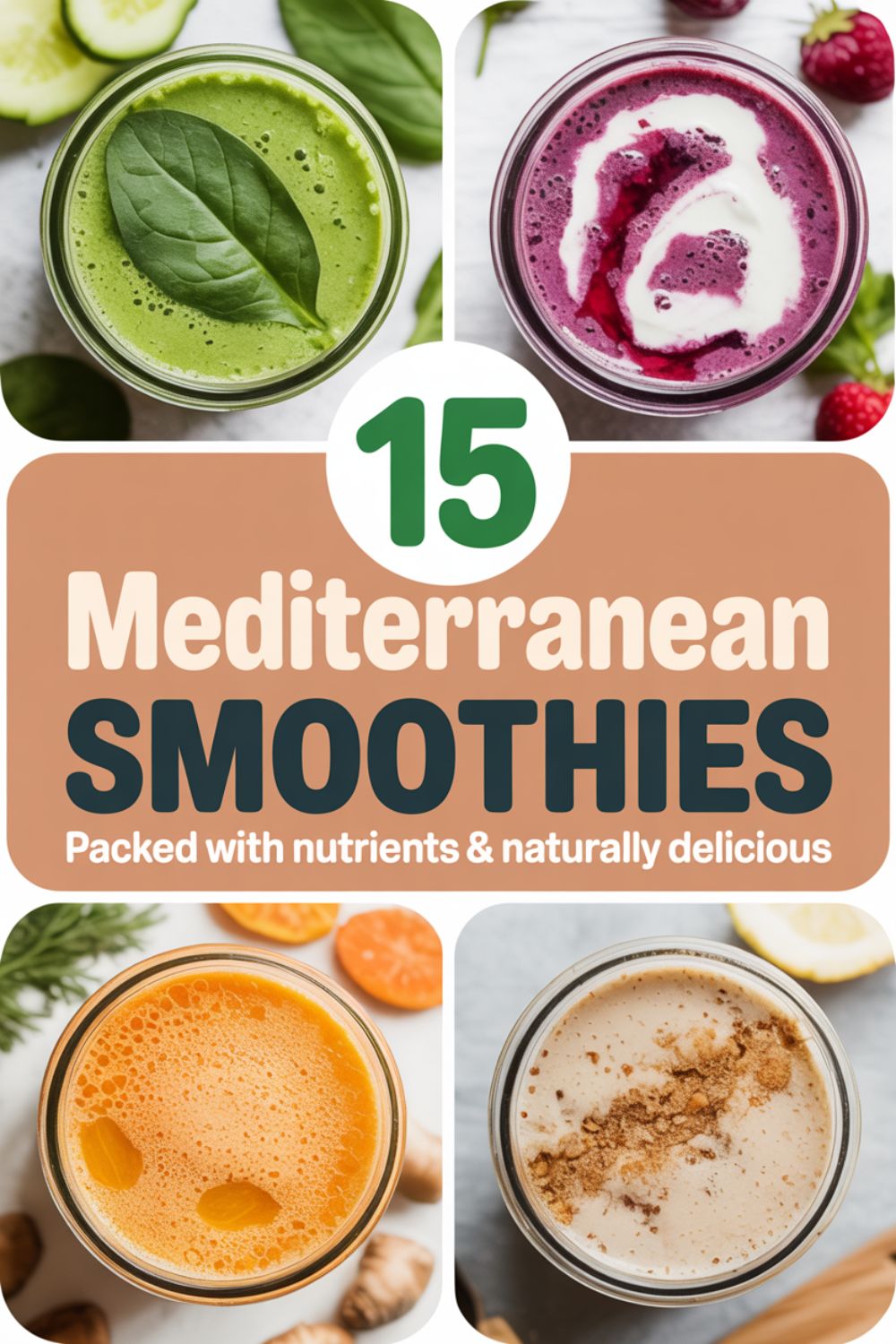
15 Mediterranean Smoothies That’ll Actually Keep You Full
Alright, let’s get to the good stuff. I’ve organized these smoothies by category so you can find exactly what you need, whether that’s an energy boost or a post-workout refuel.
1. Classic Greek Yogurt Berry Blast
This is my default morning smoothie when I’m running late. Blend together 1 cup Greek yogurt, 1 cup mixed frozen berries, a handful of spinach, 1 tablespoon ground flaxseed, and a splash of almond milk. Takes two minutes, keeps me full until noon.
The berries provide antioxidants, the Greek yogurt delivers protein, and nobody knows there’s spinach in there. If you’re feeling fancy, Get Full Recipe for the detailed version with exact measurements.
2. Fig and Walnut Morning Glory
Dried figs, walnuts, Greek yogurt, cinnamon, and a touch of honey create this ridiculously good combination that tastes like dessert but actually fuels your morning. Figs are packed with fiber and have that naturally sweet, jammy flavor.
I soak the dried figs in warm water for about 5 minutes before blending—makes them way easier on your blender. Plus, you can use that soaking liquid in the smoothie for extra flavor. Get Full Recipe.
3. Green Mediterranean Power Smoothie
If you need vegetables but don’t want to taste vegetables, this one’s for you. Spinach, cucumber, avocado, pineapple, Greek yogurt, and a squeeze of lemon blend into something surprisingly refreshing.
The pineapple completely masks the green flavor, and the avocado makes it creamy without any banana. I use a high-speed blender for this one because getting cucumber completely smooth can be tricky with a cheaper model.
4. Pomegranate and Orange Sunrise
Pomegranate arils, fresh orange juice, Greek yogurt, a handful of ice, and a drizzle of honey create this tart, vibrant smoothie that’s loaded with vitamin C. Pomegranate is one of those ingredients that screams Mediterranean, and the seeds add a nice texture if you don’t blend them completely.
Fresh pomegranate juice works too, but watch out for added sugar in store-bought versions. Get Full Recipe for the perfect ratio.
5. Almond Butter and Date Delight
This tastes like a milkshake but won’t send your blood sugar through the roof. Medjool dates, almond butter, Greek yogurt, cinnamon, and almond milk blend into pure creamy heaven.
Dates are naturally sweet and packed with fiber, so you don’t need any additional sweetener. I pit mine and store them in the freezer—they blend better when frozen and make the smoothie colder. My go-to almond butter is this brand with just almonds and salt.
6. Mint and Cucumber Cooler
On hot mornings, nothing beats this refreshing blend. Cucumber, fresh mint, Greek yogurt, lime juice, and a touch of honey create something that’s practically a spa treatment in a glass.
Fresh mint is key here—dried mint tastes like toothpaste in smoothies. If you grow mint (which basically grows like a weed), you’ve got an endless supply.
For more morning fuel that won’t weigh you down, check out this berry green smoothie or explore these easy Mediterranean breakfast ideas.
7. Cherry and Cacao Mediterranean Treat
This one’s for chocolate lovers. Frozen cherries, raw cacao powder, Greek yogurt, almond milk, and a tablespoon of almond butter create a smoothie that tastes indulgent but is packed with antioxidants.
Cherries and chocolate are a classic combo, and cherries have anti-inflammatory properties that make them perfect for post-workout recovery. Get Full Recipe.
8. Peachy Tahini Smoothie
Tahini in a smoothie might sound strange, but it’s a Middle Eastern ingredient that fits perfectly into Mediterranean eating. Blend frozen peaches, tahini, Greek yogurt, a drizzle of honey, and a pinch of cinnamon for something nutty, creamy, and totally unique.
Tahini adds healthy fats and a subtle sesame flavor that pairs beautifully with stone fruits. I buy tahini in bulk because I use it in everything from smoothies to salad dressings.
9. Blueberry and Flax Breakfast Boost
Frozen blueberries are antioxidant rockstars, and when you combine them with ground flaxseed, Greek yogurt, and a splash of orange juice, you get a smoothie that’s both tart and satisfying.
Blueberries have one of the highest antioxidant levels of any fruit, and flaxseeds provide omega-3s and fiber. This combo keeps me full for hours. Get Full Recipe.
10. Tropical Mediterranean Fusion
Who says Mediterranean smoothies can’t be tropical? Mango, pineapple, Greek yogurt, coconut milk, and a squeeze of lime create something vacation-worthy.
I use canned coconut milk (the full-fat kind in the small cans) for richness. Just shake it well before opening because it separates.
11. Strawberry Basil Surprise
Basil isn’t just for caprese salad. Fresh strawberries, a few basil leaves, Greek yogurt, honey, and a splash of balsamic vinegar create this sophisticated smoothie that tastes way fancier than the effort required.
The balsamic adds depth without making it taste like salad dressing, I promise. Start with just a teaspoon and adjust from there.
12. Carrot Cake Smoothie (Without the Guilt)
This tastes like dessert but counts as breakfast. Shredded carrots, Greek yogurt, walnuts, cinnamon, nutmeg, a date or two, and almond milk blend into something that genuinely tastes like carrot cake.
Use pre-shredded carrots to save time, or grate your own and freeze them in portions. This smoothie is loaded with beta-carotene and fiber. Get Full Recipe.
13. Watermelon and Mint Refresher
This is basically summer in a glass. Frozen watermelon cubes, fresh mint, Greek yogurt, lime juice, and a drizzle of honey create something incredibly hydrating and refreshing.
Watermelon freezes beautifully—just cube it and freeze in a single layer before transferring to a bag. Makes the smoothie thick and slushy without diluting the flavor.
14. Spiced Pear and Cinnamon Smoothie
Fall vibes in a glass. Ripe pear, Greek yogurt, almond butter, cinnamon, cardamom, and almond milk create this cozy smoothie that’s perfect for cooler mornings.
I core the pear but leave the skin on for extra fiber. If you want it sweeter, add a date. The cardamom is optional but highly recommended—it adds this warm, aromatic quality that makes the whole thing feel special.
15. Kale and Pineapple Green Machine
Okay, hear me out on the kale. When you blend it with frozen pineapple, Greek yogurt, hemp hearts, and coconut water, you seriously can’t taste it. The pineapple is sweet enough to overpower any bitterness.
Hemp hearts add protein and omega-3s without changing the flavor at all. I buy organic hemp hearts in bulk and keep them in the fridge so they stay fresh.
If you’re into high-protein options, definitely explore these high-protein smoothies for fat loss and this collection of high-protein breakfast recipes for more variety.
The Tools That Actually Make a Difference
You don’t need a professional blender that costs more than your rent, but you do need something with decent power. I learned this the hard way after destroying two cheap blenders trying to pulverize frozen fruit.
A good mid-range blender will handle frozen fruit, leafy greens, and nuts without leaving chunks. Look for something with at least 1000 watts if you’re serious about daily smoothie-making.
Other tools that make life easier: reusable smoothie cups with lids for drinking on the go, silicone ice cube trays for freezing fresh herbs or leftover smoothie, and a small kitchen scale if you want to track portions accurately.
Common Mistakes People Make With Mediterranean Smoothies
I’ve made every smoothie mistake in the book, so let me save you some trouble.
Using too much liquid is mistake number one. Start with less liquid than you think you need—you can always add more, but you can’t take it back once your smoothie is watery. I usually start with 1/2 cup of liquid and add more if needed.
Skipping the fat is another common issue. Those healthy fats from nuts, seeds, olive oil, or avocado are what keep you full. Without them, you’re basically drinking expensive fruit juice that’ll leave you starving an hour later.
Over-blending can actually heat up your smoothie and destroy some nutrients. Once everything is smooth, stop. You’re making a smoothie, not trying to create a molecular transformation.
Not balancing flavors leads to boring smoothies. A squeeze of lemon or lime can brighten up any blend. A pinch of salt enhances sweetness. Cinnamon adds warmth. Vanilla extract makes everything taste better. Don’t be afraid to adjust and taste as you go.
How to Customize These Recipes
Once you understand the basic formula, you can create infinite variations. Every Mediterranean smoothie follows this pattern: protein source + healthy fat + fruits or vegetables + liquid + flavor enhancers.
Protein sources: Greek yogurt, silken tofu, cottage cheese, protein powder (unflavored collagen works great)
Healthy fats: Olive oil, nut butter, tahini, avocado, hemp hearts, chia seeds, flaxseed
Fruits/vegetables: Any combination works, but frozen is easier. Berries, stone fruits, tropical fruits, leafy greens, cucumber, carrots
Liquid: Almond milk, coconut water, regular milk, coconut milk, even brewed green tea
Flavor enhancers: Cinnamon, vanilla, cacao, fresh herbs, citrus zest, dates for sweetness
Mix and match based on what you have and what sounds good. The Mediterranean approach is all about using quality ingredients you actually enjoy.
Making Smoothies That Actually Fit Your Life
Look, I’m not going to pretend that everyone has time to make fresh smoothies every morning. Some weeks I meal prep like a champion. Other weeks I’m lucky if I remember to eat breakfast at all.
The key is finding a system that works for your actual life, not some Instagram-perfect version of your life. Maybe that means buying pre-portioned smoothie packs at the store. Maybe it means keeping frozen fruit and a tub of Greek yogurt on hand for those mornings when you’re running late. Maybe it means making a big batch on Sunday and drinking it throughout the week.
Whatever works for you is the right approach. The “best” smoothie is the one you’ll actually make and drink.
For more complete meal ideas, try this Mediterranean grain bowl or check out these quick Mediterranean meal prep ideas that pair well with smoothies.
The Real Benefits Beyond Just Nutrition
Sure, Mediterranean smoothies are packed with vitamins, minerals, fiber, and healthy fats. But the real benefit is how they make eating well actually sustainable.
When breakfast takes two minutes and tastes good, you’re way more likely to actually eat breakfast. When you’re not hungry an hour later because your smoothie had protein and fat, you’re less likely to grab whatever’s convenient at 10 AM.
These smoothies have seriously changed how I approach mornings. No more skipping breakfast because I don’t have time. No more grabbing fast food because I’m starving by 9 AM. Just blend, drink, done.
Plus, sneaking vegetables into my breakfast makes me feel like I’m winning at adulting, which is a nice bonus.
Frequently Asked Questions
Can I make Mediterranean smoothies ahead of time?
Absolutely. Smoothies keep well in the fridge for up to 24 hours, though they might separate slightly—just shake before drinking. For longer storage, freeze them in individual portions and thaw overnight in the fridge. The texture won’t be quite as perfect as fresh, but it’s way better than skipping breakfast.
Do I really need to use olive oil in smoothies?
You don’t have to, but it adds healthy fats that help you absorb fat-soluble vitamins and keep you full longer. If olive oil weirds you out, substitute with avocado, nut butter, or seeds. The key is including some source of healthy fat in your smoothie.
How do I make smoothies less sweet without sacrificing flavor?
Cut back on fruit and add more vegetables like spinach or cucumber. Use unsweetened yogurt and almond milk. Add flavor with spices (cinnamon, vanilla, cardamom) or fresh herbs (mint, basil) instead of relying on sweetness. A squeeze of citrus also brightens flavors without adding sugar.
Can I lose weight drinking Mediterranean smoothies?
Smoothies can be part of a weight loss plan if they’re replacing higher-calorie meals and keeping you satisfied. The key is watching portion sizes and including protein and healthy fats so you actually stay full. Don’t just drink smoothies on top of your regular meals—that’s adding calories, not replacing them.
What’s the best blender for making these smoothies daily?
You need something with at least 1000 watts to handle frozen fruit and tough greens without leaving chunks. Mid-range blenders work great for daily use. High-end models are nice but not necessary unless you’re also making nut butters and crushing ice constantly. Whatever you choose, make sure it’s easy to clean or you won’t use it.
Final Thoughts
Mediterranean smoothies aren’t magic. They won’t transform your life overnight or cure all your problems. But they’re a genuinely convenient way to pack in nutrients, stay full, and start your day with something that actually tastes good.
The beauty of this approach is its flexibility. You’re not following some rigid meal plan or forcing yourself to drink something you hate. You’re using Mediterranean principles—whole foods, healthy fats, plenty of plants—to create smoothies that work for your taste and schedule.
Start with one or two recipes that sound appealing. Keep those ingredients stocked. Make it easy on yourself. Once you’ve got the hang of it, experiment with different combinations. Figure out what keeps you full and what you actually look forward to drinking.
That’s the whole point of Mediterranean eating anyway—it’s sustainable because it’s enjoyable. These smoothies are just one more tool to make eating well feel less like a chore and more like something you actually want to do.
Now stop reading and go make yourself a smoothie.