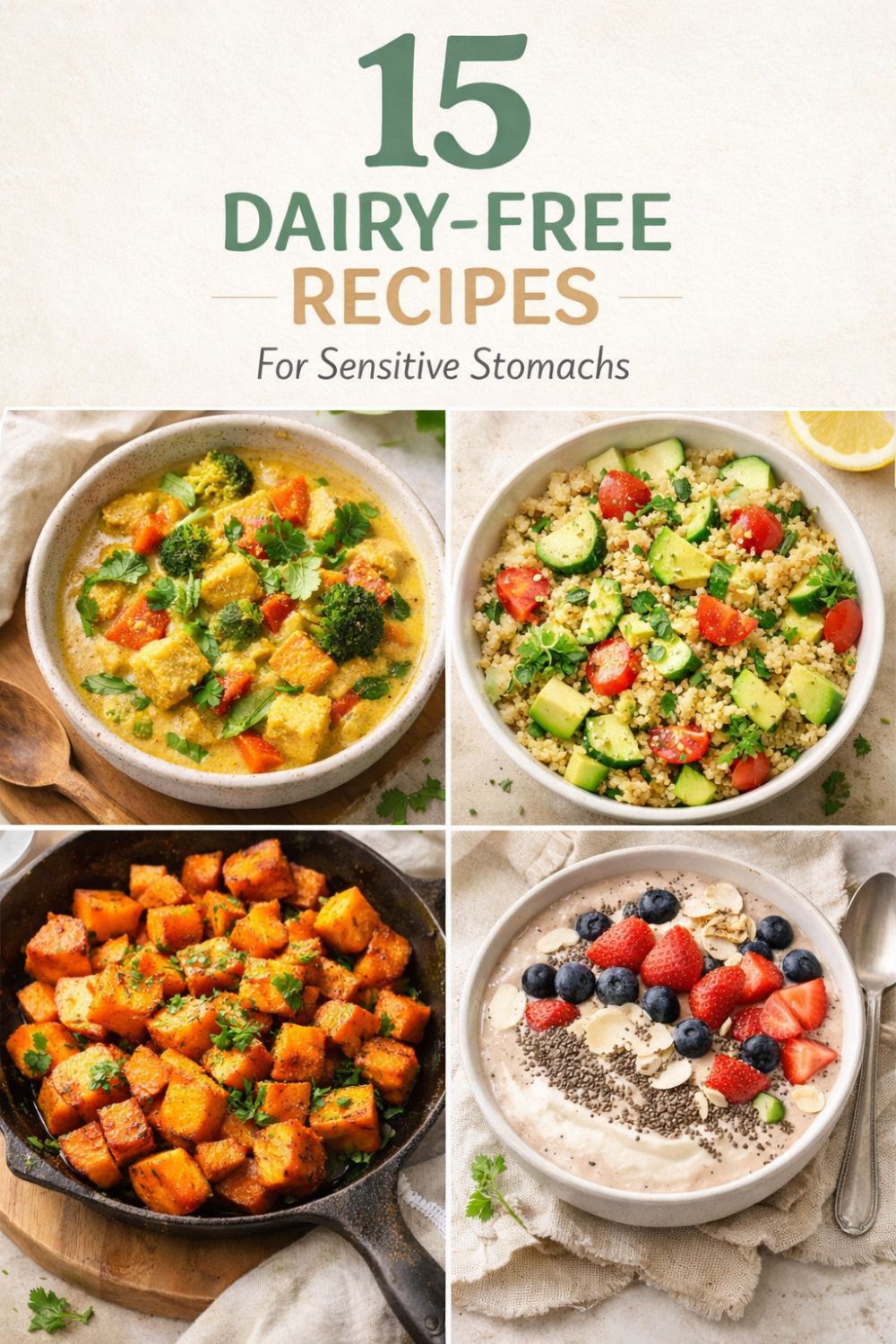
15 Dairy-Free Recipes for Sensitive Stomachs
Let’s be real for a second—dairy and I have a complicated relationship. Maybe you know the feeling. You finish that creamy latte or dig into a bowl of ice cream, and twenty minutes later, your stomach is staging a full-blown rebellion. Bloating, cramps, that uncomfortable gurgling sound that seems to echo in quiet rooms. Yeah, not fun.
If you’ve been dealing with a sensitive stomach, you’re definitely not alone. Research indicates that millions of adults experience dairy-related digestive issues, and going dairy-free can dramatically improve how you feel after meals. The best part? You don’t have to sacrifice flavor or satisfaction.
I’ve spent the last few years figuring out how to eat delicious food without the dairy drama, and honestly, it’s been a game-changer. These 15 recipes are my go-to meals when I want something tasty, filling, and gentle on my stomach. No weird ingredients, no pretending that cashew cream tastes exactly like heavy cream (it doesn’t, but it’s still pretty great). Just real food that actually works.
Why Your Stomach Might Be Begging You to Ditch Dairy
Before we dive into the recipes, let’s talk about why dairy causes so many issues. Lactose intolerance is the obvious culprit—it happens when your body doesn’t produce enough lactase, the enzyme needed to break down lactose (the sugar in milk). Without enough lactase, that undigested lactose ferments in your gut, leading to gas, bloating, and other fun surprises.
But here’s the thing: lactose isn’t always the only problem. Some people react to casein and whey, the proteins in dairy. According to digestive health experts, these proteins can trigger inflammation and digestive distress even in people who technically aren’t lactose intolerant. Your body might just be telling you it’s had enough of dairy, period.
The good news? Going dairy-free doesn’t mean eating bland, boring food. It just means getting a little creative with your ingredients. And honestly, once you get the hang of it, you might not even miss the dairy.
The Mediterranean Advantage for Sensitive Stomachs
One of the smartest moves I made was leaning into Mediterranean-style eating. Traditional Mediterranean cuisine naturally uses less dairy than Western diets, relying instead on olive oil, nuts, legumes, and fresh vegetables. It’s like the diet was designed for people with sensitive stomachs.
The emphasis on whole grains, lean proteins, and healthy fats means you’re getting all the nutrients you need without the digestive distress. Plus, Mediterranean meals are packed with fiber, which helps keep your gut happy and your digestion running smoothly.
If you’re looking for more Mediterranean inspiration beyond these recipes, check out this 7-day Mediterranean meal plan for beginners or explore some quick Mediterranean dinner ideas that keep things simple and stomach-friendly.
15 Dairy-Free Recipes That Actually Satisfy
1. Oatmeal with Dried Figs, Walnuts & Cinnamon
Starting your day with a warm bowl of oats is like giving your stomach a gentle hug. This isn’t the sad, watery oatmeal you ate as a kid—it’s rich, naturally sweet, and surprisingly filling. The dried figs add a caramel-like sweetness without any refined sugar, while the walnuts provide that satisfying crunch and a dose of omega-3s.
I make mine with almond milk and a splash of vanilla extract. The cinnamon isn’t just for flavor—it actually helps regulate blood sugar and adds a warming quality that makes this feel like dessert for breakfast. If you want to meal prep this, you can make a big batch on Sunday and reheat portions throughout the week. Get Full Recipe.
Pro tip: I use this old-fashioned rolled oats container because they hold up better than quick oats and give you that perfect chewy texture. And honestly, a good quality cinnamon makes all the difference—the cheap stuff tastes like sawdust.
2. Avocado Toast with Tomato & Olive Oil
Yeah, I know, avocado toast is everywhere. But there’s a reason it’s a staple—it’s genuinely delicious and happens to be naturally dairy-free. The key is using really good olive oil and ripe tomatoes. Don’t skimp on the quality here.
I drizzle mine with a generous amount of extra virgin olive oil and sprinkle some flaky sea salt on top. Sometimes I add a squeeze of lemon juice or some red pepper flakes if I’m feeling spicy. The healthy fats from the avocado help keep you satisfied for hours, and your stomach will appreciate the gentle, whole-food approach. Get Full Recipe.
For bread, I swear by this sourdough loaf from my local bakery (or you can grab a good quality one from most grocery stores). The fermentation process makes it easier to digest, which is a bonus for sensitive stomachs.
3. Lentil Soup with Crusty Bread
Lentil soup is the ultimate comfort food when your stomach needs something nourishing but not heavy. Lentils are packed with protein and fiber, and they’re incredibly easy to digest compared to other legumes. Plus, they cook quickly—no overnight soaking required.
I make a big pot of this at the beginning of the week and eat it for lunch for days. The crusty bread is non-negotiable for me (you need something to dunk), but make sure it’s dairy-free. Most artisan breads are, but always check the ingredients. Get Full Recipe.
“I was skeptical about dairy-free soups because I thought they’d be watery and bland, but this lentil soup changed my mind completely. I’ve made it three times in the past month, and my digestion has never been better. The leftovers taste even better the next day!” — Emma, from our community
4. Grilled Veggie Platter with Hummus
Sometimes the simplest meals are the best. A platter of grilled vegetables with hummus is colorful, satisfying, and gentle on your digestive system. I use whatever vegetables I have on hand—zucchini, bell peppers, eggplant, asparagus—and grill them until they’re slightly charred.
The hummus provides protein and healthy fats, making this more substantial than you’d think. It’s perfect for those days when you want something light but filling. Get Full Recipe.
I use this cast iron grill pan year-round because I’m too lazy to fire up the outdoor grill most nights. It gives you those perfect grill marks and caramelizes the veggies beautifully. For hummus, I usually make my own in my mini food processor, but store-bought works just fine when you’re short on time.
Speaking of hummus-based meals, you might also love these Mediterranean chickpea wraps or this falafel wrap with dairy-free tzatziki for more protein-packed options.
5. Whole Wheat Spaghetti with Cherry Tomatoes & Basil
Pasta doesn’t need cheese to be delicious—fight me on this. A simple cherry tomato and basil sauce lets the quality of your ingredients shine through. The tomatoes get sweet and jammy when cooked, and fresh basil adds that bright, summery flavor.
I cook my cherry tomatoes in olive oil with lots of garlic until they burst and create their own sauce. Toss with whole wheat spaghetti, add fresh basil, and you’ve got a meal that’s satisfying without being heavy. Get Full Recipe.
The whole wheat pasta provides more fiber than regular pasta, which is great for digestive health. Just make sure to cook it al dente—overcooked pasta turns to mush and nobody wants that.
6. Mediterranean Smoothie Bowl
Smoothie bowls get a bad rap for being Instagram fodder, but hear me out. When made right, they’re actually a fantastic breakfast option for sensitive stomachs. The key is using frozen fruit, plant-based milk, and a handful of spinach (you won’t taste it, I promise).
I top mine with sliced almonds, fresh berries, and a drizzle of almond butter. It’s refreshing, nutrient-dense, and easy to digest. Plus, you can customize it based on what you have on hand. Get Full Recipe.
For blending, you really need a decent blender that can handle frozen fruit. Cheap blenders just push the fruit around without actually blending it, and you end up with chunks. Trust me on this one.
7. Lemon Herb Chicken with Roasted Potatoes
This is my go-to dinner when I want something that feels like a real meal but won’t leave me feeling sluggish. The lemon and herbs make the chicken incredibly flavorful without any dairy-based marinades or sauces. The roasted potatoes get crispy on the outside and fluffy inside—pure comfort food.
I use a simple marinade of olive oil, lemon juice, garlic, and fresh herbs (usually rosemary and thyme). Let the chicken sit in it for at least 30 minutes, then roast everything together. Easy cleanup, minimal effort, maximum flavor. Get Full Recipe.
8. Chickpea Cauliflower Coconut Curry
Curry night doesn’t require cream or yogurt to be amazing. Coconut milk creates that rich, creamy texture you crave while being completely dairy-free. The chickpeas add protein and fiber, making this incredibly satisfying.
I love that this recipe comes together in one pot. Sauté your onions and spices, add the vegetables and coconut milk, simmer until everything is tender. Serve it over rice or with some naan bread (check the ingredients to make sure it’s dairy-free). Get Full Recipe.
Coconut milk is one of those magical dairy substitutes that actually brings something unique to the table rather than just trying to mimic dairy. The subtle coconut flavor works perfectly with curry spices. I keep cans of full-fat coconut milk in my pantry at all times—it’s my secret weapon for dairy-free cooking.
9. Grilled Salmon with Tomato Caper Relish
Fish is naturally dairy-free and incredibly gentle on the digestive system. Salmon is rich in omega-3 fatty acids, which actually help reduce inflammation—good news if dairy has been irritating your gut. The tomato caper relish adds a bright, tangy contrast to the rich fish.
I grill my salmon with just olive oil, salt, and pepper, letting the fish speak for itself. The relish comes together in minutes—just chop tomatoes, capers, red onion, and fresh parsley, then toss with olive oil and lemon juice. Get Full Recipe.
If you’re looking for more fish-based meals, try this baked cod with tomato olive tapenade or explore these Mediterranean seafood dinner ideas for variety.
10. Stuffed Bell Peppers with Quinoa & Veggies
Stuffed peppers are one of those dishes that look impressive but are actually super easy to make. Quinoa is a complete protein, meaning it contains all nine essential amino acids—pretty rare for a plant-based food. Mixed with vegetables and herbs, it makes a filling that’s satisfying and nutritious.
I like to make a big batch of these and freeze the extras for busy weeknights. Just pop them in the oven straight from the freezer and you’ve got dinner ready in 30 minutes. No cheese needed—the flavors are bold enough on their own. Get Full Recipe.
11. Mediterranean Grain Bowl
Grain bowls are my answer to “I don’t know what to eat.” You can throw together whatever you have in your fridge and it works. The Mediterranean version typically includes farro or bulgur, roasted vegetables, chickpeas, and a tahini dressing.
The beauty of grain bowls is that they’re endlessly customizable. Leftover roasted vegetables? Toss them in. Some cooked chicken from last night? Perfect. A handful of olives? Why not. The tahini dressing ties everything together with its nutty, creamy flavor. Get Full Recipe.
“These grain bowls have become my weekly meal prep staple. I make all the components on Sunday, then mix and match throughout the week. My stomach feels so much better now that I’m not eating dairy at lunch every day, and I actually look forward to these bowls more than I ever looked forward to my old cheese-heavy salads.” — Marcus, home cook and busy parent
12. Shakshuka (Eggs in Spicy Tomato Sauce)
Shakshuka is naturally dairy-free and one of the most flavorful egg dishes you’ll ever eat. Eggs poached in a spiced tomato sauce with peppers and onions—it’s breakfast, lunch, or dinner depending on when you make it.
The sauce is the star here. I simmer tomatoes with cumin, paprika, and a pinch of cayenne until it’s thick and jammy, then crack eggs directly into the sauce. Cover and cook until the eggs are set to your liking. Serve with crusty bread for dipping. Get Full Recipe.
I make this in my cast iron skillet because it goes from stovetop to table beautifully. Plus, the even heat distribution is perfect for getting those eggs just right. If you like shakshuka, you’ll probably also enjoy this Mediterranean shakshuka variation.
13. Lentil Sweet Potato Stew
This stew is cozy, warming, and incredibly nourishing for your gut. Sweet potatoes add natural sweetness and beta-carotene, while lentils provide protein and fiber. Together, they create a thick, hearty stew that’s perfect for cold nights.
I add warming spices like cumin and coriander, plus a handful of spinach at the end for extra nutrients. It’s one of those meals that tastes even better the next day after the flavors have had time to meld together. Get Full Recipe.
14. One-Pot Mediterranean Pasta
One-pot meals are a godsend when you’re too tired to deal with multiple dishes. This Mediterranean pasta cooks everything together—pasta, vegetables, garlic, and tomatoes—in one pot. The pasta absorbs all the flavors as it cooks, and you’re left with minimal cleanup.
The trick is using just enough liquid so the pasta cooks perfectly without being soupy. I add cherry tomatoes, spinach, olives, and plenty of garlic. Finish with fresh basil and a drizzle of good olive oil. No cheese necessary. Get Full Recipe.
15. Moroccan Spiced Quinoa Bowl
This bowl brings together Moroccan-inspired spices like cinnamon, cumin, and turmeric with quinoa, roasted vegetables, and chickpeas. It’s warming, filling, and packed with anti-inflammatory ingredients that are great for gut health.
I top mine with a simple lemon-tahini dressing and some toasted almonds for crunch. The combination of sweet and savory flavors is surprisingly addictive. Plus, it reheats beautifully for meal prep. Get Full Recipe.
If you’re into grain bowls and looking for more variety, check out these high-protein bowl ideas that’ll keep you satisfied without the post-meal crash.
Building Your Dairy-Free Pantry
Having the right ingredients on hand makes dairy-free cooking infinitely easier. Here are the essentials I always keep stocked:
- Plant-based milks: Almond, oat, and coconut milk cover most of your bases. Oat milk is great for coffee, almond milk for smoothies and baking, coconut milk for curries and creamy dishes.
- Tahini: This sesame paste is your secret weapon for creamy dressings and sauces. It’s rich, nutty, and adds depth to everything.
- Nutritional yeast: Gives you that cheesy, umami flavor in pasta dishes, popcorn, and sauces. It’s not cheese, but it scratches that savory itch.
- Good quality olive oil: When you’re not using butter, olive oil becomes even more important. Get the good stuff—it makes a noticeable difference.
- Canned coconut milk: Essential for curries and creamy soups. Always buy full-fat for the best texture and flavor.
- Vegetable broth: Use it instead of water when cooking grains or making soups for extra flavor depth.
I keep these glass storage jars for my pantry staples—they keep everything fresh and make it easy to see when I’m running low on something. Organization isn’t my strong suit, but having a well-stocked dairy-free pantry has made weeknight cooking so much easier.
The Truth About Dairy-Free Nutrition
One concern people have about going dairy-free is missing out on calcium and other nutrients. Here’s the thing: plenty of plant-based foods are rich in calcium. Leafy greens like kale and collard greens, fortified plant milks, almonds, and tahini all provide significant amounts of calcium.
Vitamin D is another consideration, but many plant-based milks are fortified with it. You can also get vitamin D from sunlight and fortified foods like cereal. Protein is easily covered through beans, lentils, quinoa, nuts, seeds, and if you eat them, eggs and fish.
The key is eating a varied diet with plenty of whole foods. If you’re concerned about specific nutrients, chat with your doctor or a registered dietitian. They can help you make sure you’re getting everything you need without the dairy drama.
For more guidance on balanced, dairy-free eating plans, take a look at this 14-day Mediterranean meal plan or this 21-day balanced lifestyle plan.
Making Restaurant Dining Work for Your Sensitive Stomach
Eating out can be tricky when you’re avoiding dairy, but it’s definitely doable. Mediterranean restaurants are usually your safest bet—many dishes are naturally dairy-free or can easily be modified. Asian cuisine (especially Thai, Vietnamese, and Japanese) tends to use less dairy than Western restaurants.
Don’t be shy about asking questions or requesting modifications. Most restaurants are happy to accommodate dietary needs. I usually phrase it as “I can’t have dairy” rather than “I’m trying to avoid dairy”—it seems to get taken more seriously.
Watch out for hidden dairy in places you might not expect: salad dressings, marinades, bread (some contain milk or butter), and sauces. When in doubt, ask for olive oil and vinegar on the side.