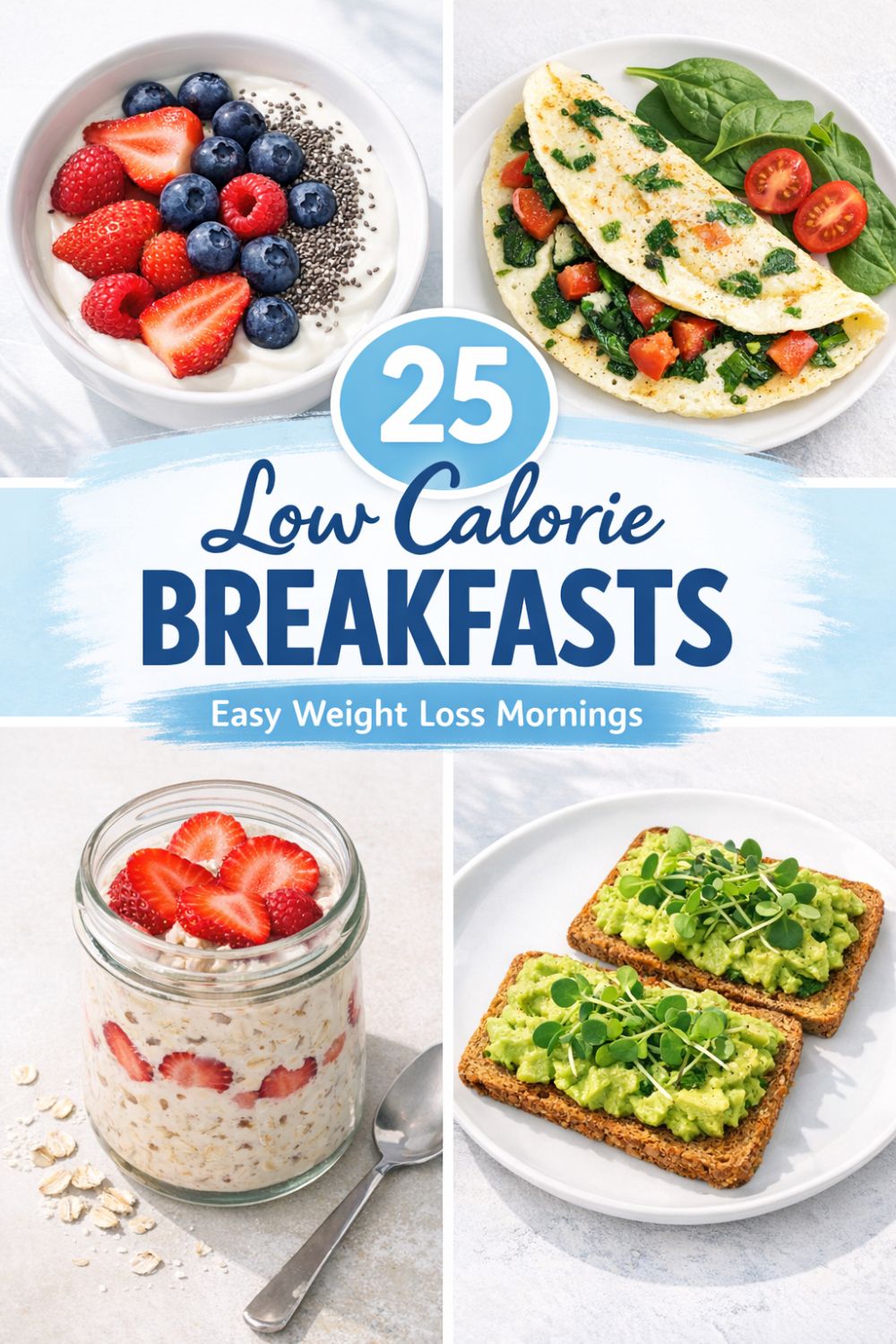
25 Low Calorie Breakfasts for Weight Loss
Look, I’m not going to sugarcoat it—breakfast can be the make-or-break meal when you’re trying to lose weight. You either nail it and cruise through your morning feeling like a champion, or you blow it and spend the rest of the day battling cravings and questionable snack choices. Been there, done that, got the empty cookie wrapper to prove it.
Here’s the thing about low calorie breakfasts: they’re not about deprivation or eating sad bowls of plain oatmeal while staring wistfully at your coworker’s bagel. They’re about being strategic, getting creative, and honestly? Finding stuff that actually tastes good enough to stick with.
These are the basics that make healthy cooking fast and actually enjoyable: less mess, less time, and meals your whole family will happily eat.
- non-stick panCheck today’s price →
- mason jarsCheck today’s price →
- cast iron skilletCheck today’s price →
- granolaCheck today’s price →
Amazon prices and deals change often, so it’s worth checking today’s price.
I’ve spent way too many mornings experimenting with breakfast combos, and I’m sharing the ones that actually work. These aren’t just low in calories—they’re filling, they’re practical, and they don’t require you to wake up at 5 AM to prep them. Some you can literally throw together in two minutes. Others you can make ahead and grab on your way out the door.
Whether you’re team savory or ride-or-die for sweet breakfasts, there’s something here that’ll work for you. And before you ask—yes, there are options for people who claim they “don’t have time for breakfast.” I see you.
Why Low Calorie Breakfasts Actually Matter
Starting your day with a reasonable calorie count isn’t about starving yourself—it’s about leaving room for the rest of your meals without going over your daily target. Think of it like budgeting, but for food instead of money. You wouldn’t blow your entire paycheck on Monday morning, right?
A good low calorie breakfast typically lands somewhere between 250-400 calories. That’s the sweet spot where you get enough energy to function like a normal human being, but you’re not using up half your daily calories before lunch. The key is making those calories count with protein, fiber, and enough satisfaction that you’re not raiding the vending machine by 10 AM.
Protein keeps you full. Fiber keeps things moving (you know what I mean). Healthy fats give your brain the fuel it needs. When you combine these three, you’ve got yourself a breakfast that actually works instead of leaving you hangry an hour later.
The Building Blocks of a Killer Low Calorie Breakfast
Before we jump into the recipes, let’s talk strategy. Every solid breakfast needs a foundation, and I’m not talking about toast (though toast is great). I’m talking about the components that make a breakfast worth getting out of bed for.
Protein Power Players
Eggs are the obvious MVP here. They’re cheap, versatile, and pack about 6 grams of protein each. Greek yogurt is another heavy hitter—get the plain stuff and add your own flavors to avoid the sugar bomb that comes with most flavored varieties. If you want to check out some protein-packed options, these high protein breakfast recipes are game-changers.
Cottage cheese has made a comeback lately, and honestly, it deserves it. It’s creamy, it’s protein-rich, and it works in both sweet and savory applications. Don’t sleep on lean turkey or chicken sausage either—they’re not just for dinner.
Fiber-Filled Friends
Oats are your best friend when it comes to fiber. They’re filling, they’re cheap, and you can flavor them about a million different ways. Whole grain bread is solid, but make sure you’re actually getting whole grain and not that sneaky “wheat bread” that’s basically white bread in disguise.
Berries bring fiber and antioxidants to the party without loading you up with sugar. Chia seeds are these tiny nutritional powerhouses that absorb liquid and help you feel full. Plus, they don’t taste like much, so you can sneak them into basically anything. Speaking of oats, I’m obsessed with these overnight oats for weight loss—they’re seriously life-changing.
Healthy Fats That Don’t Derail You
Avocado gets all the attention, but let’s be real—a whole avocado in one sitting is a lot of calories. Use a quarter or a third, and you’ll get the healthy fats without overdoing it. Nuts and nut butters are fantastic, but you’ve gotta measure them. Eyeballing peanut butter is how you accidentally eat 400 calories before you realize what happened.
A drizzle of olive oil on your avocado toast adds richness and heart-healthy fats. Seeds like pumpkin or sunflower seeds give you that satisfying crunch without going overboard on calories.
Quick and Easy Low Calorie Breakfast Ideas
Let’s get to the good stuff. These breakfasts are practical, they’re tested, and they won’t leave you feeling like you’re on some extreme diet that’s destined to fail by Thursday.
1. Greek Yogurt Parfait with Fresh Berries
This one’s a no-brainer. Take a cup of plain Greek yogurt, add a handful of mixed berries, sprinkle some granola on top, and maybe drizzle a tiny bit of honey if you’re feeling fancy. You’re looking at around 250 calories with a solid protein punch. Get Full Recipe.
The beauty of this breakfast is that you can prep the yogurt and berries the night before. Keep the granola separate until you’re ready to eat, or it’ll get soggy and sad. Nobody wants soggy granola.
2. Veggie-Loaded Egg White Scramble
Three egg whites, a handful of spinach, some diced tomatoes, and whatever other veggies are hanging out in your fridge. Cook it in a non-stick pan with a tiny spray of oil. Season it well because egg whites can be bland if you don’t show them some love. This clocks in around 150-200 calories depending on what you throw in there.
If you want to meal prep this, check out these egg muffins—same concept, but baked in a muffin tin so you can grab and go all week.
3. Overnight Oats with Chia Seeds
Mix half a cup of oats with a cup of unsweetened almond milk, add a tablespoon of chia seeds, and let it sit in the fridge overnight. In the morning, top it with berries and a drizzle of almond butter. You’re done. About 300 calories, and it keeps you full for hours.
The chia seeds do this cool gel thing that makes the texture way more interesting than regular oats. Plus, they add fiber and omega-3s. For more variations, these vanilla almond overnight oats are stupidly easy and delicious.
4. Smoked Salmon and Cream Cheese on Cucumber Slices
This is for when you want to feel fancy but don’t want to wreck your calorie budget. Slice a cucumber into rounds, spread a tiny bit of light cream cheese on each one, and top with a small piece of smoked salmon. Add a sprinkle of dill if you’re into that. Around 200 calories, and it feels like you’re eating at a brunch spot.
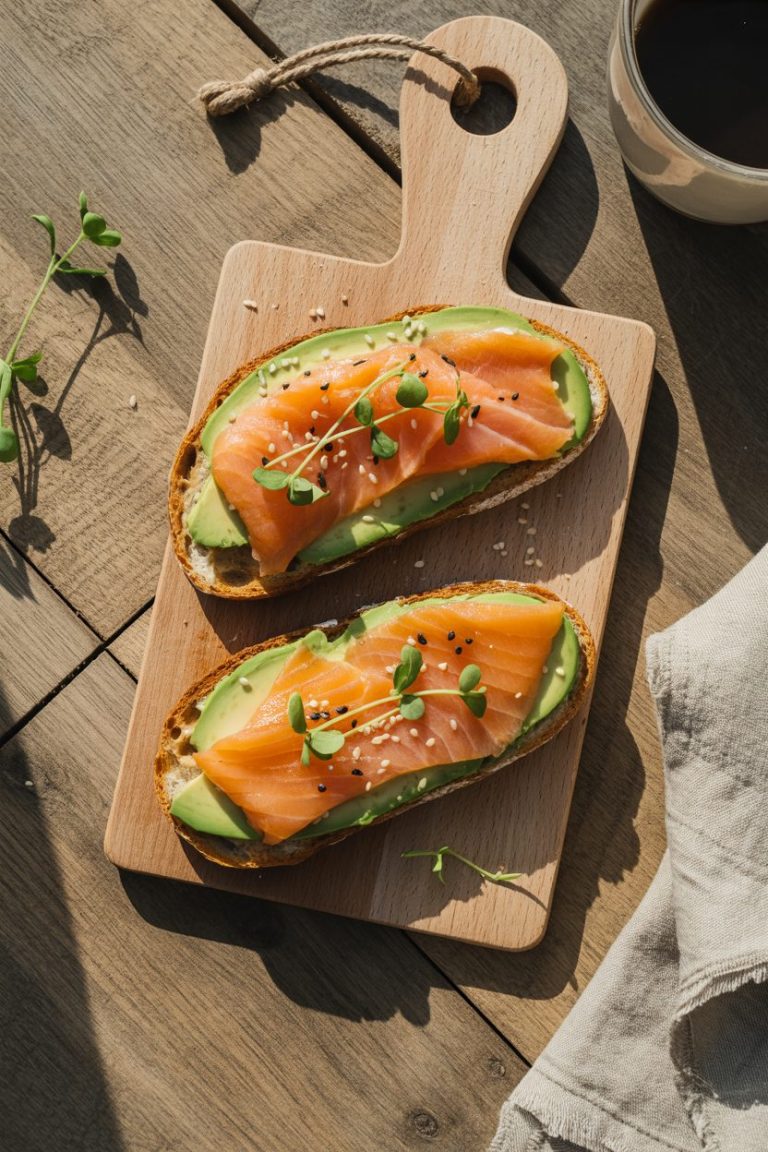
No cucumber? Try it on whole grain crackers instead. Or better yet, make this smoked salmon avocado toast for a more substantial version.
5. Protein Smoothie Bowl
Blend a scoop of protein powder, frozen berries, half a banana, and some spinach (you won’t taste it, I promise) with unsweetened almond milk. Pour it into a bowl and top with sliced fruit, a sprinkle of coconut flakes, and maybe some chia seeds. It’s Instagram-worthy and comes in around 300 calories.
The trick with smoothie bowls is making them thick enough that you can actually eat them with a spoon. Use less liquid than you think you need, and add frozen fruit instead of fresh to get that ice cream-like consistency. These protein-packed smoothies have some killer combinations worth trying.
💪 My Secret Weapon: High-Speed Blender That Actually Works
Real talk: trying to make smoothies with a weak blender is like trying to run a marathon in flip-flops. Technically possible, but why torture yourself? I upgraded to a high-powered personal blender last year, and my morning smoothie game went from “chunky disappointment” to “actually drinkable in under 60 seconds.”
This thing pulverizes frozen fruit, blends spinach into oblivion (no leafy bits, I promise), and the cup doubles as your to-go container. No extra dishes, no excuses. It’s powerful enough to handle ice and frozen berries without sounding like it’s dying, and cleanup takes literally 30 seconds.
For more morning inspo that won’t sabotage your goals, check out these Mediterranean breakfast recipes or these high protein breakfasts under 350 calories. They’re both solid options when you need to switch things up.
6. Cottage Cheese with Sliced Peaches and Cinnamon
Half a cup of low-fat cottage cheese, a sliced peach (fresh or canned in water—not syrup), and a generous shake of cinnamon. That’s it. Around 180 calories, surprisingly filling, and weirdly satisfying.
Cottage cheese has this reputation for being diet food from the 80s, but it’s actually really good when you pair it right. The cinnamon adds sweetness without sugar, and peaches bring natural flavor that doesn’t taste like compromise.
7. Avocado Toast with Everything but the Kitchen Sink
One slice of whole grain toast, a quarter of an avocado mashed on top, a sprinkle of everything bagel seasoning, and a squeeze of lemon. If you want to get wild, add a fried egg on top. Without the egg, you’re at about 200 calories. With it, around 280.
The lemon juice is key here. It brightens everything up and keeps the avocado from turning brown if you’re packing this to go. Try this cucumber avocado toast with zaatar if you want a Mediterranean twist.
8. Turkey Breakfast Sausage with Roasted Veggies
Make a batch of turkey breakfast sausage patties on Sunday, pair them with whatever roasted vegetables you have, and you’ve got a savory breakfast that doesn’t feel like you’re on a diet. Two small patties plus veggies lands around 250-300 calories.
Roast a big sheet pan of bell peppers, zucchini, and cherry tomatoes at the beginning of the week. Season them with garlic, salt, and pepper. Done. Breakfast veggies sorted for days.
9. Chia Pudding with Berries and Almonds
Mix three tablespoons of chia seeds with a cup of unsweetened almond milk and let it sit overnight. Top with fresh berries and a few sliced almonds. Around 250 calories, and it has this pudding-like texture that’s oddly satisfying. Check out the full recipe for chia pudding with almond milk.
According to Healthline’s research on chia seeds, these little seeds are packed with omega-3 fatty acids and can absorb up to 12 times their weight in water, which helps you feel full longer.
10. Banana Protein Pancakes
Mash a banana, mix it with two eggs and a scoop of protein powder, and cook them like regular pancakes in a non-stick griddle. Top with a small drizzle of maple syrup or some fresh berries. Around 350 calories and actually filling.
These aren’t going to taste exactly like IHOP pancakes, so manage your expectations. But they’re pretty damn good considering they’re basically just fruit, eggs, and protein powder. For a more traditional version, try these whole grain banana pancakes.
11. Egg White and Veggie Muffins
These spinach feta egg muffins are perfect for meal prep. Mix egg whites with diced bell peppers, onions, spinach, and a bit of feta cheese. Pour into a silicone muffin pan and bake. Each muffin is around 50-70 calories, so you can eat two or three and still be under 250 calories.
The silicone muffin pan is a game changer because these pop right out without sticking. If you don’t have one, just grease a regular muffin tin really well, or use paper liners.
🎯 Game-Changer Alert: Premium Meal Prep Containers
Listen, I resisted getting proper meal prep containers for way too long. I was using random Tupperware from 2009 and wondering why my breakfast prep felt chaotic. Then I grabbed a set of glass meal prep containers with snap-lock lids, and honestly? It changed everything.
These containers are portion-controlled (hello, calorie tracking made easy), they’re microwave and dishwasher safe, and they don’t turn orange after one use like cheap plastic containers. Stack five overnight oats jars on Sunday night, and you’ve got grab-and-go breakfasts that actually look appealing at 6 AM.
12. Low-Fat Greek Yogurt with Granola and Fruit
Similar to the parfait, but let’s talk about portion control because this is where people mess up. A three-quarter cup of Greek yogurt, a quarter cup of granola (measured, not eyeballed), and half a cup of mixed berries. That’s your breakfast. Around 280 calories.
If you want to get fancy with it, try this low-fat Greek yogurt parfait with oats. Same concept, slightly different vibe.
13. Smashed Chickpea and Avocado Toast
Mash a quarter cup of chickpeas with a quarter of an avocado, spread it on whole grain toast, and season with salt, pepper, and red pepper flakes. Around 250 calories, and the chickpeas add protein and fiber that plain avocado toast doesn’t have.
This is basically hummus and avocado’s lovechild, and it works way better than it sounds. For something similar but different, check out this cucumber hummus sandwich.
14. Breakfast Burrito with Scrambled Eggs and Salsa
Scramble two eggs with a tablespoon of salsa, wrap it in a small whole wheat tortilla with a sprinkle of reduced-fat cheese. Around 300 calories, portable, and doesn’t require utensils. Perfect for car breakfasts if that’s your life.
Meal prep these by making a batch of low-cal breakfast burrito wraps on Sunday, wrapping them in foil, and freezing them. Microwave for two minutes and you’re golden.
15. Oatmeal with Apple and Cinnamon
Half a cup of oats cooked with water or unsweetened almond milk, top with half a diced apple and a heavy sprinkle of cinnamon. Around 250 calories. Simple, classic, and it works. Get Full Recipe.
Want to make it more interesting? Stir in a tablespoon of pumpkin puree and some pumpkin pie spice. It’s like fall in a bowl, year-round.
16. Tofu Scramble with Veggies
Crumble firm tofu, sauté it with turmeric (for color), nutritional yeast (for a cheesy flavor), and whatever veggies you like. Around 200 calories for a generous portion. This is a solid plant-based option that actually fills you up. Get Full Recipe.
The turmeric makes it look like scrambled eggs, which is kind of fun. The nutritional yeast adds a savory, almost cheesy flavor that makes you forget you’re not eating actual eggs.
17. Berry Smoothie with Spinach
One cup of frozen mixed berries, a handful of spinach, half a cup of unsweetened almond milk, and a scoop of protein powder. Blend until smooth. Around 200-250 calories depending on your protein powder.
The spinach turns it green, but you seriously can’t taste it. If you’re skeptical, start with less spinach and work your way up. These berry green smoothies have perfected the ratio.
18. English Muffin with Egg and Tomato
Toast a whole wheat English muffin, top one half with a fried or poached egg and sliced tomato. Season with salt, pepper, and a tiny bit of hot sauce if you’re into that. Around 250 calories and way better than a fast food breakfast sandwich.
English muffins are secretly great for portion control because they’re pre-portioned. You can’t accidentally eat half a loaf of bread like you can with regular sliced bread.
OXO Good Grips Non-Stick Egg Pan
If you’re serious about making perfect eggs every single morning without scrubbing your pan like you’re trying to remove evidence, this non-stick egg pan is your new best friend. The 8-inch size is perfect for 2-3 eggs, heats evenly, and nothing—and I mean NOTHING—sticks to it.
- Dishwasher safe (because who wants to hand-wash at 6 AM?)
- PFOA-free non-stick coating that actually lasts
- Perfect size for single servings without wasting space
- Works on all stovetops including induction
19. Cottage Cheese Pancakes
Mix half a cup of cottage cheese with two eggs and a quarter cup of oat flour. Cook like regular pancakes. They’re fluffy, they’re protein-packed, and they come in around 300 calories for the whole batch.
These have a slightly tangy flavor from the cottage cheese, which sounds weird but actually works really well with berries on top.
20. Breakfast Salad with Hard-Boiled Eggs
Yes, salad for breakfast is a thing. Mixed greens, cherry tomatoes, cucumber, two hard-boiled eggs, and a drizzle of balsamic vinegar. Around 250 calories, and honestly kind of refreshing if you’re not a sweet breakfast person.
Hard-boil a dozen eggs on Sunday. Keep them in the fridge. Suddenly you have instant protein for breakfasts, snacks, whatever. Life hack.
Dash Rapid Egg Cooker
I bought this on a whim and now I can’t imagine life without it. This little machine makes perfect hard-boiled eggs, soft-boiled eggs, poached eggs, or even omelets without you having to watch a pot or set a timer. Just add water, press the button, and walk away. It beeps when it’s done.
- Makes up to 6 eggs at once—perfect for meal prep
- Auto shut-off means you can’t overcook them
- Takes up minimal counter space
- Easier to peel than stovetop eggs (seriously, game-changer)
21. Almond Butter and Banana on Rice Cakes
Two rice cakes, a tablespoon of almond butter (measure it!), and half a banana sliced on top. Sprinkle with cinnamon. Around 250 calories and surprisingly satisfying for something so simple.
Rice cakes get a bad rap for being diet food, but when you actually put something good on them, they’re a solid vehicle for flavor. Plus, they’re crunchy, which makes your brain think you’re eating more than you are.
22. Mediterranean Scramble
Two eggs scrambled with diced tomatoes, spinach, and a crumble of feta cheese. Serve with a small piece of whole grain toast. Around 300 calories. Get Full Recipe.
The feta adds so much flavor that you don’t need to add butter or oil to make this taste good. It’s salty, it’s creamy, it’s perfect.
23. Protein-Packed Oatmeal
Cook your oats with a scoop of protein powder mixed in (add it after cooking to avoid weird texture issues). Top with berries and a few chopped nuts. Around 350 calories with substantial protein.
This is basically your regular oatmeal but beefed up with protein so you’re not starving by 10 AM. According to Mayo Clinic’s guide on fiber, combining protein with high-fiber foods like oats helps slow digestion and keeps you satisfied longer.
24. Sweet Potato Hash with Eggs
Dice a small sweet potato, cook it in a cast iron skillet until crispy, make two wells in the hash and crack eggs into them. Cover and cook until the eggs are done. Around 350 calories and fills you up like nobody’s business. Get Full Recipe.
Sweet potatoes for breakfast sound weird until you try them. They’re naturally sweet, they’re filling, and they pair surprisingly well with eggs.
25. Quinoa Breakfast Bowl
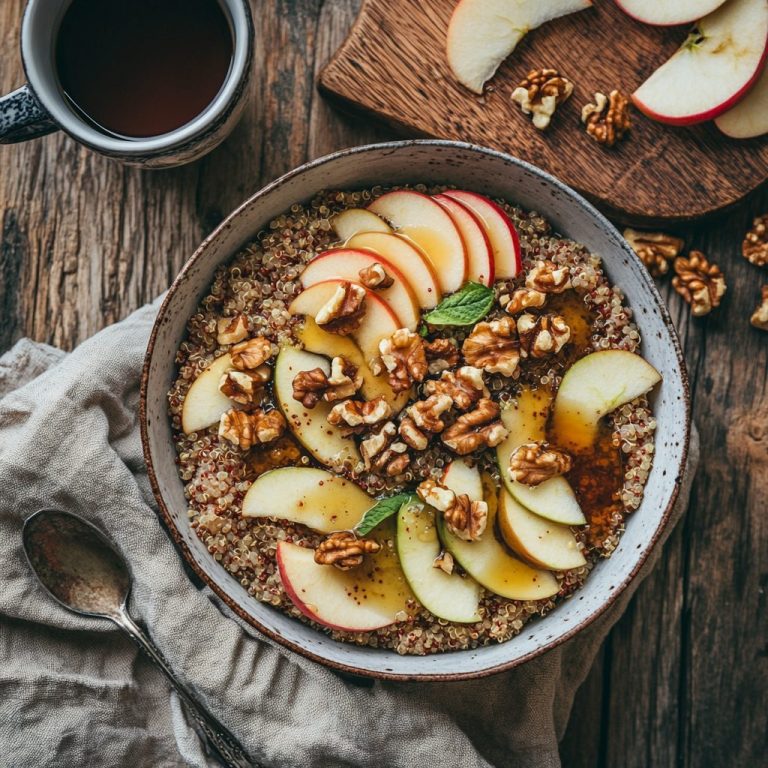
Cook quinoa in almond milk instead of water, top with sliced banana, a drizzle of honey, and some chopped walnuts. Around 300 calories and loaded with protein and fiber. Get Full Recipe.
Quinoa for breakfast is next level. It’s got more protein than oats, and it has this nutty flavor that works surprisingly well in sweet applications.
Prepworks by Progressive Portion Control Bowls
These bowls changed how I think about portion sizes. Each one has measurement markings inside for 1 cup, 1.5 cups, and 2 cups, plus they’re microwave and dishwasher safe. No more guessing if you’re eating a “serving” or accidentally eating three servings because your bowl was too big.
- Built-in portion guides eliminate calorie-counting guesswork
- Set of 4 bowls in different colors (helps with meal prep organization)
- Stackable design saves cabinet space
- BPA-free and dishwasher safe for easy cleanup
Making Low Calorie Breakfasts Work in Real Life
Here’s the reality check: none of these breakfasts matter if you can’t actually stick with them. The best diet is the one you can maintain, and that means being realistic about your life, your schedule, and your preferences.
If you’re not a morning person, batch cooking is your friend. Make egg muffins, overnight oats, or breakfast burritos on Sunday. Store them properly. Grab and go during the week. Done.
If you hate eggs, don’t force yourself to eat eggs every day just because someone said they’re the “perfect breakfast food.” Try the yogurt options, the oatmeal variations, or the smoothies instead. The goal is to find something you’ll actually want to eat.
And if you’re someone who claims they “can’t eat breakfast,” maybe you just haven’t found the right breakfast yet. Start small. A smoothie. A piece of toast with peanut butter. Something is better than nothing, and your metabolism will thank you.
Join Our Free WhatsApp Community!
Get daily recipe ideas, meal prep tips, and motivation delivered straight to your phone. No spam, no BS—just real advice from people who actually get it.
Join 15,000+ people crushing their weight loss goals together
The Meal Prep Game Plan
Meal prepping sounds intimidating until you realize it’s just cooking once and eating multiple times. Revolutionary, I know.
Pick one weekend day. Dedicate two hours. Make three different breakfast options in bulk. You now have breakfast for the entire week, and you spent less total time than you would have making breakfast every single day.
Overnight oats can be made five at a time in mason jars. Egg muffins can be baked in batches of 12. Breakfast burritos can be wrapped individually and frozen. You’re not just saving time—you’re saving yourself from making bad decisions when you’re rushed and hungry.
Store everything properly. Label it if you’re making multiple varieties. Set yourself up for success instead of opening the fridge and staring at mystery containers.
🔥 Total Game-Changer: Digital Kitchen Scale
Okay, this might be the most unsexy recommendation in this entire article, but hear me out. A digital kitchen scale is the difference between guessing your portions and actually knowing what you’re eating. I eyeballed portions for months and wondered why I wasn’t losing weight. Spoiler: my “tablespoon” of peanut butter was actually three tablespoons.
Get one that measures in grams and ounces, has a tare function (so you can zero out the bowl weight), and is accurate to the gram. Suddenly you’ll realize your serving sizes were… optimistic. But knowledge is power, and accurate tracking is how you actually hit your calorie targets instead of accidentally overeating by 300 calories before 9 AM.
Frequently Asked Questions
How many calories should my breakfast be for weight loss?
For most people trying to lose weight, a breakfast between 250-400 calories is ideal. This leaves enough room for lunch, dinner, and snacks while keeping you in a calorie deficit. The exact number depends on your total daily calorie goal, but starting your day with about 20-25% of your daily calories is a solid strategy. Focus on getting enough protein (20-30g) to keep you satisfied until your next meal.
Can I skip breakfast and still lose weight?
Technically yes—weight loss comes down to total daily calories, not specific meal timing. However, many people find that eating a balanced breakfast helps control hunger and prevents overeating later in the day. If you genuinely don’t feel hungry in the morning and intermittent fasting works for your lifestyle, that’s fine. But if you’re skipping breakfast and then raiding the pantry by 10 AM, you’re probably better off eating something.
What’s the best protein source for low calorie breakfasts?
Eggs and egg whites are your best bet—they’re cheap, versatile, and pack about 6 grams of protein per egg with only 70-80 calories. Greek yogurt is another winner with 15-20 grams of protein per cup. If you’re plant-based, try tofu scrambles, protein powder in smoothies, or adding hemp seeds to your oatmeal. The goal is to hit 20-30 grams of protein at breakfast to keep you full and preserve muscle mass while losing weight.
Are overnight oats actually good for weight loss?
Yes, when done right. Overnight oats are high in fiber, customizable, and perfect for meal prep. The key is controlling portions and avoiding sugar bombs—use half a cup of oats, unsweetened milk, and natural toppings like berries instead of honey or chocolate chips. They keep you full for hours because the fiber slows digestion. Plus, making them in advance means you’re less likely to grab something unhealthy when you’re rushed.
How do I make low calorie breakfasts more filling?
Three words: protein, fiber, and volume. Add extra vegetables to your eggs or scrambles—they’re low calorie but take up space in your stomach. Include protein sources like Greek yogurt, eggs, or protein powder. Choose whole grains over refined ones for more fiber. Drink water or black coffee with your meal. And honestly, sometimes you just need to give your stomach 20 minutes to register that you’re full before deciding you’re still hungry.
Final Thoughts
Here’s what I’ve learned after years of trying to make breakfast work: it doesn’t have to be complicated, expensive, or time-consuming to be effective. The best low calorie breakfast is the one you’ll actually eat consistently, not the one that looks prettiest on Instagram.
Start with two or three recipes from this list that sound appealing to you. Make them a few times. See how you feel. If you’re satisfied until lunch and you’re not fantasizing about drive-thru breakfast sandwiches by 9 AM, you’ve found a winner. If something doesn’t work, try something else. This isn’t about perfection—it’s about finding a sustainable routine that supports your goals.
Remember that weight loss isn’t just about cutting calories. It’s about creating habits you can maintain long-term. If your breakfast strategy involves eating foods you hate or spending two hours in the kitchen every morning, you’re not going to stick with it. Be realistic. Be flexible. Be kind to yourself.
And for what it’s worth? Some days you’ll nail the perfect breakfast. Other days you’ll eat string cheese in your car on the way to work. Both are fine. Life happens. The goal is consistency over time, not perfection every single day. These 25 breakfasts give you options for every mood, every schedule, and every level of motivation.
Now go make something delicious that happens to also support your goals. Your future self—and your waistline—will thank you.