18 Mediterranean Diet Soups for Cold Weather
Look, I get it. When the temperature drops and you can see your breath in the morning, the last thing you want is another boring salad. You need something that actually warms you from the inside out, right? That’s where Mediterranean soups come in—and trust me, these aren’t your grandma’s canned chicken noodle.
I spent years thinking soup was just… meh. Then I discovered how Mediterranean cuisine does it, and honestly? Game changer. We’re talking about bowls packed with flavor, loaded with veggies, beans, and enough olive oil to make your heart happy (literally). These soups don’t just fill you up—they actually make you feel good.
The best part? Most of these come together in under an hour, and they taste even better the next day. So whether you’re meal prepping for the week or just trying to survive another freezing evening, these 18 soups have your back.
Why Mediterranean Soups Are Perfect for Winter
Ever wonder why people in Greece and Italy seem to age like fine wine? Part of it comes down to what they eat, and soups play a huge role. These aren’t just comfort food—they’re basically medicine in a bowl.
Research shows that extra virgin olive oil helps lower blood pressure and bad cholesterol while boosting the good kind, which is why it’s the star player in most Mediterranean soups. And unlike cream-based soups that leave you feeling sluggish, these are light enough to energize you but hearty enough to satisfy.
The Mediterranean approach to soup-making is simple: start with quality ingredients, don’t overcomplicate things, and let the flavors speak for themselves. You won’t find any canned cream-of-whatever here. Just real food, cooked with care.
Pro Tip: Make a double batch on Sunday and freeze half. Future you will be incredibly grateful when you’re too tired to cook but need something nutritious.
The Foundation: What Makes a Soup Mediterranean
Before we dive into the recipes, let’s talk about what actually makes these soups Mediterranean. It’s not just about throwing some feta on top and calling it a day.
Extra virgin olive oil is non-negotiable. This isn’t the time for that cheap vegetable oil. Get yourself a decent bottle of EVOO—I keep this medium-sized bottle near my stove for daily cooking. The polyphenols in quality olive oil provide anti-inflammatory benefits and support brain function, making it way more than just a cooking fat.
Legumes and beans show up constantly. Lentils, chickpeas, white beans—these are your protein sources. They’re cheap, they store forever, and they make soups incredibly filling without any meat. Plus, the fiber keeps you satisfied for hours.
Fresh herbs aren’t optional garnish. Oregano, thyme, basil, parsley—these add layers of flavor that transform a basic veggie soup into something you’d actually want to eat. Dried works fine, but fresh takes it to another level.
Tomatoes appear in many recipes, whether fresh or canned. They add acidity and depth. Honestly, I usually keep both quality canned San Marzanos and fresh tomatoes on hand depending on the season.
18 Mediterranean Soups You Need to Try
1. Classic Greek Lentil Soup
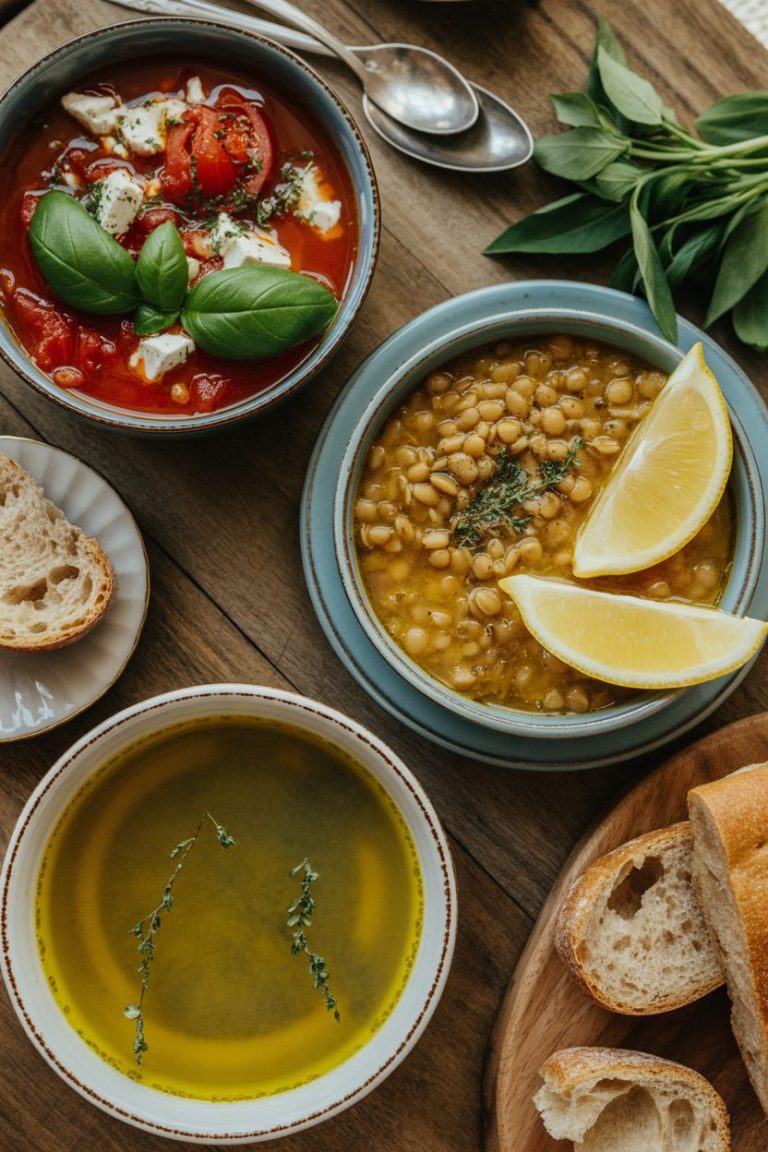
This is the soup that made me fall in love with Mediterranean cooking. It’s earthy, slightly tangy from tomatoes, and ridiculously simple. You basically throw lentils, carrots, onions, and garlic into a pot with vegetable broth, add a generous pour of olive oil, and let it simmer. The secret? A splash of red wine vinegar at the end that brightens everything up.
My version includes a bay leaf and some dried oregano, but the real magic happens when you drizzle extra olive oil on top before serving. Yeah, it seems like a lot of oil, but that’s the point. If you’re already making lentil soup with crusty bread, you know what I’m talking about.
2. White Bean and Spinach Soup
Think Tuscan countryside in a bowl. Creamy white beans (cannellini are my go-to), tons of spinach that wilts down, and enough garlic to ward off vampires. The texture is velvety without any cream, which still amazes me every time I make it.
I add a parmesan rind while it simmers—save those rinds in your freezer specifically for this. They infuse the broth with this umami richness that’s impossible to replicate. Pull it out before serving, obviously. Our lentil spinach soup takes a similar approach if you want to try that variation.
Quick Win: Use pre-washed baby spinach. It costs a tiny bit more but saves so much time, and you’ll actually eat more greens because there’s zero barrier to entry.
3. Chickpea and Tomato Soup
This is my go-to when I need something fast. Canned chickpeas, diced tomatoes, onion, garlic, cumin, and smoked paprika. Done in 25 minutes, and it tastes like you spent way longer on it. The chickpeas get slightly creamy as they simmer, thickening the broth naturally.
I like to mash some of the chickpeas against the side of the pot toward the end—gives you a better texture without pulling out the blender. A squeeze of lemon juice before serving is essential. It’s similar to how Mediterranean chickpea bowls work, just in liquid form.
4. Roasted Red Pepper and Tomato Soup
Okay, technically you can use jarred roasted red peppers for this, but if you have 15 minutes to actually roast fresh peppers under the broiler? Do it. The flavor is completely different. Blend them with tomatoes, garlic, vegetable broth, and a pinch of red pepper flakes.
The color alone is gorgeous—bright red-orange that looks like summer even when it’s freezing outside. I usually top mine with some crumbled feta and a drizzle of olive oil. For roasting, I use these silicone baking mats so the peppers don’t stick and cleanup is stupid easy.
Speaking of Mediterranean flavors, you might also enjoy shakshuka with eggs in spicy tomato sauce or Mediterranean shakshuka for breakfast—same flavor profile, different meal.
5. Greek-Style Chicken and Rice Soup (Avgolemono)
This one’s special. The egg-lemon sauce (avgolemono) makes it creamy and tangy without any dairy. It’s weird the first time you make it—you’re basically tempering eggs with hot broth—but once you nail the technique, you’ll want to put it on everything.
Use rotisserie chicken to save time. Shred it, add it to chicken broth with rice (or orzo), then slowly whisk in the egg-lemon mixture off the heat. The result is silky, comforting, and unlike any other soup you’ve had. My Greek friend says her mom adds dill, which I thought was strange but now I can’t make it without.
6. Tuscan Kale and White Bean Soup
Kale gets a bad rap, but in soup? It’s perfect. The sturdy leaves hold up to long cooking without turning to mush, and they add this slightly bitter note that balances the creamy beans. I use dinosaur kale (lacinato) because it’s less tough than the curly stuff.
This soup is basically vegetables, beans, and broth, but the combination of rosemary, thyme, and a parmesan rind makes it taste complex. Sometimes I throw in some Italian sausage for my husband, but it’s honestly great without. For chopping all those vegetables, a good chef’s knife makes the process way less annoying.
7. Minestrone with Pesto
Minestrone is whatever vegetables you have, basically. But the Italian version always has some pasta or rice, beans, and gets finished with pesto stirred in right before serving. That pesto addition is key—it makes the whole thing sing.
I make mine with zucchini, carrots, celery, green beans, canned tomatoes, and cannellini beans. Small pasta shapes work best. And honestly? Store-bought pesto is fine. Life’s too short to make everything from scratch, and there are some really good options out there now.
8. Moroccan Lentil and Vegetable Soup
This is where Mediterranean meets North African spices, and the result is incredible. Red lentils break down as they cook, creating this thick, almost stew-like consistency. Cumin, coriander, turmeric, cinnamon—the spice combo is warm and complex.
I add sweet potato and carrots for sweetness, and finish with fresh cilantro and a squeeze of lemon. It’s similar to what you’d find in Moroccan spiced quinoa bowls but in soup form. Sometimes I serve it over couscous to make it even heartier.
Pro Tip: Red lentils cook way faster than green or brown ones—about 15 minutes versus 30-40. Use them when you’re short on time but still want that creamy soup texture.
9. Sicilian Seafood Soup
If you’re not into seafood, skip this one. But if you are? This is the soup that’ll make you feel fancy even though it’s absurdly easy. White fish, shrimp, maybe some mussels if you’re feeling it, all simmered in a tomato-based broth with white wine, garlic, and saffron.
The trick is not overcooking the seafood. Add it at the very end and let it poach gently for just a few minutes. Serve with crusty bread for soaking up all that broth. This pairs beautifully with grilled salmon with tomato caper relish for a full seafood dinner.
10. Greek-Style Mushroom and Barley Soup
Mushrooms and barley are a match made in heaven. The earthiness of mushrooms, the chewiness of barley, all swimming in a rich vegetable broth. I use a mix of mushroom types—cremini, shiitake if I can find them, even regular button mushrooms work.
Thyme is essential here. And don’t skimp on the mushrooms—they shrink down a lot as they cook. I usually buy a pound and think it’s too much, then realize it’s just right. A splash of dry sherry at the end adds depth, but it’s optional. Check out barley mushroom soup for another take on this combo.
11. Spicy Harissa and Chickpea Soup
Harissa is a North African chili paste that’s smoky, spicy, and slightly sweet. A tablespoon in chickpea soup transforms it from basic to extraordinary. I buy this harissa paste and it lasts forever in the fridge.
This soup is warming in that “oh wow, my sinuses are clear now” kind of way. Not painfully spicy, just enough heat to make you pay attention. I balance it with a dollop of Greek yogurt on top, which cools things down and adds creaminess. It’s inspired by flavors you’d find in Mediterranean chickpea wraps.
12. Italian Wedding Soup (Lightened Up)
Traditional Italian wedding soup has meatballs, but I make mini turkey meatballs to keep it lighter. Mix ground turkey with breadcrumbs, parmesan, and herbs. Roll them tiny—like marble-sized—so they cook quickly in the broth.
Add orzo or small pasta, plenty of spinach, and finish with parmesan. It’s comforting without being heavy, and the kids actually eat it, which is a win. The turkey keeps the protein high while staying lean, much like turkey breakfast sausage patties do for breakfast.
13. Tuscan Ribollita
This is the “use up your stale bread” soup, and it’s brilliant. You literally tear up day-old bread and let it soak into the soup, creating this thick, porridge-like consistency. Sounds weird, tastes amazing.
It’s basically minestrone that’s been left overnight and reheated with bread the next day. The name literally means “reboiled.” Cannellini beans, kale, tomatoes, lots of vegetables. IMO, it’s even better on day three when everything’s completely melded together. I keep a stash of these airtight containers specifically for storing soup because they stack perfectly and don’t leak.
14. Cypriot Trahana Soup
Okay, this is less common but hear me out. Trahana is a fermented grain product—kind of like couscous but with a tangy flavor from the fermentation. You can find it at Greek or Middle Eastern markets. The soup is traditionally made with chicken broth, trahana, and halloumi cheese.
The sourness from the trahana is unique and addictive. It’s comfort food in Cyprus, and now I understand why. The halloumi gets squeaky and salty as it heats through. If you can’t find trahana, pearl couscous with a splash of lemon juice gets you close.
15. Greek Fasolada (National Dish)
This is literally Greece’s national dish. White beans simmered with tomatoes, carrots, celery, and a metric ton of olive oil. It looks simple on paper but tastes complex because of how the flavors develop during the long simmer.
The traditional recipe calls for a full cup of olive oil for a pot of soup, which sounds insane until you try it. The oil creates this velvety texture and makes the soup incredibly satisfying. Serve with crusty bread and crumbled feta. Similar concept to tuna white bean salad but served hot.
16. Zucchini and Dill Soup
This is peak summer soup, but I include it because you can find zucchini year-round now. It’s light, fresh, and the dill makes it taste bright even in winter. Sauté onions and zucchini, add broth, simmer until soft, then blend until smooth.
The key is not overcooking the zucchini or it gets bitter. I add a squeeze of lemon and a swirl of Greek yogurt before serving. Sometimes I throw in some feta. It’s basically the opposite of heavy winter soups, which is exactly what you need when you’re sick of feeling stuffed.
17. Roasted Cauliflower and Garlic Soup
Roasting the cauliflower first is non-negotiable. It caramelizes, gets sweet, and adds so much more flavor than just boiling it. Toss cauliflower florets with olive oil, roast at 425°F until golden, then simmer with roasted garlic and vegetable broth.
Blend it smooth and you get this creamy, almost decadent soup with zero cream. I usually roast a whole head of garlic at the same time—just cut the top off, drizzle with olive oil, wrap in foil, and throw it in the oven. The roasted garlic cloves squeeze out like butter. If you’re into roasted vegetables, check out roasted cauliflower shawarma bowls too.
18. Lemon and Orzo Soup
This is basically avgolemono’s cousin, but with more orzo and a simpler preparation. Cook orzo in vegetable or chicken broth, add lots of lemon juice and zest, finish with a handful of fresh herbs—dill or parsley work great.
It’s light, tangy, and perfect when you’re feeling under the weather. The orzo makes it hearty enough for a meal, but it’s not heavy. I keep this microplane zester by my cutting board because fresh lemon zest makes such a difference in recipes like this.
Quick Win: Batch cook plain orzo or rice on meal prep day. Having it ready to go means you can throw together soup in literally 15 minutes when you’re tired and hungry.
Making These Soups Work for Real Life
Look, I’m not going to tell you to spend all Sunday chopping vegetables. That’s not realistic for most people. Here’s how I actually make these soups happen during busy weeks.
Prep once, eat twice (or thrice): Most of these soups freeze beautifully. Make a big batch, eat some fresh, freeze the rest in individual portions. I use wide-mouth mason jars for freezing soup—just leave an inch of space at the top so it doesn’t crack as it expands.
Embrace shortcuts: Pre-cut vegetables, rotisserie chicken, canned beans, jarred roasted peppers—use them all. The Mediterranean diet police aren’t going to show up at your door. What matters is that you’re eating real food, not whether you chopped the onions yourself.
Invest in decent tools: You don’t need expensive equipment, but a good pot, a sharp knife, and an immersion blender will make your life so much easier. I fought getting an immersion blender for years, then finally bought this one and now I use it constantly. Blending soup right in the pot instead of transferring it to a blender? Revolutionary.
Season as you go: Taste your soup throughout cooking and adjust. More salt? More lemon? Another glug of olive oil? Trust your palate. The recipes are guidelines, not gospel.
The Olive Oil Conversation We Need to Have
I know olive oil can be expensive, and using a lot of it in soup might seem wasteful. But here’s the thing—it’s not just about calories or cost. The protective effects of extra virgin olive oil come from its polyphenol content, not just the monounsaturated fat, which means cheap olive oil won’t give you the same benefits.
You don’t need to buy the fanciest bottle for cooking soup. But you do need actual extra virgin olive oil, not that “light olive oil” nonsense. I buy a mid-range EVOO for cooking and a nicer one for drizzling. The cooking one still needs to taste good—if it’s rancid or flavorless, your soup will be too.
And yes, Mediterranean recipes use what seems like a lot of oil. That’s intentional. The oil carries fat-soluble vitamins and makes you feel satisfied so you’re not rummaging through the kitchen an hour later. Would you rather use less oil and feel hungry, or use the proper amount and actually feel nourished?
Storage and Reheating Tips
Most of these soups last 4-5 days in the fridge, which is perfect for meal prep. The flavors actually improve as they sit, giving everything time to meld together. I usually make soup on Sunday or Monday and eat it through the week.
For freezing, let the soup cool completely first. Don’t freeze soups with pasta or rice if you can avoid it—they get mushy. Instead, freeze the base and cook fresh pasta or rice when you reheat. If you’re freezing soup with beans, they might get slightly softer but they’re still fine.
Reheat gently on the stove, adding a splash of water or broth if it’s gotten too thick. Microwave works in a pinch, but stovetop preserves the texture better. Always taste and adjust seasoning after reheating—it usually needs a bit more salt and a fresh squeeze of lemon.
When Soup Becomes a Lifestyle
I realize this sounds dramatic, but these soups genuinely changed how I eat during cold months. Instead of reaching for heavy, processed comfort food, I have these nutrient-dense options that actually make me feel good.
The Mediterranean approach to food is less about strict rules and more about patterns. Lots of vegetables, reasonable portions, quality fats, minimal processing. These soups check all those boxes while being legitimately delicious, which is the whole point.
Will eating Mediterranean soup magically make you live to 100? Probably not. But will it help you feel more energized, less bloated, and generally better during winter? Yeah, actually. And unlike most “health food,” you’ll want to keep eating it because it tastes good.
Frequently Asked Questions
Can I make these soups in a slow cooker?
Absolutely. Most of these adapt perfectly to slow cookers. Sauté your aromatics first in a pan for better flavor, then transfer everything to the slow cooker. Cook on low for 6-8 hours or high for 3-4 hours. Just add delicate ingredients like spinach or fresh herbs in the last 30 minutes.
Are these soups good for weight loss?
They can be part of a weight loss plan because they’re filling, nutrient-dense, and relatively low in calories considering how satisfying they are. The fiber from beans and vegetables keeps you full, and the olive oil helps with satiety. But remember, weight loss is about overall calorie intake, not any single food.
What if I don’t like olive oil?
Honestly, olive oil is pretty central to Mediterranean cooking, but if you truly can’t stand it, you could use avocado oil instead. The flavor won’t be the same, and you’ll miss out on some of the health benefits specific to olive oil’s polyphenols, but it’s better than not making the soup at all.
Can I substitute dried beans for canned?
Sure, but you’ll need to plan ahead. Dried beans need soaking overnight and then 1-2 hours of cooking time depending on the type. They’re cheaper and arguably taste better, but canned beans are convenient and still nutritious. No judgment either way.
How do I make these soups more filling for my family?
Serve them with crusty bread, add more beans or lentils, include some protein like chicken or sausage, or serve over grains like farro or quinoa. You can also make the portions larger or serve a substantial salad on the side. The goal is satisfaction, so adjust based on what your family needs.
Final Thoughts
Here’s what I want you to take away from all this: Mediterranean soups aren’t complicated. They’re not time-consuming if you use smart shortcuts. And they’re definitely not boring.
They’re just good food that happens to be good for you. Start with one or two recipes that sound appealing. Don’t overthink it. Use what you have in your pantry. Make substitutions. The point is to find soups you’ll actually make and eat, not to perfectly execute restaurant-quality versions.
Winter’s long enough without eating food that makes you feel sluggish. These soups give you something to look forward to when it’s cold and dark outside. They’re warm, nourishing, and they taste like someone actually cares about what you’re eating—even if that someone is just you, cooking for yourself on a random Tuesday.
Now go make some soup. Your future self—the one who’s tired and hungry and doesn’t want to order takeout again—will thank you.