25 Heart-Healthy Recipes You Can Make for Under $10
Look, I get it. You’re standing in the grocery store, staring at organic produce prices that make your wallet weep, wondering if eating healthy means choosing between your heart health and your rent money. Spoiler alert: it doesn’t.
After years of meal planning on a shoestring budget, I’ve cracked the code on eating heart-healthy without breaking the bank. And honestly? Some of my cheapest meals have become my absolute favorites. There’s something deeply satisfying about creating a Mediterranean masterpiece for less than the cost of a sad fast-food combo.
Why Budget-Friendly and Heart-Healthy Aren’t Enemies
Here’s the thing nobody tells you: heart-healthy ingredients are often the cheapest ones at the store. Beans, lentils, whole grains, seasonal veggies—they’re nutritional powerhouses that cost pennies per serving. Meanwhile, processed junk food might seem cheap upfront, but you’re paying twice: once at the register and again with your health.
The American Heart Association backs this up, showing that whole foods like beans and grains offer serious nutrition bang for your buck. I’ve been cooking this way for years, and my grocery bills have actually dropped while my energy levels skyrocketed.
Plus, when you’re making food at home instead of grabbing takeout, you control exactly what goes into your body. No mystery sodium bombs or hidden trans fats. Just real food that actually tastes good and keeps your heart happy.
The Real Cost of Eating Well
Let’s talk numbers. Most people think healthy eating costs a fortune, but research from Harvard’s Nutrition Source found that nutritious meal patterns only cost about $1.48 more per day than less healthy options. That’s less than a fancy coffee.
When I started tracking my spending, I realized I was dropping $12-15 per meal on mediocre takeout. Now I’m making restaurant-quality heart-healthy meals for under $10—and getting multiple servings out of them. The math just works.
Pro Tip: Buy dried beans and lentils in bulk. They’re ridiculously cheap, last forever in your pantry, and pack more protein and fiber than most expensive “superfoods.” I stock up when they’re on sale and never look back.
Smart Shopping Strategies That Actually Work
Okay, real talk: meal planning changed my life. Every Sunday, I spend 20 minutes mapping out my week and making a shopping list. Sounds boring, I know, but it’s the difference between a $120 grocery bill and a $65 one.
Shop seasonal produce—it’s always cheaper and tastes better anyway. Zucchini in summer, butternut squash in fall, you get the idea. I also hit up the farmers market near closing time when vendors are practically giving away their remaining stock.
Here’s another hack: buy whole foods instead of pre-cut or pre-seasoned versions. That vegetable chopper I picked up saves me so much time, and I’m not paying the “convenience tax” for someone else to dice my onions.
And frozen vegetables? Absolute game-changer. They’re frozen at peak freshness, last for months, and cost way less than fresh. I keep freezer-safe storage containers stocked with pre-portioned veggies for quick weeknight dinners.
Building Your Budget-Friendly Pantry
Your pantry is your secret weapon. When you stock smart staples, you’re never more than 20 minutes from a solid meal. My essentials include dried lentils, brown rice, canned tomatoes, olive oil, and a decent spice collection.
I use glass storage jars for my bulk items because they keep everything fresh and I can actually see what I have. No more buying duplicate ingredients because I forgot I already had them hiding in the back of a dark cabinet.
Spices seem expensive upfront, but they last forever and transform boring ingredients into something you’d actually want to eat. A quality spice rack pays for itself after a few meals when you’re not ordering takeout out of sheer boredom.
Breakfast: Start Your Day Right Without Starting Broke
Breakfast is where most people’s healthy eating plans go to die. But it doesn’t have to be complicated or expensive. Oats are literally under $3 for a huge container, and you can make them a thousand different ways.
I’m obsessed with overnight oats because I can prep a week’s worth in about 10 minutes. Throw oats, milk, and whatever toppings you have into mason jars, refrigerate, and boom—breakfast is handled. Try the Get Full Recipe for my go-to combination that costs maybe 75 cents per serving.
Greek yogurt bowls are another winner. Buy the big plain tub (way cheaper than individual flavored ones) and customize it yourself with frozen berries and a drizzle of honey. Speaking of which, you might love this Greek yogurt bowl with berries and honey that’s become my weekday staple.
Eggs are your friend. At around $3-4 per dozen, they’re one of the most affordable sources of high-quality protein. A simple veggie scramble with whatever’s in your fridge takes five minutes and costs next to nothing.
Quick Win: Make a big batch of egg muffins on Sunday. They reheat perfectly, cost pennies each, and keep you full all morning. I stash them in my fridge using these meal prep containers and grab them on busy mornings.
For more morning inspiration, try these high-protein breakfasts or this Mediterranean smoothie bowl that’s packed with nutrients and flavor.
Lunch Ideas That Won’t Drain Your Bank Account
Lunch is where the takeout trap gets most of us. That $12 salad adds up to $60 per week, $240 per month. Meanwhile, I’m making incredible lunches for under $3 each.
Soup is criminally underrated. One pot of lentil soup costs maybe $6 total and gives you four to six hearty servings. Plus, it gets better as it sits in the fridge. I love this lentil soup with crusty bread recipe—it’s basically liquid comfort food.
Mediterranean-style grain bowls are another lunch MVP. Cook a big batch of quinoa or farro at the start of the week, then mix and match with whatever veggies, proteins, and dressings you have. The Mediterranean grain bowl is my template for this strategy.
Wraps and sandwiches don’t have to be boring. Get Full Recipe for my favorite chickpea mash that costs maybe $1 per serving and tastes better than any deli sandwich. I spread it on whole wheat bread with some veggies and call it lunch.
Here’s a weird tip: invest in a good insulated lunch bag. When your homemade lunch stays fresh and appetizing until noon, you’re way less likely to hit up the food court.
If you’re looking for more ideas, check out these Mediterranean lunchbox recipes that travel well and taste amazing cold or reheated.
Dinner Solutions That Save Money and Time
Dinner is where budget cooking really shines. You can make genuinely impressive meals for under $10 that feed your whole family.
One-pot meals are your new best friend. Less cleanup, less stress, and somehow they always taste better than complicated recipes. A big pot of chili, curry, or pasta costs almost nothing and provides multiple meals.
I’m completely hooked on this whole wheat spaghetti with cherry tomatoes and basil. The entire recipe costs maybe $7 and easily feeds four people. That’s less than $2 per person for a restaurant-worthy dinner.
Sheet pan dinners are another brilliant move. Throw chicken thighs (way cheaper than breasts), potatoes, and whatever vegetables you have onto a pan with olive oil and seasonings. Get Full Recipe for my go-to combination that comes together in 30 minutes.
IMO, the best budget hack is cooking with less expensive proteins. Chicken thighs, ground turkey, and canned tuna are all dirt cheap and incredibly versatile. This tuna white bean salad costs less than $5 total and tastes like something from a fancy Italian restaurant.
Pro Tip: Double your dinner recipe and freeze half. Future you will thank present you when you’re exhausted on a Wednesday and have a homemade meal ready to reheat. I use freezer-safe containers that stack perfectly and prevent freezer burn.
Speaking of quick dinners, you might also love these Mediterranean one-pan dinners or this one-pot Mediterranean pasta that’s ready in 20 minutes.
Protein Without the Price Tag
Let’s bust this myth right now: you don’t need expensive meat to get enough protein. Beans, lentils, and chickpeas are protein powerhouses that cost pennies per serving.
A can of chickpeas costs maybe 80 cents and contains about 12 grams of protein. Compare that to chicken breast at $4-5 per pound. The math is pretty clear.
I make these easy baked falafel at least twice a month. They’re crispy, satisfying, and cost almost nothing to make. Serve them in pita with vegetables and tahini sauce, and you’ve got a complete meal for under $5.
Eggs remain one of the best protein bargains on the planet. This savory Mediterranean scramble costs maybe $2 per serving and keeps you full for hours.
When you do buy meat, go for cheaper cuts and cook them smart. Chicken thighs have more flavor than breasts and cost way less. Ground turkey works in anything ground beef does but rings up cheaper at checkout.
For more protein-packed ideas that won’t wreck your budget, browse through these high-protein vegetarian recipes.
Vegetables: Fresh, Frozen, or Canned?
Here’s the truth: all three options are perfectly fine. The “fresh or nothing” mindset is how people go broke trying to eat healthy.
Fresh vegetables are great when they’re in season and on sale. Out-of-season imported stuff? Pass. That’s when frozen vegetables become your hero. They’re picked and frozen at peak ripeness, so they’re often more nutritious than “fresh” produce that’s been sitting in storage for weeks.
I keep my freezer stocked with basics: peas, green beans, spinach, mixed vegetables. They’re ready when I need them, never go bad, and cost way less than fresh. Plus, no prep work required.
Canned tomatoes are actually superior to fresh for cooking. Fight me on this. A can of quality tomatoes costs less than fresh ones and makes better sauce every time. Same goes for canned beans—just rinse them well to reduce sodium.
FYI, a good vegetable steamer basket makes frozen veggies taste freshly cooked instead of mushy. Worth every penny.
Smart Substitutions That Save Money
Learning strategic substitutions is like having a superpower. You can make almost any recipe cheaper without sacrificing taste or nutrition.
Expensive nuts in a recipe? Swap in sunflower seeds or pumpkin seeds. Same crunch, way less money. Fancy cheese? Use half the amount of something flavorful like feta or Parmesan instead of a full cup of mild cheese.
Fresh herbs cost $3-4 for a tiny package. Meanwhile, dried herbs are $2-3 and last for months. Yes, fresh is nice for garnishing, but dried works perfectly fine in cooked dishes.
Instead of buying pre-made hummus for $4-5, make your own with a can of chickpeas, tahini, lemon, and garlic. It takes five minutes in a food processor and tastes infinitely better.
Plain Greek yogurt can replace sour cream, mayo, and even some cream in recipes. Buy one big tub instead of three different expensive products.
Meal Prep: Your Secret Weapon
I resisted meal prep for years because it sounded tedious. Then I realized I was spending 2+ hours cooking dinner every single night. Now I spend 2 hours on Sunday and coast through the week.
My strategy: cook 2-3 base components that can be mixed and matched. A big batch of quinoa or rice, roasted vegetables, and some kind of protein. Then I recombine them differently each day so I’m not eating the same thing over and over.
This 7-day Mediterranean meal prep plan walks through exactly how I do it. Game-changing doesn’t even cover it.
Invest in quality glass meal prep containers with compartments. Being able to see your food makes you way more likely to actually eat it instead of letting it die in the back of the fridge.
You can also prep just components instead of full meals. Wash and chop vegetables, cook grains, make a big batch of dressing. Then assembly becomes super fast on busy weeknights.
Snacks That Don’t Break the Bank
Snacking is where people hemorrhage money without realizing it. Those $5 protein bars add up fast. Meanwhile, homemade snacks cost pennies and taste better.
Roasted chickpeas are my go-to. Get Full Recipe for my favorite spice blend—they’re crunchy, satisfying, and cost maybe 30 cents per serving. I make a huge batch and keep them in airtight containers.
Raw veggies with hummus is the ultimate budget snack. Carrots, celery, cucumbers, bell peppers—all cheap, all delicious. This hummus and veggie sticks combo has saved me countless times.
Fruit is nature’s perfect snack food and costs way less than processed alternatives. An apple with some peanut butter keeps you full and costs under a dollar.
For more ideas, check out these Mediterranean snacks that actually keep you full.
Cooking Tools Worth the Investment
Good tools make budget cooking easier and more enjoyable. You don’t need a million gadgets, but a few key pieces will transform your cooking game.
A solid chef’s knife is non-negotiable. Cheap dull knives make cooking miserable and dangerous. One good knife will last decades with proper care.
A large cast iron skillet costs around $30 and lasts forever. It heats evenly, goes from stovetop to oven, and gets better with age. I use mine almost daily.
Speaking of pans, a decent nonstick pan lets you cook with less oil, which saves money and calories. Just don’t buy the cheapest one—they wear out fast.
A slow cooker or Instant Pot pays for itself in a month. Throw in cheap ingredients in the morning, come home to a complete meal. These Mediterranean slow cooker meals are proof.
Avoiding Food Waste: The Hidden Money Saver
Want to know the fastest way to flush money down the drain? Let food go bad in your fridge. I used to throw away so much produce, it was embarrassing.
Now I have systems. Fresh herbs go into ice cube trays with olive oil and freeze. Vegetable scraps get collected in the freezer for making broth. Wilting greens get blended into smoothies.
That rotisserie chicken carcass? Broth. Stale bread? Homemade croutons or breadcrumbs. Overripe bananas? Get Full Recipe for banana “nice cream” that costs nothing and tastes like dessert.
Plan meals around what you already have before buying new groceries. Sometimes the best budget meal is whatever’s about to expire in your fridge combined creatively.
Making It Taste Good: Because Healthy Food Should Be Delicious
Let’s be real: nobody sticks with healthy eating if the food tastes like cardboard. The secret is learning to use spices, acids, and aromatics to build flavor.
Garlic, onions, and olive oil form the base of countless Mediterranean dishes. They’re cheap and transform everything they touch. A squeeze of lemon or splash of vinegar at the end brightens any dish.
Don’t be afraid of salt and fat—just use them smartly. A little good olive oil goes a long way. Some recipes genuinely need butter or cheese to taste right, and that’s okay when you’re cooking real food from scratch.
Fresh cracked black pepper, smoked paprika, cumin, oregano—a decent spice collection is worth its weight in gold. Buy them from the bulk bins if your store has them, or get a variety spice set to start.
This lemon herb chicken with roasted potatoes shows how simple ingredients become restaurant-worthy with proper seasoning.
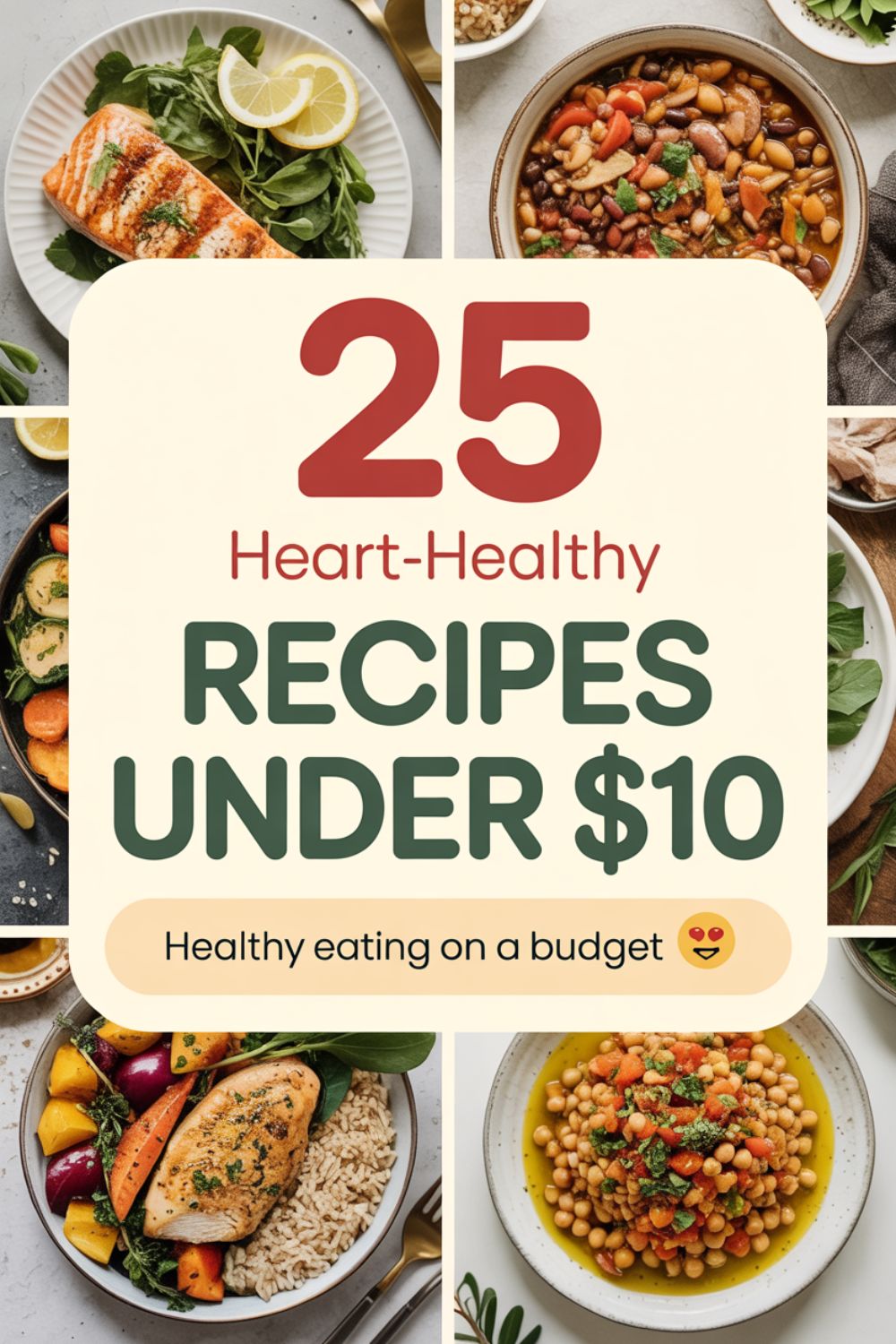
25 Heart-Healthy Recipes Under $10
Alright, here’s the good stuff. These recipes have kept my heart happy and my wallet full for years. Each one costs under $10 total and makes multiple servings.
1. Greek Yogurt Bowl with Berries and Honey – Morning perfection in a bowl. Get Full Recipe
2. Lentil Soup with Crusty Bread – Liquid gold that costs almost nothing. Get Full Recipe
3. Mediterranean Chickpea Wraps – Lunch that actually keeps you full. Get Full Recipe
4. Oatmeal with Dried Figs, Walnuts, and Cinnamon – Breakfast that tastes like dessert. Get Full Recipe
5. Tuna White Bean Salad – Protein-packed and ridiculously cheap. Get Full Recipe
6. Whole Wheat Spaghetti with Cherry Tomatoes and Basil – Simple Italian perfection. Get Full Recipe
7. Shakshuka (Eggs in Spicy Tomato Sauce) – Dinner for breakfast vibes. Get Full Recipe
8. Grilled Veggie Platter with Hummus – Perfect for meal prep. Get Full Recipe
9. Mediterranean Grain Bowl – My weekly staple. Get Full Recipe
10. Cucumber Hummus Sandwich – Sounds simple, tastes amazing. Get Full Recipe
11. Lentil Spinach Soup – Green goodness in a bowl. Get Full Recipe
12. Easy Baked Falafel – Crispy without the deep fryer. Get Full Recipe
13. Greek Salad (But Like, Actually Good) – Fresh, crunchy perfection. Get Full Recipe
14. Stuffed Bell Peppers with Quinoa and Veggies – Meal prep MVP. Get Full Recipe
15. One-Pot Mediterranean Pasta – Literally one pot, zero stress. Get Full Recipe
16. Grilled Eggplant with Yogurt Sauce – Smoky, creamy heaven. Get Full Recipe
17. Mediterranean Chickpea Skillet – 20 minutes to dinner. Get Full Recipe
18. Avocado Toast Mediterranean Style – Classic with a twist. Get Full Recipe
19. Three Bean Chili – Hearty, healthy, and crazy cheap. Get Full Recipe
20. Greek Yogurt Parfait – Breakfast or dessert? Yes. Get Full Recipe
21. Mediterranean Lentil Salad – Travels well for lunch. Get Full Recipe
22. Carrot Ginger Soup with Chickpea Croutons – Comfort in a bowl. Get Full Recipe
23. Cucumber Tomato Feta Salad – Summer in a bowl, budget-friendly year-round. Get Full Recipe
24. Savory Mediterranean Scramble – Eggs elevated to art. Get Full Recipe
25. Barley Mushroom Soup – Earthy, satisfying, stupidly cheap. Get Full Recipe
Pro Tip: Start with recipes that use similar base ingredients. If you’re making lentil soup, also make the lentil salad that week. You’ll save money buying ingredients in larger quantities and reduce waste.
Related Recipes You’ll Love
Looking for more ideas? Here are some recipes that pair perfectly with these budget-friendly meals:
More Budget-Friendly Mediterranean Ideas:
- 15 Budget-Friendly Mediterranean Meals
- 30 Mediterranean Dinner Recipes for the Whole Week
- 21 Quick Mediterranean Meal Prep Ideas
High-Protein Options:
- 25 High-Protein Vegetarian Recipes
- 21 High-Protein Mediterranean Meals Under 400 Calories
- 15 High-Protein Soups to Keep You Full
Frequently Asked Questions
Can you really eat heart-healthy on a tight budget?
Absolutely. The cheapest foods at the grocery store—beans, lentils, whole grains, seasonal vegetables—are also some of the most heart-healthy options available. You’re actually spending less money when you skip processed foods and cook simple meals from scratch. I’ve been doing this for years and my grocery bills are consistently 30-40% lower than when I was buying convenience foods.
How much should I budget per meal for heart-healthy eating?
For the recipes I’ve shared, you’re looking at $2-3 per serving, sometimes even less. A $10 recipe typically makes 3-5 servings, so you’re getting multiple meals from one cooking session. That’s way cheaper than takeout or even most frozen dinners, and infinitely better for your heart.
Are frozen vegetables as healthy as fresh ones?
Yes, and sometimes they’re actually better. Frozen vegetables are processed at peak ripeness, locking in nutrients. Fresh produce loses nutrients during transport and storage. Plus, frozen veggies last for months, so you waste less food and save more money. I keep my freezer stocked with them and use them interchangeably with fresh.
What are the cheapest heart-healthy proteins?
Hands down: dried beans, lentils, chickpeas, and eggs. A pound of dried lentils costs around $2 and makes enough protein for 10+ servings. Eggs are about $3-4 per dozen and pack incredible nutrition. Canned tuna and chicken thighs are also budget-friendly animal protein options that work great in heart-healthy recipes.
How do I make budget meals not taste boring?
The secret is building a good spice collection and learning to layer flavors. Garlic, onions, fresh lemon juice, and quality olive oil transform simple ingredients. Don’t skimp on seasonings—they’re what make cheap ingredients taste expensive. Also, varying your cooking methods (roasting, grilling, sautéing) keeps things interesting even when you’re cooking the same basic ingredients.
Making It Work for You
Here’s what I’ve learned after years of budget-conscious, heart-healthy cooking: it’s not about being perfect. Some weeks I meal prep like a boss. Other weeks I’m throwing together whatever’s in the fridge five minutes before dinner.
The key is having a solid foundation of budget-friendly staples and knowing a handful of recipes you can make without thinking. Start with 3-5 recipes from this list that appeal to you. Master those, then gradually add more.
Your heart doesn’t care if your meals are Instagram-worthy. It cares that you’re feeding it real food prepared with ingredients you can actually pronounce. And your wallet definitely appreciates keeping more money in your pocket instead of handing it to fast food chains.
The beautiful thing about these recipes is they’re flexible. Don’t have spinach? Use kale. Out of chickpeas? Swap in white beans. Cooking on a budget means being creative and using what you’ve got.
Final Thoughts
Eating heart-healthy on a budget isn’t some impossible dream or sacrifice. It’s actually simpler and more satisfying than the expensive alternative. Real food costs less than processed junk and tastes infinitely better when you know how to prepare it.
These 25 recipes have literally saved me thousands of dollars over the years while keeping my energy high and my doctor happy. Start with one or two, get comfortable with them, then expand your repertoire.
Your future self—and your heart—will thank you for taking this seriously. Good food doesn’t have to break the bank. Sometimes the best meals come from the simplest ingredients and the tightest budgets.
Now go make something delicious.