7-Day Low-Carb High-Protein Meal Plan (Quick Recipes + Shopping List)
Starting a low-carb high-protein meal plan sounds great in theory until you’re standing in your kitchen on Monday morning with no idea what to actually eat. You know the drill—good intentions, zero preparation, and suddenly you’re eating string cheese for lunch three days in a row because it’s the only protein you can find.
This meal plan fixes that. Seven days of actual meals with real recipes, plus a shopping list that won’t require you to take out a second mortgage. We’re keeping carbs low, protein high, and prep time reasonable because nobody has three hours a day to spend cooking.
Why Low-Carb High-Protein Actually Works
Low-carb diets work because they force your body to burn fat for fuel instead of constantly relying on glucose from carbs. High-protein meals keep you full longer, preserve muscle mass, and require more energy to digest than carbs or fats. Combine the two and you’ve got a pretty effective approach for weight management and steady energy levels.
The trick is getting enough protein—we’re aiming for 25-35 grams per meal—while keeping carbs under 50 grams total per day. That’s low enough to see benefits but not so restrictive that you’re fantasizing about bread constantly. Some people go even lower, but this is a sustainable starting point.
Research from nutrition authorities like the American Journal of Clinical Nutrition shows that higher protein intake supports satiety, helps maintain lean muscle mass during weight loss, and can improve metabolic markers. The key is choosing quality protein sources and pairing them with non-starchy vegetables.
The Ground Rules Before You Start
This isn’t a strict ketogenic diet, so you don’t need to stress about hitting exact macros or testing ketone levels. We’re just keeping carbs low and protein high while eating real food. You’ll still get carbs from vegetables, which provide fiber, vitamins, and minerals your body actually needs.
Drink water. Like, a lot of it. When you cut carbs, your body releases water weight initially, and you need to stay hydrated. Aim for at least eight glasses a day, more if you’re active or it’s hot outside.
Don’t skip fat. Low-carb doesn’t mean low-fat. You need healthy fats for energy, hormone production, and nutrient absorption. Olive oil, avocados, nuts, and fatty fish are your friends here.
Your Complete Shopping List
Let’s get the shopping out of the way first. This list covers the full week, and yes, it looks long, but you probably already have some of these staples.
Proteins
- 2 lbs chicken breast
- 1.5 lbs ground turkey
- 1 lb salmon fillets
- 1 lb white fish (cod or halibut)
- 1 lb shrimp
- 18 eggs
- 1 container Greek yogurt (plain, full-fat)
- 1 block cheddar cheese
- 1 container feta cheese
- 1 package turkey bacon
Vegetables
- 2 heads broccoli
- 1 bag spinach
- 1 head cauliflower
- 3 zucchini
- 2 bell peppers (red and yellow)
- 1 container cherry tomatoes
- 2 avocados
- 1 cucumber
- 1 bunch asparagus
- 1 bag mixed salad greens
- 1 red onion
- 4 cloves garlic (or a jar of minced garlic)
- Fresh herbs: basil, cilantro, parsley
Pantry Staples
- Olive oil
- Coconut oil
- Apple cider vinegar
- Dijon mustard
- Salt, pepper, garlic powder, paprika, cumin
- Almond flour
- Unsweetened almond milk
Optional but Recommended
- Hot sauce
- Everything bagel seasoning
- Lemon juice
- Sugar-free salsa
I keep these glass meal prep containers stocked because they make the whole week easier—you can see what’s inside without opening them, and they don’t get weird smells like plastic does.
Day 1: Getting Started Strong
Breakfast: Veggie-Loaded Scramble
Scramble three eggs with spinach, diced bell peppers, and a sprinkle of cheddar. Cook in olive oil, season with salt and pepper, and you’re done in under 10 minutes. This delivers 22 grams of protein and about 5 grams of net carbs.
The beauty of egg scrambles is you can make them different every day just by switching up the vegetables and cheese. Throw in some turkey bacon if you want extra protein and that satisfying crunch.
Lunch: Grilled Chicken Salad
Season chicken breast with garlic powder, paprika, salt, and pepper. Grill or pan-sear until cooked through, then slice over mixed greens with cherry tomatoes, cucumber, and avocado. Dress with olive oil and lemon juice.
You’re getting 35 grams of protein here with maybe 8 grams of net carbs. The avocado adds healthy fats and makes the salad actually filling instead of leaving you hungry an hour later.
Dinner: Baked Salmon with Roasted Broccoli
Season salmon with lemon, dill, and garlic. Bake at 400°F for 12-15 minutes. Toss broccoli florets with olive oil, salt, and pepper, and roast alongside the salmon. Simple, clean, and packed with omega-3s.
Salmon provides 30 grams of protein per serving, and the broccoli adds fiber without many carbs. This meal prep tip: make extra salmon and broccoli for tomorrow’s lunch.
Snack: Greek Yogurt with Nuts
Half a cup of full-fat Greek yogurt topped with a handful of almonds or walnuts. This gives you 12-15 grams of protein and keeps you satisfied between meals without spiking blood sugar.
Day 2: Building Momentum
Breakfast: Turkey Sausage Patties with Avocado
Make your own turkey sausage patties by mixing ground turkey with sage, fennel seeds, salt, and pepper. Form into patties and cook in a skillet. Serve with half an avocado on the side.
This breakfast delivers 28 grams of protein and healthy fats to keep you full all morning. The homemade sausage tastes way better than store-bought and you control exactly what goes into it.
Lunch: Leftover Salmon and Broccoli
See? Meal prep paying off already. Reheat yesterday’s salmon and broccoli, maybe add a different sauce or seasoning to mix it up. Squeeze some fresh lemon over everything and you’ve got lunch sorted.
Dinner: Ground Turkey Lettuce Wraps
Brown ground turkey with cumin, chili powder, and garlic. Spoon into large lettuce leaves (butter lettuce works great), and top with diced tomatoes, cheese, salsa, and avocado. It’s basically tacos without the carbs.
Each wrap provides about 25 grams of protein, and you can eat three or four without worrying about overdoing the carbs. The lettuce adds satisfying crunch and freshness.
Snack: Cheese and Turkey Roll-Ups
Roll slices of cheddar or Swiss cheese around deli turkey. Three roll-ups give you about 15 grams of protein and zero prep time. Keep them in the fridge for emergency snack situations.
Day 3: Finding Your Rhythm
Breakfast: Spinach and Feta Omelet
Whisk three eggs with a splash of almond milk. Pour into a hot, oiled pan, add spinach and crumbled feta, fold, and cook until set. This takes maybe five minutes and delivers 24 grams of protein.
Omelets are one of those skills worth mastering because they’re fast, versatile, and always feel like you’re treating yourself to restaurant breakfast.
Lunch: Chicken and Veggie Skillet
Dice leftover grilled chicken, sauté with zucchini, bell peppers, and cherry tomatoes. Season with Italian herbs or everything bagel seasoning. This one-pan situation gives you 30 grams of protein and uses up vegetables before they go bad.
Dinner: Shrimp Stir-Fry with Cauliflower Rice
Sauté shrimp with garlic, ginger, and coconut oil. Add broccoli, bell peppers, and cauliflower rice (buy it pre-riced or use this vegetable chopper to make your own). Season with coconut aminos or a splash of soy sauce.
Shrimp cook in minutes and provide 25-30 grams of protein per serving. Cauliflower rice is the move for low-carb eating—it absorbs flavors like real rice but has maybe 5 grams of carbs per serving instead of 45.
Snack: Hard-Boiled Eggs
Prep a batch at the beginning of the week. Two eggs give you 12 grams of protein and they’re portable, which matters when you’re actually living your life.
Day 4: Halfway There
Breakfast: Almond Flour Pancakes
Mix almond flour, eggs, and a little baking powder to make low-carb pancakes. Cook on a griddle, top with a tiny bit of sugar-free syrup or some berries and Greek yogurt. You’re getting 18-20 grams of protein from a breakfast that feels like a weekend treat.
Almond flour is lower in carbs than regular flour while adding protein and healthy fats. These pancakes actually taste good, not like sad diet food.
Lunch: Tuna Salad Lettuce Cups
Mix canned tuna with mayo, diced celery, and a squeeze of lemon. Spoon into large lettuce leaves. Three cups give you 25 grams of protein and take about two minutes to assemble.
This is one of those lunches that works great when you’re working from home and just need something fast that won’t make you fall asleep at your desk afterward.
Dinner: Baked Cod with Asparagus
Season cod with lemon, garlic, and herbs. Bake at 400°F for 15 minutes. Roast asparagus with olive oil and salt alongside the fish. Simple, light, and packed with protein.
White fish like cod is lean but still delivers 28 grams of protein per serving. Asparagus provides folate, vitamins A and C, plus it has a natural diuretic effect that helps reduce bloating.
Snack: Cottage Cheese with Cucumber
Half a cup of cottage cheese with sliced cucumber and everything bagel seasoning. This combination gives you 14 grams of protein and feels refreshing, especially if you’re sick of heavier snacks.
Day 5: Powering Through
Breakfast: Breakfast Casserole (Prepped Earlier)
If you followed my advice and made a breakfast casserole on Sunday, today’s breakfast is just reheating a portion. If not, scramble eggs with turkey sausage, peppers, and cheese. Either way, 25 grams of protein to start your day.
Breakfast casseroles are clutch for low-carb meal plans because you do the work once and eat all week. These spinach feta egg muffins also work great for grab-and-go mornings.
Lunch: Chicken Shawarma Salad
Slice leftover chicken (or cook fresh if you ran out), season with cumin, paprika, and garlic powder. Serve over greens with cucumber, tomatoes, red onion, and a dollop of Greek yogurt as dressing.
This delivers 32 grams of protein and tastes way more interesting than plain grilled chicken salad. The Middle Eastern spices make everything better.
Dinner: Steak with Roasted Vegetables
Season a good steak with salt and pepper, cook to your preferred doneness. Roast Brussels sprouts, bell peppers, and onions with olive oil. This is the meal that reminds you low-carb eating doesn’t mean deprivation.
A 6-ounce steak provides 40+ grams of protein, and the vegetables add nutrients without many carbs. Use this meat thermometer if you’re serious about cooking steak perfectly every time.
Snack: Protein Smoothie
Blend protein powder with unsweetened almond milk, spinach, and ice. Optionally add a tablespoon of almond butter. This gives you 25 grams of protein in drinkable form when you don’t feel like chewing.
Day 6: Almost Done
Breakfast: Classic Veggie Omelet
Three eggs with whatever vegetables you have left—bell peppers, spinach, mushrooms, tomatoes. Add cheese if you want. This flexible breakfast delivers 22-25 grams of protein and uses up produce before it goes bad.
Lunch: Mediterranean Chickpea Bowl (Modified)
Okay, chickpeas have carbs, but we’re keeping the portion small and loading up on protein from grilled chicken, feta, cucumber, tomatoes, and olives. The chickpeas add texture and flavor without derailing your carb count if you keep it to a quarter cup.
You’re still getting 28 grams of protein with moderate carbs from a lunch that feels substantial and satisfying.
Dinner: Zucchini Noodle Pasta with Turkey Meatballs
Make turkey meatballs with ground turkey, egg, almond flour, and Italian seasonings. Bake them while you spiralize zucchini into noodles. Toss the zoodles with olive oil and garlic, top with meatballs and a little marinara sauce (check the label for sugar content).
This delivers 30 grams of protein and scratches that pasta itch without the carb bomb. I use this spiralizer because it’s faster than doing it by hand and you get more consistent noodles.
Snack: Smoked Salmon on Cucumber Slices
Layer smoked salmon on thick cucumber slices, top with a tiny bit of cream cheese or Greek yogurt. Three slices give you 12 grams of protein and feel fancy enough to serve to guests.
Day 7: Finish Strong
Breakfast: Egg Muffins
If you meal-prepped these on Sunday, just reheat. If not, whisk eggs with vegetables, cheese, and cooked sausage, pour into muffin tins, and bake at 350°F for 20 minutes. Each muffin has about 8 grams of protein, so eat two or three.
Lunch: Leftover Turkey Meatballs and Zoodles
Meal prep magic again. Reheat last night’s leftovers, maybe add some fresh vegetables or a different sauce to keep it interesting.
Dinner: Grilled Salmon with Cauliflower Mash
Season salmon with lemon and herbs, grill until flaky. Make cauliflower mash by steaming cauliflower until tender, then blending with butter, garlic, and a splash of almond milk. It’s shockingly close to mashed potatoes.
Salmon provides 30 grams of protein plus omega-3 fatty acids that support brain health and reduce inflammation. Cauliflower mash has maybe 5 grams of carbs per serving instead of the 30+ in regular mashed potatoes.
Snack: Cheese and Veggie Plate
Cubed cheese, cherry tomatoes, cucumber slices, and maybe some olives. This gives you 10-12 grams of protein and feels like you’re having a wine-and-cheese night without the wine (or with it—I’m not your boss).
The Meal Prep Strategy That Actually Works
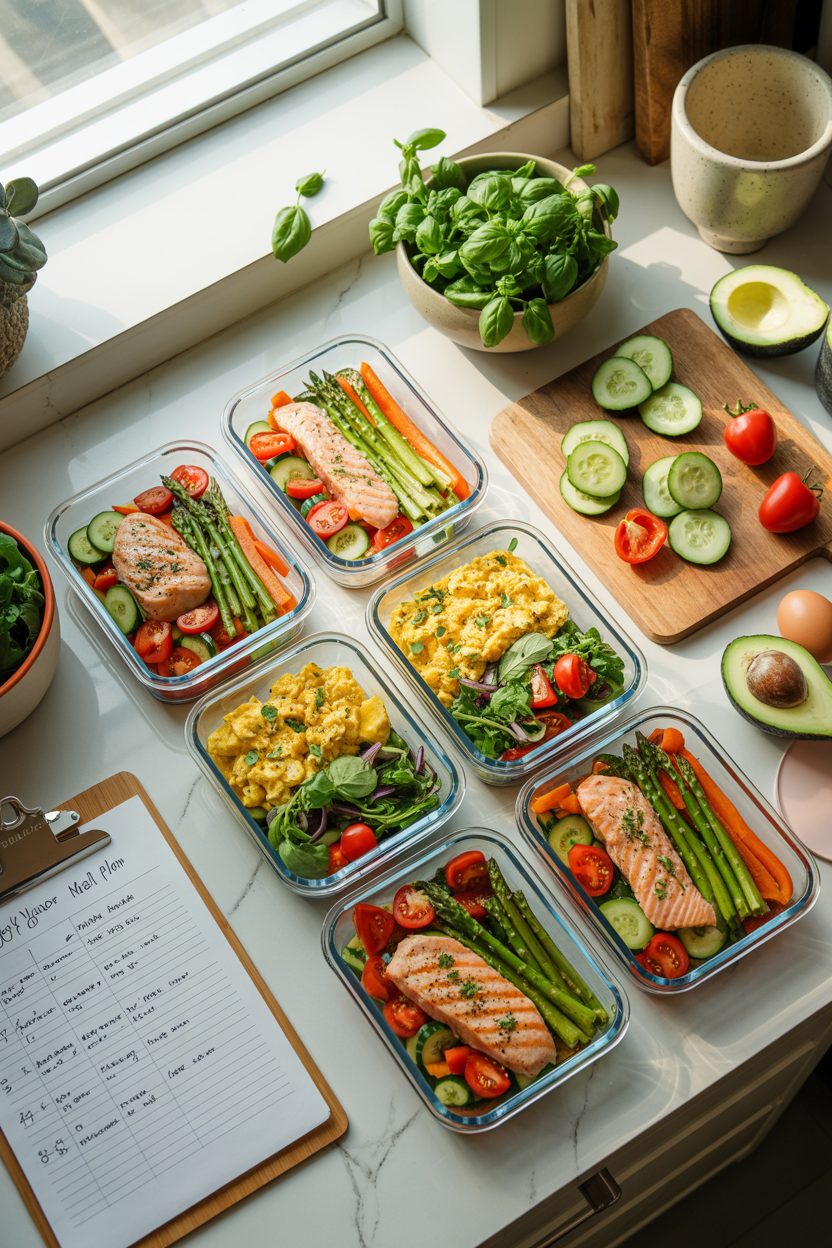
If you want this week to go smoothly, spend two hours on Sunday doing prep work. Here’s what makes the biggest difference:
Cook proteins in bulk. Grill or bake multiple chicken breasts, make turkey sausage patties, hard-boil a dozen eggs. Having cooked protein ready means you’re always 10 minutes away from a meal.
Chop vegetables ahead. Wash and chop bell peppers, cucumber, broccoli, cauliflower. Store them in containers so you can just grab and cook when needed.
Make a breakfast casserole. One casserole feeds you breakfast for 3-4 days. Less thinking, less cooking, more sleeping in.
Pre-portion snacks. Divide cheese, nuts, and vegetables into single servings. When you’re hungry, you grab a pre-portioned snack instead of accidentally eating half a block of cheddar while standing at the fridge.
What About Eating Out?
Life happens, and sometimes you need to eat out during a low-carb week. Here’s how to make it work:
Order protein-based entrees—steak, fish, chicken—and ask for double vegetables instead of potatoes or rice. Most restaurants will accommodate this without charging extra. Skip the bread basket, and ask for dressing on the side so you control how much you use.
Mexican restaurants? Fajitas without the tortillas, just eat the filling with guacamole and sour cream. Asian restaurants? Skip the rice and ask for extra vegetables with your protein. It’s totally doable once you know the strategy.
How You’ll Actually Feel
The first 2-3 days might feel weird as your body adjusts to lower carb intake. You might feel a little sluggish or get headaches—this is temporary and usually means you need more water and electrolytes. Add some salt to your food and drink extra water.
By day 4 or 5, most people report feeling more energized and less bloated. The constant blood sugar spikes and crashes from carb-heavy meals stop happening, and your energy levels stabilize. You’ll probably notice you’re not getting that 3 PM crash anymore.
Sleep often improves too, especially if you were eating a lot of sugar before. Your body doesn’t have to process a carb-heavy dinner, which means better, deeper sleep.
Making It Sustainable Beyond Week One
This meal plan is designed as a starting point, not a prison sentence. After this week, you can repeat it exactly, mix and match days, or use it as a template to create your own low-carb high-protein meals.
The key is finding 10-15 meals you actually like and rotating through them. You don’t need endless variety—you need reliable meals that work with your schedule and taste preferences. Once you have your rotation down, low-carb eating becomes automatic instead of something you have to constantly think about.
For more meal planning ideas, check out this 7-day low-carb meal plan for beginners or these 15 easy low-carb meals if you want more options to rotate through.
The Real Talk
Low-carb high-protein eating works for a lot of people, but it’s not magic. You still need to pay attention to portion sizes and overall calorie intake. Eating three pounds of cheese daily just because it’s low-carb isn’t going to get you the results you want.
This approach is particularly effective if you’re someone who gets hungry frequently on other diets. The high protein keeps you full longer, and the low carbs prevent the blood sugar rollercoaster that triggers cravings. But it requires planning, at least initially, until it becomes second nature.
Give this week a real shot—don’t half-commit and then declare it doesn’t work. Follow the plan, drink your water, get enough sleep, and see how you actually feel by day 7. Most people are genuinely surprised by how good they feel when they cut back on refined carbs and increase protein.
And if you hate it? That’s fine too. Not every eating approach works for every person. But you won’t know until you actually try it properly for a full week with proper planning and preparation. This meal plan gives you everything you need to do exactly that.