

21 Mediterranean Dips & Spreads You Can Make at Home
Look, I’m just going to say it—if you’re still buying those questionable tubs of “artisan” dips from the grocery store, we need to talk. Mediterranean dips are ridiculously easy to make at home, taste about ten times better than anything pre-packaged, and won’t leave you squinting at an ingredient list trying to pronounce “xanthan gum” or wondering why your hummus needs preservatives that could survive a nuclear winter.
Here’s the thing about Mediterranean spreads: they’re basically the MVPs of any meal. Lunch feeling boring? Slap some baba ghanoush on it. Need a snack that won’t derail your whole day? Whipped feta’s got your back. Hosting people and panicking? Throw together a mezze platter and suddenly you’re fancy.
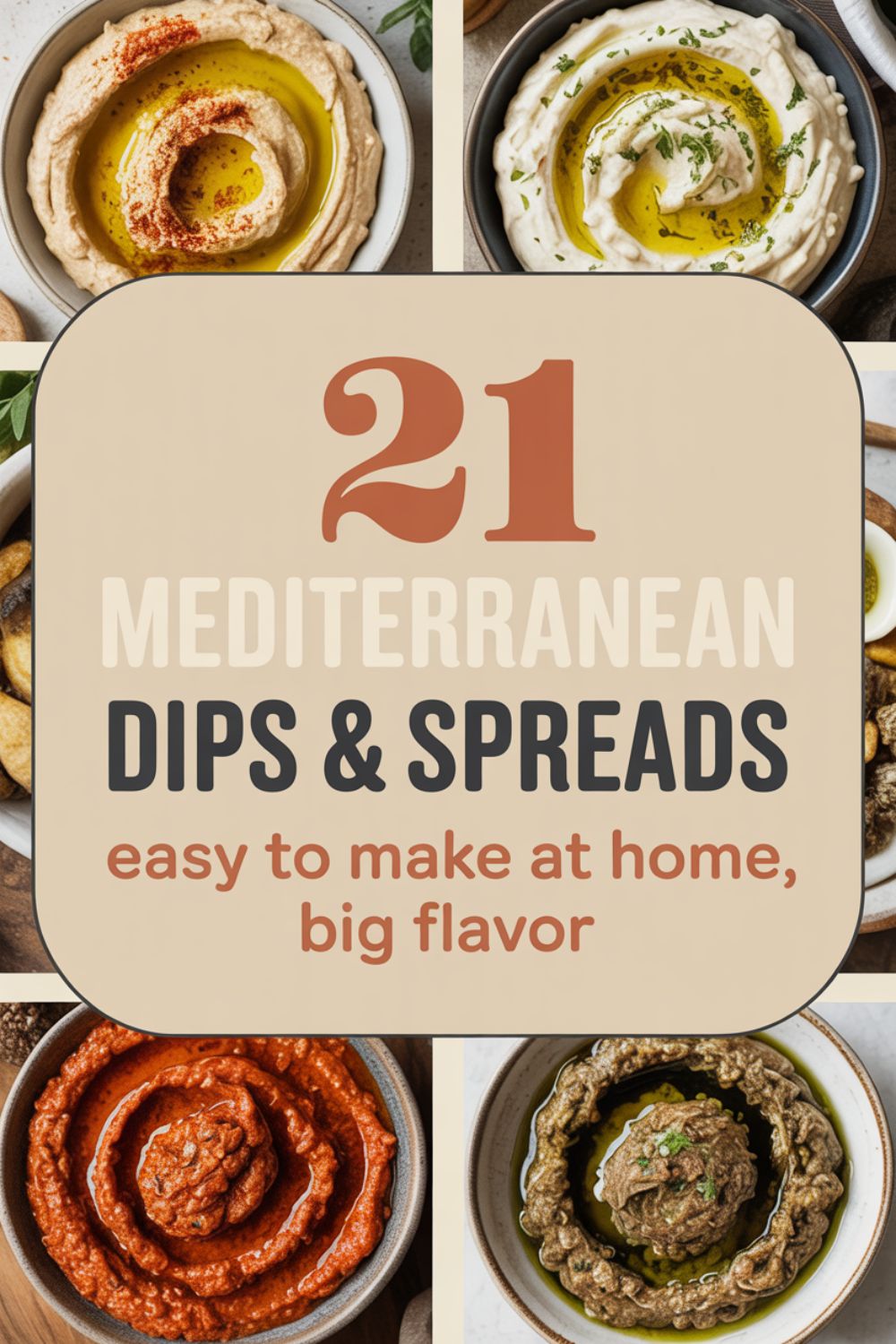
These 21 dips aren’t just delicious—they’re actually good for you. Most are loaded with chickpeas, tahini, and olive oil, which means you’re getting plant protein, healthy fats, and enough fiber to keep things moving (if you know what I mean). Plus, making them at home means you control what goes in. No weird additives, no unnecessary sugar, just real ingredients doing real work.
The Chickpea Champions
1. Classic Hummus
Let’s start with the obvious one. Hummus is the gateway dip to all things Mediterranean, and honestly, once you make it from scratch, you’ll never go back to store-bought. The secret? Good tahini and don’t skimp on the olive oil.
Blend cooked chickpeas with tahini, lemon juice, garlic, and a generous glug of extra virgin olive oil until it’s smoother than your best pickup line. If it’s too thick, add some of that reserved chickpea liquid (aquafaba, if you want to get technical about it).
The best part about hummus is how versatile it is. Use it as a spread on your avocado toast, dollop it on a grain bowl, or just eat it straight with veggies when you’re standing in front of the fridge at 10 PM pretending you’re not hungry.
Pro Tip: Toast your chickpeas slightly before blending for a nuttier flavor. Game changer.
2. Roasted Red Pepper Hummus
Same idea as classic hummus, but you’re throwing in roasted red peppers (from a jar is totally fine, no judgment). This one’s got a slightly sweet, smoky vibe that makes regular hummus look boring by comparison.
I use a mini food processor for this because it blends everything into submission without taking up half my counter space. Blend until smooth, taste, adjust, and try not to eat half of it before it even makes it to a serving bowl. Get Full Recipe
3. Spicy Harissa Hummus
If regular hummus is a polite handshake, harissa hummus is a firm slap on the back. Mix in some harissa paste (the North African chili paste that’s basically sunshine in condiment form) and you’ve got yourself a dip with actual personality.
This one pairs beautifully with baked falafel or stuffed into a falafel wrap. The heat level is totally customizable—start with a teaspoon and work your way up if you’re into pain. Get Full Recipe
4. Masabacha (Chunky Hummus)
Think of masabacha as hummus that didn’t feel like getting fully dressed. Instead of blending all the chickpeas, you leave most of them whole and toss them in tahini sauce. It’s chunkier, heartier, and honestly feels more like a meal than a dip.
Top it with a drizzle of olive oil, some whole chickpeas, and a sprinkle of paprika. Scoop it up with warm pita bread and try to remember a time you were this satisfied with chickpeas. According to research on chickpea consumption, people who eat chickpeas regularly tend to have better nutrient intake and lower body mass index. So yeah, eat your masabacha guilt-free. Get Full Recipe
For more chickpea-forward meals, you might also love this Mediterranean chickpea skillet or these chickpea wraps for easy lunch ideas.
The Eggplant Empire
5. Baba Ghanoush
If eggplant had a glow-up, this would be it. Roast a whole eggplant until it’s charred and collapsing on itself, scoop out the flesh, and blend it with tahini, garlic, lemon, and olive oil. The result is smoky, creamy, and has that “I definitely know what I’m doing in the kitchen” energy.
The key to killer baba ghanoush is getting that char. I throw mine directly on the gas burner (or under the broiler if you’re working with an electric stove) and let it blacken. Don’t be timid—the smokier, the better. Use a good quality tahini here because it really makes a difference. Get Full Recipe
6. Mutabbal
Mutabbal is baba ghanoush’s slightly richer cousin. Same charred eggplant base, but with more tahini and sometimes a bit of yogurt for extra creaminess. Some people use these names interchangeably, but traditionally, mutabbal is the tahini-heavy version.
Serve this with some grilled veggies or as part of a larger mezze spread. It’s also fantastic as a base layer in a Mediterranean grain bowl. Get Full Recipe
The Yogurt Wonders
7. Tzatziki
Tzatziki is what happens when cucumbers, garlic, and Greek yogurt have a very successful blind date. It’s cool, refreshing, and pairs with literally everything from grilled meats to veggies to the spoon you’re using to “taste” it seventeen times before dinner.
Grate your cucumber, squeeze out the excess water (seriously, squeeze it like it owes you money), and mix with thick Greek yogurt, minced garlic, dill, lemon juice, and olive oil. I keep a garlic press around because mincing garlic by hand is for people with more patience than me.
This stuff is perfect on Greek salad, grilled chicken, or honestly just eaten with a spoon when no one’s looking. Get Full Recipe
Quick Win: Make tzatziki the night before. The flavors meld together and it tastes even better the next day.
8. Whipped Feta Dip
This dip is what convinced me that cheese could be even more lovable. Blend feta cheese with Greek yogurt, a bit of olive oil, and maybe some honey if you’re feeling adventurous. The result is tangy, creamy, and addictive enough to require an intervention.
I sometimes add sun-dried tomatoes, fresh herbs, or a drizzle of honey on top. It’s ridiculously good with Mediterranean flatbread or pita chips. You’ll need a decent food processor or blender to get it properly smooth. Get Full Recipe
9. Labneh
Labneh is basically Greek yogurt that went to finishing school. You strain regular yogurt overnight until it’s thick, tangy, and spreadable. Mix it with olive oil, za’atar, and maybe some minced garlic, and you’ve got yourself a dip that feels way fancier than the effort you put in.
Line a strainer with cheesecloth (or a clean nut milk bag if you’re fancy), dump in your yogurt, and let it drain in the fridge overnight. The whey separates out, and you’re left with thick, creamy labneh that’s perfect for spreading on toast or using as a dip. Get Full Recipe
10. Cacik (Turkish Tzatziki)
Cacik is Turkey’s answer to tzatziki, but thinner and often served as a cold soup. It’s basically diluted tzatziki with extra dill and mint, perfect for hot days when you need something cooling that doesn’t involve ice cream.
Same basic ingredients as tzatziki, but you add a bit of cold water or ice to thin it out. Serve it ice-cold with some crusty bread for dipping, or use it as a sauce over grilled eggplant wraps. Get Full Recipe
The Vegetable Virtuosos
11. Romesco Sauce
Spain’s gift to the dip world. Romesco is a punchy blend of roasted red peppers, toasted almonds (or hazelnuts), garlic, tomatoes, and vinegar. It’s got depth, it’s got texture, and it makes you look like you know what you’re doing.
Toast your nuts in a dry pan until fragrant (or use a small toaster oven if you don’t want to babysit them), then blend everything together until it’s somewhere between smooth and chunky. This sauce is phenomenal on grilled vegetables, fish, or even stirred into pasta. Get Full Recipe
12. Skordalia
Greek garlic sauce that’s not messing around. Traditionally made with mashed potatoes or bread, garlic, olive oil, and lemon juice. Fair warning: this is not a first-date dip unless you’re both eating it.
The ratio of garlic to everything else is… aggressive. But if you love garlic (and you should), skordalia is your new best friend. Serve it with fried fish, grilled veggies, or baked salmon. Get Full Recipe
13. Muhammara
A Syrian dip that deserves way more attention. Roasted red peppers, walnuts, pomegranate molasses, and breadcrumbs come together into something sweet, tangy, and slightly spicy. It’s complex without being complicated, which is basically my life motto.
The pomegranate molasses gives it this sweet-tart thing that’s completely addictive. Spread it on sandwiches, use it as a dip, or eat it straight from the bowl while pretending you’re just “testing” it. A high-speed blender works best for getting the texture just right. Get Full Recipe
14. Greek Fava (Split Pea Puree)
Despite the name, Greek fava has nothing to do with fava beans. It’s made from yellow split peas, and it’s criminally underrated. Simmer split peas with onion and garlic until they’re falling apart, blend with olive oil, and you’ve got a creamy, protein-packed dip that’s actually good for you.
Serve it warm with a drizzle of olive oil, some chopped onions, and capers. It’s comfort food that doesn’t require an apology. Pair it with toasted baguette or use it as a spread in wraps. Get Full Recipe
The Olive & Caper Crew
15. Tapenade
If you like olives, you’ll lose your mind over tapenade. If you don’t like olives, well, this probably isn’t for you. Blend kalamata olives, capers, garlic, anchovies (optional but recommended), and olive oil until it’s a chunky, briny, intensely flavored paste.
This stuff is potent, so a little goes a long way. Spread it on crostini, stir it into pasta, or use it to top grilled fish like in this baked cod recipe. You’ll want a sturdy food chopper for this one. Get Full Recipe
16. Olive & Herb Spread
Similar to tapenade but with more herbs and less… intensity. Combine chopped olives with fresh parsley, basil, oregano, lemon zest, and olive oil. It’s fresher, brighter, and won’t scare people who are olive-curious but not fully committed.
This spread is perfect on avocado toast or mixed into a white bean salad for extra flavor. Get Full Recipe
The Cheese & Dairy Delights
17. Tirokafteri (Spicy Feta Dip)
Greece’s answer to “what if feta had a temper?” Blend feta cheese with Greek yogurt, roasted red peppers, chili flakes, and olive oil until it’s creamy, tangy, and has just enough heat to keep things interesting.
This dip has serious personality. Serve it with pita bread, use it as a spread in sandwiches, or dollop it on grilled veggie skewers. Get Full Recipe
18. Htipiti (Roasted Pepper & Feta Spread)
Similar to tirokafteri but usually milder and sometimes includes breadcrumbs for body. It’s creamy, slightly sweet from the peppers, and tangy from the feta. Basically, it’s what happens when feta cheese goes to therapy and comes back well-adjusted.
Make a big batch and keep it in a glass storage container in the fridge. It stays good for about a week, though it rarely lasts that long. Get Full Recipe
The Wild Cards
19. Toum (Lebanese Garlic Sauce)
This is basically garlic mayonnaise on steroids. Just garlic, oil, lemon juice, and salt emulsified into a fluffy, intensely garlicky sauce that’ll clear a room faster than a fire alarm. But in the best way possible.
Making toum requires patience and the right technique—you have to add the oil very slowly while blending to get that emulsification. But once you nail it, you’ll put it on everything. It’s amazing with shawarma, roasted vegetables, or grilled chicken. Get Full Recipe
Pro Tip: Keep breath mints handy. Toum is worth it, but your coworkers might disagree.
20. Melitzanosalata (Greek Eggplant Salad)
Another eggplant dip, but this one’s more salad-like. Charred eggplant mixed with tomatoes, onions, parsley, lemon juice, and olive oil. It’s chunkier than baba ghanoush and has more going on texture-wise.
Serve it cold as part of a mezze spread or on toast for a light lunch. It goes particularly well alongside stuffed grape leaves. Get Full Recipe
21. White Bean Dip
The underdog of Mediterranean dips. Blend cannellini beans with garlic, lemon juice, rosemary, and olive oil until smooth. It’s milder than hummus, creamier than you’d expect, and honestly doesn’t get enough credit.
This dip is fantastic for people who find hummus too heavy or tahini too intense. It’s also great as a sandwich spread or stirred into soups for extra creaminess. Try it on roasted veggie pita pockets or with a simple tuna and white bean salad. Get Full Recipe
For more protein-packed meal ideas that pair perfectly with these dips, check out this roundup of high-protein Mediterranean meals or these protein-rich Mediterranean snacks.
What Makes Mediterranean Dips So Good for You?
Beyond tasting amazing, these dips are nutritional powerhouses. Most are built on a base of legumes (chickpeas, lentils, beans), which means you’re getting plant-based protein and fiber in every scoop. Chickpeas alone are loaded with vitamins and minerals, low in sodium and cholesterol, and can help with everything from blood sugar regulation to heart health.
Then there’s the olive oil—liquid gold, basically. Rich in monounsaturated fats and antioxidants, olive oil is one of the reasons the Mediterranean diet is constantly winning awards for being ridiculously healthy. And don’t even get me started on tahini. Made from sesame seeds, it’s packed with healthy fats, protein, and minerals like magnesium and calcium.
The yogurt-based dips bring probiotics to the party, which means happy gut bacteria. Fresh herbs add antioxidants and flavor without calories. Basically, these dips let you snack like you’re doing your body a favor—because you actually are.
One thing I love about making dips at home is controlling the sodium. Store-bought versions can be salt bombs disguised as health food. When you make your own, you decide how much salt goes in, which means you can actually taste the other ingredients instead of just “salt with a hint of chickpea.”
The Equipment That Actually Matters
You don’t need a full Williams Sonoma kitchen to make these dips, but a few key tools make life easier. A decent food processor or blender is essential—I use a mid-range food processor for almost everything and it’s held up for years.
A good garlic press saves time and sanity, especially for dips like tzatziki and toum where you need a lot of garlic. A citrus squeezer is nice for fresh lemon juice (which, BTW, tastes way better than the bottled stuff), and some airtight glass containers keep your dips fresh for days.
For serving, I’m obsessed with these shallow ceramic dip bowls that make everything look Instagram-worthy without trying. But honestly, any bowl works. The dip’s the star here, not the dishware.
Storage & Make-Ahead Tips
Most of these dips actually taste better the next day after the flavors have had time to get to know each other. Store them in airtight containers in the fridge—hummus and bean-based dips last about 5-7 days, yogurt-based ones about 3-5 days, and eggplant dips about 3-4 days.
Some dips freeze surprisingly well. Hummus, baba ghanoush, and white bean dip all freeze for up to 3 months. Just thaw in the fridge overnight and give them a good stir (maybe add a drizzle of fresh olive oil) before serving.
The one thing that doesn’t freeze well? Yogurt-based dips. The texture gets weird when yogurt freezes and thaws. Trust me on this one—I learned the hard way with a batch of tzatziki that turned into sad, watery disappointment.
If you’re meal prepping for the week, make a couple of different dips on Sunday and you’ve got easy snacks and lunch components ready to go. Pair them with prepped veggies, whole grain crackers, or use them as sandwich spreads. Check out these quick Mediterranean meal prep ideas for more inspiration.
Frequently Asked Questions
Can I make these dips ahead of time?
Absolutely. In fact, most of these dips taste better after sitting in the fridge for a few hours or overnight. The flavors meld together and develop more depth. Just give them a good stir and maybe add a fresh drizzle of olive oil before serving. Most will keep in an airtight container for 3-7 days depending on the base ingredients.
What’s the difference between tahini brands, and does it matter?
It matters more than you’d think. Some tahini is smooth and mild, while other brands are thick, bitter, and almost chalky. Look for tahini made from hulled sesame seeds—it’s smoother and less bitter. Middle Eastern grocery stores usually have better options than mainstream supermarkets. Once you find a brand you like, stick with it because consistency is everything in dip-making.
Can I substitute Greek yogurt for regular yogurt in these recipes?
You can, but the texture won’t be the same. Greek yogurt is strained, so it’s thicker and has more protein. Regular yogurt is thinner and can make dips watery. If you only have regular yogurt, strain it yourself by lining a fine-mesh strainer with cheesecloth and letting it drain for a few hours in the fridge. Problem solved.
How do I prevent my hummus from being grainy?
The graininess usually comes from chickpea skins. For ultra-smooth hummus, peel your chickpeas (yes, it’s tedious, but the difference is real) or blend them longer with enough liquid to help break everything down. Some people swear by adding ice water while blending to help emulsify everything. Also, good tahini that’s not old and separated helps tremendously.
Are these dips suitable for meal prep?
Most of them, yes. Bean-based and eggplant-based dips hold up great in the fridge for 5-7 days. Yogurt-based ones last 3-5 days. Make them on Sunday, portion them into containers with some cut veggies or pita, and you’ve got easy snacks and lunch components all week. Just don’t freeze yogurt-based dips—the texture gets weird.
Final Thoughts
Making Mediterranean dips at home isn’t just about saving money (though you will) or controlling ingredients (though you should). It’s about having real food that tastes incredible and actually makes you feel good after eating it. No weird aftertaste, no ingredient mystery, just simple combinations that have been working for centuries.
Start with one or two that sound good to you. Get the technique down. Then branch out. Before you know it, you’ll be that person who brings the homemade hummus to parties and everyone loses their minds over it.
The beauty of these dips is their flexibility. They work as snacks, sandwich spreads, salad toppers, or even light meals when paired with some good bread and vegetables. They make healthy eating feel less like a chore and more like you’re treating yourself, which is basically the whole point.
And honestly? There’s something deeply satisfying about pulling a batch of homemade dip out of the fridge when you’re hungry. It’s like past-you did future-you a solid favor. That’s the kind of self-care I can get behind.
So grab some chickpeas, fire up that food processor, and start making dips that’ll make you question why you ever bought the store-bought stuff in the first place. Your taste buds will thank you. Your wallet will thank you. And your body will definitely thank you.