
21 Low-Calorie Overnight Oats Recipes
Overnight oats are either your breakfast best friend or that thing you tried once and never touched again. If you’re in the second camp, you probably made them wrong—too thick, too bland, or just plain sad. But when you nail the ratio and flavors, overnight oats are basically morning magic: no cooking, minimal effort, and you get to eat dessert for breakfast without the guilt.
I’m talking about creamy, flavorful oats that taste like you actually tried, even though you literally just mixed stuff in a jar and walked away. Most of these clock in under 300 calories, they’re loaded with fiber to keep you full, and you can prep a week’s worth in about 20 minutes. Honestly, what more do you want from breakfast?

Why Overnight Oats Actually Work
Here’s the deal: oats absorb liquid overnight and soften without needing heat. You get all the fiber, texture, and satisfaction of cooked oatmeal without standing over a stove at 6 a.m. Plus, cold oats in the summer? Way better than hot oatmeal when it’s already 80 degrees outside.
The other thing people don’t talk about enough—overnight oats are stupid easy to customize. You can make them high-protein, low-sugar, dairy-free, vegan, whatever. The base is always the same: oats plus liquid plus time. Everything else is just flavor.
And let’s be real, meal prep is the only way most of us eat breakfast consistently. If you have to think about what to eat every morning, you’ll default to whatever’s fastest, which is usually not great. Having five jars of overnight oats in your fridge means you actually eat breakfast, and you don’t hate it.
The Basic Formula That Never Fails
Before we get into the 21 recipes, let’s talk about the ratio because this is where most people mess up. The standard ratio is 1:1—half a cup of oats to half a cup of liquid. Some people like it thicker (use less liquid), some like it runnier (use more liquid). I usually go with a 1:1.25 ratio because I like mine creamy, not paste-like.
Your liquid options:
- Regular milk (any fat percentage)
- Almond milk, oat milk, coconut milk, soy milk
- Greek yogurt thinned with a bit of milk
- Even water if you’re desperate (though it’s pretty bland)
The other key ingredient: chia seeds. A tablespoon of chia seeds makes everything creamier and adds fiber, omega-3s, and a bit of protein. They also help thicken the mixture so it’s not soup by morning.
Most recipes suggest adding a touch of sweetener—honey, maple syrup, stevia, whatever. You don’t need much because the fruit usually adds enough sweetness. And always add a pinch of salt. It makes everything taste better, even sweet stuff.
21 Low-Calorie Overnight Oats Recipes
1. Classic Vanilla Almond Overnight Oats
Mix 1/2 cup oats, 1/2 cup almond milk, 1 tablespoon chia seeds, 1/2 teaspoon vanilla extract, a drizzle of honey. Top with sliced almonds in the morning. This classic vanilla almond overnight oats is around 250 calories. Simple, not boring, and it tastes like you meant to do it.
2. Strawberry Cheesecake Overnight Oats
Oats, almond milk, Greek yogurt, diced strawberries, a tiny bit of cream cheese (or skip it for lower calories), vanilla extract. This strawberry cheesecake overnight oats version is ridiculously good at about 280 calories. Feels like dessert, but it’s actually breakfast.
3. Peanut Butter Banana Slim-Down Oats
Oats, almond milk, mashed banana, 1 tablespoon peanut butter, cinnamon. Try these peanut butter banana slim-down oats for around 290 calories. Bananas add natural sweetness, fiber, and potassium, so you’re not just eating empty calories. Speaking of nut butters, peanut butter typically has slightly more protein than almond butter, though both work great here.
4. Blueberry Lemon Wake-Me-Up Oats
Oats, almond milk, fresh or frozen blueberries, lemon zest, a touch of honey, chia seeds. These blueberry lemon wake-me-up oats are bright and refreshing at 240 calories. Blueberries are loaded with antioxidants and they don’t turn your oats a weird color like some berries do.
5. Chocolate Banana Not-So-Guilty Oats
Oats, almond milk, cocoa powder (unsweetened), mashed banana, a bit of honey or maple syrup. This chocolate banana not-so-guilty oats recipe is chocolate for breakfast without the sugar crash—about 270 calories. Cocoa powder adds flavor without a ton of calories.

6. Apple Pie Overnight Oats
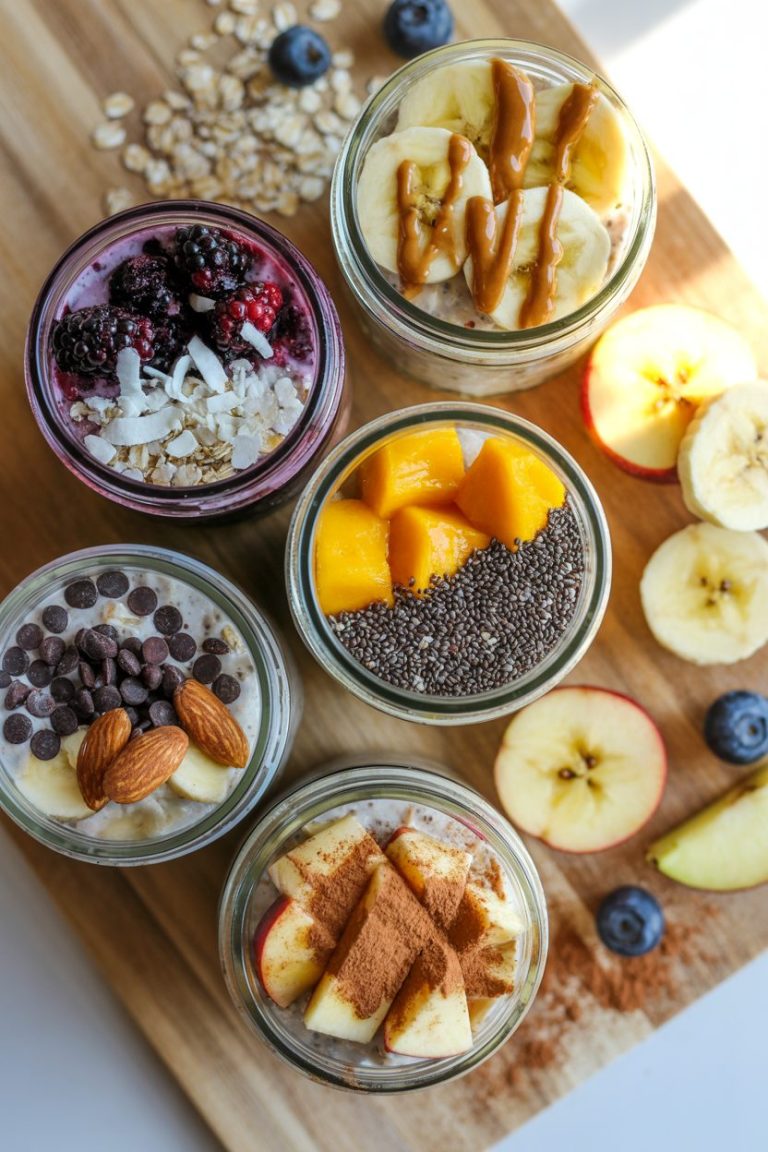
Oats, almond milk, diced apple, cinnamon, nutmeg, a touch of maple syrup, walnuts. These apple pie overnight oats taste like fall in a jar at 260 calories. The apple adds fiber and natural sugars so you don’t need a ton of sweetener. I use this mini apple corer to dice apples fast without losing fingers.
7. Carrot Cake Overnight Oats
Oats, almond milk, grated carrot, raisins, walnuts, cinnamon, nutmeg, tiny bit of honey. Try this carrot cake overnight oats version at about 280 calories. Carrots in oatmeal sounds weird but it works. Trust me.
8. Coconut Mango Paradise Oats
Oats, coconut milk, diced mango (fresh or frozen), shredded coconut, lime zest. These coconut mango paradise oats are tropical and summery at 270 calories. Mango adds vitamin C and natural sweetness, and coconut milk makes everything creamy.
9. Cinnamon Roll Overnight Oats
Oats, almond milk, Greek yogurt, cinnamon, a swirl of almond butter, a drizzle of maple syrup. This cinnamon roll overnight oats recipe is comfort food territory at 290 calories. Greek yogurt adds protein and makes the texture richer without adding a ton of calories.
10. Mocha Protein Overnight Oats
Oats, cold brew coffee (or strong regular coffee), chocolate protein powder, almond milk, chia seeds. These mocha protein overnight oats are breakfast and caffeine in one jar—about 300 calories. The coffee flavor is subtle but it definitely wakes you up.
11. Berry Almond Crunch Overnight Oats
Oats, almond milk, mixed berries, sliced almonds, chia seeds, vanilla extract. Try this berry almond crunch overnight oats at 250 calories. Berries are low in calories but high in antioxidants and fiber. The almonds add crunch and healthy fats.
12. Pumpkin Spice Overnight Oats
Oats, almond milk, pumpkin puree (not pie filling), pumpkin pie spice, a touch of maple syrup, pecans. About 260 calories. Pumpkin adds fiber and beta-carotene without many calories. Yes, you can eat this outside of fall. No one’s stopping you.
13. Raspberry White Chocolate Overnight Oats
Oats, almond milk, fresh raspberries, white chocolate chips (just a few), vanilla extract, chia seeds. Around 280 calories. Raspberries are tart enough that you don’t need much sweetener, and a few chocolate chips go a long way for flavor.
14. Peaches and Cream Overnight Oats
Oats, almond milk, Greek yogurt, diced peaches (fresh or canned in juice), vanilla, a pinch of cinnamon. About 260 calories. The Greek yogurt makes it extra creamy and adds protein without needing protein powder.
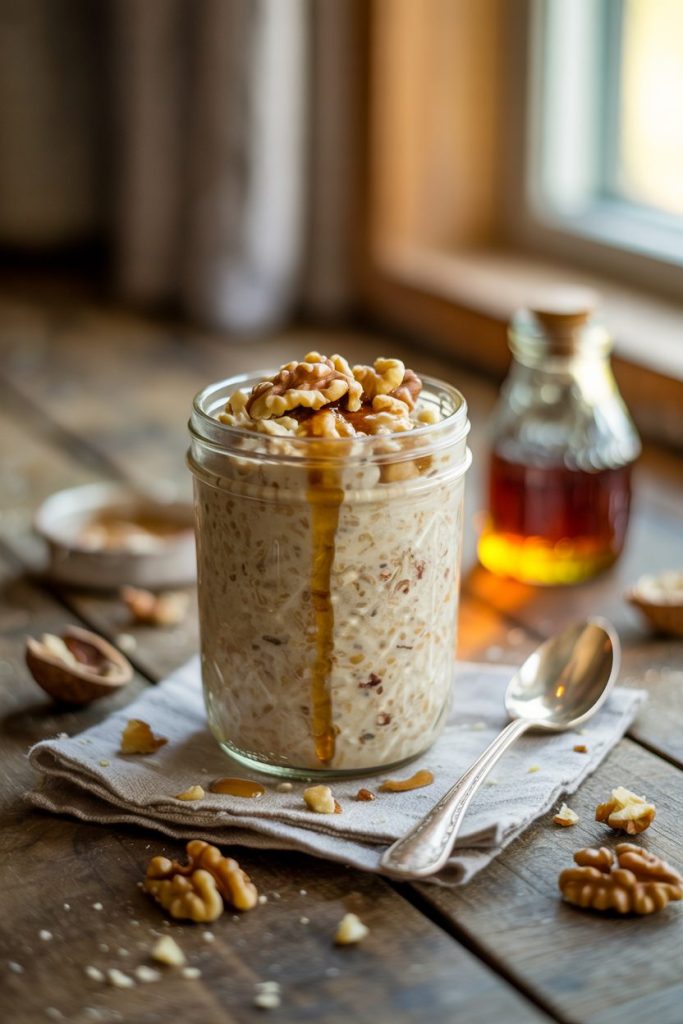
15. Maple Walnut Overnight Oats
Oats, almond milk, chopped walnuts, maple syrup, cinnamon. Simple and around 270 calories. Walnuts are high in omega-3 fatty acids, which is good for your brain. Also they taste good, which is the main point.
16. Chai Spice Overnight Oats
Oats, chai tea (cooled) or almond milk, honey, cardamom, cinnamon, ginger, a splash of vanilla. About 240 calories. The chai spices make it interesting without adding sugar. You can use actual brewed chai or just mix the spices.
17. Cherry Almond Overnight Oats
Oats, almond milk, pitted cherries (fresh or frozen), almond extract, sliced almonds. Around 260 calories. Cherries are naturally sweet and they have melatonin, which might help you sleep better if you eat this as a late-night snack instead.
18. Orange Cranberry Overnight Oats
Oats, almond milk, orange zest, dried cranberries (use less than you think—they’re sweet), chia seeds, a touch of honey. About 270 calories. Orange zest adds flavor without calories or sugar, and cranberries add tartness.
19. Banana Nut Overnight Oats
Oats, almond milk, mashed banana, chopped walnuts or pecans, cinnamon. Around 270 calories. Bananas are excellent pre-workout fuel because they have easily digestible carbs and potassium, which helps prevent muscle cramps.
20. Tropical Overnight Oats
Oats, coconut milk, diced pineapple, diced mango, shredded coconut, lime juice. About 280 calories. Pineapple has bromelain, an enzyme that aids digestion, which is a nice bonus when you’re eating a fiber-heavy breakfast.
21. Matcha Green Tea Overnight Oats
Oats, almond milk, 1 teaspoon matcha powder, honey, chia seeds. Top with sliced kiwi or berries. Around 250 calories. Matcha gives you a caffeine boost without the coffee jitters, and it’s loaded with antioxidants. The color is also ridiculously Instagram-worthy if that matters to you.
The Prep Strategy That Actually Works
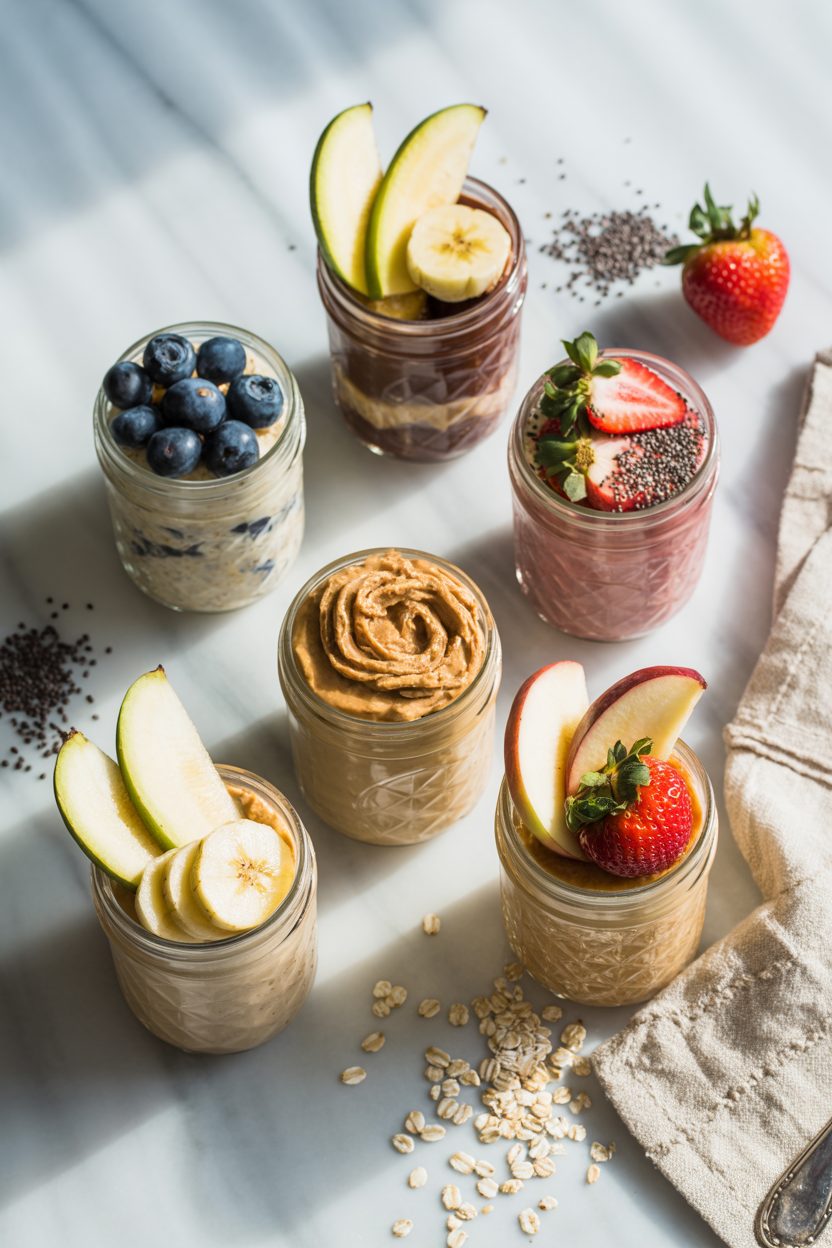
Here’s how I do overnight oats without losing my mind: Sunday meal prep. I line up five mason jars, prep all the dry ingredients and mix-ins, pour in the liquid, seal, and stack them in the fridge. Takes maybe 20 minutes for five breakfasts.
Pro tips:
- Use mason jars or containers with tight lids. Nothing worse than oat soup leaking in your fridge.
- Add crunchy toppings (nuts, granola, fresh fruit) in the morning, not the night before. Otherwise they get soggy.
- These keep for about 4-5 days in the fridge. Don’t make a month’s worth at once.
- Stir before eating. Sometimes the oats settle weird and you get a layer of liquid on top.
I keep a set of these half-pint mason jars specifically for overnight oats. They’re the perfect size, they don’t stain, and you can eat straight from the jar or dump it into a bowl.
Making Low-Calorie Overnight Oats Actually Filling
The whole point of low-calorie breakfast is that it still needs to work. If you’re hungry an hour later, the calories don’t matter because you’ll just eat something else. Here’s how to make these actually satisfying:
Add protein. Greek yogurt, protein powder, or a tablespoon of nut butter makes a huge difference. Protein keeps you full longer than carbs alone.
Don’t skip the chia seeds. They add fiber, healthy fats, and they help thicken everything so it feels more substantial.
Use whole milk or full-fat coconut milk if you can spare the calories. The fat content makes overnight oats way more satisfying. If you’re strictly counting calories, almond milk works, but it’s less filling.
Add volume with fruit. Berries, diced apples, mashed banana—these add bulk and fiber without a ton of calories. You feel like you’re eating more food because you are.
Common Mistakes People Make
Mistake 1: Too Much Liquid – You end up with oat soup instead of oatmeal. Stick to the 1:1 or 1:1.25 ratio.
Mistake 2: Not Enough Flavor – Plain oats with milk is sad. Add vanilla, spices, fruit, something. Your taste buds deserve better.
Mistake 3: Adding Toppings the Night Before – Granola and nuts get soggy. Add them in the morning or regret it.
Mistake 4: Using Quick Oats – They turn mushy. Use old-fashioned rolled oats. Steel-cut oats are too chewy even after soaking overnight.
Mistake 5: No Salt – A pinch of salt makes sweet things taste sweeter. Don’t skip it.
Dairy-Free and Vegan Options
Good news—most of these are already dairy-free or easily adaptable. Swap regular milk for any plant-based milk: almond, oat, soy, coconut, whatever. They all work fine. Oat milk is probably the creamiest if you care about texture.
For vegan versions, just skip the honey and use maple syrup or agave instead. Greek yogurt can be replaced with coconut yogurt or just extra plant milk. Plant-based overnight oats are just as filling as dairy-based ones, especially if you add chia seeds and nut butter for healthy fats and protein.
According to nutrition experts, plant-based diets can provide all the nutrients you need as long as you’re intentional about protein, healthy fats, and variety. Overnight oats are a solid way to hit those marks without thinking too hard.
Storage and Meal Prep Tips
How long do they last? About 4-5 days in the fridge. After that, the texture gets weird and the fruit starts breaking down.
Can you freeze them? Technically yes, but the texture changes when you thaw them. Better to just make a few days at a time.
Best containers? Mason jars are classic. I also like these stackable containers with screw-top lids—they take up less fridge space.
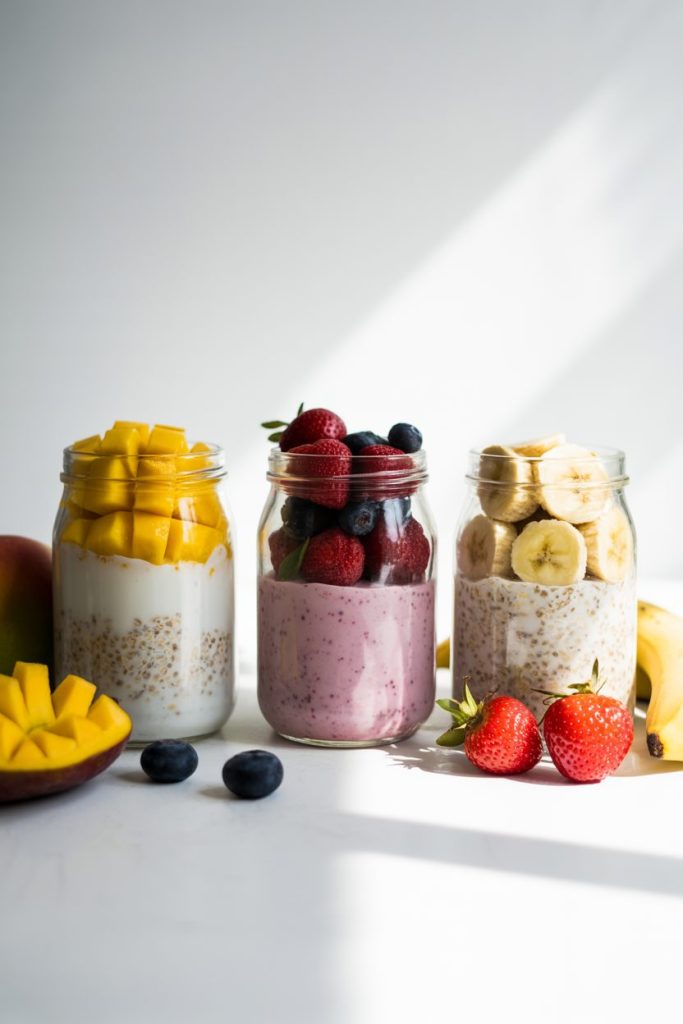
Layering vs. mixing? Some people like to layer ingredients for the aesthetic. I just dump everything in and stir because I’m eating it, not photographing it. Do whatever makes you happy.
Eating cold vs. warming up? Most people eat overnight oats cold, but you can microwave them for 30-60 seconds if you want warm oats. The texture changes slightly but it’s still good.
Why This Approach Beats Regular Oatmeal
Look, I like regular oatmeal. But overnight oats have some real advantages. You don’t have to cook anything, which matters when you’re half-asleep at 6 a.m. You also don’t have to eat them immediately—make them Sunday, eat them Friday, they’re fine.
The other thing is that cold oats in the summer are way more appealing than hot oatmeal. And if you’re someone who doesn’t have an appetite first thing in the morning, you can grab a jar and eat it at your desk an hour later. No reheating, no mess.
Plus, overnight oats are more customizable. You can prep five different flavors for the week so you’re not eating the same thing every day. That alone makes them more sustainable than any other breakfast I’ve tried.
The Bottom Line
Overnight oats get a bad rap because people make them wrong once and give up. But when you get the ratio right, add enough flavor, and prep them properly, they’re one of the best breakfast solutions out there.
All 21 of these recipes are under 350 calories, most are closer to 250-280. They’re high in fiber, you can customize them for dietary restrictions, and they require almost zero effort. If you meal prep on Sunday, you have breakfast sorted for the entire week.
Whether you’re trying to lose weight, eat healthier, or just stop skipping breakfast entirely, overnight oats actually work. They taste good, they keep you full, and they don’t require you to function like a normal human at 6 a.m. Honestly, that’s all I need from breakfast.