21-Day Menopause Support Meal Plan (PDF Inside)
The Meal Plan You Wish You’d Had Sooner
Let’s be real — menopause can feel like a surprise party you didn’t RSVP to. One day, your jeans fit perfectly; the next, you’re Googling “why am I hot, angry, and craving bread at 3 a.m.?” The good news? You’re not losing it — your hormones just decided to remix themselves.
Now, here’s where food comes in like your calm, reliable best friend. What you eat during menopause can actually shift the game — from hot flashes to mood swings to that stubborn weight around your midsection.
This 21-day menopause support meal plan isn’t about restriction, calorie-counting, or pretending kale chips are fun. It’s about supporting your hormones naturally through balanced, anti-inflammatory, nutrient-dense meals that actually taste good. Think: Mediterranean vibes with a side of sanity.
By the end of this plan, you’ll have more energy, steadier moods, and (fingers crossed) a smoother ride through hormonal chaos. And yep — there’s a free downloadable PDF meal plan inside, because printing it and sticking it on your fridge makes it real.
The Hormone-Food Connection (aka Why This Plan Works)
Here’s the deal: estrogen, progesterone, and testosterone don’t just affect mood — they control metabolism, bone strength, and fat distribution. When they dip (as they do during menopause), the body can throw a bit of a tantrum.
So, what’s the fix? Eating to balance those shifting hormones.
Here’s what your body needs more of right now:
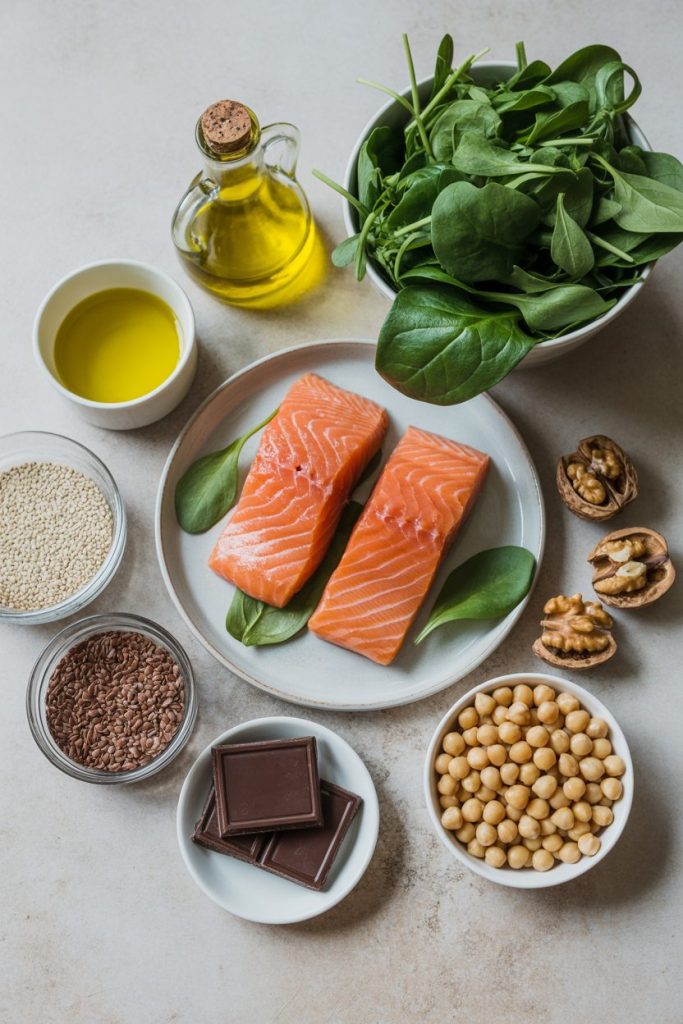
- Phytoestrogens (found in soy, flax, and lentils) — they gently mimic estrogen and can reduce hot flashes.
- Omega-3 fats (from salmon, chia, walnuts) — help calm inflammation and boost mood.
- Protein — supports muscle mass, which naturally declines during menopause.
- Calcium and Vitamin D — because bone density loss is real, and no one wants that surprise at 65.
- Fiber — keeps digestion on track and helps manage weight changes.
And yes, you’ll still have dessert — just the kind that won’t spike your blood sugar like a roller coaster. Think dark chocolate almond clusters or no-bake coconut date balls (yep, both recipes are linked below).
If you want to dig deeper into the science, Healthline has an excellent breakdown of how diet affects menopause symptoms.
The 21-Day Plan at a Glance
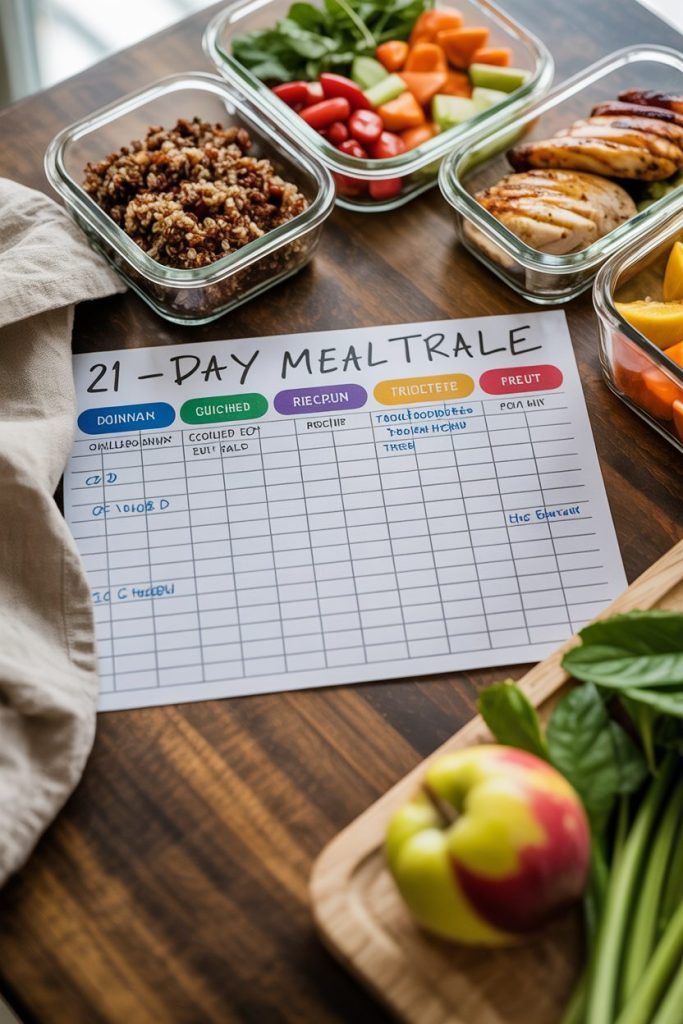
Before we dive into daily menus, let’s talk structure. This isn’t one of those “same oats every morning for eternity” plans. It’s flexible, flavorful, and — dare I say — fun.
Each day includes:
- Breakfast – high-protein, fiber-packed, and usually under 400 calories
- Lunch – balanced with lean protein + good fats
- Snack – keeps blood sugar stable (no 3 p.m. cookie crash)
- Dinner – light but satisfying, with plenty of plants
- Optional dessert – because let’s be honest, hormones sometimes demand chocolate
The base of this plan leans Mediterranean, since that diet has been linked with improved heart health, lower inflammation, and better weight management during menopause (Mayo Clinic agrees — it’s basically the gold standard).
You’ll also see plenty of plant-based swaps, anti-inflammatory herbs, and blood-sugar-friendly carbs like quinoa, farro, and sweet potatoes.
Days 1–3: Kickstarting Balance
Day 1: Nourish + Reset
Breakfast:
Greek Yogurt Bowl with Berries & Honey – packed with protein and probiotics to kickstart digestion.
Try it here.
Lunch:
Lentil Soup with Crusty Bread – fiber-packed and estrogen-friendly thanks to lentils.
(You can swap in gluten-free bread if needed.)
Recipe link.
Snack:
A small handful of walnuts and dried figs — nature’s version of hormone balance.
Dinner:
Lemon Herb Chicken with Roasted Potatoes – a comfort meal with heart-healthy fats and lean protein.
Get it here.
Dessert (optional):
A square or two of dark chocolate — high in magnesium and antioxidants (and yes, permission granted).
Day 2: Calm Energy Mode
Breakfast:
Oatmeal with Dried Figs, Walnuts & Cinnamon – fiber, omega-3s, and blood-sugar balance in one bowl.
Full recipe here.
Lunch:
Tuna & White Bean Salad – rich in protein and omega-3s, perfect for mid-day energy without the crash.
Try it here.
Snack:
Cucumber slices with hummus — crunchy, hydrating, satisfying.
Dinner:
Grilled Veggie Platter with Hummus – colorful, antioxidant-rich, and totally delicious.
Find it here.
Dessert (optional):
A few chocolate-dipped frozen banana bites — sweet, simple, and satisfying.
Recipe here.
Day 3: Glow from the Inside Out
Breakfast:
Mediterranean Smoothie Bowl – packed with antioxidants, Greek yogurt, and flaxseed for hormone balance.
Try it here.
Lunch:
Avocado Toast Mediterranean Style – topped with tomatoes, olives, and a drizzle of olive oil.
Recipe here.
Snack:
A few roasted chickpeas for a crunchy, protein-rich fix.
Dinner:
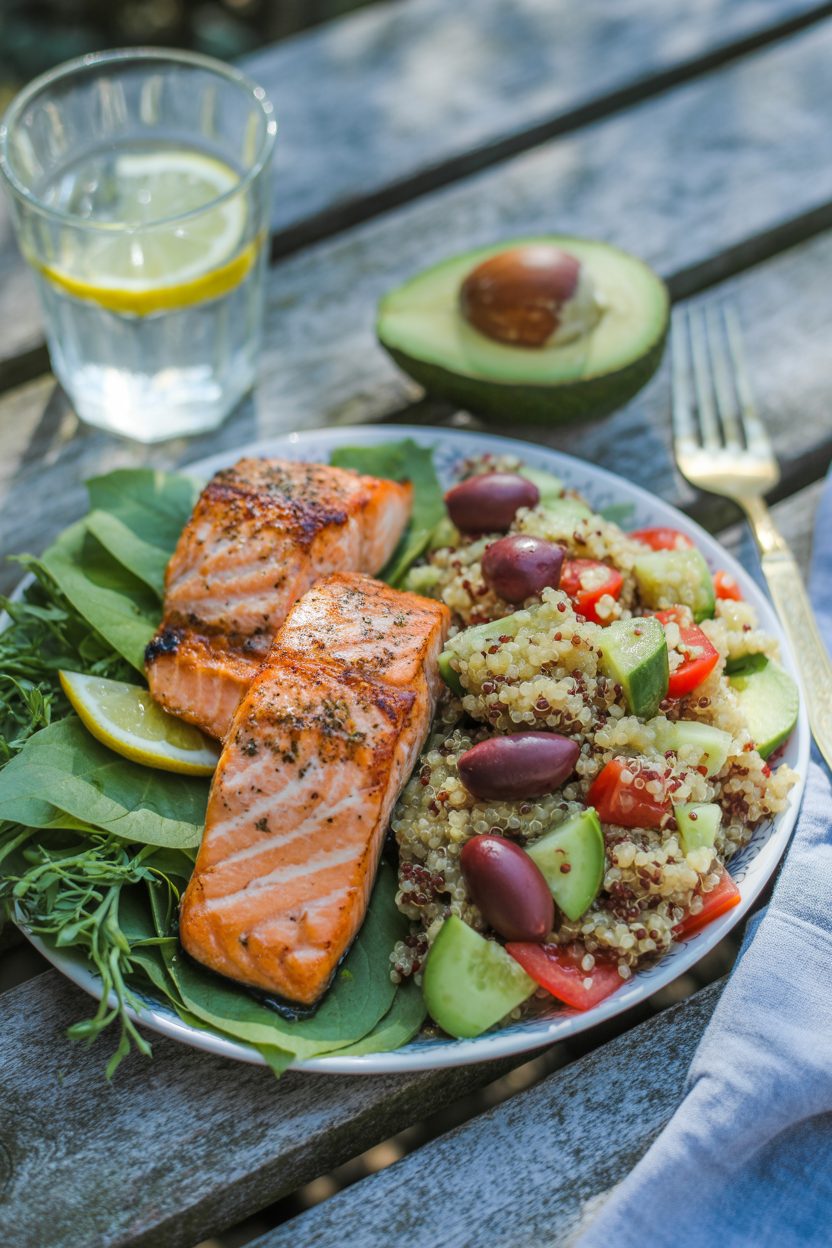
Baked Salmon with Herbed Quinoa – omega-3-rich and full of flavor.
Check it out here.
Dessert (optional):
No-Bake Coconut Date Balls – naturally sweet and fiber-rich.
Recipe here.
Day 4 — Plant-Powered Protein
Breakfast: Savory cottage cheese toast with cherry tomatoes and a sprinkle of flaxseed.
Lunch: Mediterranean chickpea bowl with cucumber, olives, and herbs.
Snack: Sliced apple + 1 tablespoon almond butter.
Dinner: Grilled salmon with a lemon-herb farro and steamed green beans.
Why it works: Omega-3s for mood & inflammation + fiber for steady blood sugar. PMC
Day 5 — Slow Carbs, Big Flavor
Breakfast: Oatmeal with walnuts, cinnamon, and a few fresh berries.
Lunch: Lentil-spinach soup with a wedge of whole grain bread.
Snack: Carrot sticks + hummus.
Dinner: Lemon-oregano grilled chicken with a large mixed salad.
Why it works: Lentils bring phytoestrogens and fiber—helpful for hot flashes and heart health. Healthline
Day 6 — Fish & Greens Night
Breakfast: Greek yogurt parfait with oats and figs.
Lunch: Tuna and white bean salad (bright citrus dressing).
Snack: A small handful of walnuts.
Dinner: Baked cod with tomato-olive tapenade and sautéed kale.
Why it works: Lean fish + legumes deliver protein and healthy fats that keep insulin stable. PMC
Day 7 — Comfort with a Purpose
Breakfast: Spinach-feta egg muffins (easy batch-make).
Lunch: Quinoa tabbouleh with a dollop of hummus and pita.
Snack: Greek yogurt with a drizzle of honey.
Dinner: Baked salmon with herbed quinoa and roasted carrots.
Why it works: Protein at every meal protects muscle mass and satiety—important as metabolism shifts. Mayo Clinic
Day 8 — Plant-Focused & Satisfying
Breakfast: Chia pudding made with almond milk, topped with kiwi and toasted almonds.
Lunch: Mediterranean grain bowl with roasted veggies and tahini drizzle.
Snack: Roasted chickpeas.
Dinner: Stuffed bell peppers with quinoa, black beans, and herbs.
Why it works: Fiber and plant protein keep digestion predictable and energy even.
Day 9 — Light & Crisp
Breakfast: Avocado toast with hemp seed and lemon zest.
Lunch: Grilled vegetable platter with tzatziki.
Snack: Pear slices + a small handful of pistachios.
Dinner: Lemon-garlic chicken with roasted Brussels sprouts.
Why it works: Healthy fats + protein help reduce hunger spikes and mood swings.
Day 10 — Comforting Soup Day
Breakfast: Oatmeal bowl with banana and peanut butter.
Lunch: Lentil sweet-potato stew (hearty and warming).
Snack: Cucumber hummus bites.
Dinner: Shrimp sautéed in garlic & olive oil with a side of couscous.
Why it works: Complex carbs + protein restore evening calm without sugar spikes. (Swap peanut butter for almond butter if preferred.)
Day 11 — Power Greens & Protein
Breakfast: Smoothie with spinach, Greek yogurt, banana, and flaxseed.
Lunch: Mediterranean grain bowl with chickpeas and arugula.
Snack: Edamame pods (lightly salted).
Dinner: Grilled turkey kofta with cucumber-yogurt sauce and roasted sweet potato.
Why it works: Edamame/soy can provide phytoestrogens; evidence is mixed so use as a food, not a treatment. Healthline
Day 12 — Weekend-Style Dinner (But Responsible)
Breakfast: Savory cottage-cheese bowl with sliced radish and chives.
Lunch: Chickpea cauliflower coconut curry with brown rice.
Snack: A small square of dark chocolate + almonds.
Dinner: Grilled steak (or portobello) with garlic-roasted asparagus.
Why it works: A balanced treat night keeps cravings in check while staying nutrient-dense.
Day 13 — Brain-Food Focus
Breakfast: Oatmeal with blueberries and ground flaxseed.
Lunch: Salmon salad with arugula and capers.
Snack: Cottage cheese with sliced peaches.
Dinner: Stir-fried tofu with broccoli and brown rice (or tofu scramble for non-fish days).
Why it works: Omega-3s + antioxidants support cognition and mood during the transition. PMC
Day 14 — Halfway Celebration (No Cake Required)
Breakfast: Whole-grain banana pancakes (light stack).
Lunch: Greek salad but actually good — add white beans for protein.
Snack: Celery + peanut butter.
Dinner: Baked falafel wraps with tahini and mixed greens.
Why it works: This day rewards consistency—your energy should feel more even. (Celebrate with a dinner you really enjoy.)
Food & Lifestyle Hacks to Ease Menopause Symptoms
Short, practical, and actionable—no miracle cures, just smart, food-first moves.
Cool Hot Flashes with Real Choices
- Avoid common triggers: caffeine, alcohol, and spicy foods can worsen hot flashes for some people, so watch your personal pattern. Cleveland Clinic
- Eat cooling, hydrating foods: cucumbers, watermelon, pears, and apples can feel cooling when hot flashes hit. Cleveland Clinic
- Include phytoestrogens sensibly: soy, flaxseed, and legumes may help some women; the evidence isn’t uniform, so treat them as supportive foods rather than cures. Healthline
Sleep & Night Sweats: Eat to Calm the Night
- Limit late caffeine and alcohol—both can fragment sleep and worsen night sweats. Cleveland Clinic
- Prefer a small, protein-rich bedtime snack (Greek yogurt + a few berries) over sugar or high-fat snacks that disrupt sleep.
- Magnesium-rich foods (leafy greens, pumpkin seeds) may help relax muscles and support sleep.
Bones, Calcium & Vitamin D — Yes, They Matter
- Calcium + vitamin D support bone health, especially after menopause; food first (yogurt, sardines, fortified milk), supplements when needed. Discuss dosing with a provider. PMC
- Don’t rely only on supplements—weight-bearing exercise also protects bone density.
Mood, Brain Fog & Energy
- Omega-3 fats (salmon, walnuts, chia) help mood and cognitive focus during the menopausal transition. PMC
- Stabilize blood sugar—regular protein + fiber meals reduce the mood roller coaster.
- Move daily—even a short walk boosts brain blood flow and clarity.
Hydration Tricks & What to Sip (Not Chug)
Water matters, but how you hydrate can affect symptoms.
- Keep water accessible — aim for steady sips rather than chugging.
- Try cooling herbal teas (peppermint, chamomile) in place of hot coffee when you’re prone to flashes.
- Electrolyte spritz: mix water with a squeeze of citrus and a pinch of sea salt when you sweat a lot at night.
- Limit alcohol and high-caffeine drinks—both often trigger hot flashes and disturb sleep. Cleveland Clinic
Handling Cravings Without Derailing Progress
Yes, cravings happen. You don’t have to be a saint—just smart.
- Prep “swap” snacks: If you crave something crunchy, reach for roasted chickpeas or pistachios instead of chips.
- Protein + fiber beats sugar: a small serving of cottage cheese with fruit or a spoon of nut butter + celery keeps cravings away.
- Have an enjoyable, portioned treat—a small square of dark chocolate or the chocolate-dipped frozen banana bites from earlier is fine; the point is structure, not deprivation. (See that banana snack I used on Day 2? It’s a winner.)
- Distract for 10 minutes—walk, call a friend, or tidy one shelf. Cravings often fade once you shift gears.
If you want a quick sweet that won’t wreck your day, try the low-calorie mug cake or the chocolate-dipped banana bites for a controlled dessert option.
(Example recipes I like: the low-calorie mug cake or these chocolate-dipped banana bites.)
I use a silicone baking mat for every small dessert—zero sticking, zero guilt in cleanup.
Meal Prep, Pantry Staples & Smart Shortcuts
Practical prep equals long-term wins.
Pantry staples to keep on hand:
- Canned beans, lentils, and chickpeas
- Whole grains: quinoa, farro, brown rice
- Nuts and seeds (walnuts, flaxseed, chia)
- Olive oil, tahini, low-sodium broths
- Canned tuna/salmon and frozen edamame
Batch-cook tips:
- Roast a tray of mixed veggies and a sheet of seasoned chicken or tofu on Sunday—use them across bowls and salads.
- Cook a big pot of lentils or quinoa for 3–4 days of lunches.
- Make a large jar of yogurt parfait components (yogurt, berries, toasted oats) for grab-and-go breakfasts.
A mini food processor speeds hummus and dressings—game changer for weekday lunches.
Day 15 — Reboot Your Gut
Breakfast: Greek yogurt with chia, sliced kiwi, and a sprinkle of flaxseed.
Lunch: Mediterranean lentil bowl with roasted red peppers and arugula.
Snack: Handful of mixed nuts.
Dinner: Baked trout with lemon-caper sauce and steamed broccoli.
Why it works: Fermented foods + fiber support gut balance and hormone metabolism.
Day 16 — Energy Reboot
Breakfast: Whole-grain avocado toast with egg and chili flakes.
Lunch: Chickpea salad sandwich on sprouted bread.
Snack: Cottage cheese with pineapple chunks.
Dinner: Turkey meatballs with tomato-basil sauce over zucchini noodles.
Why it works: Protein-packed, blood sugar-friendly meals to curb fatigue.
Day 17 — The Gentle Detox
Breakfast: Berry smoothie with spinach, protein powder, and almond butter.
Lunch: Quinoa veggie stir-fry with tamari and sesame seeds.
Snack: Roasted almonds or cashews.
Dinner: Mediterranean baked cod with roasted carrots and kale.
Why it works: High antioxidants + clean proteins reduce inflammation naturally.
Day 18 — Stay Satisfied Sunday
Breakfast: Warm bowl of oats topped with walnuts and blueberries.
Lunch: Greek-style chicken salad wrap with tzatziki.
Snack: Apple slices + almond butter.
Dinner: One-pan roasted chicken with lemon, potatoes, and green beans.
Why it works: Complex carbs + fats keep energy stable for weekend routines.
Day 19 — Brain & Mood Day
Breakfast: Smoothie bowl with Greek yogurt, banana, and walnuts.
Lunch: Tuna salad with olive oil dressing and leafy greens.
Snack: Dark chocolate + pistachios (portion-controlled).
Dinner: Lentil curry with coconut milk and spinach.
Why it works: Omega-3s and magnesium-rich foods support focus and mood balance.
Day 20 — Lighter Evenings
Breakfast: Egg white omelet with spinach and herbs.
Lunch: Falafel bowl with quinoa and roasted cauliflower.
Snack: Cucumber slices with hummus.
Dinner: Shrimp with zucchini noodles and a drizzle of olive oil.
Why it works: Low-carb, protein-forward meals ease bloating and digestion.
Day 21 — Celebrate Balance
Breakfast: Banana oat pancakes with cinnamon and a side of berries.
Lunch: Chickpea tabbouleh bowl with tahini dressing.
Snack: Greek yogurt parfait with nuts and honey.
Dinner: Grilled salmon with quinoa pilaf and asparagus.
Why it works: A celebratory day full of Mediterranean balance—fiber, healthy fats, and flavor.
🛒 Printable Grocery List (3-Week Essentials)
Here’s your one-stop Mediterranean pantry list — designed for simplicity and minimal waste. Downloadable PDF version follows this list.
Proteins
- Eggs (1 dozen per week)
- Salmon, cod, or trout (frozen or fresh)
- Chicken breast or thighs
- Canned tuna & sardines
- Greek yogurt (unsweetened)
- Cottage cheese
- Chickpeas, lentils, black beans
- Tofu or tempeh
- Nuts: almonds, walnuts, pistachios
Vegetables
- Spinach, kale, arugula
- Bell peppers (red/yellow)
- Broccoli, cauliflower, carrots
- Zucchini, cucumbers
- Tomatoes (fresh + sun-dried)
- Onions, garlic, lemon
Fruits
- Apples, pears, bananas
- Berries (frozen or fresh)
- Kiwi, oranges, or watermelon
- Avocados
Grains & Legumes
- Quinoa, farro, or brown rice
- Oats
- Whole-grain or sprouted bread
- Whole wheat wraps or pita
Healthy Fats
- Extra virgin olive oil
- Tahini
- Chia seeds, flaxseed
- Natural nut butter (almond or peanut)
Flavor Boosters
- Herbs: basil, parsley, oregano, dill
- Spices: cumin, turmeric, cinnamon
- Sea salt, black pepper, chili flakes
- Low-sodium broth or vegetable stock
🕓 Weekly Prep Schedule
This simple rhythm saves time and makes consistency feel effortless.
| Day | Prep Focus | Time Needed |
|---|---|---|
| Sunday | Roast mixed veggies, cook quinoa/lentils, make hummus or tzatziki | 90 min |
| Monday | Prep smoothie packs & breakfast jars | 20 min |
| Wednesday | Midweek batch: bake salmon or chicken, chop greens | 45 min |
| Friday | Restock snacks (nuts, yogurt, fruit) | 15 min |
| Saturday | Optional: freeze soups or curry portions for next week | 60 min |
💡 Pro Tip: Freeze lentil soups or salmon portions in single servings—perfect for “I don’t want to cook” nights.
🍴 Quick & Easy Recipes (Meal Plan Favorites)
1. Lemon-Garlic Shrimp with Zucchini Noodles
Ingredients:
Shrimp (1 lb), olive oil, garlic (2 cloves), zucchini noodles (2 cups), lemon juice, parsley.
Instructions:
- Sauté garlic in olive oil.
- Add shrimp; cook 2–3 minutes each side.
- Toss with zoodles and lemon juice.
- Top with chopped parsley.
Why you’ll love it: It’s fresh, fast, and tastes indulgent without carbs.
2. Greek Yogurt Parfait (Snack or Breakfast)
Ingredients: Greek yogurt, berries, oats, honey, chia seeds.
How to make: Layer yogurt, berries, and a spoon of oats. Sprinkle chia seeds and drizzle with honey.
Bonus: Add cinnamon or cocoa nibs for variety.
3. Mediterranean Chickpea Bowl
Ingredients: Chickpeas, cucumber, cherry tomatoes, feta, olives, olive oil, lemon juice, herbs.
How to make: Toss all ingredients together and chill before serving.
Tip: Keep a jar of this ready — lasts 3–4 days, great for quick lunches.
💬 Common Questions
“Do I need supplements?”
Focus on food first, but discuss vitamin D and calcium with your doctor — both are commonly needed post-menopause.
“Can I have coffee?”
Yes, just keep it moderate and avoid drinking it close to bedtime if you’re dealing with hot flashes or insomnia.
“What if I miss a day?”
No guilt. Simply resume with the next meal — consistency over perfection.
📄 Download the 21-Day Menopause Support Meal Plan (PDF)
Your downloadable PDF includes:
- The full 3-week plan (breakfast, lunch, dinner, snacks)
- Printable grocery checklist
- Prep schedule
- Space for personal notes + progress tracking
👉 [Download Your Free PDF Meal Plan Here]
🌿 Final Thoughts
Menopause isn’t the end of feeling good in your body — it’s the start of owning your health differently.
This 21-day plan helps you rebalance hormones naturally through food, hydration, and mindful structure — without extremes, deprivation, or gimmicks.
Stick with it, stay hydrated, move daily, and most importantly, listen to your body. You’ll begin to notice what it needs and what doesn’t serve you anymore — that’s the real transformation.
“Nourish, don’t punish.” That’s the Mediterranean way — and the menopause way, too.