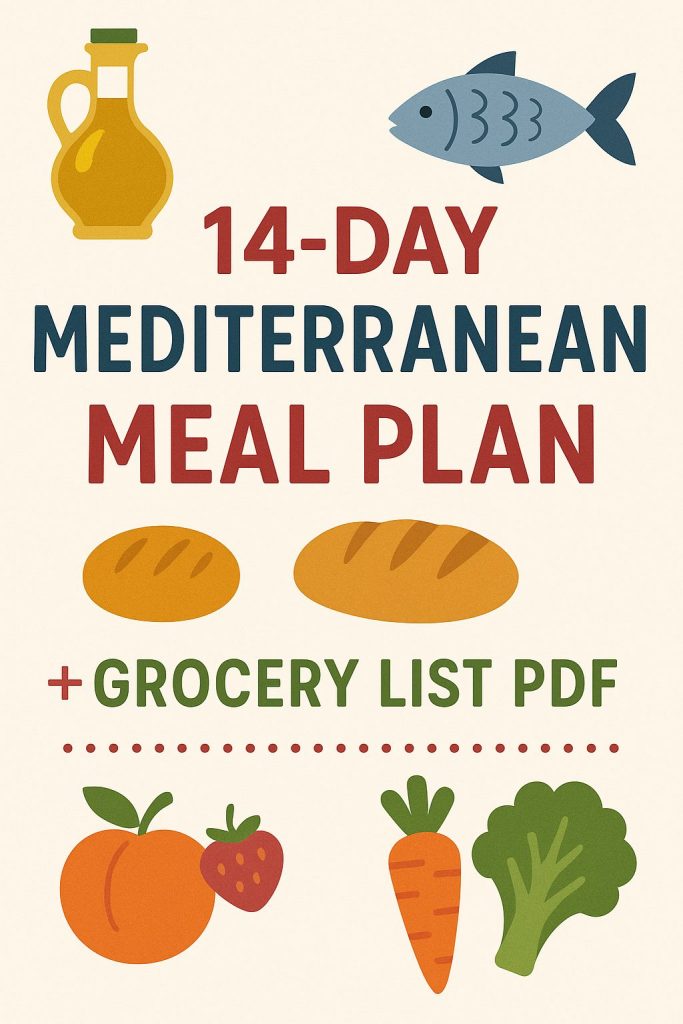
14-Day Mediterranean Meal Plan With Grocery List (PDF)
Why I Needed a Reset (and Found It in the Mediterranean Diet)
If you’ve ever found yourself standing in front of the fridge, wondering what on earth you’re going to cook for dinner again, you’re not alone. That used to be me almost every night—tired after work, staring at random ingredients, and eventually defaulting to takeout or cereal for dinner (no shame, but it didn’t exactly make me feel great).
I tried all kinds of “structured” diet plans in the past—low carb, no sugar, even those color-coded container things. They all left me feeling restricted, bored, and honestly, like I was doing something wrong if I enjoyed food. And as a self-proclaimed foodie, that just wasn’t sustainable.
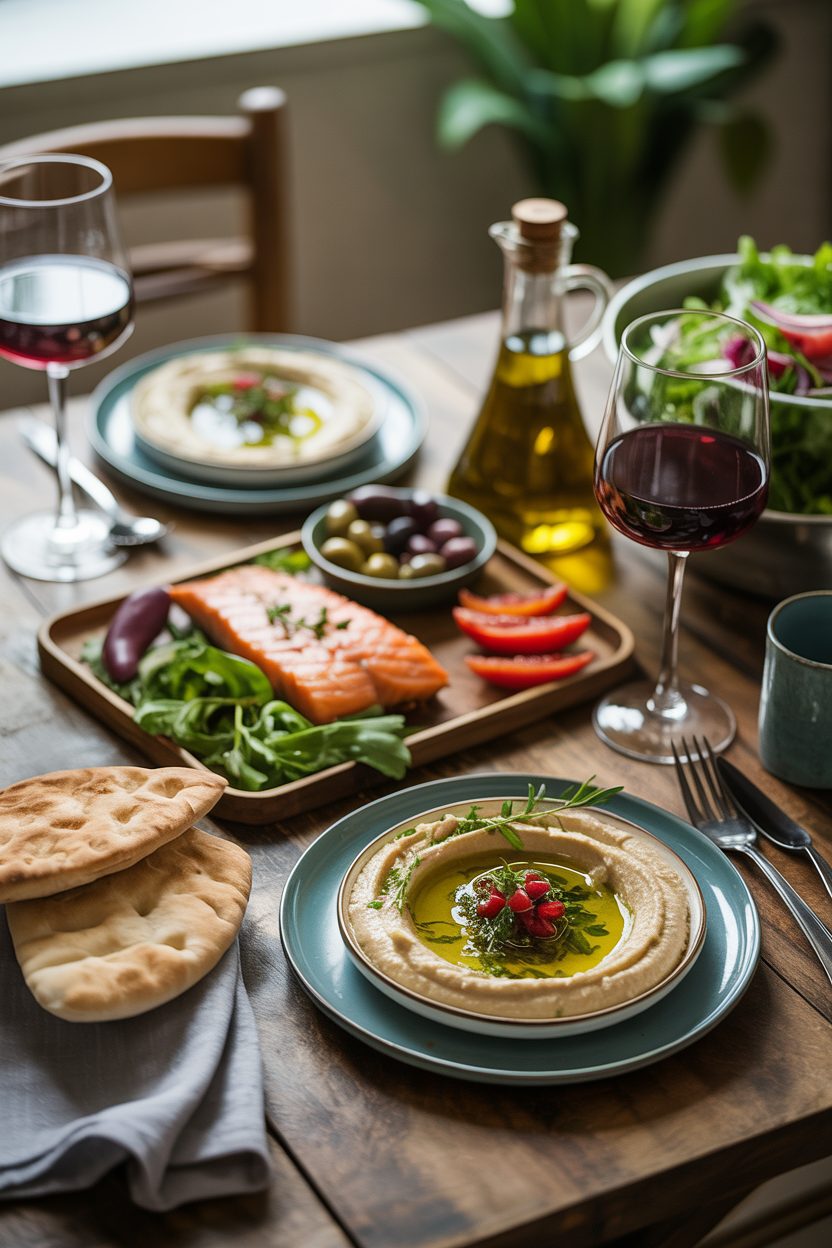
Then I stumbled across the Mediterranean diet. It wasn’t about eliminating everything fun. It wasn’t about obsessing over calories. Instead, it was about simple, flavorful meals built from whole ingredients: creamy hummus with pita bread, lemony grilled fish, fresh veggies drizzled with olive oil, and even a glass of red wine on the weekend.
What I loved most? I could plan meals ahead without feeling overwhelmed. Once I started putting together 14-day meal plans with a matching grocery list, life got so much easier. I wasn’t scrambling at 6 p.m. anymore—I already knew what I was making, and I had everything I needed in the kitchen.
If you’re craving both structure and freedom in your eating, this 14-day Mediterranean meal plan might be the reset you’re looking for. And yes—I’ve created a free printable PDF with the plan and grocery list to make it even easier for you.

What You’ll Get in This Guide
By the end of this post, you’ll have:
- A clear understanding of what the Mediterranean diet actually is (and why it’s consistently ranked the world’s healthiest).
- A full 14-day meal plan with breakfast, lunch, dinner, and snack ideas.
- A peek at the grocery list included in the free PDF.
- Tips for staying on track without feeling deprived.
- A breakdown of common mistakes people make (and how to avoid them).
- My personal experience trying it for two weeks.
Think of this as your all-in-one starter kit for Mediterranean eating—complete with an easy-to-use printable so you don’t have to reinvent the wheel.
What Makes the Mediterranean Diet So Powerful?
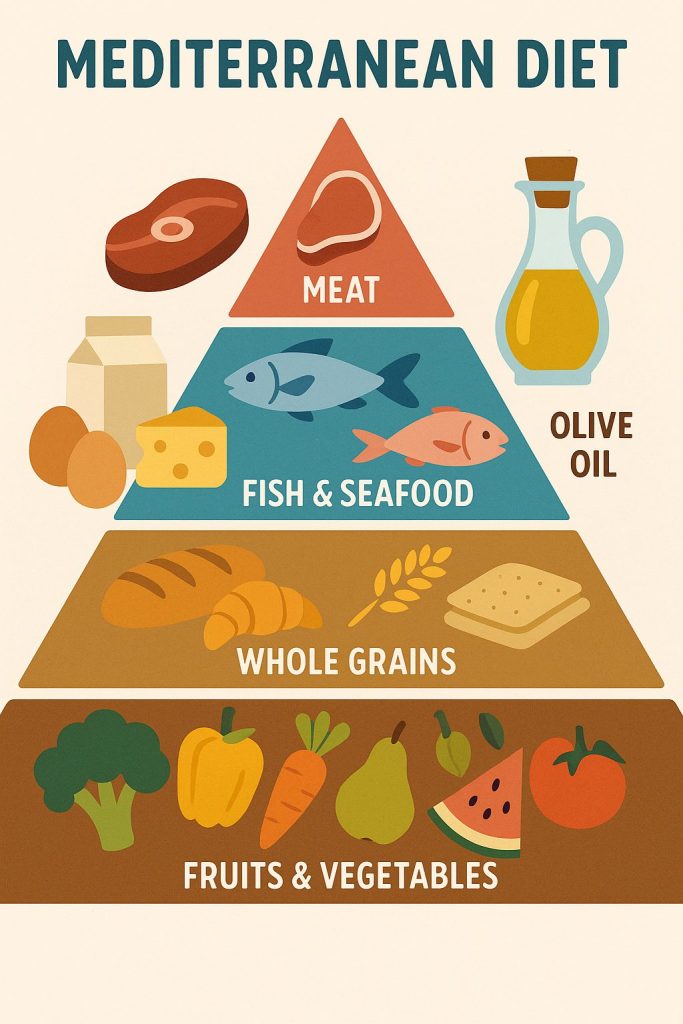
The Mediterranean diet isn’t really a “diet” in the trendy, restriction-heavy sense. It’s more of a lifestyle of eating based on the traditional foods of countries bordering the Mediterranean Sea—like Greece, Spain, and Italy.
Instead of cutting out food groups, it encourages you to eat more of what’s naturally nourishing and satisfying. Think:
- Vegetables & fruits: Fresh, colorful, and eaten daily.
- Healthy fats: Olive oil is the star, along with nuts, seeds, and avocado.
- Lean proteins: Fish and seafood are central, with chicken, beans, and lentils in rotation.
- Whole grains: Brown rice, oats, whole wheat bread, and quinoa.
- Dairy in moderation: Mostly yogurt and cheese.
- Herbs & spices: Flavor comes from basil, oregano, cinnamon, garlic, and rosemary—not processed sauces.
- Wine in moderation: A glass of red with dinner (if you enjoy alcohol).
Why does it matter? Study after study has linked the Mediterranean diet to:
- Better heart health (thanks to healthy fats and fiber).
- Reduced risk of diabetes.
- Improved brain health and lower rates of dementia.
- Longevity (people in Mediterranean regions often live longer, healthier lives).
But here’s the secret sauce: it doesn’t feel like a punishment. You’re not counting calories or obsessing over macros. You’re eating foods that are delicious, versatile, and flexible.
When I first learned about it, I was skeptical because it sounded almost too simple. But once I started cooking Mediterranean meals, I realized how flavorful and filling they were. Instead of dieting, I felt like I was finally eating like a human again.
Your 14-Day Mediterranean Meal Plan
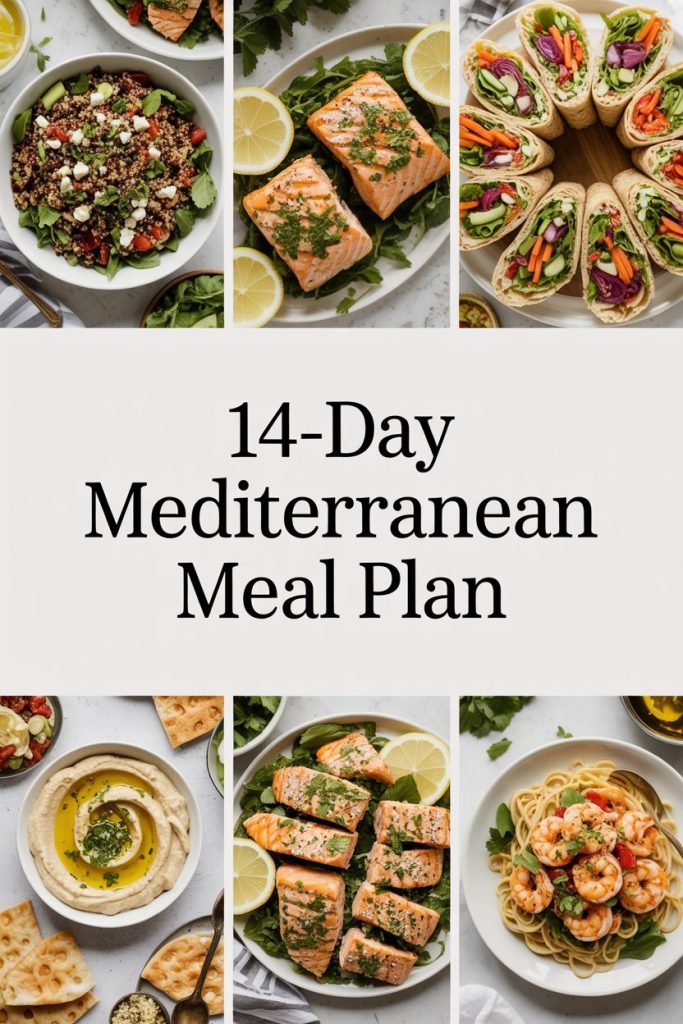
Here’s the exciting part—your two-week plan. You don’t have to follow it perfectly (life happens!), but it gives you structure and variety while keeping things simple.
Week 1
Day 1
- Breakfast: Greek yogurt with honey, walnuts, and strawberries
- Lunch: Quinoa salad with chickpeas, cucumbers, tomatoes, and feta
- Snack: Apple slices with almond butter
- Dinner: Baked salmon with lemon, roasted zucchini, and farro
Day 2
- Breakfast: Whole-grain avocado toast with poached egg and chili flakes
- Lunch: Lentil soup with a slice of whole-grain bread
- Snack: Handful of pistachios
- Dinner: Shrimp sautéed with garlic, olive oil, spinach, and whole wheat pasta
Day 3
- Breakfast: Overnight oats with banana, chia seeds, and cinnamon
- Lunch: Grilled chicken gyro wrap with tzatziki
- Snack: Carrot sticks with hummus
- Dinner: Lamb skewers with tabbouleh and roasted eggplant
Day 4
- Breakfast: Smoothie with spinach, blueberries, Greek yogurt, and flaxseeds
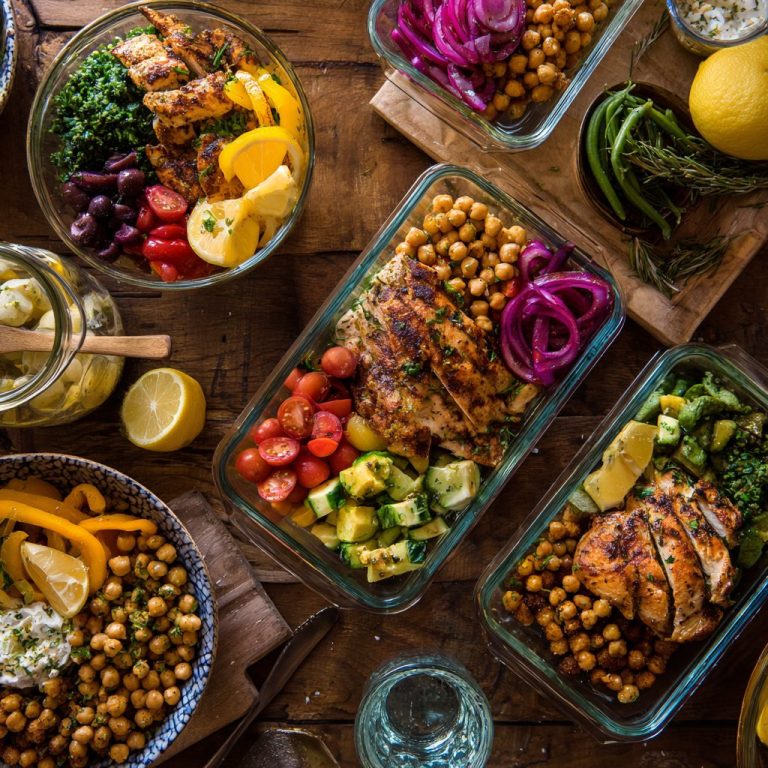
- Lunch: Mediterranean grain bowl with olives, roasted peppers, chickpeas, and tahini
- Snack: Fresh figs with goat cheese
- Dinner: Pan-seared cod with lemon, garlic, and steamed green beans
Day 5
- Breakfast: Whole wheat pita stuffed with hummus, cucumber, and tomato
- Lunch: Grilled veggie wrap with feta and tzatziki
- Snack: Roasted almonds
- Dinner: Baked chicken with roasted sweet potatoes and Greek salad
Day 6
- Breakfast: Cottage cheese with peaches and olive oil drizzle
- Lunch: Falafel bowl with tabbouleh and tahini
- Snack: Dark chocolate with walnuts
- Dinner: Whole wheat spaghetti with fresh tomato-basil sauce and grilled shrimp
Day 7
- Breakfast: Spinach and feta omelet
- Lunch: Salmon bowl with farro, cucumber, lemon, and olive oil
- Snack: Orange slices with almonds
- Dinner: Light eggplant parmesan (with whole wheat breadcrumbs)
Week 2
Day 8
- Breakfast: Greek yogurt parfait with oats and berries
- Lunch: Tuna salad with chickpeas, cucumbers, and lemon dressing
- Snack: Bell pepper strips with hummus
- Dinner: Grilled chicken with roasted veggies and quinoa
Day 9
- Breakfast: Whole-grain toast with ricotta, honey, and figs
- Lunch: Lentil and spinach stew with a slice of whole-grain bread
- Snack: Fresh pear with almonds
- Dinner: Grilled sea bass with olive oil, lemon, and sautéed greens
Day 10
- Breakfast: Overnight oats with apple slices and cinnamon
- Lunch: Mediterranean wrap with hummus, olives, and roasted peppers
- Snack: Handful of trail mix (nuts and dried fruit)
- Dinner: Baked turkey meatballs with whole wheat pasta and tomato sauce
Day 11
- Breakfast: Smoothie with banana, spinach, almond milk, and flaxseed
- Lunch: Chickpea salad with arugula, cucumber, tomato, and feta
- Snack: Dark chocolate square with walnuts
- Dinner: Grilled shrimp skewers with bulgur wheat and roasted veggies
Day 12
- Breakfast: Pita bread with hummus and sliced tomatoes
- Lunch: Quinoa tabbouleh with chickpeas and parsley
- Snack: Cucumber slices with tzatziki
- Dinner: Baked salmon with sweet potato mash and green beans
Day 13
- Breakfast: Cottage cheese bowl with pineapple and chia seeds
- Lunch: Mediterranean lentil soup with olives and a slice of whole-grain bread
- Snack: Apple with almond butter
- Dinner: Grilled chicken souvlaki with roasted zucchini and yogurt sauce
Day 14
- Breakfast: Omelet with mushrooms, spinach, and feta
- Lunch: Salmon grain bowl with cucumbers and lemony olive oil dressing
- Snack: Fresh grapes with goat cheese
- Dinner: Light vegetarian moussaka with eggplant, tomato, and lentils
👉 Remember, this plan isn’t rigid. Swap out meals, repeat favorites, or adjust for your preferences. The goal is balance, not perfection.
Your Free 14-Day Mediterranean Plan + Grocery List
Let’s be real—reading a meal plan online is helpful, but putting it into action is another story. That’s why I created a FREE printable 14-Day Mediterranean Meal Plan PDF with a complete grocery list.
Here’s what’s inside:
- A day-by-day meal schedule (breakfast, lunch, dinner, snacks).
- A consolidated grocery list so you can shop once and be done.
- Substitution ideas for vegetarians, dairy-free eaters, and picky eaters.
- A simple format that you can print and stick on your fridge.
No more “what’s for dinner?” stress. No more forgotten ingredients. Just a clear roadmap to make eating Mediterranean-style simple, fun, and actually doable.
👉 [Download your FREE 14-Day Mediterranean Diet Meal Plan + Grocery List PDF here] (insert link).

Mistakes to Avoid + Bonus Hacks
Even though the Mediterranean diet is flexible and forgiving, there are a few common pitfalls people fall into. Luckily, with a little awareness, you can avoid them and make your 14-day journey way smoother.
Mistake #1: Thinking “Mediterranean” means endless pasta and bread.
Yes, pasta and bread exist in the Mediterranean region, but they’re not the centerpiece of every meal. Whole grains like farro, quinoa, and barley, plus plenty of veggies, fish, and legumes, are actually the real stars. Don’t make carbs your default—make plants your baseline.
Mistake #2: Forgetting portion control with “healthy fats.”
Olive oil, nuts, and avocados are nutrient-rich, but they’re still calorie-dense. I once made the mistake of pouring half a bottle of olive oil over a salad thinking, “Hey, it’s Mediterranean!” Yeah, no. Use fats mindfully—think drizzle, not flood.
Mistake #3: Skipping protein.
Some people focus so much on vegetables and grains that they under-eat protein. The Mediterranean diet includes plenty of fish, beans, eggs, and even moderate poultry. Aim for at least one protein source per meal to keep energy stable.
Mistake #4: Going too hard, too fast.
If you’re coming from a diet heavy in fast food or processed snacks, transitioning overnight might feel overwhelming. Instead of ditching everything at once, layer Mediterranean swaps slowly. For example, replace chips with roasted chickpeas or soda with sparkling water and lemon.
Mistake #5: Overcomplicating it.
You don’t need exotic ingredients or gourmet cooking skills. Simple meals like Greek yogurt with berries, a chickpea salad, or grilled salmon with veggies are just as “Mediterranean” as something elaborate.
Bonus Hacks to Make It Easier:
- Batch cook grains and beans on Sunday—you’ll thank yourself midweek.
- Keep frozen veggies on hand. They’re just as nutritious and save chopping time.
- Use herbs and spices—Mediterranean food bursts with oregano, basil, garlic, cinnamon, and more. These little touches keep meals exciting.
- Swap dressings for olive oil + lemon. It’s fresher, cheaper, and healthier.
- Shop the perimeter of the grocery store—fresh produce, proteins, and dairy live there.
When I first adopted Mediterranean eating, these hacks kept me consistent without stress. It’s all about finding balance, not perfection.

Let me share a real story from my own kitchen. A couple of years ago, I was constantly tired and relying too much on processed snacks to “get through the day.” When my doctor gently nudged me toward healthier eating, the Mediterranean diet kept popping up.
I committed to trying it for two weeks. At first, I thought it would be complicated, but my first grocery run changed my mind—fresh produce, chickpeas, salmon, yogurt, whole wheat pita, and some feta. Simple, colorful, and honestly cheaper than my usual snack stash.
By day 4, I noticed a shift: fewer energy crashes, better digestion, and (weirdly enough) less sugar craving. Instead of cookies at 3 pm, I found myself reaching for apple slices with almond butter. By the end of the 14 days, I had dropped a few pounds without even trying, but more importantly, my mood and focus had improved.
Fast forward: I’ve been following a mostly Mediterranean style of eating ever since, and it doesn’t feel like “a diet.” It feels like a lifestyle. Even my family got on board—we do Mediterranean-inspired taco nights with lentils, and Sunday dinners often feature a big roasted fish with herbs.
So when I put together this 14-day meal plan with the grocery list, I wanted it to feel like that: doable, not overwhelming, and actually enjoyable. If I could go from exhausted snack addict to energized home cook in just two weeks, trust me—you can too.

If you’ve read this far, you’re clearly ready to make a change. And honestly? The only thing standing between you and a simpler, healthier routine is a little planning. That’s exactly why I created this 14-Day Mediterranean Meal Plan with Grocery List (PDF)—so you don’t have to waste hours searching recipes or figuring out what to buy.
This guide is beginner-friendly but detailed enough to keep things exciting. You’ll know exactly what to cook, how to shop smarter, and how to keep meals tasty without overthinking. It’s like having a nutrition-savvy friend guiding you through your kitchen for two full weeks.
👉 Click below to grab your FREE Mediterranean Meal Plan + Grocery List PDF now and kick-start your two-week journey to feeling lighter, more energized, and fully in control of your meals.
Don’t wait—your healthier lifestyle can literally start with your next grocery trip.

FAQ
1. What makes the Mediterranean diet different from other diets?
Unlike restrictive diets, the Mediterranean approach emphasizes balance. It’s about eating whole, nutrient-rich foods—like fish, vegetables, legumes, nuts, and olive oil—without banning entire food groups.
2. Can I lose weight on this 14-day Mediterranean meal plan?
Yes! Many people naturally lose weight because the meals are nutrient-dense, filling, and lower in processed carbs and sugars. But the real benefit goes beyond weight—it’s about better energy, digestion, and long-term heart health.
3. Is this meal plan vegetarian-friendly?
Absolutely. While the plan includes fish and poultry, you can easily swap those with beans, lentils, or tofu. The foundation is still plant-based.
4. Do I need to buy expensive ingredients?
Not at all. Most items—like olive oil, chickpeas, yogurt, and fresh vegetables—are affordable staples at any grocery store. Specialty items like feta or olives are optional flavor boosters.
5. How much olive oil is “too much”?
A drizzle is plenty. Around 1–2 tablespoons per meal is a good guideline. Remember: healthy fats are amazing, but they’re calorie-dense.
6. What if I don’t have time to cook every day?
That’s where the grocery list and batch cooking come in. Prepping grains, beans, or roasted veggies once or twice a week makes daily meals quick to assemble.
7. Can I still eat bread or pasta?
Yes, but in moderation. Whole grain bread, brown rice, and small portions of pasta are welcome—just pair them with veggies and protein to keep meals balanced.
8. Is dairy included?
Yes, but it’s usually enjoyed in smaller portions—like Greek yogurt, a sprinkle of cheese, or milk in coffee. Think “accent,” not “main dish.”
9. Will I feel full enough on this plan?
Definitely. Between protein, fiber, and healthy fats, Mediterranean meals are designed to satisfy without overeating.
10. Do I need to count calories?
Nope! That’s one of the best parts. Focus on quality over quantity, and let your body’s hunger cues guide you.
Conclusion
If you’ve been craving a healthier lifestyle that actually feels doable, the Mediterranean diet might just be the best place to start. It’s not about cutting things out or punishing yourself—it’s about adding more color, flavor, and energy to your plate.
This 14-day Mediterranean meal plan with grocery list is more than just recipes—it’s a roadmap. Two weeks is enough to reset your habits, notice real changes in energy, and discover how delicious healthy eating can be.
So, instead of waiting for “Monday” or the “perfect time,” why not start now? Head to your kitchen, grab the PDF, and let this be the first step toward better health that lasts.
Your future self will thank you—trust me.