
High-Protein Breakfast Meal Prep Guide (7 Days of Easy Recipes!)
Spending two hours on Sunday to avoid breakfast chaos all week sounds like a decent trade-off, right? I used to think meal prep was for people with way more patience and Tupperware than me. Then I realized I was spending more time every single morning staring into my fridge trying to figure out what to eat than it would take to just prep everything at once.
This guide maps out seven days of high-protein breakfasts you can prep in one session. We’re talking 20-30 grams of protein per serving, minimal morning effort, and actual food that tastes good on day five. No sad, soggy disasters or meals that require a PhD to assemble at 6 AM.
These are the basics that make healthy cooking fast and actually enjoyable: less mess, less time, and meals your whole family will happily eat.
- nonstick skilletCheck today’s price →
- silicone egg bite moldsCheck today’s price →
- glass meal prep containersCheck today’s price →
- whisk setCheck today’s price →
Amazon prices and deals change often, so it’s worth checking today’s price.
Why Meal Prep Actually Works for Breakfast
Look, I get the skepticism. Meal prep sounds great until you’re eating the same chicken and rice for the sixth day in a row and contemplating whether takeout counts as self-care. But breakfast meal prep is different because breakfast foods actually hold up well in the fridge.
Overnight oats get better after sitting. Egg muffins reheat perfectly. Even breakfast burritos taste nearly as good on Thursday as they did on Sunday. The key is choosing recipes that improve or maintain quality over time rather than degrading into mystery mush.
High-protein breakfasts specifically benefit from meal prep because protein-rich foods—eggs, Greek yogurt, cottage cheese, turkey sausage—all store beautifully. You’re not trying to keep lettuce crispy or bread from getting soggy. You’re working with ingredients that were basically designed for this.
Plus, when your breakfast is already prepped, you’re way more likely to actually eat it. No more grabbing a donut because cooking eggs felt like too much work. No more skipping breakfast entirely and then wondering why you’re starving and irritable by 10 AM.
Your Sunday Prep Strategy
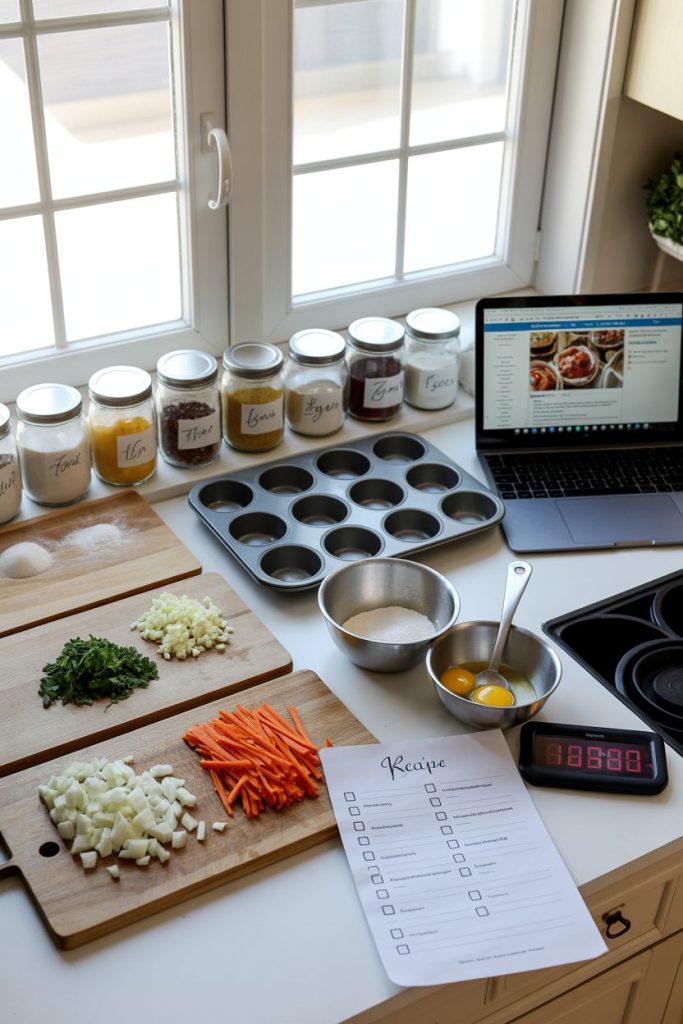
Before you start cooking everything at once and creating kitchen chaos, you need a game plan. Here’s how I tackle Sunday prep without losing my mind:
Time block: 2-3 hours total
The whole process takes about two to three hours from start to finish, including cleanup. That sounds like a lot, but it’s way less than the cumulative time you’d spend making breakfast every single morning.
Prep order matters
Start with anything that needs oven time—egg muffins, breakfast casseroles, turkey sausage patties. While those cook, assemble your overnight oats and parfaits. Finish with anything stovetop like scrambles or wraps. This keeps you moving efficiently without standing around waiting for timers.
Containers are crucial
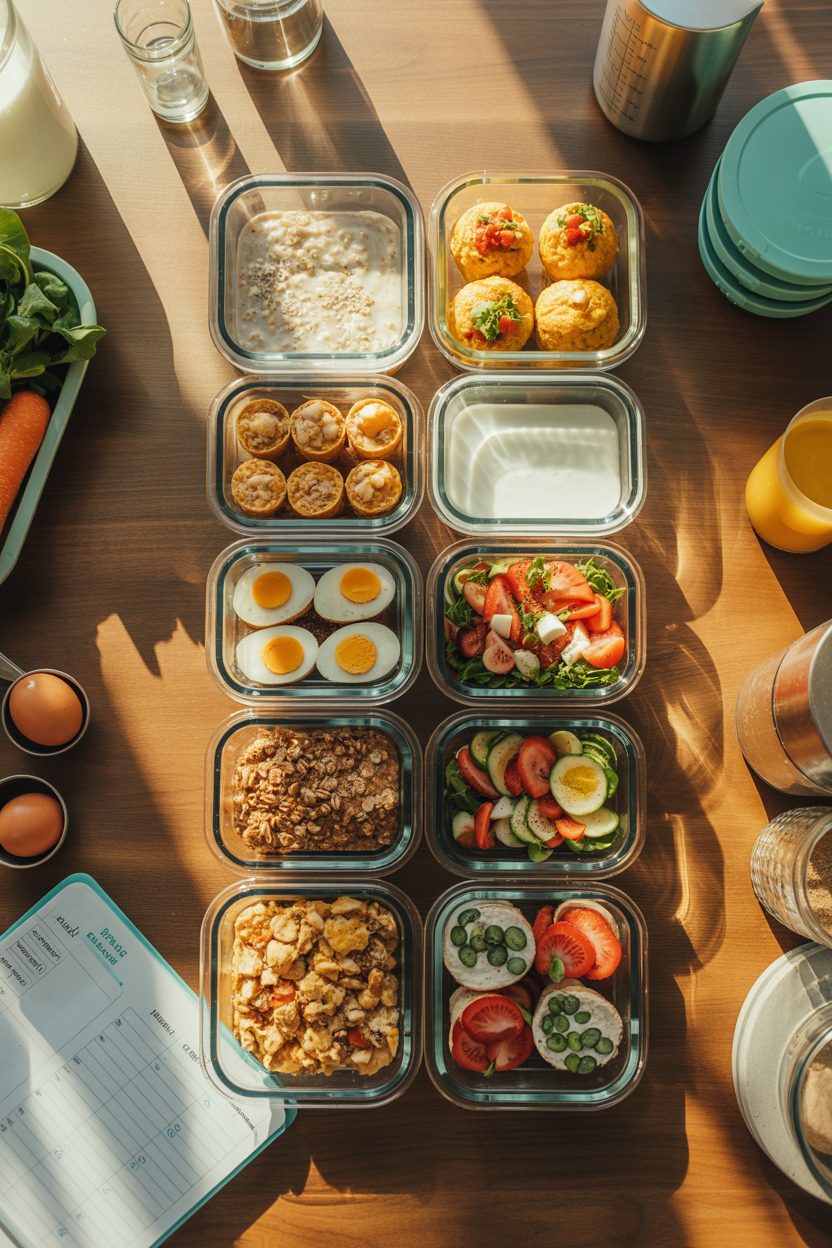
Invest in actual meal prep containers—not the random mismatched Tupperware collection you’ve accumulated over the years. I use these glass containers with snap lids because they don’t stain, they’re microwave-safe, and you can actually see what’s inside without playing fridge roulette.
Label everything with dates
Use masking tape and a Sharpie to label each container with what it is and when you made it. Future you will appreciate knowing whether that egg muffin is from this Sunday or last Sunday.
Day 1 & 2: Overnight Oats Two Ways
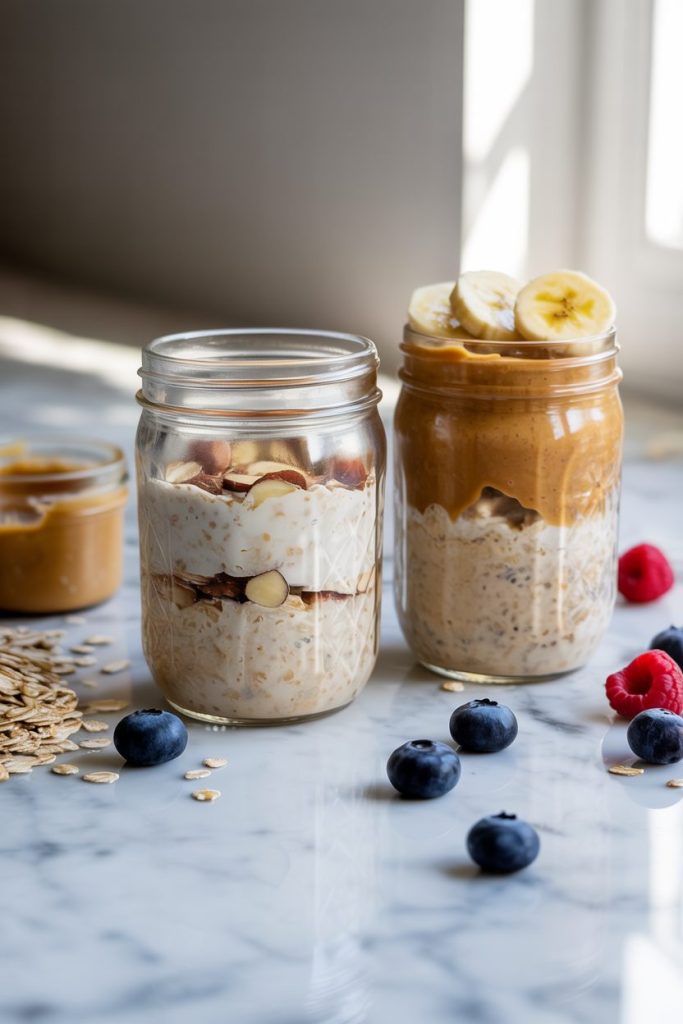
Classic Vanilla Almond Overnight Oats
The classic vanilla almond overnight oats are your reliable baseline. Mix rolled oats, Greek yogurt, almond milk, almond butter, vanilla extract, and a touch of maple syrup in jars. That’s it.
Make four servings at once—the recipe scales perfectly. Each jar delivers around 15-18 grams of protein from the combination of Greek yogurt and almond butter. Store them in the fridge and grab one each morning for the first two days.
Top with fresh berries right before eating so they don’t get weird and soggy. The fiber from oats combined with protein creates this perfect sustained energy that doesn’t quit halfway through your morning.
Peanut Butter Banana Slim Down Oats
Days three and four get the peanut butter banana slim down oats treatment. Same base concept, different flavor profile. Peanut butter has slightly more protein than almond butter—about 8 grams per two tablespoons versus 7 grams—plus it’s cheaper and tastes incredible with banana.
Slice the banana fresh each morning rather than adding it Sunday night. Trust me on this—pre-sliced bananas turn brown and slimy, and nobody wants that at 7 AM. The nutritional benefits of bananas include potassium for muscle function and natural sugars for quick energy alongside the sustained release from the oats and protein.
Day 3: Spinach and Feta Egg Muffins

These spinach and feta egg muffins are meal prep gold. Whisk a dozen eggs with chopped spinach, crumbled feta, diced onions, and seasonings. Pour into a greased muffin tin and bake for 20-25 minutes at 350°F.
Each muffin contains about 7 grams of protein, so eating two gives you a solid 14 grams plus whatever else you add. They reheat beautifully in the microwave—60 seconds and they’re perfect. You can also eat them cold straight from the fridge if you’re really rushing.
Make a full dozen on Sunday. Use them for day three, but also keep extras on hand for emergency backup breakfasts throughout the week. They last five days in the fridge or freeze for up to three months.
I use this silicone muffin pan for these—nothing sticks, cleanup takes five seconds, and they pop out perfectly every time without that annoying peeling situation metal pans create.
Day 4: Greek Yogurt Parfaits
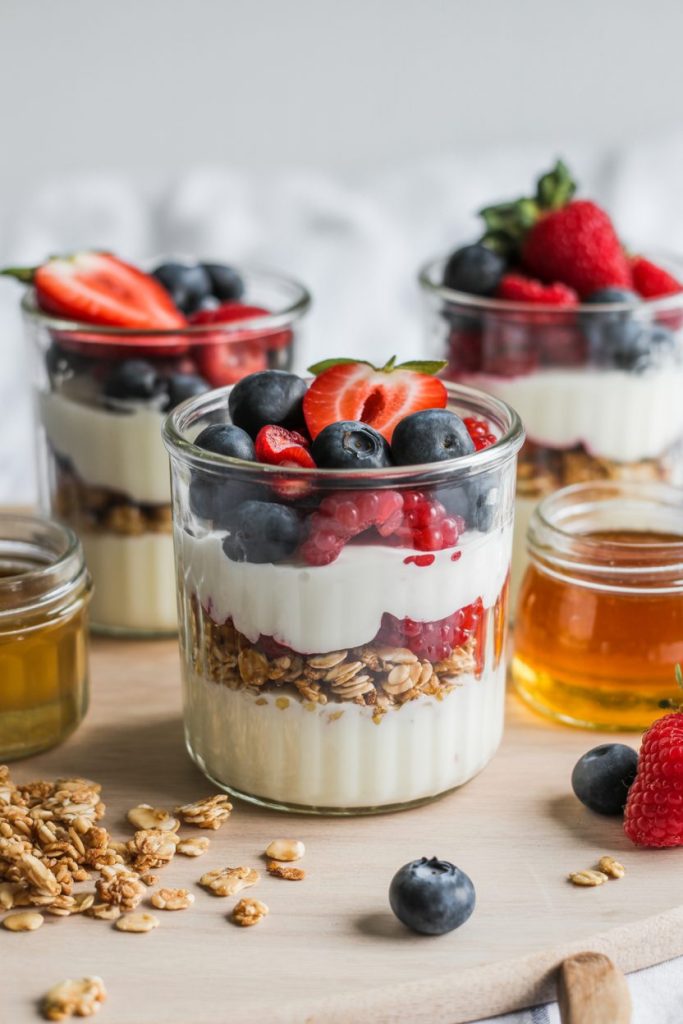
The Greek yogurt parfait is your fancy-but-not-fancy option. Layer Greek yogurt, granola, fresh berries, and a drizzle of honey in containers. Keep the granola separate until morning so it doesn’t turn into soggy sadness.
Greek yogurt packs 15-20 grams of protein per cup, making it one of the most efficient breakfast proteins available. Add nuts or seeds for extra protein and healthy fats. The key is using plain Greek yogurt and controlling your own sweetness level—those pre-flavored varieties are basically dessert.
Prep the yogurt and berries together on Sunday, but store granola in a separate small container or baggie. In the morning, dump the granola on top, and you’ve got yourself a breakfast that looks impressive but required zero actual morning effort.
Day 5: Turkey Breakfast Sausage with Eggs

Make a batch of turkey breakfast sausage patties on Sunday. Mix ground turkey with sage, fennel seeds, garlic powder, black pepper, and just a touch of maple syrup. Form into patties and cook them all at once.
Each three-ounce patty delivers about 15 grams of protein from lean turkey breast. Store them in the fridge, and on day five, reheat two patties while scrambling a couple eggs. Total morning time: maybe six minutes.
This is one of those recipes where making your own version absolutely destroys the store-bought option. You control the sodium, skip the preservatives, and the flavor is exponentially better. Plus, homemade turkey sausage costs about half what the fancy pre-made ones do.
Store the cooked patties separated by parchment paper so they don’t stick together. Freeze extras individually for future weeks.
Day 6: Breakfast Burrito Wraps
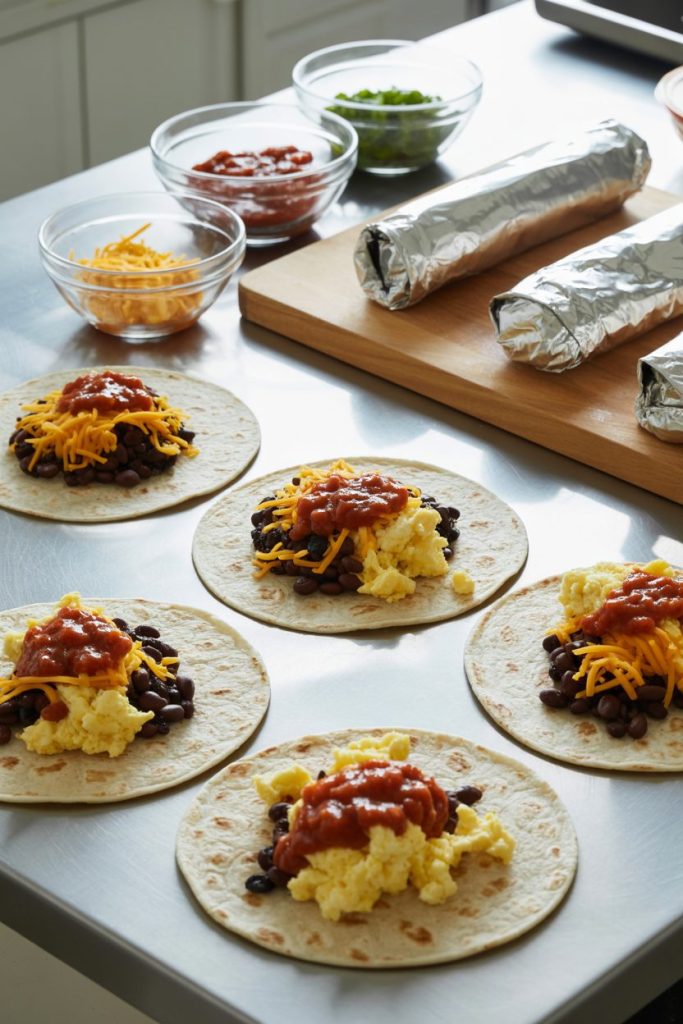
The low-cal breakfast burrito wraps are your portable protein bomb. Scramble eggs, add black beans, a bit of cheese, salsa, and whatever vegetables you like. Wrap in whole grain tortillas and individually wrap in foil.
Each burrito provides 15-20 grams of protein depending on how much you stuff them. They freeze incredibly well—just microwave from frozen for two minutes, rotating halfway through. The foil keeps everything contained and makes transport easy if you’re eating breakfast in your car or at your desk.
Make six to eight burritos at once. Use some for day six and freeze the rest for backup breakfasts over the next few weeks. They’re also excellent for those mornings when you wake up late and need to literally run out the door with food.
Black beans add both protein and fiber, which work together to keep you full. Plus they’re cheap and shelf-stable, making them perfect for meal prep.
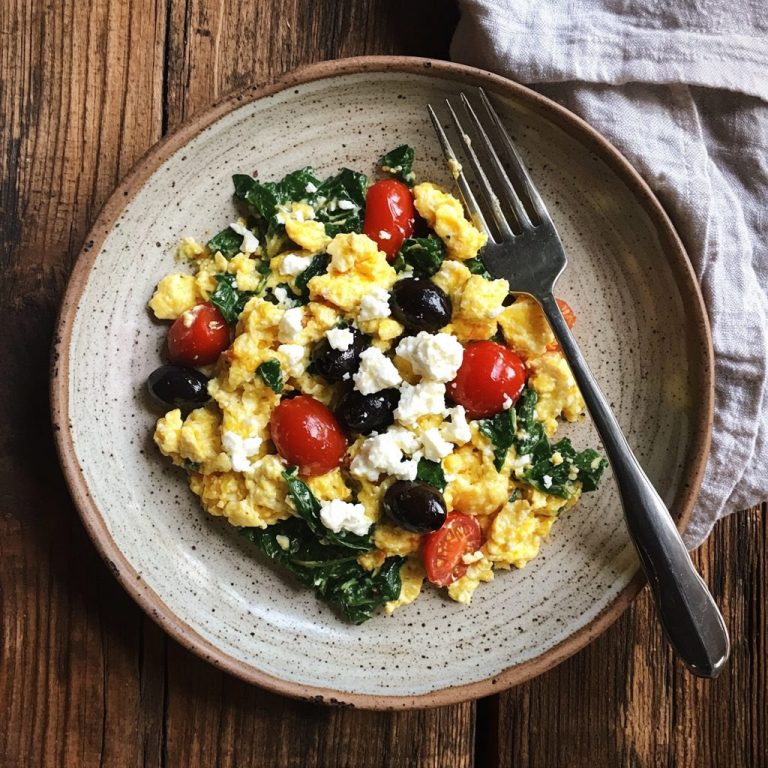
Day 7: Savory Mediterranean Scramble
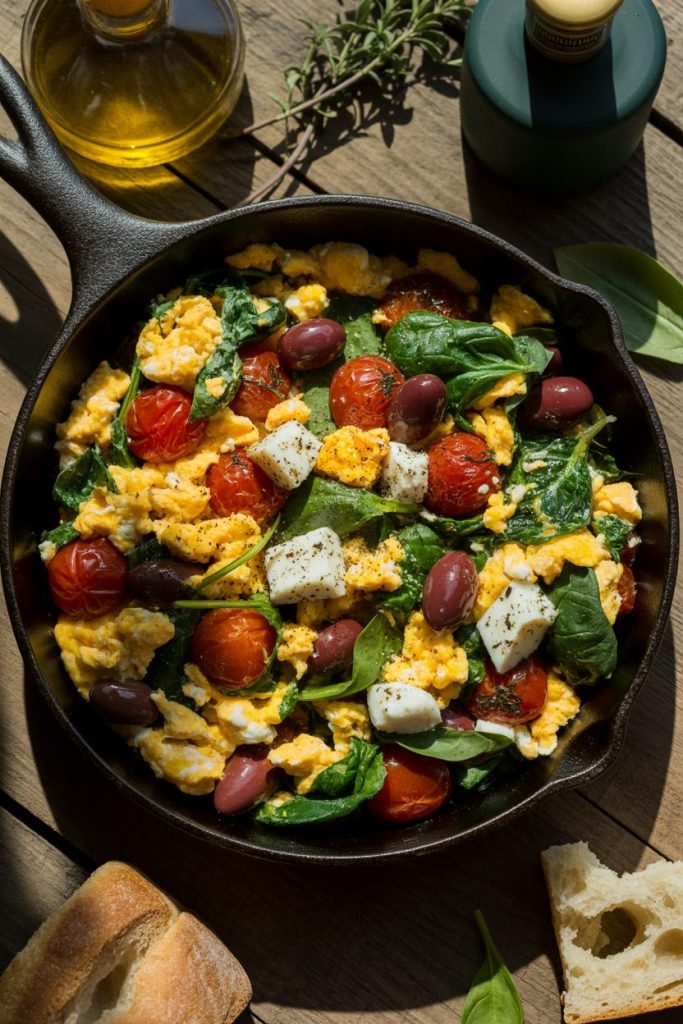
End your week with the savory Mediterranean scramble. You can prep the vegetables on Sunday—dice tomatoes, chop spinach, slice olives, crumble feta. Store everything in a container, and on Sunday morning, just scramble eggs and add your prepped mixture.
The combination of eggs and feta delivers serious protein—around 18-20 grams total for a two-egg scramble with feta. The Mediterranean ingredients provide flavor complexity without requiring complicated seasoning or sauces.
This is technically the least prepped option on the list, but having your vegetables ready to go means breakfast still only takes five minutes. It’s a nice break from eating fully prepped meals and gives you something fresh to end the week.
The Complete Grocery List
Here’s everything you need for the full seven-day plan:
Proteins & Dairy:
- 2 dozen eggs
- 2 large containers plain Greek yogurt
- 1 pound ground turkey
- Block of feta cheese
- Shredded cheese of choice
- Cottage cheese (optional for snacks)
Carbs & Grains:
- Large container rolled oats
- Granola
- Whole grain tortillas
- Whole grain bread
Fruits & Vegetables:
- Fresh berries (strawberries, blueberries, blackberries)
- 4-5 bananas
- Fresh spinach
- Cherry tomatoes
- Onions
- Bell peppers (optional)
Pantry Items:
- Almond butter
- Peanut butter
- Almond milk
- Canned black beans
- Olives
- Salsa
- Vanilla extract
- Maple syrup
- Olive oil
Seasonings:
- Sage, fennel seeds, garlic powder for turkey sausage
- Salt and black pepper
- Everything bagel seasoning (optional but recommended)
Storage and Reheating Tips
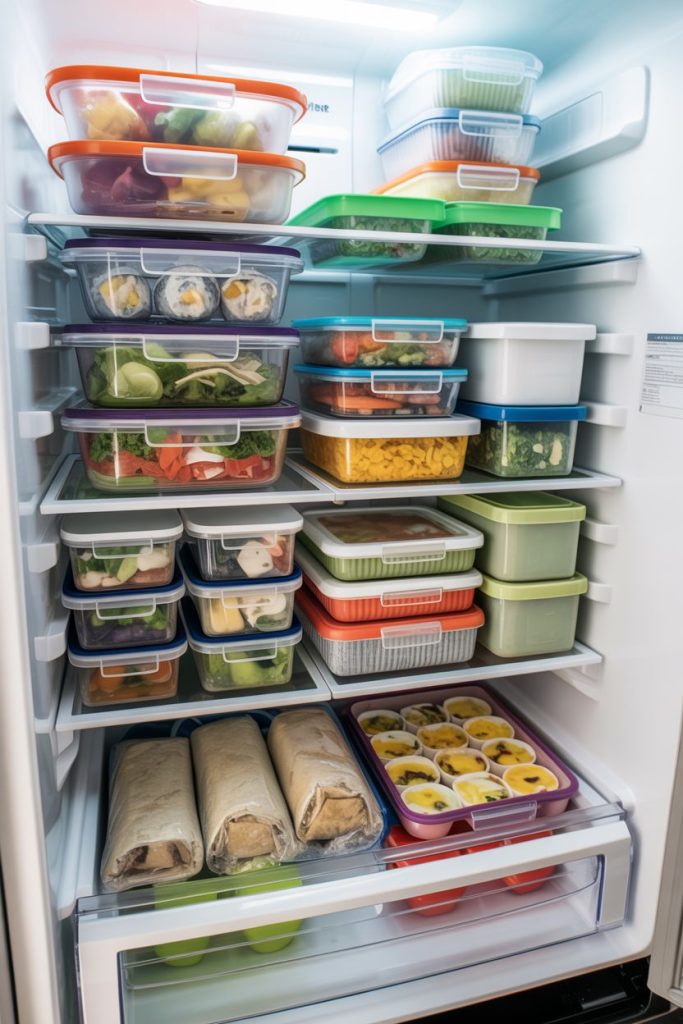
Getting your food prepped is only half the battle—storing it correctly makes the difference between food that’s still good on Friday and food that’s questionable by Wednesday.
Refrigerator storage rules:
Keep egg-based dishes for five days maximum. Overnight oats last up to five days but taste best within four. Greek yogurt parfaits assembled with berries stay good for three to four days—longer if you keep the fruit separate. Turkey sausage lasts five to seven days cooked.
Freezer strategies:
Egg muffins freeze perfectly for up to three months. Same with breakfast burritos and turkey sausage patties. Always separate items with parchment paper before freezing so they don’t stick together in one giant frozen mass.
Reheating methods:
Microwave egg muffins for 60-90 seconds. Reheat turkey sausage in a pan for best texture, or microwave for 45 seconds if you’re rushed. Breakfast burritos need two minutes from frozen, rotating halfway through. Never microwave overnight oats—eat them cold or slightly warmed, but definitely not hot.
I use this set of glass meal prep containers that stack neatly and don’t retain smells or stains. The lids seal completely, so you can transport them without leaks, and they’re clear so you can see what’s inside without opening every container.
Mix and Match Your Week
You don’t have to follow this exact seven-day plan every single week. Once you’ve got the basic recipes down, you can mix and match based on what you’re craving or what’s on sale.
High-rotation favorites:
Some weeks I make only overnight oats and egg muffins because they’re the fastest options and I’m feeling lazy. Other weeks I go heavy on the egg-based meals because I found a great sale on eggs. The point is having a flexible system, not following a rigid meal plan forever.
Variety strategies:
Change up your overnight oats flavors—try chocolate banana not-so-guilty oats or mocha protein overnight oats for different options. Rotate your egg muffin add-ins weekly. One week it’s spinach and feta, next week it’s peppers and cheddar, the following week it’s mushrooms and goat cheese.
Plant-based swaps:
For the plant-based crowd, substitute the tofu scramble with spinach and bell peppers for egg-based meals. Use plant-based protein powder in overnight oats. Dairy-free alternatives like coconut yogurt or almond milk work perfectly in most of these recipes.
Troubleshooting Common Meal Prep Problems
Problem: Overnight oats are too thick
Add more liquid. The oats absorb moisture as they sit, so if your oats are turning into cement by day three, increase your milk ratio. Start with a 1:1 ratio of oats to liquid and adjust from there.
Problem: Egg muffins are rubbery
You’re overcooking them. Bake at 350°F instead of higher temperatures, and pull them when they’re just set. They’ll continue cooking slightly from residual heat. Overcooked eggs get that weird bouncy texture nobody wants.
Problem: Breakfast burritos are soggy
Don’t add sauce or salsa inside the burrito before freezing. Keep wet ingredients separate and add them after reheating. Also, make sure your scrambled eggs aren’t too wet before assembling.
Problem: Everything tastes the same by day five
You’re not seasoning enough or varying your flavors. Use different herbs, spices, and toppings throughout the week. Add hot sauce, everything bagel seasoning, fresh herbs, or different cheeses to change up the flavor profile.
Problem: Food is getting freezer burn
You’re not wrapping things tightly enough or using containers with bad seals. Double-wrap burritos in plastic wrap then foil. Make sure container lids snap completely closed. Remove as much air as possible from storage bags.
Making It Actually Sustainable
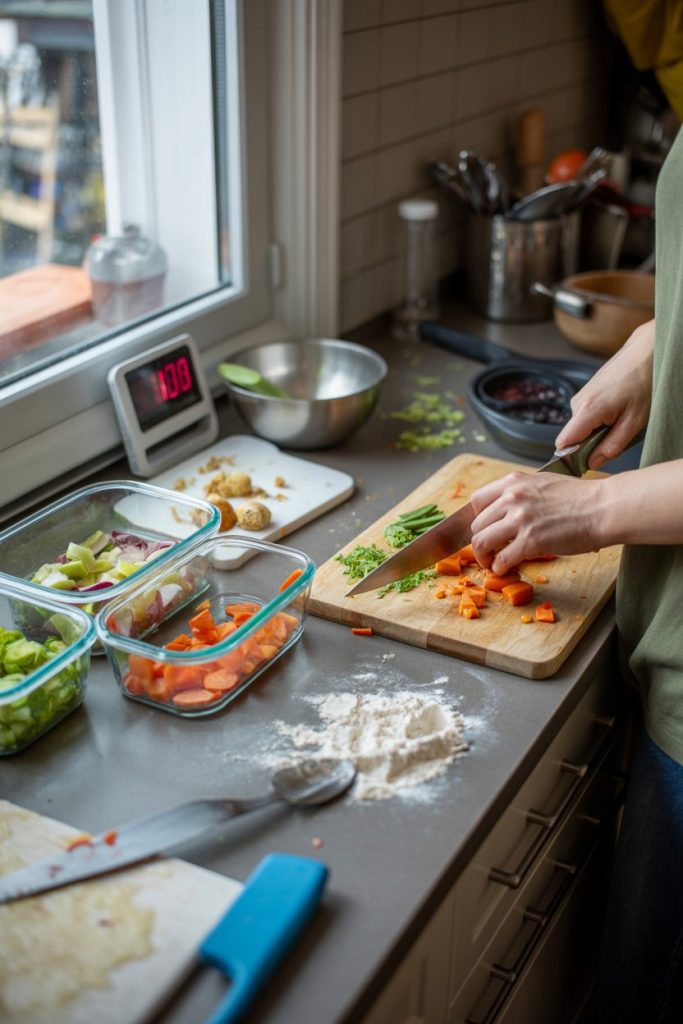
The biggest mistake people make with meal prep is treating it like an all-or-nothing commitment. You don’t need to prep every single meal for the entire week. You don’t need fancy containers or a color-coded system. You just need enough prepped breakfasts to make your mornings easier.
Start small: Try prepping just three or four breakfasts for the first week. See how it feels, whether you actually eat what you made, and whether the time investment feels worth it. Some people love meal prep. Others realize they’d rather cook fresh more often. Neither approach is wrong.
Adjust based on reality: Maybe you realize you hate eating the same thing multiple days in a row. Fine—prep smaller batches of more variety. Maybe you love the simplicity of eating overnight oats every single morning. Great—make seven jars of those and call it done.
Use shortcuts: Frozen vegetables work great in egg muffins. Pre-cooked turkey sausage from the store is fine if you don’t want to make your own. Bagged spinach instead of washing and chopping fresh. The goal is making your life easier, not harder.
Account for real life: Some weeks you’ll meal prep perfectly. Other weeks you’ll forget until Monday morning and have to cobble together a backup plan. That’s fine. The meal prep skills you’re building make even the chaotic weeks easier because you know what works and how long things actually take.
For reference, research shows that eating adequate protein at breakfast—typically 20-30 grams—can improve satiety throughout the day and support better overall nutrition choices. That’s not diet culture nonsense; that’s just how protein affects hunger hormones and energy levels.
Your Sunday Prep Timeline
Here’s exactly how to spend your two-hour prep session:
Minutes 0-15: Preheat oven, get out all ingredients, prep vegetables that need chopping. This is your mise en place time.
Minutes 15-45: Make egg muffins and turkey sausage—both use the oven. While they bake, assemble overnight oats jars. Everything happens simultaneously.
Minutes 45-75: Cook eggs for breakfast burritos, assemble and wrap them. Prep parfait containers with yogurt and berries.
Minutes 75-105: Package everything into proper containers with labels. Store some items in freezer, others in fridge. Clean up your kitchen so it doesn’t look like a meal prep tornado hit it.
Minutes 105-120: Final cleanup, double-check you’ve got everything stored properly, maybe prep your grocery list for next Sunday.
This timeline assumes you’re working at a normal pace, not rushing but not dawdling. If you’re new to meal prep, add an extra 30 minutes the first time while you figure out your rhythm.
The Bottom Line
Meal prep doesn’t have to be complicated or time-consuming or require twenty matching containers and a label maker. It just needs to solve the actual problem: making breakfast happen consistently without requiring brain function before your coffee kicks in.
These seven days of high-protein breakfasts give you enough variety to not get bored, enough protein to actually keep you full, and enough simplicity to actually maintain. When you’ve got 20-30 grams of protein waiting for you in the fridge every morning, you’re setting yourself up for better energy, fewer cravings, and generally feeling less like a disaster human before noon.
Start with whatever seems most doable from this list. Maybe that’s just overnight oats for the whole week. Maybe it’s a combination of three different recipes. Maybe you modify everything to fit your preferences and dietary needs. The recipes aren’t sacred—they’re templates you can adapt.
The real win is Sunday night when you close the fridge knowing you don’t have to think about breakfast for the next week. That’s worth two hours of your weekend, and anyone who’s ever scrambled to find food while running late knows it.