
25 Overnight Oats for Weight Loss
Breakfast shouldn’t require brain power at 6 AM. You know what does require brain power? Deciding what to eat when you’re half-asleep and already running late. That’s when bad decisions happen—drive-thru pastries, skipped meals, or that sad granola bar you found in your desk drawer from 2023.
Overnight oats solve this problem. Mix ingredients the night before, grab from the fridge in the morning, and you’ve got a meal that actually keeps you full. No cooking, no thinking, no excuses. Just real food that happens to support weight loss because it’s packed with fiber, protein, and nutrients your body actually needs.
Here are 25 overnight oats recipes that taste good enough to look forward to but won’t derail your goals. Each one takes five minutes to prep, and most use ingredients you probably already have.
Why Overnight Oats Work for Weight Loss
Oats contain beta-glucan, a type of soluble fiber that slows digestion and keeps you satisfied for hours. When you eat oats, they form a gel-like substance in your stomach that literally takes longer to break down. Translation: you’re not ravenously hungry by 10 AM.
The overnight soaking process breaks down starches and makes nutrients more accessible. Your body digests soaked oats more efficiently than cooked oats, which means better nutrient absorption and more stable blood sugar levels.
Protein matters here. Plain oats only have about 5 grams of protein per half cup. Add Greek yogurt, protein powder, or nut butter and you’re suddenly looking at 15-20 grams per serving. That protein keeps you full and helps maintain muscle mass while losing weight.
According to Healthline, oats may help reduce cholesterol levels and support heart health. But for weight loss purposes, we care most about that satiety factor and the way they prevent the mid-morning snack attack that usually involves vending machines.

The Base Formula
Every overnight oats recipe follows the same basic ratio:
- 1/2 cup rolled oats (not instant, not steel-cut)
- 1/2 cup liquid (milk, almond milk, or any plant-based alternative)
- 1/4 cup Greek yogurt (optional but recommended for protein)
- Sweetener to taste (honey, maple syrup, or skip it)
- Mix-ins and toppings (this is where variety happens)
Combine everything in a jar or container, stir well, refrigerate overnight. That’s it. In the morning, eat cold or warm it up for 30 seconds if you prefer hot breakfast.
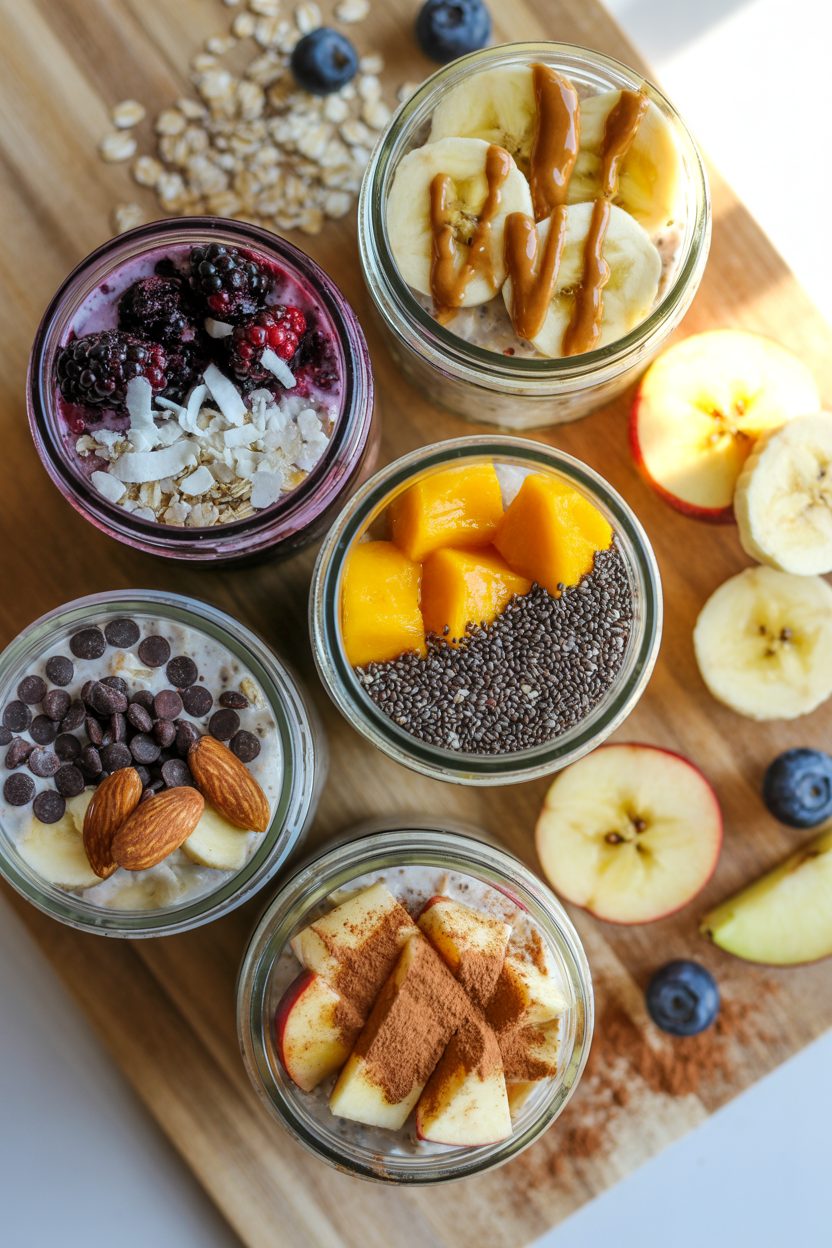
I use these wide-mouth mason jars because they’re the perfect size and I can eat straight from them without dirtying another dish. FYI, get the ones with measurement markings if you’re tracking portions.
The Classic Flavors
1. Classic Vanilla Almond
Mix oats with vanilla almond milk, a scoop of vanilla protein powder, and sliced almonds. Top with a drizzle of honey. Simple, clean, tastes like dessert for breakfast.
Calories: ~320
Protein: 18g
This classic vanilla almond version nails the proportions. The vanilla and almond combination never gets old.
2. Peanut Butter Banana
Mash half a banana into your oats, add a tablespoon of peanut butter, sprinkle of cinnamon. The banana provides natural sweetness plus potassium, while peanut butter brings healthy fats and protein.
Calories: ~350
Protein: 12g
Peanut butter vs almond butter comes down to personal preference and protein content. Peanut butter has slightly more protein, but both work fine. Try these peanut butter banana slim down oats for the full recipe.
3. Strawberry Cheesecake
Greek yogurt, fresh strawberries, cream cheese (yes, really—just a tablespoon), and graham cracker crumbs on top. Tastes indulgent but stays under 300 calories.
Calories: ~280
Protein: 15g
The cream cheese makes this taste like actual cheesecake. This strawberry cheesecake recipe proves healthy breakfast doesn’t have to taste like punishment.
4. Blueberry Lemon
Fresh or frozen blueberries, lemon zest, and a squeeze of lemon juice. The brightness wakes up your taste buds and the blueberries pack antioxidants without added sugar.
Calories: ~260
Protein: 10g
These blueberry lemon wake-me-up oats nail that tart-sweet balance. Frozen blueberries work great and cost way less than fresh.

5. Chocolate Banana
Cocoa powder, sliced banana, and a handful of dark chocolate chips. Satisfies chocolate cravings while keeping things relatively healthy. The banana’s natural sugars provide energy without the crash.
Calories: ~340
Protein: 11g
This chocolate banana not-so-guilty version uses quality cocoa powder for that deep chocolate flavor without loads of added sugar.
The Cozy Comfort Flavors
6. Apple Pie
Diced apples, cinnamon, nutmeg, and a tiny bit of maple syrup. Tastes like apple pie filling but actually counts as breakfast. The fiber from apples combines with oat fiber for serious staying power.
Calories: ~300
Protein: 10g
Make these apple pie overnight oats in fall when apples are cheap and abundant. Use tart apples like Granny Smith for the best flavor.
7. Carrot Cake
Grated carrots, raisins, walnuts, cinnamon, and ginger. All the flavors of carrot cake without the cream cheese frosting and approximately 500 fewer calories.
Calories: ~330
Protein: 12g
The carrot cake version sounds weird but tastes incredible. The carrots add natural sweetness and a dose of beta-carotene.
8. Cinnamon Roll
Cinnamon, vanilla extract, and a cream cheese drizzle (mix cream cheese with a little milk and sweetener). Satisfies that bakery craving without the refined flour and sugar bomb.
Calories: ~310
Protein: 14g
These cinnamon roll oats legitimately taste like dessert. The cream cheese drizzle makes all the difference—don’t skip it.
9. Pumpkin Spice
Canned pumpkin puree, pumpkin pie spice, and a touch of maple syrup. All the fall vibes without the coffee shop price tag and mystery ingredient list.
Calories: ~280
Protein: 11g
Use actual pumpkin, not pumpkin pie filling which contains added sugar. Pumpkin adds vitamin A and fiber while keeping calories low.

10. Maple Pecan
Real maple syrup (not the fake stuff), toasted pecans, and a pinch of salt. Simple ingredients, complex flavor. Pecans provide healthy fats that support brain function.
Calories: ~360
Protein: 11g
Toast the pecans first—it takes two minutes and completely transforms the flavor. I use this small countertop oven for toasting nuts without heating up my whole kitchen.
The Tropical Flavors
11. Coconut Mango Paradise
Coconut milk, diced mango, shredded coconut, and lime juice. Tastes like vacation, works for a random Tuesday morning.
Calories: ~320
Protein: 8g
These coconut mango paradise oats transport you somewhere tropical even when you’re stuck in a cubicle. Frozen mango works perfectly fine.
12. Piña Colada
Coconut milk, crushed pineapple, shredded coconut, and a splash of vanilla. All the tropical flavors without the rum or the calories from a blended drink.
Calories: ~290
Protein: 9g
Use canned pineapple in its own juice, not syrup. The natural fruit sugars provide enough sweetness without additional sugar needed.
13. Tropical Berry
Mixed tropical fruits (mango, pineapple, papaya), coconut flakes, and chia seeds. The chia seeds add extra fiber and omega-3 fatty acids.
Calories: ~300
Protein: 10g
This combination provides vitamin C, fiber, and healthy fats. The variety of fruits prevents flavor boredom that makes you quit eating healthy breakfast.

The Protein-Packed Versions
14. Mocha Protein
Coffee-infused oats (use cold brew), chocolate protein powder, and a sprinkle of espresso powder. Breakfast and caffeine in one container.
Calories: ~310
Protein: 22g
These mocha protein overnight oats deliver serious protein without that chalky protein powder taste. The coffee flavor masks any artificial sweetness.
15. Vanilla Chai Protein
Chai tea concentrate, vanilla protein powder, cinnamon, and cardamom. All the warming spices of chai with the protein boost you need.
Calories: ~300
Protein: 20g
Brew strong chai tea and let it cool before mixing with oats. The spices contain anti-inflammatory compounds that support overall health.
16. Chocolate Peanut Butter Cup
Chocolate protein powder, peanut butter powder (PB2 works great), and a few dark chocolate chips. Tastes like candy but provides 20+ grams of protein.
Calories: ~330
Protein: 24g
Peanut butter powder gives you peanut butter flavor with a fraction of the calories. Mix regular peanut butter on top for that real deal texture.
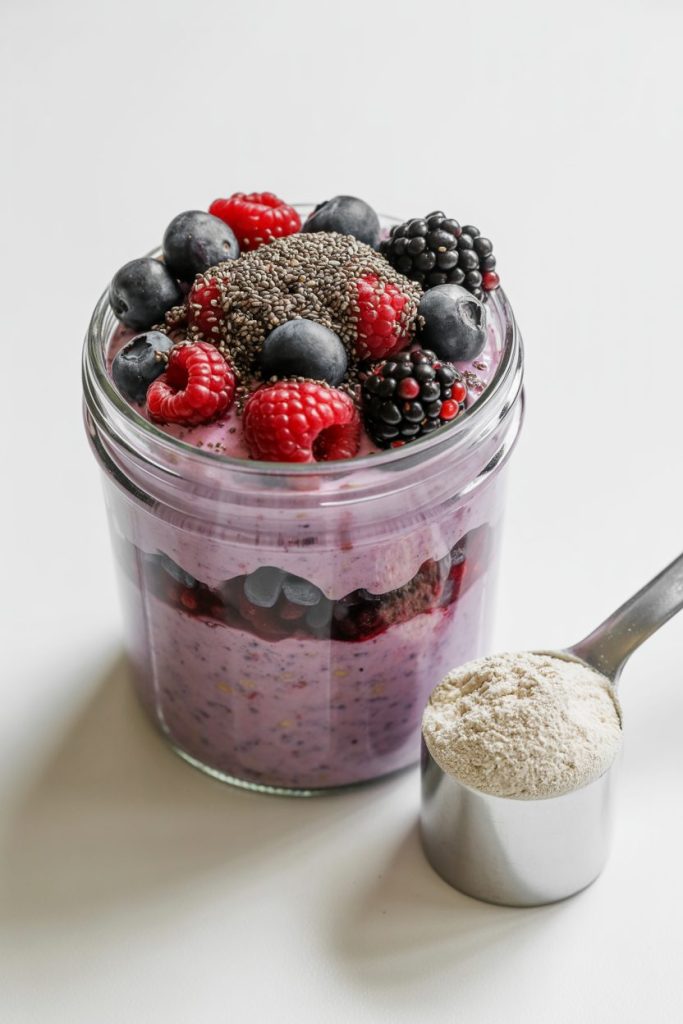
17. Berry Protein Blast
Mixed berries, vanilla protein powder, and ground flaxseed. The berries provide antioxidants, the protein powder adds staying power, and flaxseed contributes omega-3s.
Calories: ~290
Protein: 21g
This berry almond crunch version includes almonds for extra crunch and healthy fats. The combination keeps you full until lunch.
The Savory Options
18. Savory Mediterranean
Yes, savory overnight oats exist and they’re actually good. Use vegetable broth instead of milk, add sun-dried tomatoes, feta cheese, and herbs.
Calories: ~280
Protein: 12g
This concept sounds wild but works. If you’re not a sweet breakfast person, this gives you the benefits of oats without the sugar. Similar to how this savory cottage cheese toast flips breakfast expectations.
19. Everything Bagel
Make oats with milk, top with cream cheese, everything bagel seasoning, and diced cucumber. All the bagel flavors without the refined carbs.
Calories: ~310
Protein: 13g
This works surprisingly well. The everything bagel seasoning makes it taste familiar while the oats provide sustained energy. Worth trying if you’re burned out on sweet breakfast.
The Indulgent Flavors
20. S’mores
Graham cracker crumbs, mini marshmallows, and dark chocolate chips. Tastes like camping treats but won’t send your blood sugar on a roller coaster.
Calories: ~340
Protein: 10g
Use mini marshmallows sparingly—you want the flavor without loading up on pure sugar. The graham crackers add familiar comfort food vibes.
21. Cookies and Cream
Crushed chocolate sandwich cookies (yes, Oreos work), vanilla Greek yogurt, and chocolate chips. Tastes like dessert, counts as breakfast.
Calories: ~360
Protein: 12g
IMO, this pushes the boundary of “healthy” but if it gets you eating breakfast instead of skipping it, that’s a win. Use two cookies max—you want the flavor without going overboard.

22. Banana Bread
Mashed banana, walnuts, cinnamon, and a touch of vanilla extract. All the warm, comforting flavors of banana bread with more fiber and less sugar.
Calories: ~330
Protein: 11g
The banana provides natural sweetness and potassium, which helps regulate fluid balance and muscle function. Walnuts add omega-3 fatty acids that support brain health.
23. Almond Joy
Coconut milk, coconut flakes, almonds, and dark chocolate chips. Candy bar flavors that actually provide nutrients.
Calories: ~340
Protein: 10g
The combination of coconut and chocolate satisfies sweet cravings while delivering healthy fats. Use unsweetened coconut flakes to control sugar content.
24. Tiramisu
Cold brew coffee, cocoa powder, mascarpone (just a dollop), and a dusting of cocoa on top. Italian dessert meets practical breakfast.
Calories: ~320
Protein: 11g
The mascarpone makes this extra creamy. Use it sparingly—a little goes a long way for flavor without excessive calories.
25. Lemon Blueberry Cheesecake
Lemon zest, fresh blueberries, cream cheese, and graham cracker crumbs. Combines the best parts of cheesecake with the nutrition of actual food.
Calories: ~300
Protein: 14g
The lemon brightens everything and prevents the richness from feeling heavy. This makes a great weekend breakfast when you want something special.

Making Overnight Oats Work for Weight Loss
The recipes matter less than the strategy. Here’s what actually makes overnight oats effective for dropping weight:
Portion control: These recipes average 280-360 calories. That’s a reasonable breakfast that leaves room for lunch, dinner, and snacks without exceeding your daily needs.
Protein content: Aim for at least 10 grams per serving, preferably 15-20. The protein keeps you satisfied and helps maintain muscle mass during weight loss.
Fiber matters: Oats provide soluble fiber, but adding fruits, nuts, and seeds increases total fiber content. More fiber means better satiety and more stable blood sugar.
Prep prevents poor choices: When breakfast is ready to grab, you’re less likely to hit the drive-thru or skip eating altogether. Both scenarios usually lead to overeating later.
The Prep Strategy
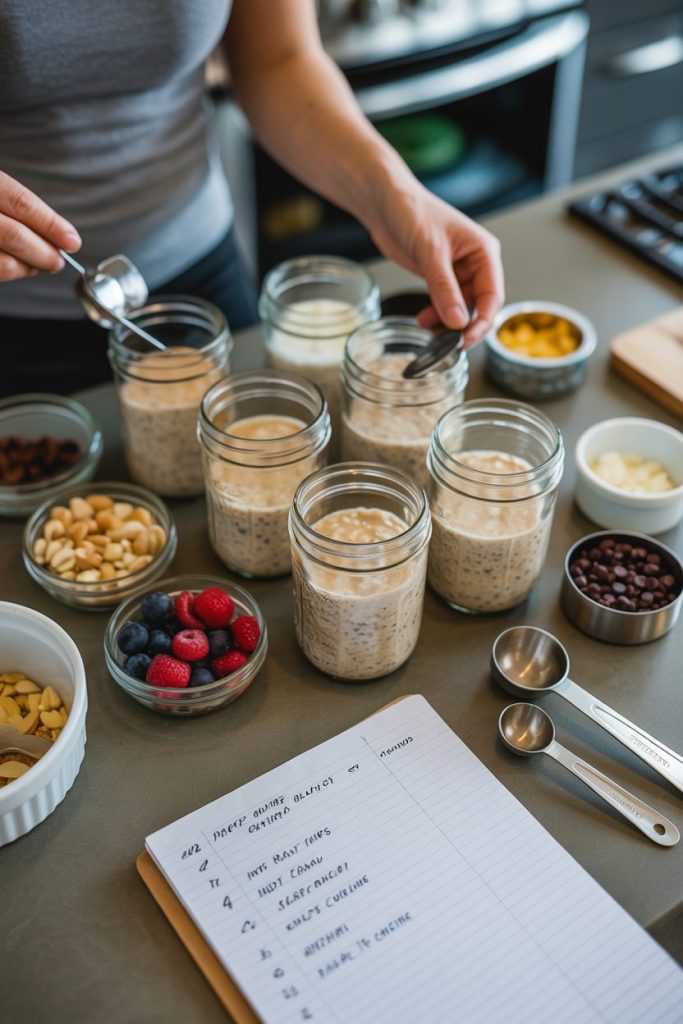
Make three to five jars on Sunday night. That covers Monday through Friday with zero morning effort. Overnight oats stay fresh for 4-5 days in the fridge.
Layer strategically: Put oats and liquid at the bottom, toppings that might get soggy (like granola or nuts) in a separate small container. Add them right before eating.
Use quality containers: I mentioned those mason jars earlier, but any airtight container works. Just make sure it seals properly so your oats don’t absorb fridge smells.
Label them: If you’re making multiple flavors, write the flavor on masking tape and stick it on the jar. Sounds neurotic but saves confusion at 6 AM when your brain isn’t working yet.
Temperature preference: Most people eat overnight oats cold, but you can microwave them for 30-60 seconds if you prefer warm breakfast. They won’t have the same texture as cooked oatmeal but they’ll be warm.
Common Mistakes to Avoid
Using instant oats: They turn to mush. Rolled oats (old-fashioned oats) have the right texture. Steel-cut oats don’t soften enough overnight. Stick with rolled.
Too much liquid: The 1:1 ratio of oats to liquid works for most recipes. Too much liquid creates soup. Too little leaves you with dry, unappetizing oats.
Skipping protein: Plain oats with fruit won’t keep you full. Add Greek yogurt, protein powder, nut butter, or a combination. The protein makes the difference between a snack and an actual meal.
Going overboard with sweetener: The fruits provide natural sweetness. You need way less honey or maple syrup than you think. Start with one teaspoon and adjust from there.
Not mixing thoroughly: Protein powder especially needs good mixing or you’ll get clumps. Stir well before refrigerating, then stir again in the morning.
Ignoring texture: Some people hate mushy oats. If that’s you, try using less liquid or adding crunchy toppings like nuts, seeds, or granola right before eating.
Customizing for Your Goals
Lower calorie: Skip nut butters and use PB2 instead. Use unsweetened almond milk (30 calories per cup vs 150 for whole milk). Load up on berries which are low-calorie but high volume.
Higher protein: Add a scoop of protein powder, use Greek yogurt instead of regular milk, top with nuts or seeds. Aim for 20+ grams per serving.
Dairy-free: Use any plant-based milk and skip the Greek yogurt. Coconut yogurt works as a substitute. Add chia seeds for thickness and protein.
Lower carb: Use half the oats and bulk it up with chia seeds, hemp hearts, and protein powder. Won’t be as low-carb as eggs but lower than standard oats.
Budget-friendly: Buy oats in bulk—they’re cheap. Use frozen fruit instead of fresh. Skip fancy protein powders and use peanut butter for protein. Plain Greek yogurt costs less than individual flavored cups.
The Science of Satiety
Why do overnight oats keep you full longer than, say, a bagel or cereal? The combination of fiber, protein, and slow-digesting carbs creates what nutritionists call “high satiety.”
Beta-glucan fiber forms a gel in your digestive system that literally slows down how fast food leaves your stomach. Slower digestion means more stable blood sugar and prolonged fullness.
Protein triggers satiety hormones like peptide YY and GLP-1. These hormones signal your brain that you’re full and satisfied. Without adequate protein, those signals don’t fire properly.
Resistant starch forms when oats are soaked overnight. This type of starch resists digestion, feeding beneficial gut bacteria instead. Better gut health correlates with better weight management.
According to Mayo Clinic research, high-fiber foods help with weight loss by promoting feelings of fullness. The fiber in oats specifically has been studied extensively for its beneficial effects.
Beyond Breakfast
These recipes work for snacks too. Half portions make excellent afternoon pick-me-ups that prevent the 3 PM vending machine raid. They’re also great for post-workout recovery—the carbs replenish glycogen while protein supports muscle repair.
Some people eat them for dessert. A bowl of chocolate peanut butter overnight oats satisfies sweet cravings better than ice cream and actually provides nutrition.
Portable breakfast: Take your jar to work and eat at your desk. Way better than skipping breakfast or eating something from the office vending machine that’s been there since 2019.
The Bottom Line
Overnight oats work for weight loss because they’re convenient, customizable, and genuinely filling. You’re more likely to stick with something that tastes good and requires minimal effort.
Start with three or four recipes from this list. Make them part of your Sunday prep routine. After a week, you’ll know which flavors you love and which ones to skip. Build your rotation from there.
The best weight loss food is the one you’ll actually eat consistently. If overnight oats check that box for you, they’re worth making part of your routine. If you try them and hate the texture, move on to something else. No single food is magic—it’s about finding sustainable habits that work for your life.
Now go prep some jars and reclaim your mornings.